4.74.67 out of 5, 3 ratings


Cookies on African Food Network
We use essential cookies to make the site work. We would also like to set analytics cookies and advertising cookies, but only if you agree. You can choose each one separately. Read our cookie policy
Traditional South African food means the classics the whole country cooks, from potjiekos in a three-legged pot to pap en vleis off the braai. Then there's chakalaka relish, bobotie, samp and beans, vetkoek and biltong, and sweet things like koeksisters, malva pudding and peppermint crisp tart. They come from Afrikaner, Cape Malay, Xhosa and township kitchens.
You can trace most of them to one community. Malva pudding and the koeksister came out of Dutch and Afrikaner kitchens, and bobotie was taken up by the Cape Malay community. Chakalaka is said to have started in the townships and gold mines around Johannesburg. Here's each classic, what it is, and AFN's recipe for it.
Some come from the fire, some from the oven or the fryer, and some from the fridge. Here's what each one is and what makes it South African.
South Africa
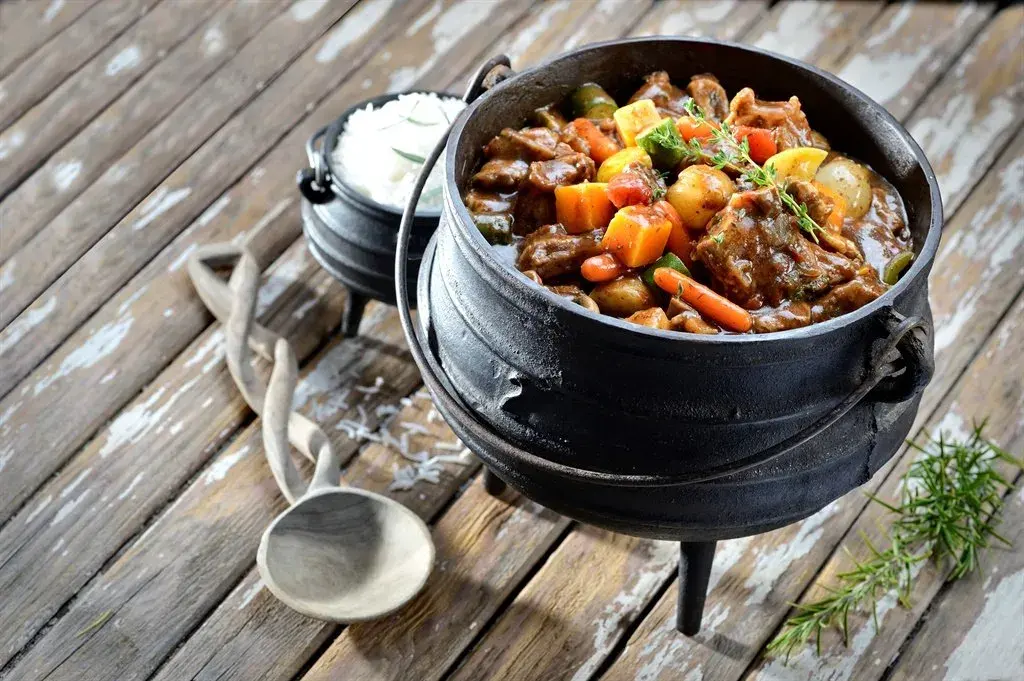
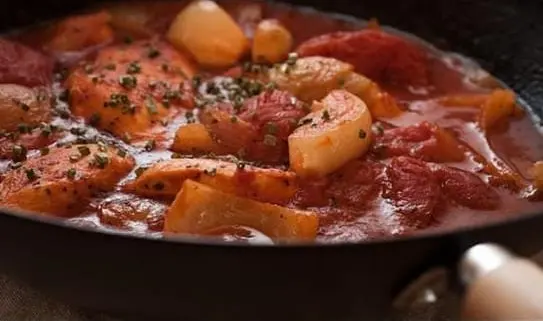
PotjiekosWhat it is: Meat and vegetables in a cast iron potjie
Layered, not stirred: meat at the bottom, vegetables above in the order of how long they need, lid on, over the coals for three to six hours. AFN's recipe is a shorter version, about two hours on the heat.
South Africa
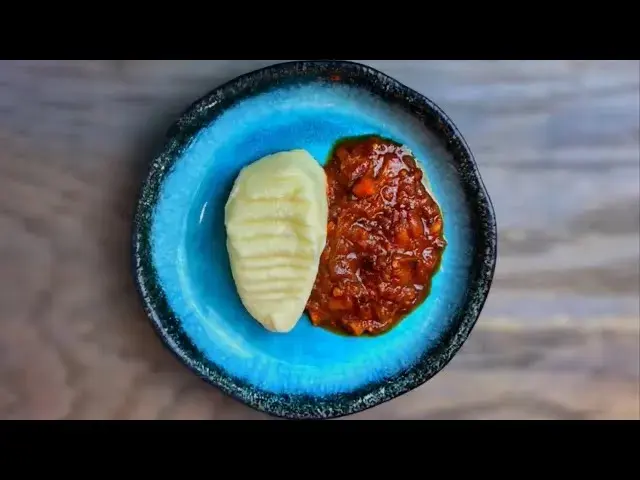
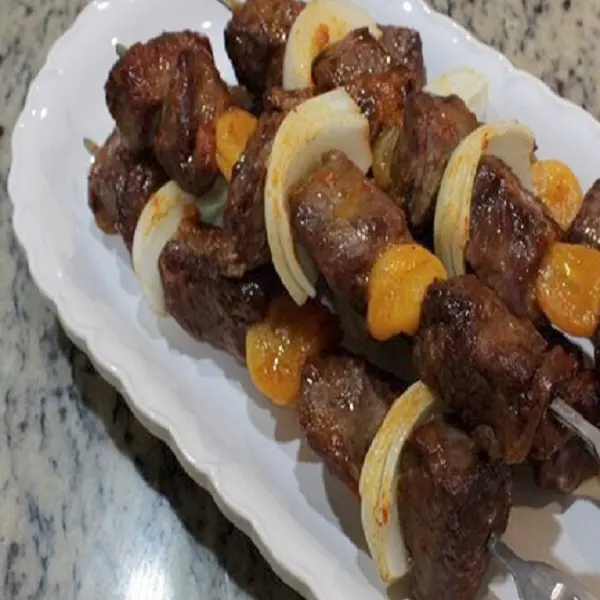
Pap en vleisWhat it is: Stiff maize porridge with grilled meat
Afrikaans for porridge and meat. Firm pap beside grilled meat, recognised all over the country. AFN's version pairs it with quick sweet chilli and teriyaki beef strips.
South Africa (townships)
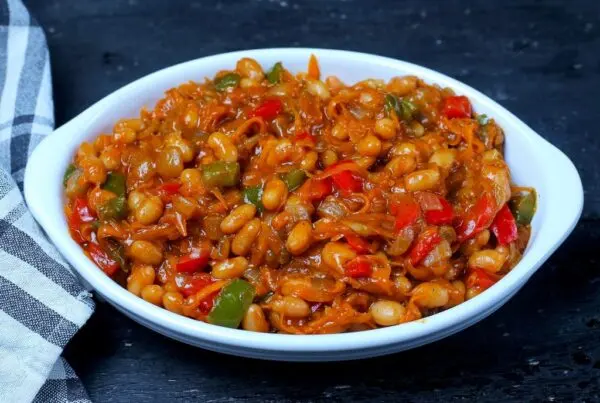
ChakalakaWhat it is: Spicy vegetable relish
Onion, carrot, peppers and tomato cooked with curry powder and chilli. Served hot or cold with pap, bread or anything off the braai, and better the next day.
South Africa (Cape Malay)
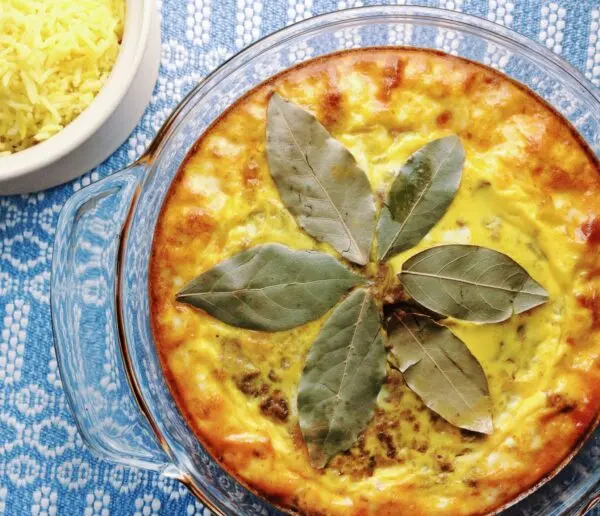
BobotieWhat it is: Spiced mince under an egg custard
Gently spiced minced meat with raisins, baked under a milk and egg topping with bay leaves tucked in. Usually eaten with yellow rice.
South Africa (Xhosa)
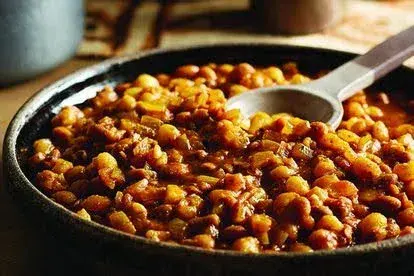
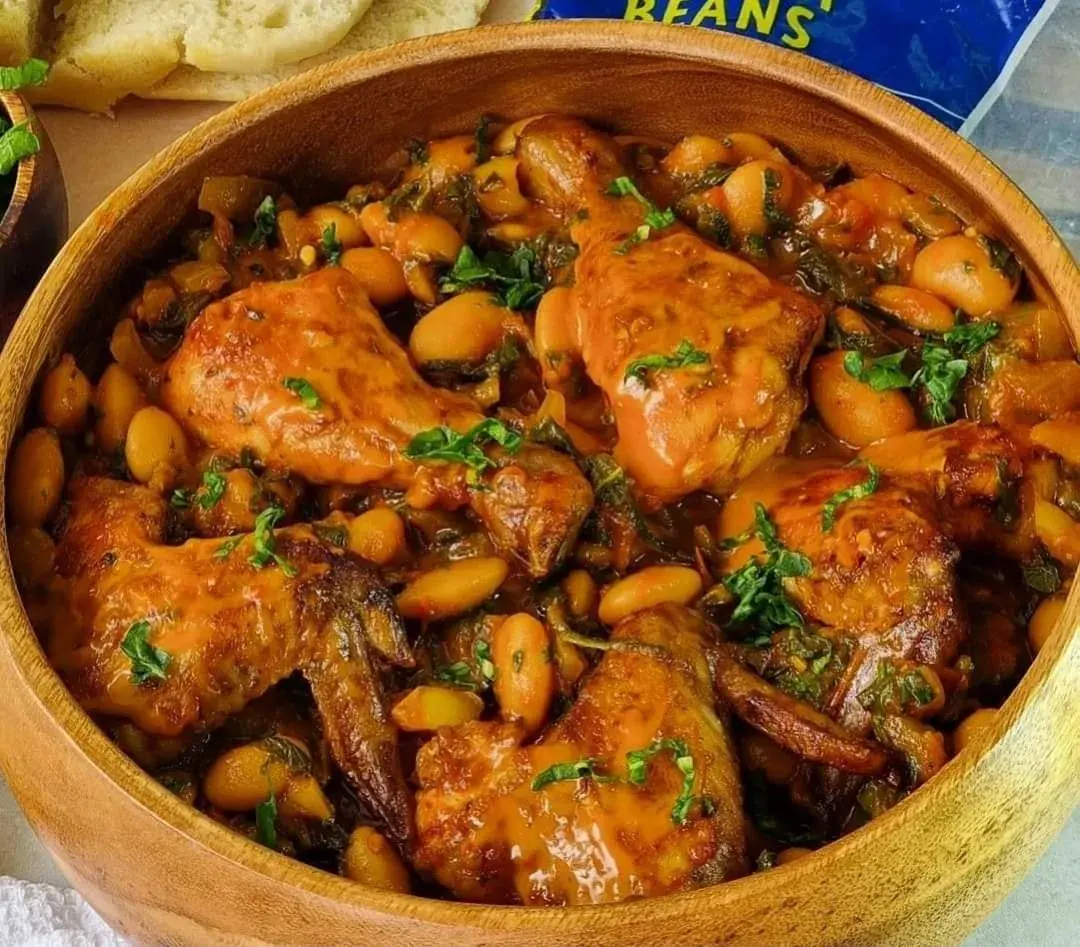
Samp and beans (umngqusho)What it is: Broken dried maize with sugar beans
Samp and beans soaked overnight, then braised. AFN's version adds beef shin, curry powder and tomato and cooks for two and a half hours; chakalaka is a common partner.
South Africa
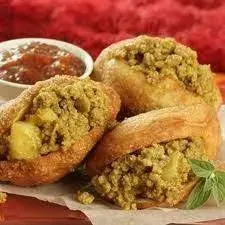
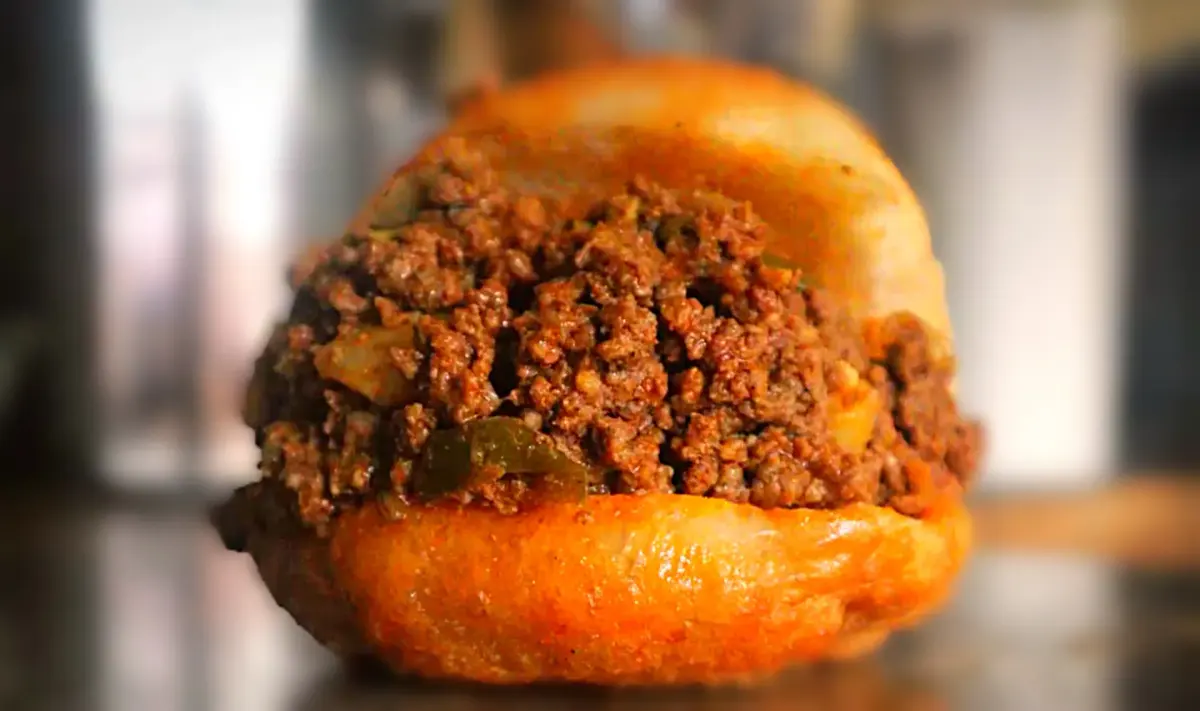
VetkoekWhat it is: Deep-fried yeast bread
Afrikaans for fat cake, and amagwinya in isiZulu and isiXhosa. Split and filled with curried mince for lunch, or spread with syrup or jam with tea.
South Africa (Gauteng townships)
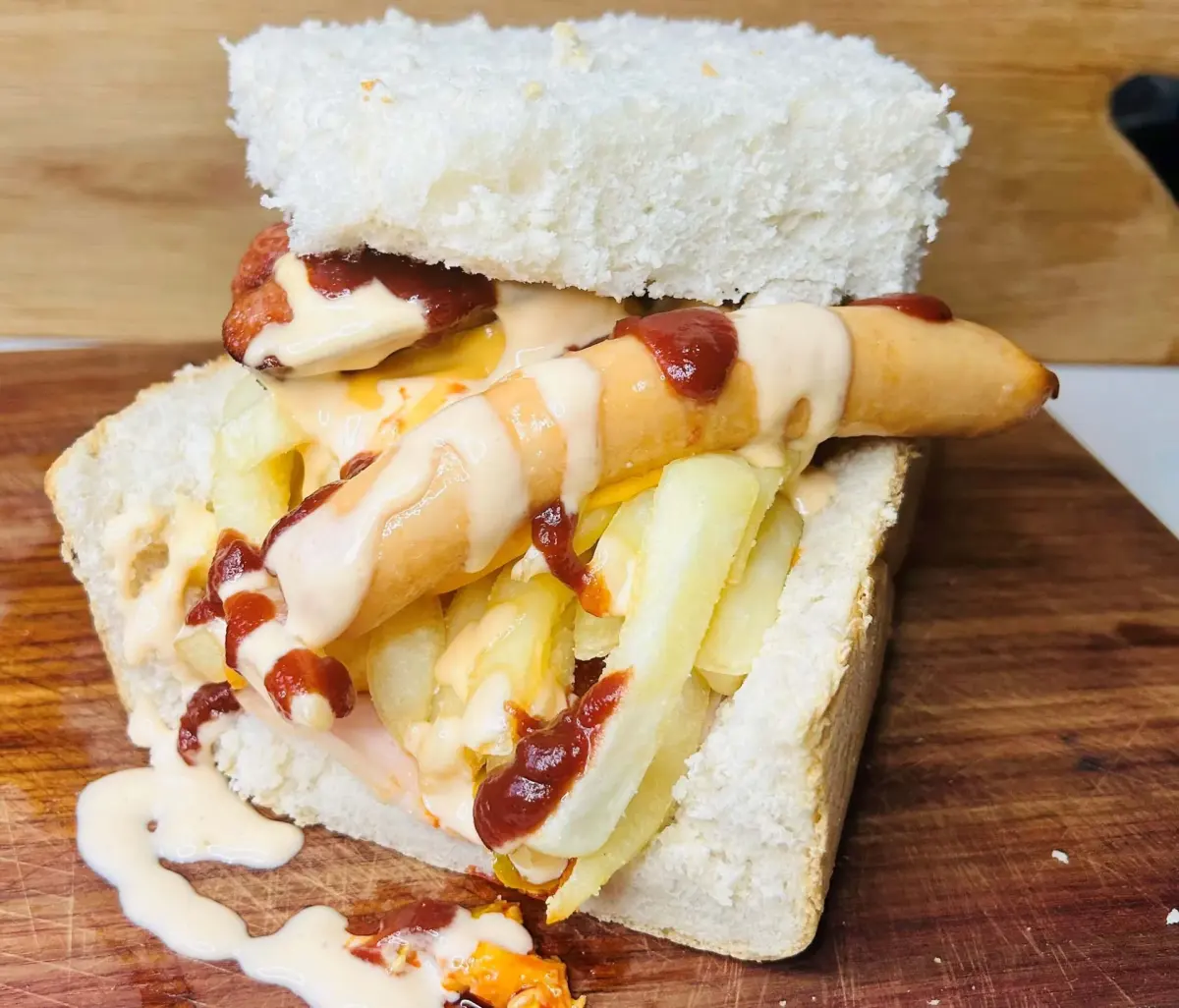
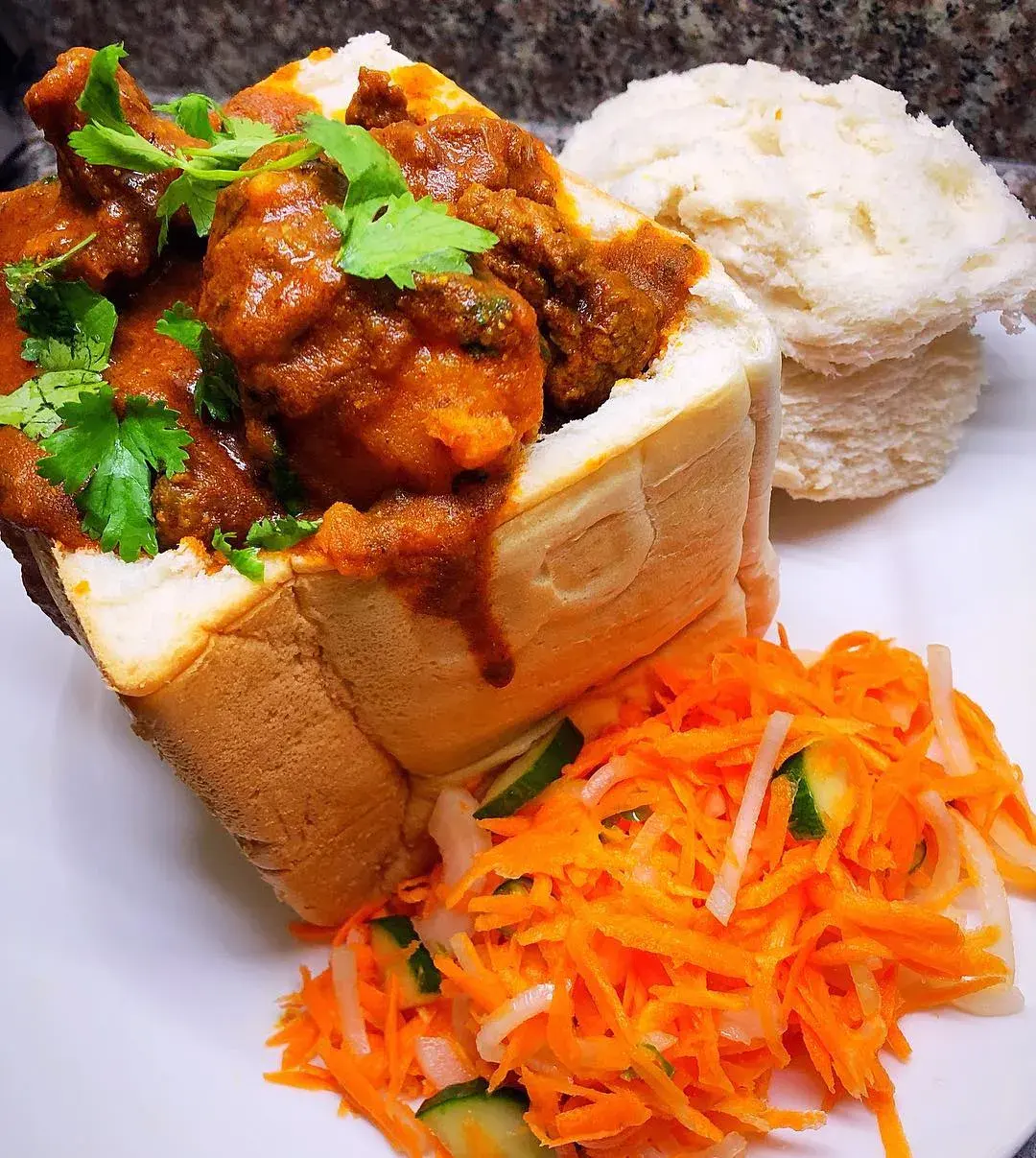
KotaWhat it is: Hollowed quarter loaf, fried fillings
Township English for quarter: a quarter loaf hollowed out and packed with chips, a fried Russian sausage, cheese and atchar, then capped with the bread that came out. The atchar is what makes it South African.
South Africa
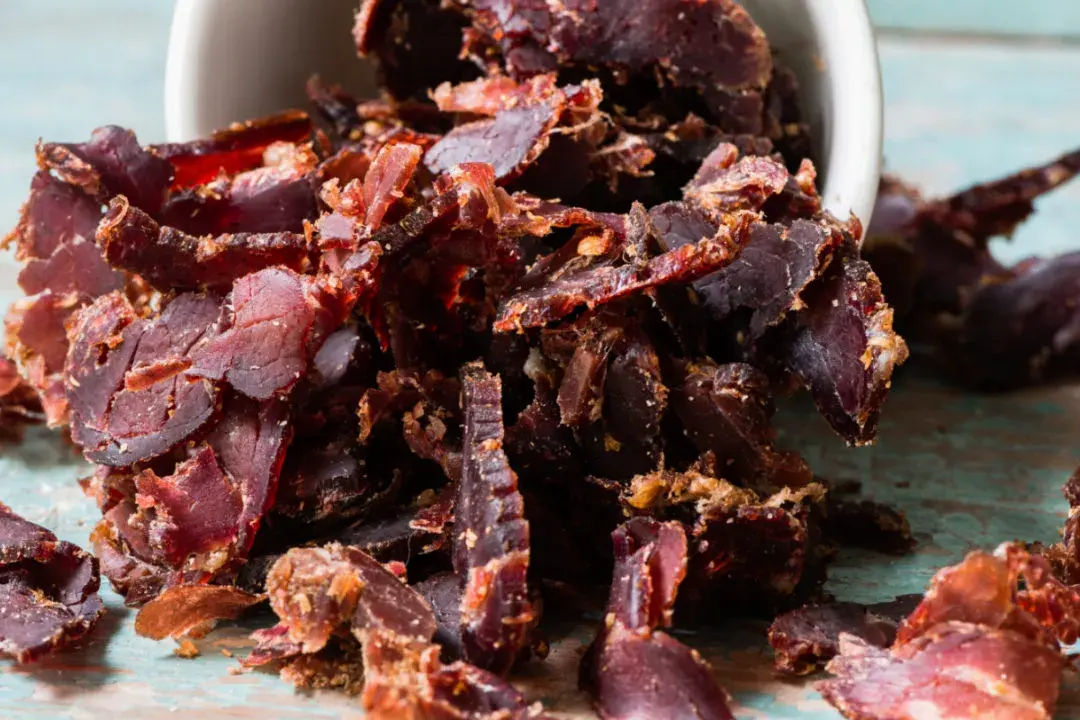
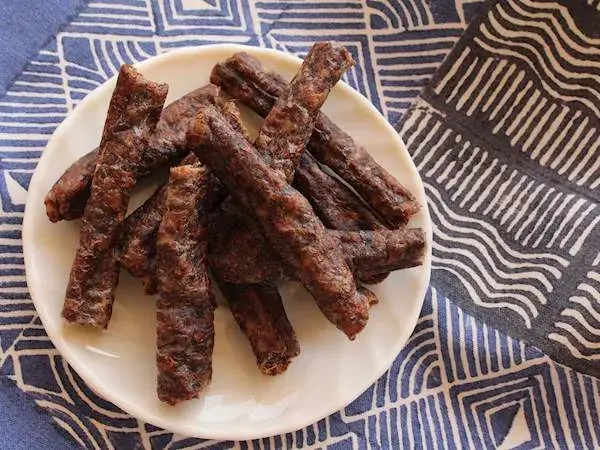
BiltongWhat it is: Air-dried cured beef
Thick strips cured in vinegar, salt and coriander, then hung in moving air for days. It's raw cured meat, never cooked, so the cure and the drying have to be done properly.
South Africa (Afrikaner)
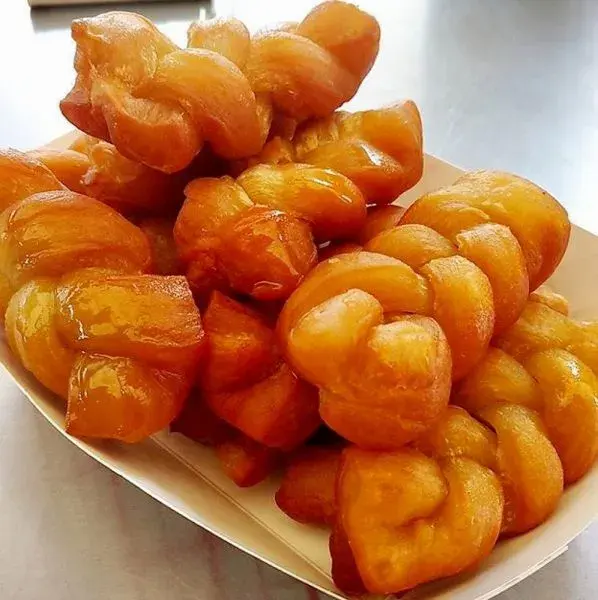
KoeksistersWhat it is: Plaited fried dough in syrup
Fried and plunged straight into ice-cold syrup, so the outside stays crisp while the syrup soaks into the middle. Warm syrup gives you a soggy one.
South Africa
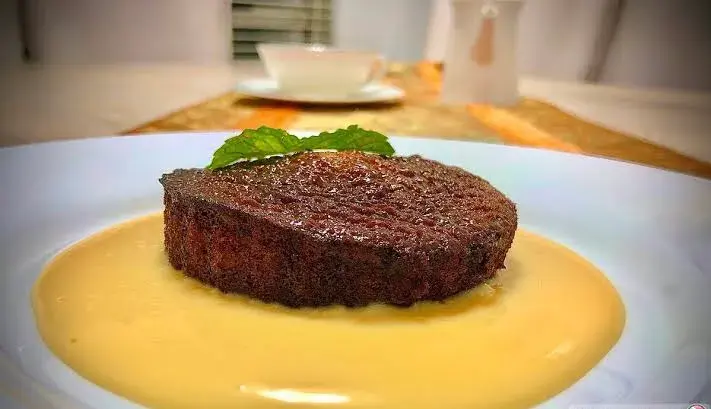
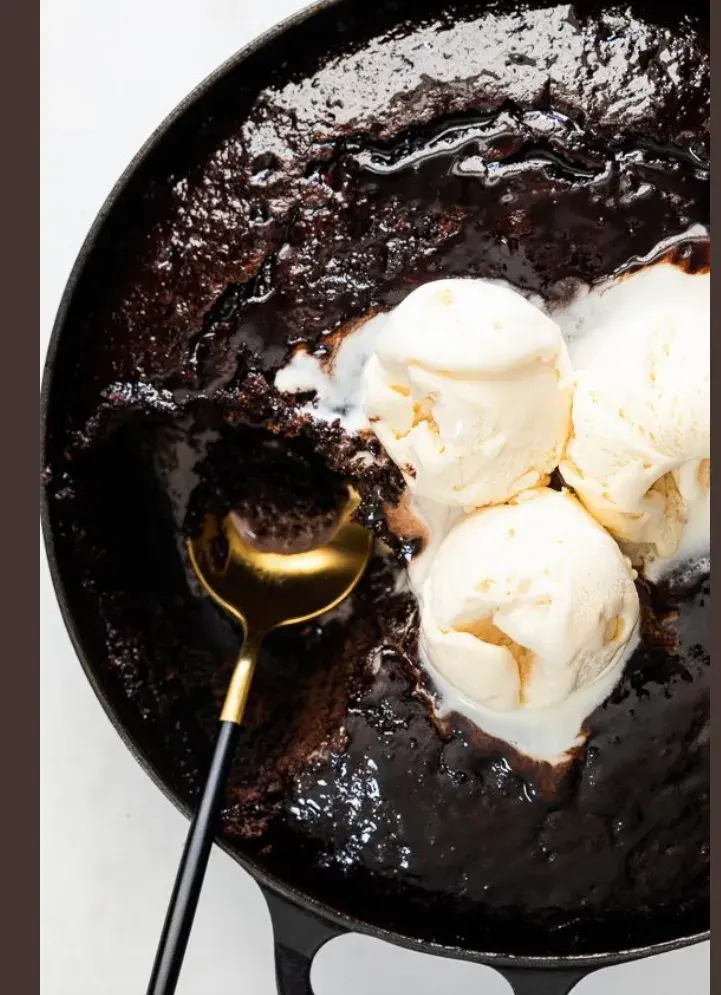
Malva puddingWhat it is: Baked sponge with apricot jam
An apricot jam sponge that becomes malva when a hot cream and butter sauce is poured over it straight from the oven. Served warm with custard or ice cream.
South Africa
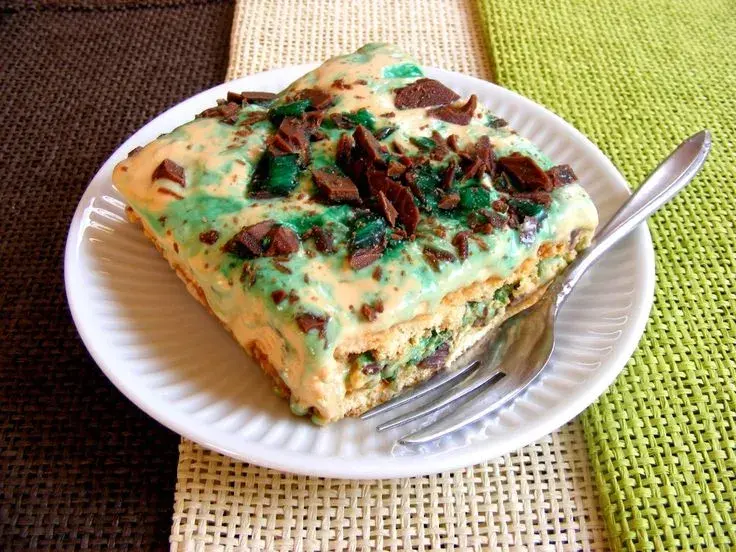
Peppermint crisp tartWhat it is: No-bake fridge tart
Tennis biscuits layered with whipped cream, caramel condensed milk and grated Peppermint Crisp, then set in the fridge for hours. No oven involved.
| Country | Version | What it is | What makes it different |
|---|---|---|---|
| South Africa | Potjiekos | Meat and vegetables in a cast iron potjie | Layered, not stirred: meat at the bottom, vegetables above in the order of how long they need, lid on, over the coals for three to six hours. AFN's recipe is a shorter version, about two hours on the heat. |
| South Africa | Pap en vleis | Stiff maize porridge with grilled meat | Afrikaans for porridge and meat. Firm pap beside grilled meat, recognised all over the country. AFN's version pairs it with quick sweet chilli and teriyaki beef strips. |
| South Africa (townships) | Chakalaka | Spicy vegetable relish | Onion, carrot, peppers and tomato cooked with curry powder and chilli. Served hot or cold with pap, bread or anything off the braai, and better the next day. |
| South Africa (Cape Malay) | Bobotie | Spiced mince under an egg custard | Gently spiced minced meat with raisins, baked under a milk and egg topping with bay leaves tucked in. Usually eaten with yellow rice. |
| South Africa (Xhosa) | Samp and beans (umngqusho) | Broken dried maize with sugar beans | Samp and beans soaked overnight, then braised. AFN's version adds beef shin, curry powder and tomato and cooks for two and a half hours; chakalaka is a common partner. |
| South Africa | Vetkoek | Deep-fried yeast bread | Afrikaans for fat cake, and amagwinya in isiZulu and isiXhosa. Split and filled with curried mince for lunch, or spread with syrup or jam with tea. |
| South Africa (Gauteng townships) | Kota | Hollowed quarter loaf, fried fillings | Township English for quarter: a quarter loaf hollowed out and packed with chips, a fried Russian sausage, cheese and atchar, then capped with the bread that came out. The atchar is what makes it South African. |
| South Africa | Biltong | Air-dried cured beef | Thick strips cured in vinegar, salt and coriander, then hung in moving air for days. It's raw cured meat, never cooked, so the cure and the drying have to be done properly. |
| South Africa (Afrikaner) | Koeksisters | Plaited fried dough in syrup | Fried and plunged straight into ice-cold syrup, so the outside stays crisp while the syrup soaks into the middle. Warm syrup gives you a soggy one. |
| South Africa | Malva pudding | Baked sponge with apricot jam | An apricot jam sponge that becomes malva when a hot cream and butter sauce is poured over it straight from the oven. Served warm with custard or ice cream. |
| South Africa | Peppermint crisp tart | No-bake fridge tart | Tennis biscuits layered with whipped cream, caramel condensed milk and grated Peppermint Crisp, then set in the fridge for hours. No oven involved. |
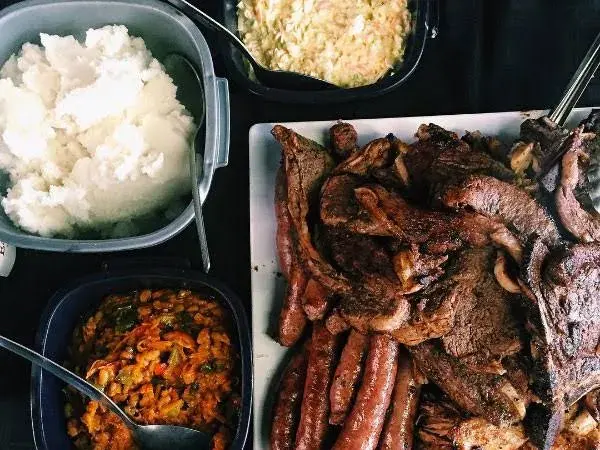
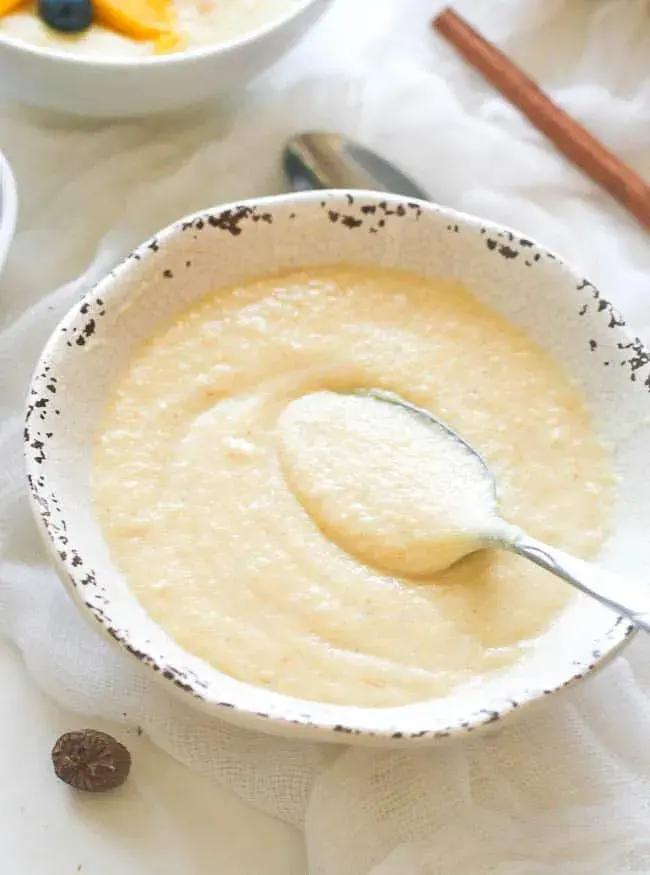
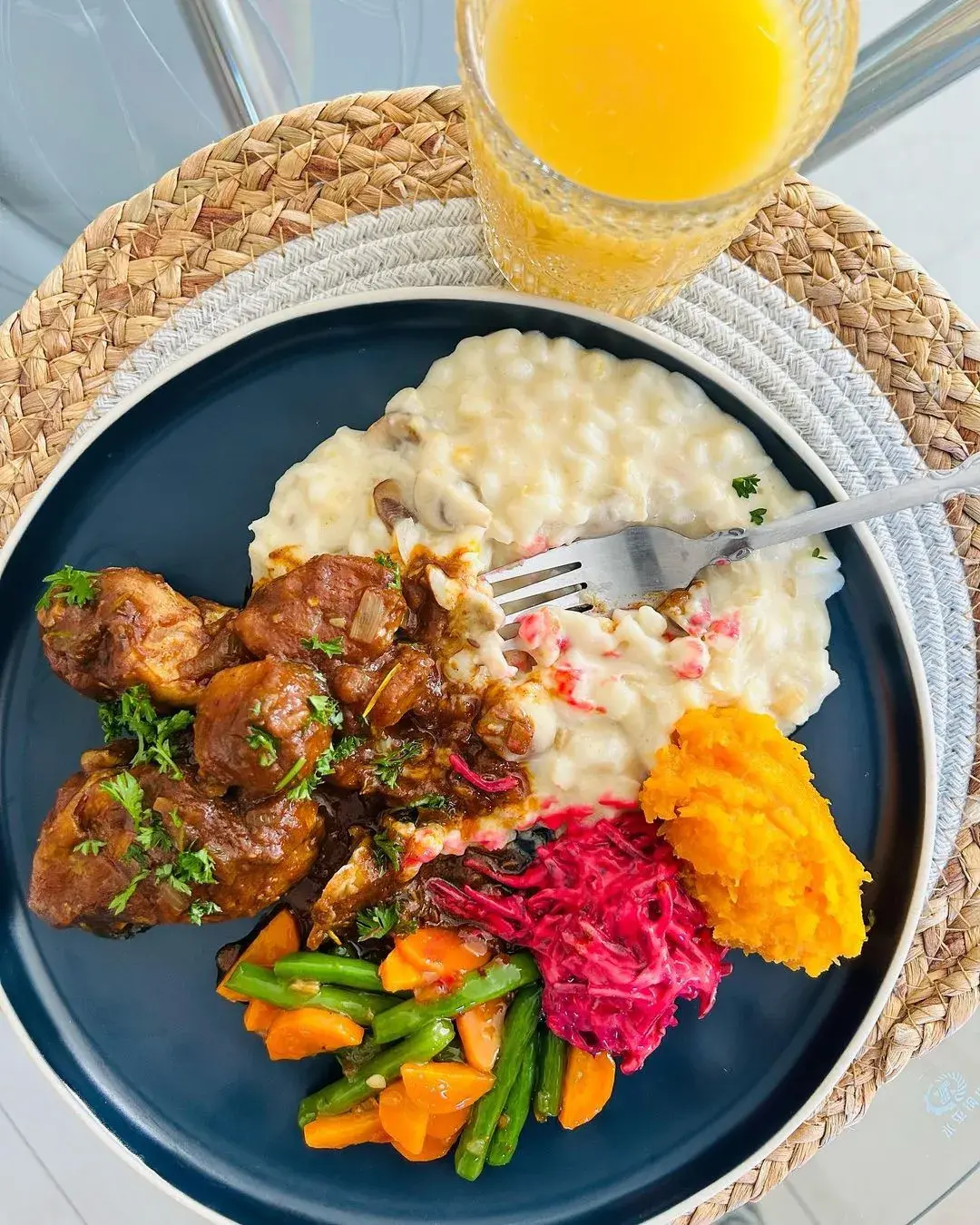
Maize is the base of the everyday plate. Mielie-meal, coarsely ground maize, is cooked into pap, a porridge that can be soft, stiff enough to hold in your hand, or dry and crumbly. Served with grilled meat it's pap en vleis, and with boerewors it's pap en wors. Samp, dried maize kernels pounded until they break, is cooked with beans in the Xhosa dish umngqusho.
The fire is the other constant. Potjiekos, which means small-pot food, is cooked outdoors in a round, three-legged cast iron pot. It goes back to the Voortrekkers, pioneers who added the game they shot to the pot as they travelled. Biltong, beef or game cured with vinegar, salt and spice and dried in the air for days, is southern Africa's answer to jerky, but it's rarely smoked and never heated.
The puddings and bakes show the Cape's mix of peoples. Malva pudding is thought to be of Dutch or Cape Dutch origin, and modern recipes always put apricot jam in it. Koeksisters are an Afrikaner treat, plaited, fried and dropped into ice-cold syrup. The Cape Malay koesister is a round, spiced dough rolled in coconut. Bobotie, spiced mince baked under an egg topping, was adopted by the Cape Malay community, and its name may come from the Indonesian bobotok.
Heritage & Origins
South African desserts to know: syrupy koeksisters, mini tarts like melktert, vetkoek and Amarula, the cream liqueur made from marula fruit.
7 min read
Technique & Kitchen Skills
Five South African spices to know: peri peri, bay leaf, Durban curry powder, braai salt and Cape Malay curry powder, with how each is used in cooking.
8 min read
Heritage & Origins
South African starters you can make at home: peri peri chicken livers, snoek pate, biltong crostini, melon and muscadel soup, and three more appetizers.
5 min read
Christmas
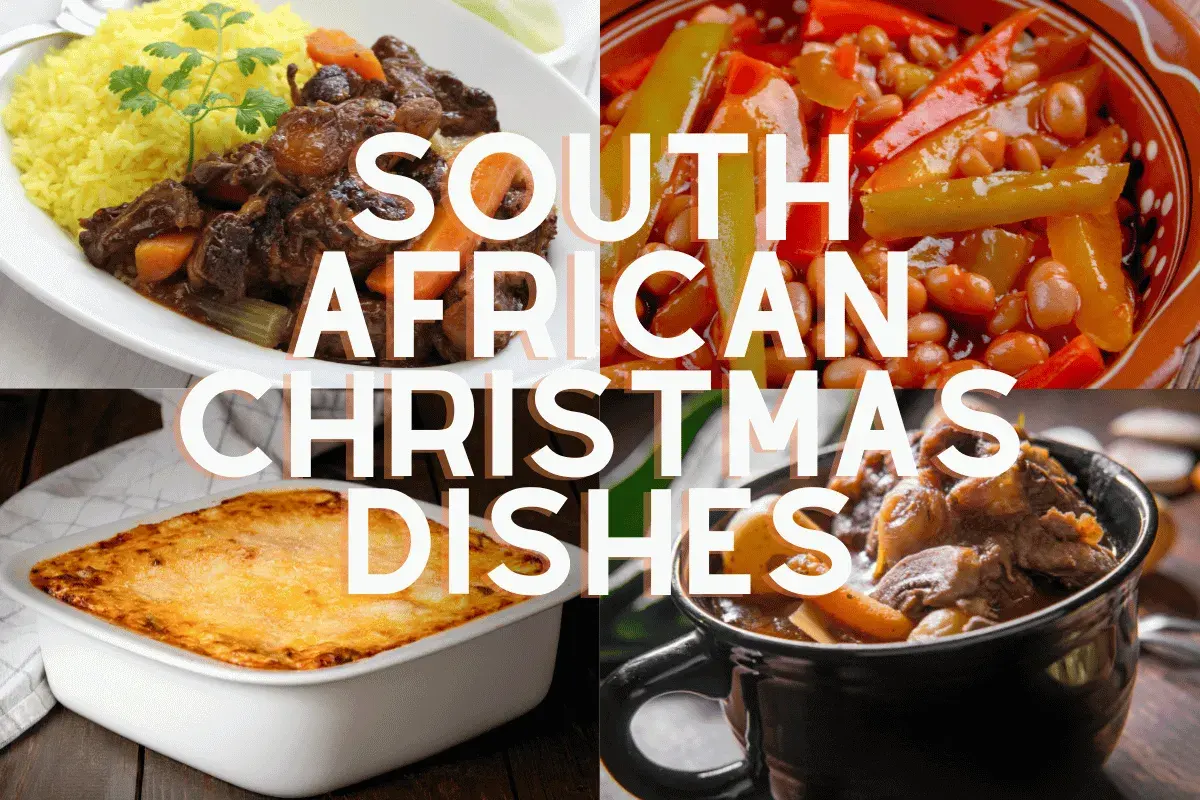
Christmas recipes South Africa loves: chakalaka, bobotie, potjiekos, gammon and yellow rice, then Christmas desserts like malva pudding and koeksisters.
9 min read
Maize and fire at its core: pap with meat from the braai, potjiekos from the three-legged pot, samp and beans and chakalaka, plus Cape Malay bobotie and sweet things such as koeksisters and malva pudding.
Pap, bread, samp, stews and curries, and almost anything from a braai. It's a spicy vegetable relish that works hot as a side dish or cold as a relish, so it turns up at barbecues and Sunday lunches alike.
The koeksister is the Afrikaner version: plaited dough, fried and dropped into ice-cold syrup until it's crunchy outside and syrupy inside. The Cape Malay koesister is a round, spiced dough ball rolled in desiccated coconut.
No. Biltong is cured with vinegar, salt and spice and dried in the air over several days, and it's rarely smoked. Jerky is usually dried with heat and without vinegar, and is often smoked. The texture and flavour are quite different.
Nobody knows for sure. The Oxford English Dictionary links it to the Afrikaans malvalekker, meaning marshmallow, but there are several theories and all of them are anecdotal.