
Malva Pudding
Overview
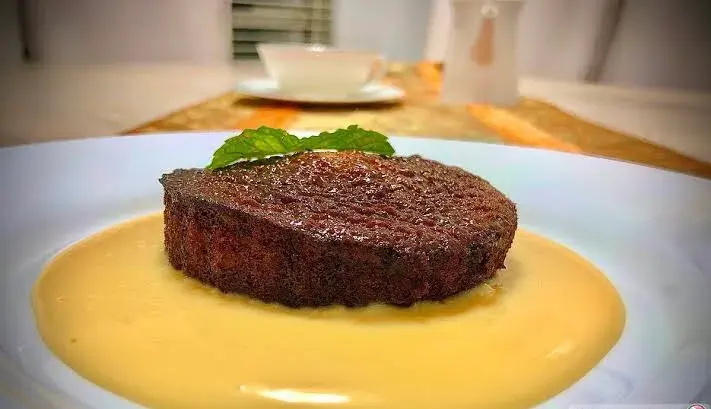
Malva pudding is a South African baked pudding, a soft sponge with apricot jam in the batter. It's soaked in a hot cream and butter sauce the moment it leaves the oven. To make malva pudding, you beat sugar and eggs with the jam, then add melted butter, vinegar, flour, bicarbonate of soda and milk. It bakes at 180°C (160 to 170°C in a fan oven) for 30 to 45 minutes, until it's browned and well risen. Then you pour the sauce over while it's still hot. The vinegar matters, because it's the acid the bicarbonate of soda needs to rise. The jam brings moisture and a faint fruit note, and the batter has only a little butter on purpose, since the richness comes later from the sauce. That's also why timing matters so much: a hot sponge drinks the sauce in, and a cooled one leaves it sitting in a puddle. Jan Ellis pudding is its close cousin. The story goes that it's named after Jan Ellis, a Springbok rugby player of the 1960s and 70s, because it was his favourite. The difference most people point to is that Jan Ellis pudding doesn't call for vinegar. Malva pudding itself is thought to be of Cape Dutch origin. It was probably based on a pudding Dutch settlers brought to the Cape. Nobody has settled where the name comes from: it's often linked to malvalekker, the Afrikaans word for marshmallow, which suits the texture, and sometimes to malvasia wine. Serve it warm with custard or vanilla ice cream. If you'd like it with cocoa, AFN's chocolate malva pudding uses a cocoa sponge and a cocoa cream sauce.
AFN Heritage Note
Malva pudding is a South African baked dessert containing apricot jam, served with a hot cream and butter sauce poured over it as it leaves the oven. It is of Cape Dutch origin, brought to the Cape by Dutch settlers, and is a standard South African dessert.
Ingredients
Dietary tags come from contributors and AFN does not verify them. They also depend on the products you buy. Recipes here are published for learning, not as medical or dietary advice. If you have an allergy or a medical condition, check every ingredient yourself and talk to a doctor or dietitian. Cooking, allergies and your own judgement
Directions
- 1
Set the oven to 350°F / 180°C. If you have a fan oven, drop it to 160 to 170°C, this pudding catches easily.
- 2
Grease an ovenproof dish of about 18 x 18 cm.
- 3
Beat the sugar and eggs until thick and pale, then mix in the apricot jam.
- 4
Melt the butter without letting it boil, and mix it into the wet ingredients along with the vinegar.
- 5
Sift or mix the flour, bicarbonate of soda and salt together.
- 6
Work the dry mixture and the milk into the egg mixture and beat well.
- 7
Pour into the dish and bake until browned and well risen, between 30 and 45 minutes depending on your oven and dish.
- 8
While it bakes, melt the cream, butter, sugar and hot water together in a pot for the sauce and mix well.
- 9
Pour the sauce over the pudding the moment it comes out of the oven. The pudding should be moistened through rather than swimming.
- 10
Let it stand for a while, kept warm, so the sauce soaks in properly. Serve warm.
Africook’s Notes
- Pour the sauce over while the pudding is straight-from-the-oven hot. A cooled pudding will not absorb it and it simply pools.
- Do not drown it. The sauce should soak through, not sit around the pudding in a puddle.
- Let it stand before serving. Serving immediately means the sauce has not had time to penetrate.
- The vinegar is not optional. Bicarbonate of soda is the only raising agent and there is no other acid in the batter.
- Watch it in a fan oven. The source found it caught easily and dropped the temperature twice, which is a fair warning.
- It is rich enough not to need anything, though custard or vanilla ice cream is traditional.
Questions cooks ask
What is malva pudding?
Malva pudding is a South African dessert of light sponge made with apricot jam, with a hot sauce of cream, butter, sugar and water poured over it straight from the oven. The sauce soaks right through, so it ends up moist and soft rather than dry like a cake. It's usually eaten warm.
What is the difference between Jan Ellis pudding and malva pudding?
They're close relatives: both are baked puddings finished with a creamy sauce poured over while hot. The difference most people point to is that malva pudding uses vinegar and Jan Ellis pudding doesn't. In AFN's malva recipe the vinegar is there for a reason, because bicarbonate of soda is the only raising agent and it needs an acid to work.
Who was Jan Ellis pudding named after?
The story goes that it's named after Jan Ellis, a Springbok rugby player of the 1960s and 70s, because it was his favourite pudding.
Where does malva pudding come from?
It's thought to be of Dutch or Cape Dutch origin, probably based on a pudding Dutch settlers brought to the Cape in the mid-1600s. The written trail is much younger. A 1924 South African cookbook has a possible ancestor that's boiled rather than baked and has no apricot jam. Malva pudding recipes show up in South African cookbooks from the 1970s. It appeared on the menu at the Boschendal wine estate in 1978.
What does malva mean?
The Oxford English Dictionary traces it to malvalekker, the Afrikaans word for marshmallow, so that is the likeliest answer, but nobody has proved it. The soft, spongy texture fits that story. Every other explanation is anecdotal too, and one traces the name to malvasia, a sweet wine.
How long do you bake malva pudding?
Between 30 and 45 minutes at 180°C, or 160 to 170°C in a fan oven, in a dish about 18 x 18 cm. It's done when it's browned and well risen. Watch it in a fan oven, because it catches easily.
Why isn't my malva pudding soaking up the sauce?
Usually because the pudding cooled before the sauce went on. A hot pudding takes in hot liquid easily, while a cooled one leaves it sitting in a puddle. Pour the sauce over the second it comes out of the oven, then let it stand somewhere warm for a while before serving so the sauce has time to soak in.
What do you serve with malva pudding?
Custard or vanilla ice cream, and it's usually served warm. Cold custard on hot pudding is the classic pairing. It's rich enough to eat on its own, too.
Reviews
Be the first to rate this recipe
Cooked it? Your rating helps the next person decide whether to try it.
No reviews on this one yet. If you have cooked it, yours would be the first.
You Might Also Like
Browse all South African recipes →
Dombolo (Dumplings or Steamed Bread)
Boeber (Cape Malay Sweet Milk Drink)