

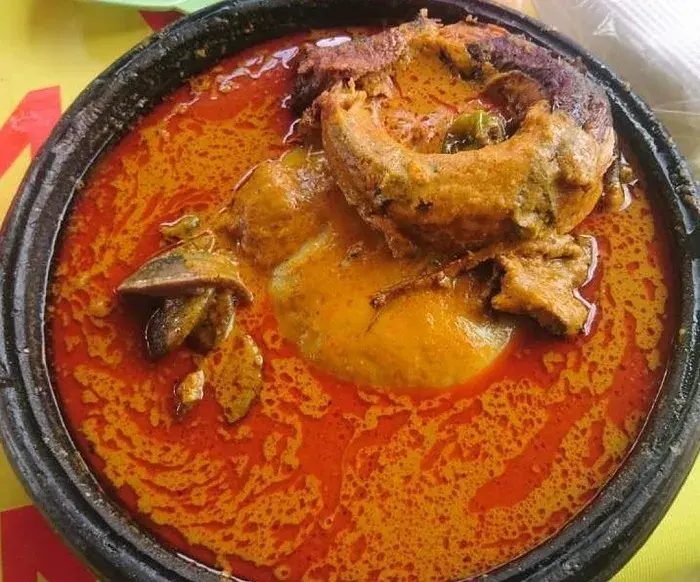
Palmnut Soup (Abenkwan)
Overview
Abenkwan is the Akan name for palmnut soup, and the Akan of Ghana have been producing and eating it for generations. It is built on palm cream, the thick pulp pressed from the fruit of the oil palm, which gives the soup its deep orange colour, its weight and a rich, faintly smoky flavour that no other ingredient produces. The palm fruit is what makes it. Palm oil runs through Ghanaian and West African cooking generally, but abenkwan uses the whole fruit pulp rather than the extracted oil, which is a different ingredient with a different result: less greasy, more substantial, and carrying a fruitiness the oil alone does not have. Smoked and dried fish, marinated meats and aromatics go into that base, and the soup is eaten with fufu, omo tuo, banku, fonio or rice. Palmnut soup is not exclusive to Ghana, and the region cooks it under several names. It is common in Côte d'Ivoire. In Nigeria's Niger Delta, banga soup is the same palm fruit base handled differently, most closely associated with the Urhobo and finished with beletete leaf and a distinct spice mix. Each country's version is recognisably from the same fruit and unmistakably its own.
AFN Heritage Note
The oil palm, Elaeis guineensis, is indigenous to West and Central Africa, and its fruit has been processed for both oil and pulp across the region for several thousand years, with archaeological evidence of its use documented at West African sites. Abenkwan is the Akan preparation of that pulp as a soup.
Ingredients
Dietary tags are provided by contributors as a guide, not verified by AFN, and they depend on the products you buy. If you have a serious allergy, check every ingredient yourself. Cooking, allergies and your own judgement
Directions
- 1
Remove the stomach flaps on the underside of the crabs and cut them in half from top to bottom.
- 2
Place the cold water, the meat and the pig's foot in a large heavy based pan. A slow cooker will not work here, because the initial stage needs fairly high heat.
- 3
Season with salt and pepper. Stir in the onions and cook dry over high heat, stirring continuously, until the outside of the meat is sealed and browned on all sides.
- 4
Add the tomatoes, reduce the heat and simmer for 10 to 15 minutes.
- 5
In a large bowl, combine the palmnut pulp with the boiling water, beating with a wooden spoon to a creamy, smooth consistency.
- 6
Add this to the meat mixture, along with the ground chillies, mushrooms and crabs.
- 7
Simmer over medium heat for 40 minutes to 1 hour, stirring only occasionally to keep the soup from catching on the base of the pan.
- 8
Prepare the fish, removing any remaining bones.
- 9
Add the fish, whole or in chunks, during the last 20 minutes so it does not break up.
- 10
Continue to simmer until the meat is tender.
- 11
Serve hot with the dumplings.
Africook’s Notes
- Tinned palmnut concentrate is the practical route outside West Africa and is what most cooks use. Fresh palm fruit needs boiling and pounding to extract the pulp before the soup can even begin.
- Beat the palmnut pulp smooth with boiling water before it goes into the pot. Added straight, it stays lumpy and the soup never comes together.
- Add the fish in the last twenty minutes only. Fish added early disintegrates and you lose the pieces into the soup entirely.
- Smoked and dried fish together give more depth than either alone, and both are standard rather than optional in a Ghanaian pot.
- Fufu, omo tuo, banku, fonio and rice are all standard accompaniments. Fufu is the most common.
Reviews
3 reviews
You Might Also Like
Browse all Ghanaian recipes →
Easy and Simple Way to Make Banku
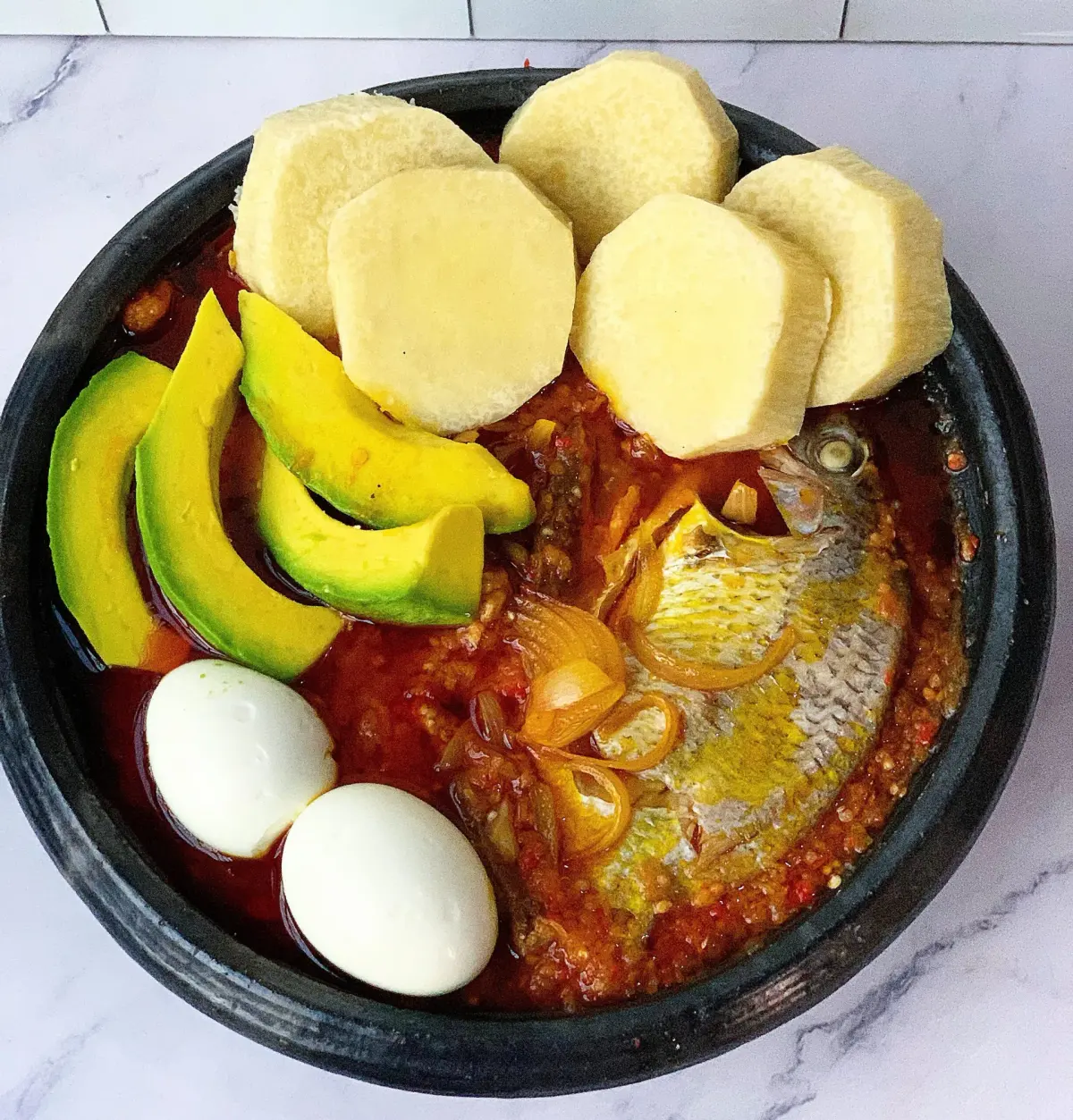
Garden Egg Stew (Earthenware Bowl Method)
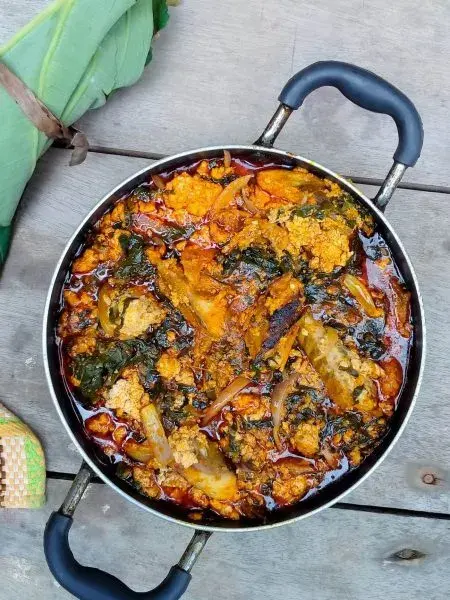
Kontomire Stew
Tracked down a tin of palmnut concentrate and some smoked fish at a small Afro-Caribbean shop in Sheffield city centre. Glad I read the instruction about not using a slow cooker for that initial step because searing the lamb shanks with the minced onions gave it a lovely rich base. The only issue was 50 minutes cook time felt a bit short to get the lamb completely tender so I gave it another 20 minutes. Tasty though!
Herh, abenkwan without momoni? I managed to find salted pig feet and canned palm nut concentrate at Kirkgate market in Leeds so that saved me paa. My grandma always taught us to beat the warm water into the pulp slowly till you get that smooth creamy texture. Made this on Sunday with smoked fish and fresh crab, chale the aroma filled my whole flat.
Used goat meat instead of lamb and grabbed canned palm nut pulp from the African store. I was skeptical about browning the meat dry with just onions first without adding oil, but it built so much deep flavor o! Tastes so close to home, e sweet. Next time I will double the habaneros for more heat.