

Droëwors
Overview
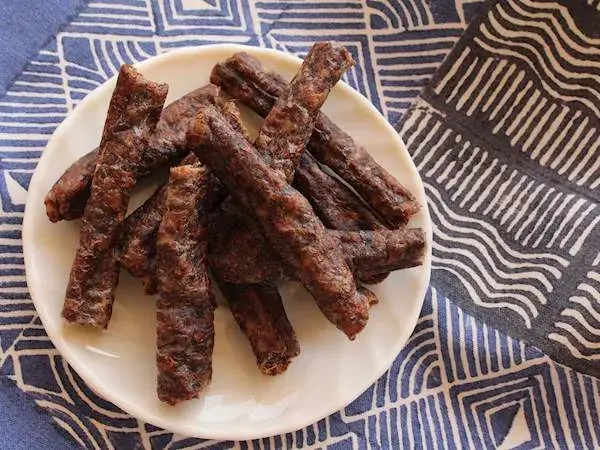
Droëwors is dried sausage, the air-cured relative of boerewors, and the name means dry sausage in Afrikaans. Thin sausages of beef or lamb with sheep tail fat are seasoned with coriander and spices and hung to dry until they are firm and dark, keeping without refrigeration. The technique belongs to the same tradition as biltong, and both come from the practical problem of preserving meat in a hot climate without cold storage. Dutch settlers brought curing and drying methods that met existing southern African practices of drying game, and coriander and vinegar became the signature of the local result. Thinness matters: droëwors is made in narrow casings precisely so it dries quickly and evenly, before spoilage can begin. Sheep tail fat is the traditional fat and it behaves differently from beef fat, staying stable rather than turning rancid through the drying period. The balance is delicate, since too little fat gives something unpleasantly dry and too much will not cure properly. Coriander is the constant seasoning, with cloves, nutmeg and black pepper in proportions that vary by household, and garlic or chilli appearing in some versions.
AFN Heritage Note
Droëwors is an air-dried southern African sausage modelled on boerewors, its name meaning dry sausage in Afrikaans. It belongs to the same preservation tradition as biltong, developed to keep meat without refrigeration, and is characterised by coriander seasoning and sheep tail fat.
Ingredients
Dietary tags are provided by contributors as a guide, not verified by AFN, and they depend on the products you buy. If you have a serious allergy, check every ingredient yourself. Cooking, allergies and your own judgement
Directions
- 1
Mix the meat and the fat together. The less fat you use the leaner the result, but too little makes the droëwors unpleasantly dry.
- 2
Pre-cool the mixture to 2°C.
- 3
Mince the meat and mix in the spices.
- 4
Refrigerate for 3 hours so the spices penetrate.
- 5
Mix again, then mince a second time through a 4.5mm plate.
- 6
Fill the sheep casings with the mixture, taking care not to let any air in.
- 7
Dry the droëwors at 30°C under UV light for 24 hours, then switch the light off.
- 8
Hang the droëwors to dry on a plastic or metal hook. Do not let the raw meat touch wood.
- 9
Continue drying for 5 days.
Africook’s Notes
 Personal notes from Nympha Nzeribe
- Keep the meat cold at every stage. Warm meat smears in the mincer instead of cutting cleanly, and it raises the spoilage risk through a five day cure.
- Use thin casings. Droëwors is deliberately narrow so it dries through quickly, and a thick sausage may spoil before the centre cures.
- Exclude air when filling the casings. Air pockets are where spoilage starts.
- Use plastic or metal hooks and never wood, which harbours bacteria against raw meat.
- Sheep tail fat is traditional because it stays stable through drying where beef fat can turn rancid.
- This is raw cured meat and food safety is not optional. If you are unsure about temperature and humidity control, buy it rather than making it.
Reviews
3 reviews
You Might Also Like
Browse all South African recipes →
Dombolo (Dumplings or Steamed Bread)
Boeber (Cape Malay Sweet Milk Drink)
finding natural sheep casings in Tema was not easy at all oo. I had to use beef fat instead of the sheep tail fat because that is what I could get here, but chilling the mixture down to 2C before mincing really kept the fat from turning into paste. Tastes good paa with extra toasted coriander.
chale if you trim off too much fat it becomes unpleasantly dry like stick oo. 300g of fat for 3kg meat is really the right balance. Herh, just do not skip letting it sit in the fridge for 3 hours after adding the spices or the vinegar wont penetrate the meat properly.
Abeg that double mincing through the 4.5mm plate is no be small thing if you are using a manual grinder! My arms were aching. But the clove and nutmeg balance with the vinegar came out so good sha, dried them out nicely.