

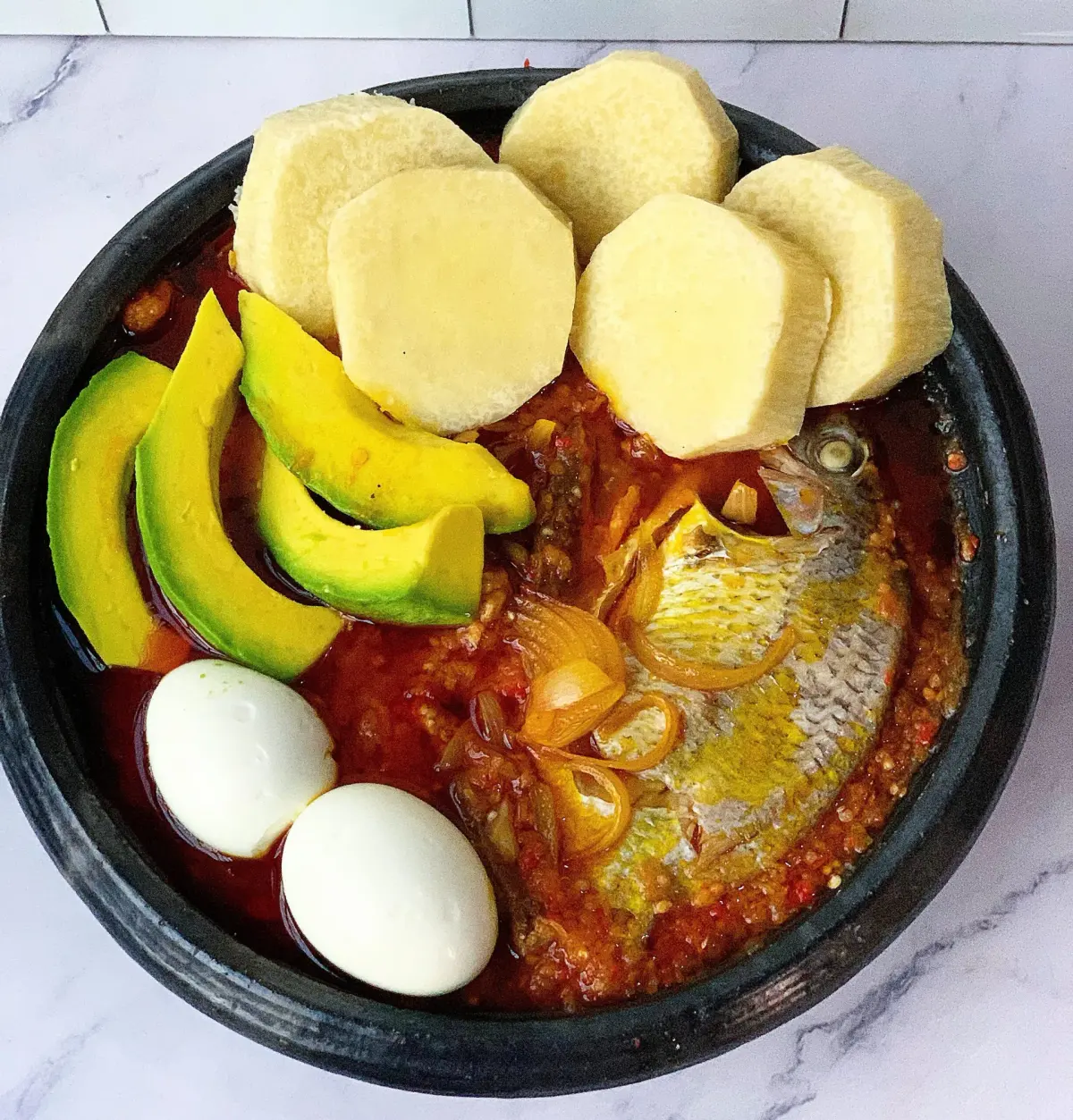
Garden Egg Stew (Earthenware Bowl Method)
Overview
Garden egg stew (some say garden eggs stew) is a Ghanaian stew of small, bitter African aubergines. They're ground with pepper, onion and roasted tomato, then finished with koobi, smoked fish and palm oil. To prepare garden egg stew in Ghana this way, you boil the garden eggs soft and grind everything together in an asanka. That's the ridged clay bowl found in kitchens across Ghana. Then you pour hot palm oil and fried onion over the top. Garden eggs are the white and pale green cousins of the big purple aubergine, firmer and more bitter, and an African crop in their own right. Cooked soft and crushed, they give the stew a thick, faintly bitter body that nothing else copies. The bowl matters, because an asanka crushes rather than purees, so the stew stays coarse and uneven. A blender gives you a different dish. Ghanaian cooks treat this ground version and the fried version as two separate recipes, not two takes on one. Koobi, a salted and cured fish, gives it its savoury weight, smoked mackerel and herring back it up, and boiled egg and avocado go on top. Serve it with boiled yam or plantain, the way it's eaten across Ghana.
AFN Heritage Note
The garden egg, a small African cultivar of Solanum aethiopicum and Solanum macrocarpon, has been cultivated in West Africa since before the arrival of the larger Asian aubergine, and remains a distinct crop across Ghana and Nigeria. The asanka, the ridged earthenware grinding bowl used in this preparation, is documented as a standard implement in Ghanaian kitchens.
Ingredients
Dietary tags are provided by contributors as a guide, not verified by AFN, and they depend on the products you buy. If you have a serious allergy, check every ingredient yourself. Cooking, allergies and your own judgement
Directions
- 1
Wash all the ingredients under running water.
- 2
Halve each garden egg and place in a saucepan with just enough water to cook them. Boil for 20 to 25 minutes and set aside.
- 3
In another saucepan, boil the koobi for about ten minutes.
- 4
About 8 minutes into cooking the koobi, add the smoked mackerel and smoked herring and let them steam for about two minutes. Keep the residual water.
- 5
In an earthenware bowl, grind the pepper and onion with a little salt.
- 6
Roast the tomato over a flame for about a minute, add it to the bowl and grind.
- 7
Add the cooked garden eggs to the bowl and grind until smooth.
- 8
Pour the koobi, mackerel, herring and their residual water into the bowl and stir.
- 9
Heat the palm oil and fry some onion in it for about a minute.
- 10
Pour the palm oil and fried onion over the mixture in the bowl and stir again.
- 11
Garnish with boiled egg and avocado, and serve with boiled yam.
Africook’s Notes
 Personal notes from Amanda Dadson
- Grind, do not blend. An asanka or any ridged mortar crushes the ingredients unevenly and that unevenness is the texture of the dish. A blender gives a smooth puree that reads as a different recipe.
- Koobi is very heavily salted. Taste before adding any salt of your own, and rinse or briefly soak the fish first if you are sensitive to it.
- Roasting the tomato over a direct flame for a minute adds a smoky note that a raw tomato does not. Do not skip it for convenience.
- The residual fish water is seasoning, not waste. Adding it is optional but it carries a great deal of the savoury depth.
- The fried version, in which the components are fried rather than ground in a bowl, is the other main Ghanaian preparation and produces a distinctly different stew.
Questions cooks ask
What are the ingredients for garden egg stew in Ghana?
For this version you need garden eggs, koobi, smoked mackerel, smoked herring, red habanero peppers, an onion, a tomato, palm oil and salt. Boiled eggs and avocado are optional toppings. AFN's recipe uses 5 to 7 medium garden eggs and half a cup of palm oil, and the full list with amounts is in the ingredients above.
How to prepare garden egg stew in Ghana, step by step
Halve the garden eggs and boil them for 20 to 25 minutes. Boil the koobi for about ten minutes, adding the mackerel and herring near the end. Grind the pepper and onion with a little salt in an earthenware bowl, then the flame-roasted tomato, then the garden eggs. Stir in the fish and its cooking water, pour over hot palm oil with fried onion, and top with egg and avocado.
What is koobi in garden egg stew, and can I make it without?
Koobi is salted, cured tilapia, dried hard and used across Ghana as a savoury base. It's what gives this stew its depth. You can make the dish without it, using only the smoked mackerel and herring, but it'll be noticeably lighter. Salted cod, soaked to take out some of the salt, is a workable swap.
What is garden egg stew eaten with?
Boiled yam and boiled plantain are the usual partners in Ghana, and the mild starch against the bitter, salty stew is the point of the plate. It's also eaten with rice or with any swallow. The boiled egg and avocado on top are common extras rather than must-haves.
What are garden eggs and what can I use instead?
Garden eggs are small African aubergines, white or pale green, firmer and a lot more bitter than the large purple kind. African grocers sell them fresh and frozen. Thai green aubergines are the closest easy-to-find swap. A large purple aubergine will give you the body but almost none of the bitterness the dish is known for.
Do I need an asanka to make this?
Not strictly, but the texture depends on grinding rather than blending. A large mortar and pestle is the closest alternative. If you only have a blender, pulse in very short bursts and stop well before it looks smooth. The coarse, uneven texture is what sets this version apart from the fried one.
Is garden egg stew the same as egg stew?
No. Garden egg stew is made from garden eggs, the small African aubergines, and the only chicken egg in it is the boiled egg some people put on top. If you came looking for a stew made with chicken eggs, that's a different recipe: AFN's Quick Egg Stew. This one is all about the garden egg.
Is garden egg a fruit or a vegetable?
Botanically it's a fruit, a berry from the nightshade family, the same family as the purple aubergine, but in the kitchen it's cooked and eaten as a vegetable. The fruits are usually picked green, before the skin gets thick. Left to ripen fully they turn bright red.
Reviews
2 reviews
You Might Also Like
Browse all Ghanaian recipes →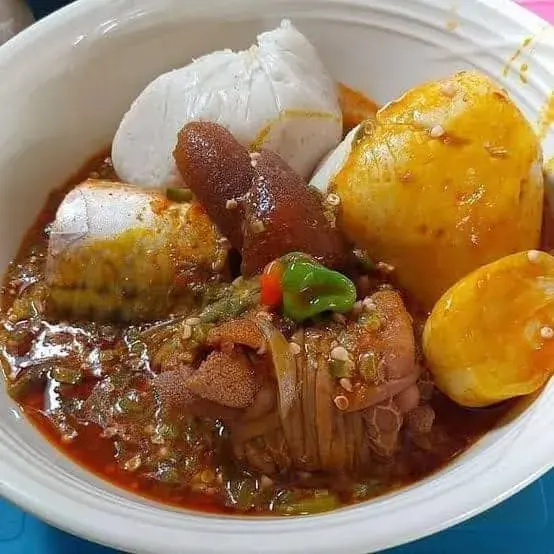
Easy and Simple Way to Make Banku
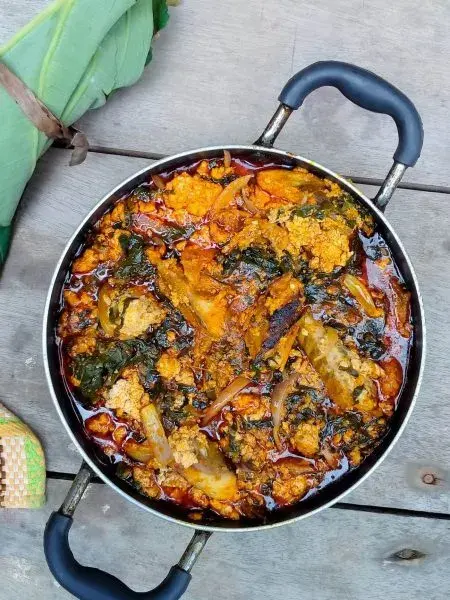
Kontomire Stew
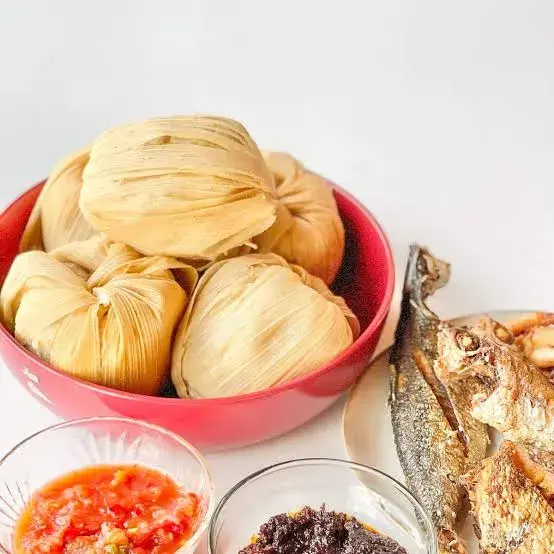
Kenkey

my ghanaian neighbor used to make this with smoked herring and red habanero peppers ground roughly in that earthenware bowl. I tried boiling the garden eggs for 20 minutes first like you wrote instead of frying them raw, and the stew turned out much smoother without absorbing too much palm oil. No be small thing o!
Steaming the smoked mackerel together with the koobi for those last two minutes gave the stock so much flavor. I had to skip adding extra salt completely because the koobi I got from Wuse market was extremely salty. Served mine with boiled yam and a slice of avocado on the side, e sweet well well.