From Sobe’s Kitchen to Your Table: Unraveling the Essence of this Delicious Native Sauce. Want to try something really simple and easy to make, Try my Tasty and easy sauce.
Goat meat goes by a few different names depending on the age of the goat it comes from. The meat from adult goats is typically called chevon. while meat from young goats is referred to as cabrito or kid.
Chevon comes from the French word for goat, chèvre. It refers to meat that comes from goats over a year old. The flavor of chevon is said to be similar to lamb, though it tends to be leaner and lower in fat and cholesterol than other red meats.
Cabrito or kid meat comes from young goats under a year old that are usually milk-fed. Cabrito is the Spanish word for “little goat.” This type of goat meat is pale pink and more tender than chevon. The taste is mild and faintly sweet.
While chevon and cabrito are the most common names, goat meat may also simply be called goat or goat meat. It all depends on the region and culture. For example, in the Middle East, it is known as mutton, since goat is the main source of meat rather than sheep.
What Parts of a Goat Are Edible?
Image Credit: Scottish goat meat UK
Goats are a useful animal to raise for meat, as most parts of their body can be used as food. Here is an overview of the edible parts of a goat:
Legs – The hind legs of goats offer a large, meaty cut of chevon that can be roasted, grilled, or turned into steaks or chops. The meat is lean with a flavor reminiscent of wild game.
Shoulders – Goat shoulders yield cuts that are flavorful and great for stews or curries. They can also be turned into roasts.
Ribs – Goat ribs are small but full of flavor. They can be cooked low and slow, then finished on the grill.
Loin – The loin provides meaty chops and is arguably the most tender part of the goat. It has a mild flavor that pairs well with marinades.
Flank – Often ground or diced for stew meat, the flank is a leaner cut good for braising.
Shank – The shanks or legs are full of connective tissue, so they benefit from braising or stewing until tender.
Liver – Goat livers have a mild taste and smooth texture. They are delicious fried or grilled with onions.
Heart – Readily available and rich in flavor, goat hearts can be stuffed, skewered, and grilled.
Kidneys – Goat kidneys have a strong flavor beloved in certain cuisines. They may be pan-fried or added to sauces.
Brains – Though less common, goat brains can be breaded and fried for a unique experience.
Testicles – Referred to as “fries,” goat testicles are eaten in some cultures after being peeled and fried.
Head – Every part of a goat’s head can be eaten after proper butchering. The cheeks, eyes, tongue, and even brain are delicacies in various cuisines.
Stomach – Goat’s stomach, including the abomasum, rumen, omasum, and reticulum, may be cleaned and stuffed.
Intestines – Goat intestines can be thoroughly cleaned and stuffed like sausage.
Hooves – Goat hooves are bony but edible after extended boiling to tenderize the tough connective tissue and gelatin inside. They are used for broth or jelly.
Blood – Fresh goat blood is high in iron and is sometimes used to fortify stews or soups. It can be fried to make blood cubes or sausage.
Image Credit: Facebook
Interesting Facts About Goat Meat
Goat meat is leaner than beef or lamb, with less fat and cholesterol. It provides a healthy source of protein.
It’s naturally lower in calories than other red meats, averaging 122 calories per 3-ounce serving compared to 153 for lamb and 135 for beef.
Goat meat contains iron, potassium, and vitamin B12. It delivers more iron per serving than beef.
The taste of goat meat is said to be similar to lamb, though slightly sweeter and less gamey. The meat is tender when cooked properly.
Young goat meat is called cabrito or kid, while meat from older goats is known as chevon. Names vary by region and culture.
Almost every part of a goat can be used for food, including the organs, head, legs and more. This makes goat a very efficient protein source.
Goat meat is easier for some people to digest than beef or lamb because the fat particles in goat are smaller.
Goats mature faster than cattle, so goat meat is more environmentally sustainable and requires fewer resources than beef to produce.
As you can see, almost nothing from a goat has to go to waste. While the most commonly eaten parts are the legs, shoulders, loin, and rib sections, the organs and other extremities also offer culinary potential. Trying new cuts and unconventional parts is a great way for adventurous eaters to make the most of the whole goat.
The next time you come across goat meat at the store or on a menu, you now know exactly what it is. Chevon and cabrito offer a tasty, leaner alternative to traditional meats. With its versatile flavor and wide range of edible cuts, goat meat is an efficient, nutritious, and ethical protein source perfect for any diet.
Before we get into the main topic, what are fruits? This article would be discussing about African fruits in general, the health benefits of fruits, the different types of fruits and lastly, just as the title says, we will be giving free, delicious, healthy, and new African methods of enjoying your fruits. There is no way you wouldn’t love these fruit dishes.
Africa is one of the most diverse continents when it comes to their dishes, not just their dishes, Africans are diverse and creative in almost everything that does but we are here to talk about the African food aspect.
Let’s take a few steps back and ask ourselves, what are fruits?
How Would You Describe A Fruit?
Fruits can easily be described as fleshy and sweet products of trees and other plants. As you know, fruits are gotten from plants, and some of them have seeds, while some of them don’t have seeds.
You have a general idea of what fruits might be, but do you know the nutritional values of these fruits that you enjoy almost every day?
Before we get into the nutritional benefits of fruits, let’s talk about the different kinds of African fruits that you might know and African fruits you might not know.
But here is a pretty interesting fact about fruits that everyone should know; Did you know that fruits have their different seasons of harvest?
This just means that there are certain periods or times in the year, where you would get to see fruit, and there are also certain times periods in the year where some African fruits would not be so common.
Are you not fascinated by this? To read more about this fun fact, you can check out this article about different fruits and their seasons, here at the African Food Network.
Now, let us get back to the different types of African fruits.
There are so many types of African fruits, covering all the types of African fruits out there would lead to extra information that this article would not be able to contain.
But are we going to give you some interesting and healthy African fruits for you to learn about and get? Of course, we would, that is what the African food network is here for.
Let Us Get Into The Different Types Of African Fruits
Before we start to discuss the different types of African fruits out there, you should know that having these African fruits would be the best thing you can do for yourself and your general health. You don’t believe it?
Well, we will show you the different types of African fruits out there and the health benefits of these fruits.
But before we get into the specifics of the different types of African fruits out there, you should get familiar with the health benefits of these African fruits.
What Are The Health Benefits Of African Fruits?
Fruits are known to help the skin with acne and prevent sunburns that are caused due to harsh rays of the sun, to get more information about fruits that would help your skin glow, you can check out this article, here at African Food Network.
Having fruits as part of your diet every day is like doing your body and mind a favor because you would be exposing yourself to several new and nourishing health benefits that your body needs.
As you know, there are so many nutrients that are required by the body to undergo some intense and important processes that would enable the human body to function better.
These nutrients can be gotten from different sources but one of the major sources of these nutrients is through feeding.
Feeding, in general, is very important for the body because the body literally cannot function well without food, but feeding, in general, is one thing, and feeding yourself the right kind of food is another thing.
This is enough reason to be adequately informed on the nutritional contents of what you eat, especially your fruits.
Fruits are known to have a high fiber content.
Fruits are known to be a great source of antioxidants.
Adequate intake of fruits will help in the improvements of the health, by boosting the immune system.
Fruits are known to contain flavonoids.
Proper intake of fruits can aid in the prevention of some diseases like cancer and several heart diseases.
There are so many ways to enjoy fruits but the most common way is eating the fruit fresh the way it is, or the way they are meant to be eaten, but what would do if we told you that you can leave the boring and old way of enjoying your favorite African fruits and enjoy these African fruits in a new and fun way?
Who doesn’t like something new? Don’t you want to get new and delicious flavors out of your favorite fruits? If you have been tired of enjoying your favorite African fruits the same old way, if you are looking for new, fun, and exciting ways to enjoy your African fruits, well, guess what? You are in the right place.
African food network will give you the best and fun ways to enjoy your African fruits and guess what? There is always a recipe for these tasty African fruit dishes waiting for you to try out and have the best time with.
African Fruits and Fun Ways to Enjoy Them
The first African fruit on this list of African fruits and fun ways to enjoy them is;
Guava
What do you know about this healthy and flavor-filled African fruit? Well, here is a little breakdown of guava and how you can enjoy this African fruit.
In simple terms, guava can be described as a super fruit, this is because of the amazing health benefits it possesses,
You have some idea of what this African fruit is but do you know the health benefits of this African fruit?
What Are the Health Benefits of Guava?
The African guava fruit is known to be a great helper in some aspects of health like the lowering of blood sugar levels.
African guava fruit is known to also aid in the improvement or boosting of the immune system.
This African fruit is said to be very good for the skin.
For painful menstrual cramps, this nutrient-filled African fruit is known to be a great aid in relieving of cramps.
This African fruit is also known to boost the health of the heart.
With these health benefits, it is hard not to want this nutrient-filled African fruit, imagine getting all these nutrients in your body, think of how healthy and happy you would be.
How can enjoy this African fruit (Guava)?
There are common ways of enjoying this African fruit but the African food network is here to tell you to come out of your boring feeding style and start getting creative with your food.
Guava Fruit
There are so many ways to enjoy some African food but there are also some fun and exciting ways to enjoy the African fruits that would make you happy and healthy while enjoying some new and tasty flavors.
The first method of enjoying this delicious African fruit (Guava) is;
Guava jam
Just like the name says, this is an amazing way to enjoy your fruit, and guess what? You can enjoy your guava jam with anything you love, allowing you to mix flavors and get different tastes and nutrients. Isn’t this amazing?
The process for making this delicious Guava jam is pretty simple, you just need a few ingredients and materials to get you started.
African Guava Fruit
Sugar
Water
Citric Acid (optional)
You can enjoy your tasty and nutrient-filled guava jam with anything of your choice, this is where your creativity comes out to play, feel free, have some fun with it, and believe when we say that you would not regret this experience.
You can check out the recipe for this amazing African guava fruit jam, you would not regret it.
Another way of enjoying your delicious and nutrient-filled African fruit (Guava) is a very popular dessert in South Africa, and it is called;
Guava Tart (Koejaweltert)
This is a very tasty and sweet snack, so if you have been looking for some African dessert that you can use to keep your mouth busy, while you nourish your body and general health, you have found the perfect African dessert for you.
To easily describe this delicious dessert for you in simple words, Guava tart is a sandwich, which also has a tropical and tasty guava custard in-between the slices of a Swiss roll, then a layer of unbaked cheesecake. This combination alone gives you a Guava tart, otherwise, known as Koejaweltert in South Africa.
You would need a few ingredients for the preparation of this tasty Guava dish, don’t worry, the African food network has got you covered.
Let us take a look at the ingredients and materials used for the preparation of this delicious African guava fruit dish (Guava tart);
Custard powder
Lemon juice
Cream cheese
Milk
Guava (In syrup)
Swiss roll
African Star Apple
African star apple, also known as Agbalumo or Udara, is a very popular African fruit found in West Africa, especially Nigeria.
This tasty and nutrient-filled African fruit is something you are going to have to try for yourself to understand the beauty and elegance of this African fruit.
What Are the Health Benefits of African Star Fruit?
It is expected that this African fruit has its health benefits and we are going to take a little sneak peek into the health benefits of African Star Apple;
The African star fruit (Agbalumo or Udara) is known to help in the prevention and treatment of toothache.
This delicious African fruit is known to help in the prevention of mouth gum diseases.
African star fruit helps in weight loss.
It is said that Agbalumo (Udara) is great for expecting mothers (Pregnant women).
The African star fruit is known to be a natural antioxidant.
African star fruit (Agbalumo or Udara) is rich in vitamin C.
Don’t you want to know the different ways you can enjoy this tasty African star fruit (Agbalumo or Udara)?
The first new method of enjoying the African star fruit is; African fruit salad
This is the combination of several African fruits in a bowl to give a salad. To know more about African salads, you can check out other articles here at the African food network.
Don’t you want to know new and exciting ways you can enjoy the tasty and healthy African star fruit? Let us have a look into that;
One of the popular ways of enjoying this African star fruit is usually done by making an African star fruit smoothie.
This smoothie is also known as African star fruit drink or Agbalumo drink, this Agbalumo drink is highly nutritional, and having it on the menu, a few days in a week would do wonders for you.
To prepare this tasty African star fruit drink (Agbalumo drink), you would need a few ingredients, and they are;
Honey
Water
Sugar
Ginger powder
African star fruits (Agbalumos or Udaras)
There are other ways to enjoy African tar fruit (Agbalumo) like;
Agbalumo Chutney
image from: Pinterest.com
This is a mix of meat and herbs, a few of the types of meat and herbs that can be used in the preparation of Agbalumo chutney are; calabash nutmeg (also known as pepper soup spice), chicken, and some other interesting spices.
Others are;
Agbalumo vinegar
Agbalumo banana ice-cream
Agbalumo carrot cake
Agbalumo cream puffs
Agbalumo tea
Dried Agbalumo
Tamarind
What would you say is tamarind? Have you heard of the health benefits of this African fruit? Well, let us start with what you think Tamarind is.
Tamarind is a fruit that is quite popular in most countries in Africa and India. The products of the tamarind tree can easily be mistaken for a grain. This is because of the resemblance the fruit has with beans pods. Some would say the tamarind tree produces “bean-like seeds” that are usually surrounded by a pulp that is highly rich in fiber.
To easily describe the pulp of this tasty African fruit, you can say it is sour and green. As the ripening process begins to make progress, the pulp begins to get juicy and starts to take a paste form, and the taste begins to then improve to sweet-sour.
Did you know that tamarind is often referred to as the date of India, this is because they also share some physical attributes to the fruit of the African date.
What Are the Health Benefits of Tamarind?
Tamarind is known to have so many great health benefits, but one of the most common health benefits of tamarind is the antioxidant content it possesses.
Tamarinds are known to be anti-inflammatory.
Tamarinds can help in the prevention of some diseases, like cancer, and heart disease.
According to healthline.com, tamarinds are known to help lower blood sugar levels.
The pulp extract in tamarinds may help in weight loss.
You have seen a few different types of African fruits, and you have seen fun and exciting new ways for you to have the best experience with your African fruits, what is stopping you from trying these in your free time?
Are you feeling like, you don’t have the proper cooking skills to get started on these tasty African fruit dishes? The only way to know if you are good at cooking is by doing some actual cooking.
Where is the best place for you to try out your cooking skills? Here, at the African food network, where there are enough easy and helpful recipes to help you and put you on the right track of your cooking journey.
A Few Other African Fruits You Should Try
There are so many African fruits you should try, and you are going to get a few, ensure you try to have fun with these tasty and nutrient-filled African fruits.
Give Us Your Feedback On These Different Ways to Enjoy African Fruits
image from: Pinterest.com
If you are willing to try these new and fun methods of enjoying African fruits, do let us know how it was for you, and what your favorite part of the preparation process was your favorite.
If you have already tried these tasty and nutrient-filled methods of enjoying African fruits, let us know how you made it, or where you got it from.
What were your favorite African fruits, and do you have your recipes and methods of enjoying these African fruits? Let us know everything.
Remember, the African food network is here to cater to all your needs that have anything to do with everything African food, fruits, snacks, drink, and so many more.
African Food Network gives you the opportunity to be creative with your food and allows you to explore several types of African food around the continent.
The food experience is something everyone should be glad to be a part of, and that is what we give you, the best food experience.
Dambu is a traditional Hausa food normally eaten with oil and chilly flakes. A special way of cooking and serving it is with this spicy sauce makes it more delicious.
Image Credit: Facebook
What Is Dambu Made Of?
Dambu produced from cereal grains is produced mainly from moistened pearl millet flour, blended with spices, and steamed for 20 min using two-fold systems.
It is made of grits from whole grains-maize, wheat, barley, sorghum, etc. It looks like couscous. The grits are called “tasks” in Hausa.
How To Make Dambu With Veggies
Depending on which grain you use, you can make it from”tsakin masara”(maize grits) or “tsakin alkama”(wheat grits).
Dambu can be cooked plain and eaten with any soup. It can be eaten with local Hausa soups such as “miyar taushe”, “miyar Kuka” or tomato stew. But it can also be cooked as “Jollof” by adding protein, vegetables, oils, and seasoning.
This recipe is made with maize grits, shredded lean meat, and vegetables.
In Ivory Coast, palm nut soup is a common dish. It’s a hearty dish that can be made with fish or meat. To take it, you can use a variety of swallows. When eating this dish, I choose to combine it with the popular fufu or wheat. If you haven’t tried it yet, you should do so right now.
Image Credit: Facebook
Palm-nut soup means “abenkwan” in the Akan language (the native language of Ghana’s Akan people). For decades, the many regions of Ghana have produced and enjoyed this unique, indigenous food.
A palm cream or palm nut foundation is used to make palmnut soup. (Palm oil plays an important role in Ghanaian and West African cuisines.) The palm cream is blended with tasty marinated meats such as smoked dried fish, and aromatics to make a rich, deeply flavored soup that can be served with fufu, omo tuo, banku, fonio, or rice.
Is Palmnut Soup Healthy?
Palm kernel oil is a fantastic source of healthful unsaturated and medium-chain fatty acids. Because of this, it’s ideal for use as a cooking medium. Furthermore, these characteristics make it perfect for maintaining healthy skin, bones, and joints.
Anti-aging and heart-healthy advantages are two of palm oil’s health benefits. You can use the Palm Cream in palmnut soup or as a marinara sauce replacement with meatballs over spaghetti or as an innovative way to add a nutty flavor to the flavor basis of your favorite sauce.
Palm kernel oil has a high concentration of Vitamin E, uncommon tocotrienols, and anti-oxidants, making it an excellent anti-ageing food. It helps to keep wrinkles and fine lines at bay.
It has the ability to defend against damaging UV radiation as well as other pollutants. As a result, using palm kernel oil in your diet is a good idea. It will keep your skin looking young and healthy.
Image Credit: Facebook
Variations of Palmnut Soup
Banga soup is a soup primarily inspired and cooked with palm nut fruit. It’s a popular soup in Nigeria’s Niger Delta, especially among the Urhobo ethnic group.
One of the most nourishing soups you can cook using palm nuts is banga soup. To improve this soup, all it takes is a variety of spice flavorings, a variety of meat and fish, and a touch of beletete towards the end. It’s a simple recipe with a tasty end result.
2giantcrabscooked whole in salted water, drained, and cut in half
½cupcold water
2pounds(1kg)lean lamb shanks or chops, or shoulder of beef cut into chunks
Salt
Freshly ground black pepper
2largeyellow onionsminced
3largetomatoesblanched peeled, and pureed
1½poundspalmnut pulp
1cupboiling water
2-3fresh red chile peppers, ground or
2wholehabanero chilesoptional
4largemushrooms cleaned
2pounds(1kg)fish fillets or cutletssmoked, grilled, deep-fried or sundried
Potato dumplings
Instructions
Remove the stomach flaps on the underside of the crabs and then cut them in half, from top to bottom.
Place the water, the meat, and the pig's foot in a large, heavy-based pan (not a crackpot, becuase the initial cooking process requires fairly high heat, which a crockpot does not provide).
Season with salt and pepper. Stir in the onions and cook "dry" on high heat, stirring continuously, until the outside of the meat is sealed and browned on all sides.
Add the tomatoes, reduce heat, and continue to simmer for 10 to 15 minutes.
In a large bowl, combine the palmnut pulp with the boiling water, beating with a wooden spoon to form a creamy, smooth consistency.
Add this to the meat mixture, as well as the ground chiles, mushrooms, and crabs.
Simmer on medium heat for 40 minutes to 1 hour, stirring only occasionally to keep food from sticking to the bottom of the pan.
Prepare your choice of fish by removing any residual bones.
Add the fish to the soup, either whole or in chunks, during the last 20 minutes of cooking to prevent the fish from breaking up too much and becoming mushy.
Once you add all the ingredients, continue to simmer until the meat is tender.
Located in the heart of Central Africa, the Democratic Republic of the Congo (DRC) is a nation that boasts an incredibly rich cultural cuisine, put together by its diverse ethnic groups and their fascinating culinary traditions.
With a landmass that spans over 2.3 million square kilometers, the DRC is a true treasure trove of natural wonders, its dense equatorial forests teeming with wildlife and savannahs that stretch as far as the eye can see.
But what truly sets this country apart is its vibrant and flavorful cuisine, a delightful combination of indigenous ingredients and cultural influences from neighboring regions. Tantalizing your taste buds with dishes that burst with the flavors of palm oil, peanut butter, and fiery chilies, all expertly combined with locally-sourced cassava, plantains, yams, and a variety of meats and seafood.
Congolese food is deeply rooted in tradition, with many dishes being prepared and served in a communal, family-style manner, encouraging a sense of togetherness and shared experience. So, see 15 of the most popular and must-try Congolese food, each one shows that the country has a rich culinary heritage.
Key Takeaways
Rich Cultural Diversity: The Democratic Republic of the Congo is home to a vibrant culinary heritage that reflects the diversity of its ethnic groups and their fascinating traditions.
Staple Ingredients and Cooking Methods: Congolese food heavily relies on staple ingredients such as cassava, plantains, yams, palm oil, peanut butter, and a variety of meats and seafood. Traditional cooking methods like liboke (wrapping food in banana leaves and cooking over an open flame) and pounding ingredients into a dough-like consistency (as seen in dishes like fufu and saka-saka) are widely practiced and celebrated.
Unique and Flavorful Dishes: Congolese cuisine offers a wide range of unique and flavorful dishes that show. the country’s culinary culture. Popular dishes like liboke de poisson (baked fish) and moambe chicken (chicken stew) and adventurous offerings like mbinzo (dried caterpillars) and mbika (squash seed flour wraps).
What Is Traditional Congolese Food?
Liboke De Poisson
Fufu Fufu
Moambe Chicken
Makayabu
Pondu
Chikwanga
Saka-Saka
Beignets
Madesu
Pili Pili
Fumbwa
Matembele
Mayebo
Mbinzo
Mbika
15 Congolese Food You’d Fall in Love With
Liboke De Poisson (Baked Fish)
If there’s one dish that epitomizes the essence of Congolese food, it’s the iconic Liboke De Poisson. Imagine succulent fish, wrapped in fragrant banana leaves and cooked over an open flame, infusing it with a smoky aroma and tender, flaky texture.
This traditional method of cooking, known as “liboke,” is often reserved for special occasions, making this dish a true celebration of flavor.
Fufu Fufu
More than just a dish; it’s a staple food that has been woven into the fabric of Congolese culture for centuries. This doughy delicacy is made from either cassava, plantains, or yams, boiled and pounded into a smooth, malleable consistency.
Rolled into small balls, fufu is then dipped into flavorful soups or stews, creating a comforting and satisfying meal.
Moambe Chicken (Chicken Stew)
Prepare to be transported to a world of rich, savory flavors with Moambe Chicken, a beloved stew that graces Congolese tables during special occasions.
Tender chicken is simmered in a tomato-based sauce, infused with the nutty aroma of palm oil and a hint of peanut butter. Serve this decadent dish alongside fufu or rice for a truly unforgettable dining experience.
Makayabu (Dried Fish)
For those seeking a taste of authentic Congolese street food, look no further than Makayabu – small, dried fish that are often fried to crispy perfection and served as a savory snack.
These bite-sized morsels pack a punch of flavor and are best enjoyed with a cold beverage, making them the perfect accompaniment to a lively gathering of friends or family.
Pondu (Cassava Leaf Stew)
Pondu is a heartwarming Congolese food, it’s a stew that celebrates the humble cassava leaf, transforming it into a dish that is both comforting and nutritious.
Cassava leaves are boiled and crushed into a flavorful paste, then simmered with a variety of seasonings and sometimes meat or fish. Served with rice or fufu, Pondu is a staple at family meals and special occasions alike.
Chikwanga (Cassava Bread)
If you thought bread couldn’t get any more delicious, think again! Chikwanga is a Congolese specialty made from cassava flour, wrapped in banana leaves, and steamed to perfection.
This bread is often served as a side dish, accompanying soups or stews, but it can also be enjoyed as a tasty snack on its own.
Saka-Saka (Pounded Cassava)
Saka-Saka is a dish that showcases the versatility of cassava, a staple ingredient in Congolese cuisine. In this preparation, cassava leaves are pounded with peanuts, creating a delightful combination of textures and flavors.
Served alongside fish, fufu, or rice, Saka-Saka is a true crowd-pleaser that will leave you craving more.
Beignets (Donuts)
Congolese would not be complete without a sweet treat, and Congolese Beignets are sure to satisfy even the most discerning of sweet tooths.
These fluffy, fried donuts are often served with coffee or tea, making them the perfect accompaniment to a leisurely morning or afternoon gathering.
Madesu (Beans with Tomato Sauce)
For a hearty and comforting meal, look no further than Madesu – a delicious dish featuring cannellini beans simmered in a spicy tomato sauce. While traditionally vegan, this versatile dish can also be served with meat, such as pork or beef, for an extra burst of flavor. Pair it with a side of rice for a complete and satisfying meal.
Pili Pili (Hot Sauce)
No Congolese feast would be complete without the fiery kick of Pili Pili, a scorchingly hot sauce made from scotch bonnet peppers. This versatile condiment can be added to virtually any dish, adding a touch of heat and depth of flavor that is sure to tantalize your taste buds.
Fumbwa (African Spinach)
Fumbwa is a vegetable dish that celebrates the vibrant flavors of Africa, also known as African spinach. The leaves are carefully rolled and sliced into thin strips, then sautéed with spices and peanuts, creating a dish that is both nutritious and bursting with flavor.
Matembele (Sweet Potato Leaves)
Matembele is a humble yet satisfying Congolese food made from the leaves of sweet potatoes. These nutrient-rich greens are cooked with a variety of spices and oil, creating a flavorful side dish that pairs perfectly with fufu, rice, or any other Congolese staple.
Mayebo (Mushrooms)
Mushroom lovers, rejoice! Mayebo is a Congolese delicacy featuring a variety of fresh or dried mushrooms, prepared in a myriad of ways. Whether sautéed in a rich tomato sauce, simmered in palm oil, or combined with vegetables in a hearty stew, Mayebo is sure to delight your taste buds.
Mbinzo (Caterpillars)
For those seeking a truly unique culinary experience, Mbinzo – dried caterpillars – is a dish that embodies the adventurous spirit of Congolese cuisine. These protein-packed morsels are often cooked in a light white sauce, infused with onions and fiery chilies, creating a flavor profile that is both bold and intriguing.
Mbika (Squash Seed Flour)
Mbika is a versatile flour made from ground squash seeds, often used to encase and wrap various ingredients in a delightful casing. This traditional preparation method, known as “liboke,” results in a dish with a unique texture reminiscent of blood sausage, making it a true testament to the ingenuity of Congolese culinary traditions.
Conclusion
As you can see, the Democratic Republic of the Congo is a true gastronomic treasure trove, offering diverse flavors and culinary experiences that are sure to delight even the most discerning of palates. Congolese food is a celebration of tradition, creativity, and an unwavering love for bold and vibrant flavors.
So, why not try Congolese food and immerse yourself in the richness of Congolese gastronomy? Whether you’re a seasoned foodie, tourist or simply seeking to expand your culinary horizons, the Democratic Republic of the Congo promises a dining experience that will leave you both satisfied and inspired.
Africa is a vast and richly diverse continent, home to an incredible array of cultures, traditions, and cuisine.
Among the many delights are the African snacks and appetizers that vary from region to region but share one wonderful commonality – they are absolutely scrumptious! Whether you’re looking for something savory, sweet, fried, or baked, African snack foods have got you covered with flavors that will dance across your taste buds.
If you’ve never ventured into the vibrant world of African snacks before, you’re in for a real treat. These tasty bites pack huge punches of flavor into portable packages perfect for snacking.
And many are quite easy to make at home with some basic ingredients. Let me walk you through some of the most popular and mouthwatering African snacks and appetizers you simply must try.
Key Takeaway
Africa is home to an incredibly diverse array of delicious snack foods, ranging from savory fried snacks like puff-puff and kelewele to sweet treats like koeksisters and crunchies.
Many African snacks are portable, making them perfect for street food and on-the-go snacking. Common examples include suya (meat kebabs), biltong (cured meat), and meat pies found across countries like Nigeria, Ghana, and South Africa.
While varied in flavors and ingredients, African snacks often share characteristics like being fried, spiced, or coated in sticky glazes or syrups.
15 Delectable African Snacks
Maakouda
If you’re a fan of potato fritters, you’ll love maakouda. These crispy, golden morsels are a staple in the Maghreb region of North Africa, especially in Morocco, Algeria, and Tunisia.
Maakouda are made with a simple mixture of potatoes, parsley, garlic, and spices, which are then formed into small discs and deep-fried to perfection. They’re often served as an appetizer or a tasty snack, and you can find street vendors selling them piping hot, accompanied by a range of dipping sauces like harissa or chermoula. See Recipe.
Brik
If you’re a fan of crispy, flaky pastries, you need to try brik, a Tunisian delicacy. Layers of thin, delicate dough encasing a savory filling of tuna, eggs, capers, and spices. The pastry is then expertly folded and fried (or baked) until it achieves a glorious, golden crunch.
Brik is often served with a squeeze of lemon and a dollop of harissa for an added punch of flavor. This portable snack is a true taste of Tunisian street food culture and is sure to become a new favorite. See Recipe.
Pampoenkoekies
These little pumpkin fritters are like biting into a warm hug. With a golden, crispy exterior that gives way to a pillowy, pumpkin-infused interior, a tantalizing South African snacks.
They’re often spiced with cinnamon and ginger, adding a lovely warmth and depth of flavor. Pampoenkoekies are a beloved treat in South Africa, especially during the autumn months when pumpkins are in season. Grab a couple (or a dozen) of these irresistible fritters. See Recipe.
Bambalouni
Let’s take a trip to North Africa and indulge in the deliciousness of bambalouni a delactable African snacks. These Tunisian doughnuts are a true taste of tradition. Made with a simple batter of flour, yeast, and salt, they’re deep-fried until golden and then generously coated in sugar.
Bambalouni are best enjoyed warm, when the sugar coating has just the right amount of crunch. Grab one (or a few) of these doughy delights and pair them with a steaming cup of mint tea for the ultimate Tunisian experience.
Mandazi
The addictively delicious mandazi. These are essentially African doughnuts, but oh-so-much more. Small rounds of dough are fried to perfection, emerging as light, fluffy, and crispy treats with enticing aromas of coconut, cardamom, and nutmeg. Mandazi make a wonderful tea-time snack or sweet bite at parties – just be sure to make extra because they will disappear fast! See Recipe.
Nigerian Suya
If you prefer your snacks on the savory side, suya is an absolute must-try. Originating from Nigeria, these are basically meat kebabs flavored with an intoxicatingly spicy dry peanut rub.
The meat (usually beef, but chicken and others can be used) is threaded onto skewers, covered in the spice mix called Yaji, and then grilled over hot coals. The result is incredibly flavorful and slightly smoky with a nice chew. Suya is unbelievably pleasant even to the eyes – you’ve been warned! See Recipe.
Koeksisters
For another taste of South African deliciousness, try making koeksisters. Every bite is beautifully crisp yet soft, and loaded with sweet syrupy goodness. The flavors are unique but utterly delightful.
These braided, syrup-coated doughnuts are a true labor of love. The dough is intricately plaited, deep-fried to perfection, and then drenched in a sweet, sticky syrup flavored with lemon and cinnamon. The result is a delightfully chewy and crispy treat that will have you licking your fingers in pure delight. See Recipe.
Chin Chin
Speaking of sweet, chin chin is a classic West African snack that is perfect for crunching on all holiday season long. These chewy pastries have an addictive crunch thanks to being deep-fried. The dough is first molded into twisted shapes and deep-fried. Then the drained and slightly cooled pieces are fried again to create that incredible crispy, craveable texture. Serve them up at any gathering for a special treat. See Recipe.
Meat Pie
If you need a heartier, more substantial snack, look no further than the delicious meat pie. These are moulded dough robustly seasoned meat filling, it could be baked or fried just as desired. South African meat pies tend to have a little bit of curry flavor while Nigerian meat pies are more heavily spiced. Both are utterly comforting and perfect for snacking. See Recipe.
Puff-Puff
Puff-puff is another African snacks a delicious, bite-sized fried dough snack. Piping hot and dusted with powdered sugar, they make for a special treat anytime.
These light, airy, and slightly sweet fritters are made from a simple batter of flour, yeast, sugar, and warm water. Perfectly golden-brown on the outside with a soft, fluffy interior, puff puff is a beloved street food across Nigeria. See Recipe.
Ghanaian Kelewele
Ghanaian kelewele is a delectable fried African snacks made from ripe plantains seasoned with a blend of spices. The tender plantain chunks are coated in a savory-sweet mixture of ginger, cayenne pepper, and grated ginger before being fried to crispy perfection. Kelewele’s irresistible blend of flavors makes it a beloved West African treat. See Recipe.
Credit: Immaculate Bites
Crunchies
You’ll definitely want to try some South African snacks during your exploration of African cuisine. South African crunchies are an addictive snack of deep-fried maize kernels coated in a sweet, sticky glaze.
These moreish bites have a crunchy exterior that gives way to a tender interior. Flavored with aromatic spices like cinnamon and curry powder, crunchies are a beloved South African treat found at markets and food stalls. What could be better than hot, fresh chips straight out of the oven?
Image Credit: Foodle Club
Accra banana aka Kouti
Perhaps one of the most unique and eye-catching African snacks is the accra banana, also called kouti. These are fritters made solely from ripe bananas that have been mashed and then bound together into little balls before frying. The result is an almost addictively crispy exterior giving way to an impossibly soft, banana-licious interior. They are accidentally vegan too! See Recipe.
Roasted or Candied Nuts.
Finally, for all you salty snack fans, you’ve got to get your hands on some African roasted or candied nuts. Groundnuts (peanuts) are a hugely popular snack across the continent, most commonly enjoyed roasted and spiced. In countries like Ghana though, you can also find them coated in a shockingly crisp sugar shell as a sweet snack dubbedgroundnut sweet or sugar peanuts. This sweet-salty combination is truly addictive.
Garantita
From the streets of Algeria comes the beloved African snacks garantita, a savory cake-like snack that’s sure to steal your heart. The dough is made with chickpea flour, spices, and oil, and then topped with a beaten egg before being baked to golden perfection.
Garantita is traditionally served hot, often with a drizzle of harissa or a sprinkle of cumin for an added kick of flavor. This portable snack is perfect for munching on-the-go or enjoying as a light meal, and it’s a true taste of Algerian street food culture. See Recipe.
Biltong
Biltong is a cured, air-dried beef that’s seasoned with a blend of spices like coriander, black pepper, and vinegar. It has a chewy, intensely savory flavor that’s utterly addictive. The meat is coated in a blend of peanuts, ginger, and fiery spices, creating a yummy flavor in every bite. See Recipe.
image from: Pinterest.com
What Is Traditional South African Snacks?
Some of the most common and traditional snack foods in South Africa include:
Biltong – Cured, dried strips of meat, often beef or game meat, that are a beloved savory snack.
Droëwors – A type of cured, dried sausage that’s a popular road trip and braai (barbecue) snack.
Roosterkoek – Grilled bread dough that’s eaten on its own or with savory toppings like curry mince.
Koeksisters – Braided, syrup-coated doughnuts that are a sweet pastry treat.
Gatsbys – A massive sandwich filled with french fries, meat, sauce, and other toppings.
What Do Nigerians Eat for Snacks?
Nigerians enjoy a wide variety of snack foods, many of which are fried and portable for snacking on-the-go. Some of the most popular Nigerian snacks include:
Puff Puff – These soft, fluffy doughnut-like fritters are made from a sweetened flour batter and fried.
Chin Chin – Crunchy fried strips or nuggets made from a dough of flour, egg, nutmeg and sugar.
Boli – Fried pounded yam/plantain balls, sometimes filled with fish, meat or vegetables.
Akara – A savory fritter made from dried beans and fried into doughnut-like balls.
Suya – Spicy grilled beef kebabs that are a popular street food snack.
Kilishi – Dried spiced and grilled meat or fish, similar to beef jerky.
Kokoro – Soft coconut candy made from grated coconut, sugar and optional ingredients like ginger or peanuts.
Conclusion
As you can see, Africa is a treasure trove of delectable snacks and treats, each with its own unique history, flavors, and cultural significance. Those are just a small sampling of the countless incredible African appetizers and snacks out there to explore.
And the best part? Many African snack foods are shockingly simple to make in your own kitchen with some basic ingredients. You can easily recreate the flavors and bring these tasty little bites of countries near and far right into your home. Just be prepared to make extra – trust me, once you taste how utterly delicious these snacks are, you’ll be going back for more!
Meet Adejoke Bakare, the trailblazing chef and restaurateur behind London’s Michelin-starred Chishuru restaurant. Her journey from HR professional to a renowned chef is an inspirational story of passion, perseverance, and celebrating African cuisine.
About Adejoke Bakare
Growing up in Nigeria, Adejoke developed a love for food watching her grandma cook traditional dishes. Though her career took her into human resources, cooking remained a creative outlet. In 2017, with urging from friends, she began hosting pop-up supper clubs serving her unique blend of West African flavors.
The supper clubs were a hit, leading Adejoke to enter a 2019 competition for a restaurant residency in Brixton Village. Despite no formal training, her cooking blew away the judges. She launched the pop-up Chishuru, fusing influences from across West Africa into contemporary dishes.
Chishuru
Critics and diners were smitten. Chishuru outgrew its small space as accolades poured in, including being named one of the UK’s 100 best restaurants. After raising £50,000 through crowdfunding, Chishuru relocated to Fitzrovia in 2023.
The larger location allowed Adejoke vision to fully shine. She trained her staff in butchery to make the most of the meat they served. Standout dishes included ekuru, a wheat cake topped with pumpkin seed pesto and Scotch bonnet sauce, showcasing flavors from across West Africa.
Just months after re-opening, Chishuru received a Michelin star, making Adejoke Bakare the first black female chef in the UK to earn the honor. She was overjoyed but also felt the weight of responsibility to represent African cuisine.
Adejoke stresses that there’s no one definition of West African food. “There’s no such thing as ‘Nigerian cuisine,'” she explains. “It’s a huge country with many different food traditions.” Her goal is to fuse styles and create new dishes, not pursue “authenticity.”
The road to Michelin glory hasn’t been easy. Adejoke landlords refusing to rent to a West African restaurant. But she persisted, eventually finding the perfect home for Chishuru to flourish.
While proud of the accolades, Adejoke is most satisfied with being able to cook on her own terms and share the food she loves. She runs a welcoming kitchen focused on teamwork.
Adejoke has decisively broken barriers for black chefs and African cuisine. Her ascent from pop-up to Michelin star in just a few years is remarkable. Most of all, she exemplifies following one’s passion. She brought her true self into the kitchen, and earned well-deserved success by celebrating the flavors of her upbringing.
Adejoke Bakare is a trailblazer. Her journey has inspired chefs from diverse backgrounds to stay true to themselves. Chishuru’s Michelin star signals a turning point. Most importantly, Adejoke found joy in sharing her culture’s rich culinary traditions. That sincere passion is what makes her cooking, and her story, so special.
Browning sauce is the hidden gem of Caribbean cuisine. This rich, dark sauce adds incredible depth of flavor and color to stews, curries, gravies, and even baked goods. Once you learn how to make browning sauce at home, you’ll never buy the store-bought bottles again!
Key Takeaways:
Browning sauce is a rich, dark syrup made by caramelizing brown sugar and adding hot water. It’s a key ingredient in Caribbean cuisine.
With just brown sugar and water, you can easily make homemade browning sauce in about 10 minutes.
Cook the brown sugar on medium heat until it reaches a very dark brown or black color.
Let the sauce cool fully before storing it in the fridge for months.
Use browning sauce sparingly at first – a little goes a long way. Start with 1-2 teaspoons per dish.
What Is Browning Made Of?
Browning sauce, also called “browning”, is a key ingredient in Jamaican, Trinidadian, and other West Indian cuisines. It’s a thick, syrupy sauce made by caramelizing brown sugar to a deep brown or even black color. Boiling water is then added to turn the caramelized sugar into a liquid sauce.
The result is an ultra-concentrated sauce with a rich toasted flavor and striking dark color. Just a teaspoon of browning sauce can transform the look and taste of stews, curries, barbecue sauces, gravies, and more. Some home cooks even add it to baked goods like gingerbread and fruit cakes.
Compared to store-bought brands, homemade browning sauce has a fresher, more balanced flavor. It’s also more economical and lets you control exactly what goes into your food. Once you try real homemade browning, you’ll ask yourself why you didn’t make it sooner!
Browning Sauce Ingredients
Browning sauce only requires two ingredients:
Brown sugar: This provides the distinctive molasses-like flavor and dark color. Dark brown sugar or muscovado sugar works best, but you can also use light brown sugar in a pinch.
Water: Hot water dissolves the caramelized brown sugar into liquid form. For best results, use boiling water.
That’s it! For optional extra flavor, you can add a pinch of salt or a teaspoon of vanilla extract. But the basic formula is simply brown sugar plus hot water.
Step-By-Step Instructions
Making browning sauce takes about 10 minutes of active time. Here’s exactly how to do it:
1. Cook the brown sugar.
Add 1 cup of brown sugar to a saucepan over medium heat. As the sugar starts to melt, stir constantly with a wooden spoon to prevent burning.
After 5-7 minutes, the sugar will be fully dissolved into a thick, bubbling syrup.
2. Continue cooking until very dark.
Keep cooking for another 2-3 minutes, stirring often. The sugar syrup will caramelize into an extremely dark brown color. It should register between 350-370°F on a candy thermometer.
Tip: If the sugar starts smoking too much before darkening, lower the heat. You want the sugar to caramelize slowly.
3. Remove pan from heat and slowly stir in 1 cup boiling water.
Once the syrup has reached a dark chocolate brown or nearly black color, immediately take it off the heat. Very slowly and carefully pour in 1 cup of boiling water, stirring constantly.
The bubbling caramel will rapidly seize up and then dissolve into liquid sauce. Be very careful, as the hot sugar syrup may splatter when the water is added.
4. Allow to cool completely before use or storage.
Let the finished browning sauce cool to room temperature, at least 30 minutes. It will thicken up as it cools. Then transfer to an airtight container and refrigerate until needed.
And that’s it – you just made homemade browning sauce! It keeps for months in the fridge.
Browning Sauce Cooking Tips
Follow these tips for perfect browning sauce every time:
Use a heavy-bottomed saucepan so the sugar doesn’t burn easily. Nonstick is ideal.
Stir constantly with a heat-proof spatula or wooden spoon.
Cook over medium heat to prevent scorching.
Allow the sugar to caramelize slowly for maximum flavor.
Have the boiling water ready before taking the pan off the heat.
Add the water very slowly and carefully to prevent splattering.
Make sure the sauce cools fully before bottling.
How to Use Browning Sauce
A little browning sauce goes a long way. Start by adding just a teaspoon or two to your dish, taste, and add more as desired. Here are some of the many ways to use browning sauce:
In stews and curries: Add 1-2 tsp browning sauce to curries, stews, chili, oxtail, etc. It adds rich color and depth.
As a marinade: Mix 2-3 tbsp browning sauce into a marinade for chicken, pork, or beef. Grilled meats will caramelize beautifully.
For gravy: Whisk in 1-2 tsp browning sauce to thicken up pan gravies, drippings, and sauces.
In barbecue sauce: Mix in 2-3 tsp browning sauce for a scrumptious hint of molasses flavor.
For baked beans: Stir in 1-2 tbsp browning sauce for delicious homemade baked beans.
In baked goods: Add 1-2 tbsp browning sauce to gingerbread, fruit cake, or cookies for rich flavor.
As a glaze: Brush meat or vegetables with a mixture of 1-2 tbsp browning sauce and honey for glazing.
Let your imagination run wild with this versatile sauce! It complements both sweet and savory dishes beautifully.
What Can I Use Instead of Browning?
Molasses – Molasses has a very similar dark color and sweet, robust flavor as browning sauce. Use an equal amount of molasses in place of browning.
Soy sauce – For savory dishes, soy sauce adds nice umami depth and darkens the color similarly to browning sauce. Use about half as much soy sauce as you would browning.
Balsamic vinegar – The rich, concentrated flavor of balsamic vinegar can mimic some of the complexity of browning sauce. Use approximately 1 teaspoon balsamic for every 1 tablespoon browning called for.
FAQs About Browning Sauce
What’s the difference between browning sauce and gravy browning?
Gravy browning is a weaker sauce made with caramel color rather than caramelized sugar. It doesn’t have the same full-bodied flavor of real browning sauce. Always make your browning from scratch for the best flavor.
Can I use white sugar instead of brown sugar?
Yes, you can substitute white sugar, but the flavor won’t be as complex. The brown sugar’s molasses notes make traditional browning sauce unique.
What about coconut sugar or sucanat?
Feel free to experiment with coconut sugar, sucanat, muscovado, or other brown sugars. Just note that sweetness and cooking times may vary.
Is Browning Sauce the same as Kitchen Bouquet?
Kitchen Bouquet is similar but contains more thickeners and preservatives. It’s mass-produced rather than homemade. Nothing beats real homemade browning!
How long does it last in the fridge?
Properly stored browning sauce keeps for 6-12 months in the fridge. The flavor may start to fade after that.
Can I freeze browning sauce?
Yes, browning freezes very well for longer term storage. Let it cool completely before freezing in a sealed container.
More Browning Sauce Tips
If your finished browning sauce comes out grainy, try heating it up again gently to dissolve the grains.
Leftover sauce may crystallize in the fridge. Reheat slowly to dissolve.
For safety, throw away browning sauce if you see any mold. Don’t take chances.
To make vegan browning, simply use coconut sugar in place of brown sugar.
For gluten-free browning, be sure to use a brand of brown sugar that is certified gluten-free.
For thicker browning, dissolve 2 teaspoons cornstarch in the water before adding it.
For thinner browning, add a touch more hot water until it reaches the desired consistency.
Glass bottles make excellent long-term storage containers for browning sauce.
To mellow the flavor, add a pinch of cinnamon, allspice, or vanilla extract.
For spicy browning, add a few dashes of hot sauce along with the water.
Now you know how quick and easy it is to make delicious homemade browning sauce!
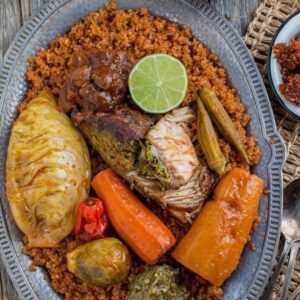
Thieboudienne is a traditional Senegalese rice and fish dish bursting with flavor. This iconic dish likely originated in St. Louis and is considered the national dish of Senegal.
Thieboudienne (also ceebu jen or thiebou dieune) literally translated means the rice of fish in the Wolof language in Senegal. The name hardly does the dish justice!
This traditional dish is made from rice, fish, and tomato sauce and is flavored with spiced onions, carrots, cabbage, cassava, and peanut oil. Interestingly, a dish from the American deep south called Savannah red rice is very similar – many believe it was taken to the new world from here and adapted by the Creole people.
Key Takeaway:
Thieboudienne is a flavorful rice and fish dish that originated in Senegal.
It’s considered the national dish and has an interesting history.
Traditional ingredients like smoked fish, netetou spice, and broken rice make it unique.
The dish can be adapted with different vegetables but has an iconic rich, savory flavor.
Image Credit: Facebook
What Is Thieboudienne and Where Did It Originate?
Thieboudienne is considered to be the national dish of Senegal and is gaining popularity far and wide. By the way, you pronounce Thieboudienne like this (ceebu jen). This classic Senegalese dish derived its name from the Wolof tribe meaning “rice and fish”.
The origin of thieboudienne is quite fascinating, albeit not as straightforward as one would like it to be as most of the history surrounding this delicacy was transmitted via oral tradition.
According to one story, this dish was accidentally created by a cook at the colonial governor’s residence; rice was substituted in place of barley due to its shortage.
Another story says the origin of this dish is commonly attributed to the city of St. Louis, wherein the nineteenth century a variant called Thieboudiene Penda Mbaye was prepared.
The rice is called “riz graz” in Cote d’ Ivoire, Guinea and other countries of French West Africa but the dish is also similar to the Jollof Rice of Nigeria and Ghana.
This dish has quickly become a household favorite. It is bursting with flavor with so many layers of delicious vegetables and spice, It is definitely a satisfying meal all by itself and do not have to order any specialty item.
Image Credit: Facebook
Some suggestions for Amazon links to “Rice Coocker”.
How to Make Senegalese Jollof Rice and Fish
Thieboudienne can be made with an assortment of different vegetables so you can easily use what you like or have on hand. Thieboudienne calls for a few unique ingredients. Smoked fish is one which adds great flavor (I bought mine at my local African store.)
Another is a spice called netetou which is a fermented bean that is ground up. This spice has a strong unpleasant scent but completely changes into an umami flavoring when cooked. I highly recommend you try it and it is also used in many other Senegalese and West African dishes.
The puree or marinade that is made for the fish is exceptional, I will use it on all sorts of other things. You can use any type of white firm fish you like but grouper or snapper would be most authentic. Additionally, you can use the whole fish or just fillets.
If using the whole fish you stuff the puree into slits or if using fillets you can marinade them in the puree, just plan some extra time for that. It should refrigerate for a couple of hours to absorb the delicious flavor.
They also use broken rice to make this dish. Typically, it is cheaper to purchase as it is not the pristine jasmine or basmati whole grains.
Just remember when making this amazing, flavorful dish, that it is totally adaptable. Use the vegetables you like and eliminate what you don’t.
I do hope that you will make it and let me know how much you loved it. It should be served and eaten on a large communal platter. Be sure to take a photo and tag me.
Enjoy my recipe!
Thieboudienne (Senegalese Jollof Rice and Fish) Recipe
This traditional dish is made from rice, fish, and tomato sauce and is flavored with spiced onions, carrots, cabbage, cassava, and peanut oil.
Mix the parsley, half the garlic, a little pepper, add salt and half a Maggi. The directory you can loot in a mortar or use a food processor.
Then put the mixture into the fish pieces.
Heat oil, add onions, tomatoes, tomato paste, the remaining black pepper garlic. Then fry for 15 minutes over medium heat.
Then add the fish in tomato sauce.
Add the bouillon cube (or Maggi ), with bay leaves and 1 cup of water.
Then simmer until the fish pieces are cooked through, about 15 minutes.
Remove the fish pieces and add all the vegetables except okra with 1 cup of water and cook the vegetables until they are cooked ( 25-30 min).You must ensure that the vegetables are ready before removing them, but make sure not to overcook them.
Then remove the vegetables and add the okra with water.
After 5 min removes the okra and adds the rice.
Cook the rice over low heat, turning often so that all sides are cooked well.
When the rice is cooked well it's ready for serving. place the rice in a nice dish and arrange the vegetables and fish on top.