
African Native Sauce
Overview
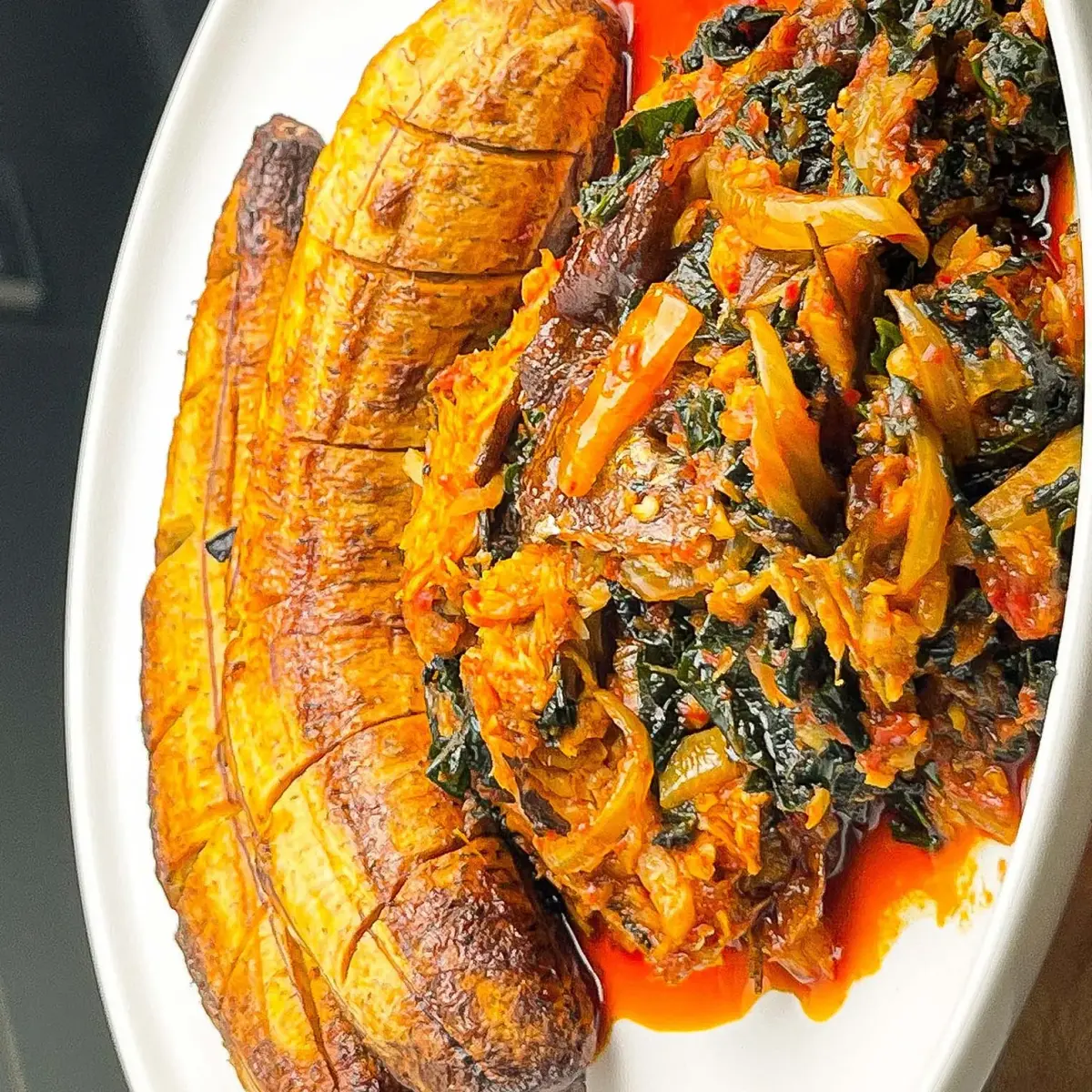
Native sauce is a palm oil sauce with smoked fish, crayfish and pumpkin leaves, made in southern Nigeria and served alongside roasted or plain starches. Native in this context means locally sourced and traditionally seasoned rather than anything about the technique, and it distinguishes the sauce from tomato-based stews. What defines it is the absence of tomato. Palm oil, blended pepper, onion, crayfish and smoked fish carry the whole thing, and the result is darker, oilier and considerably more savoury than a stew built on tomato. The same principle produces native jollof rice and the family of dishes described as native across southeastern Nigeria. Ugwu goes in at the end and needs only a few minutes to wilt while keeping its colour. The sauce is quick, around twenty-five minutes from start to finish, which is unusual for a Nigerian sauce with this depth of flavour, and it comes from the fact that the smoked fish and crayfish are already concentrated. It is served with roasted yam or plantain, or with any starch, and it functions as a sauce to be spooned over rather than as a soup to be eaten with a swallow.
AFN Heritage Note
Native sauce is a southern Nigerian palm oil sauce, distinguished from tomato-based stews by its base of palm oil, crayfish and smoked fish. Native in this usage denotes locally sourced and traditionally seasoned.
Ingredients
Dietary tags are provided by contributors as a guide, not verified by AFN, and they depend on the products you buy. If you have a serious allergy, check every ingredient yourself. Cooking, allergies and your own judgement
Directions
- 1
Chop the onions and set aside.
- 2
Clean and chop the ugwu into smaller pieces.
- 3
Soak the smoked fish in warm water to soften it, then pick out any bones and shred it.
- 4
In a large pot, heat the palm oil over medium heat until hot but not smoking.
- 5
Add the chopped onions and sauté until soft and translucent.
- 6
Stir in the ground pepper mix and sauté for a couple of minutes to release the flavours.
- 7
Once fragrant, add the smoked fish, crayfish and seasoning cubes, and stir well to combine. Cook together for a few minutes.
- 8
Add the chopped ugwu and stir well.
- 9
Taste and adjust with salt and more seasoning if needed.
- 10
Simmer for a few more minutes until the ugwu is cooked but still vibrant green.
- 11
Serve hot alongside roasted yam, plantain or any staple.
Africook’s Notes
 Personal notes from Sobecooks
- Do not let the palm oil smoke. Hot but not smoking is the instruction, and overheated palm oil turns bitter and loses its colour.
- There is no tomato in this sauce and none should be added. That absence is what makes it native rather than a stew.
- Debone the smoked fish carefully after soaking. Small bones are unpleasant and easy to miss.
- Add the ugwu at the end and stop while it is still bright green. Overcooked it goes grey and loses its texture.
- Season last. Between the crayfish, smoked fish and seasoning cubes there may already be enough salt.
- It is a sauce rather than a soup, so it is spooned over a starch rather than eaten with a swallow.
Questions cooks ask
What does native mean here?
Locally sourced and traditionally seasoned, as opposed to a tomato-based stew. In southern Nigerian usage, native describes a family of dishes built on palm oil, crayfish, smoked fish and locust beans rather than tomato, and it includes native jollof rice and various native soups and sauces.
What is it served with?
Roasted or boiled yam and plantain are the usual partners, and it works with rice, potatoes or any plain starch. It is spooned over rather than eaten with a swallow, which is the practical difference between a native sauce and a Nigerian soup.
Can I make it without smoked fish?
You can, but it will be a much plainer sauce. The smoked fish and crayfish together are doing nearly all the savoury work in a recipe that has no tomato and few other ingredients. If you leave the fish out, be considerably more generous with the crayfish and seasoning.
How long does it keep?
Three to four days refrigerated, and it reheats well. The palm oil sets solid when cold, which is normal, and it loosens as it warms. Do not freeze it with the ugwu in, since the leaves collapse entirely on thawing; freeze the base and add fresh greens on reheating.
Reviews
Be the first to rate this recipe
Cooked it? Your rating helps the next person decide whether to try it.
No reviews on this one yet. If you have cooked it, yours would be the first.
You Might Also Like
Browse all Nigerian recipes →
Edo Black Soup
Nigerian Fisherman Soup
Igbo Yam Porridge