
Kelewele
Abuja, Nigeria · View all recipes
Overview
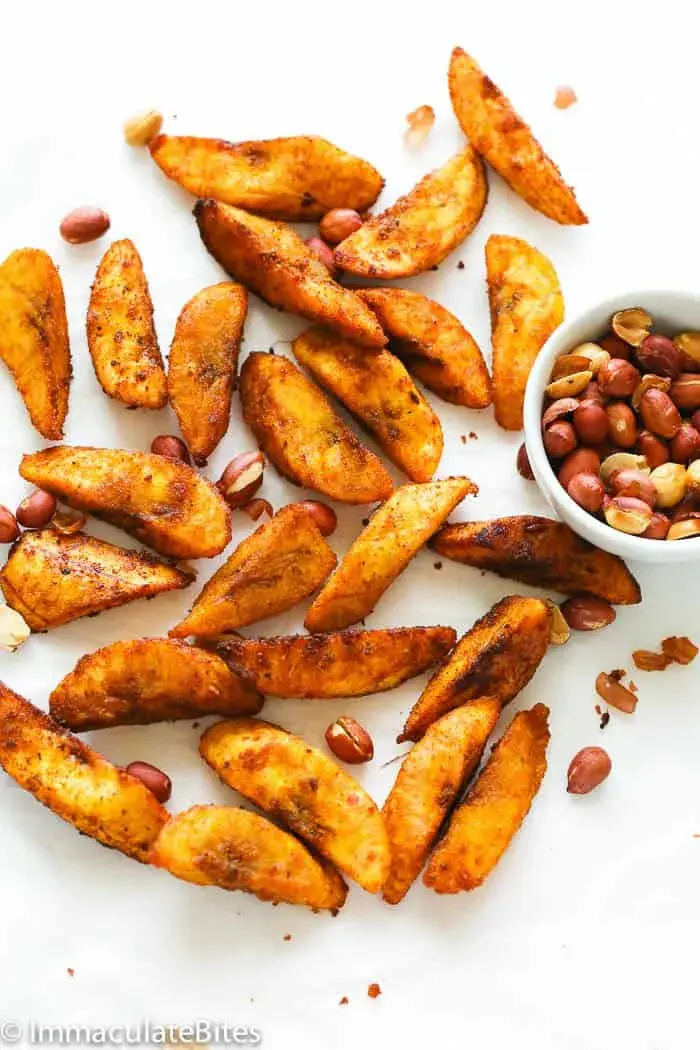
Kelewele is Ghana's spicy fried plantain: ripe plantain coated in ginger, chilli, garlic and nutmeg, then fried until the edges brown and the middle stays soft. To make kelewele, you blend onion, ginger and garlic into a thick paste and toss the plantain pieces in it. Leave them for 10 to 20 minutes, then fry in batches in hot oil. It's a popular street food in Ghana, and in Accra it's mostly sold at night by street vendors. People eat it with roasted peanuts, with a bean stew, or just on its own. Ginger and hot pepper are what give kelewele its kick. The onion, garlic, nutmeg and lemon in our version are the extras that change from kitchen to kitchen. That spice coating is the whole point. Fried ripe plantain without the spice paste is a different snack, called dodo in Nigeria and alloco in Côte d'Ivoire and Burkina Faso. Kelewele is also the name of the spice mix itself, which tells you where the heat comes from. Some cooks fry it in palm oil and others use vegetable oil, and both work.
AFN Heritage Note
Kelewele is a Ghanaian street food of ripe plantain marinated in ginger, chilli and spices before frying, distinct from the plain fried plantain known as aloco in Côte d'Ivoire and dodo in Nigeria.
Ingredients
Dietary tags come from contributors and AFN does not verify them. They also depend on the products you buy. Recipes here are published for learning, not as medical or dietary advice. If you have an allergy or a medical condition, check every ingredient yourself and talk to a doctor or dietitian. Cooking, allergies and your own judgement
Directions
- 1
Cut both ends off the plantain with a sharp knife and slit a shallow line down the long seam.
- 2
Pull the peel back to remove it, cut the plantains into diagonal pieces and set aside.
- 3
Blend the onion, ginger and garlic with just enough water to help it blend, then add the chilli pepper, lemon, nutmeg, salt and seasoning cube.
- 4
In a large bowl, toss the plantain cubes with the ginger spice mixture.
- 5
Let it rest for 10 to 20 minutes to absorb the flavour.
- 6
Heat oil about 1cm deep in a large skillet or cast iron pan over medium-high heat, until hot but not smoking.
- 7
Fry the plantain cubes in batches, turning once, until golden brown, about 5 minutes.
- 8
Do not overcrowd the pan, which makes the plantain soggy and absorb excess oil.
- 9
Transfer to a pan lined with paper towels and serve warm.
Africook’s Notes
 Personal notes from Debbie Obierika
- Rest the spiced plantain for the full 10 to 20 minutes. It is what lets the marinade reach the cut faces rather than sitting on the surface.
- Use plantain that is yellow with heavy black patches. Green will not caramelise and fully black collapses in the pan.
- Do not crowd the pan. Crowded plantain steams, goes soggy and soaks up oil, which the source flags directly.
- Use as little water as possible when blending the spice paste. A wet paste slides off and spits in the oil.
- Red palm oil is the traditional frying medium and gives the colour and flavour Ghanaians expect.
- Roasted peanuts alongside are the standard street pairing, and the salt and crunch work well against the sweet spiced plantain.
Questions cooks ask
Where does kelewele come from?
Kelewele comes from Ghana, where it's a popular street food. In Accra it's mostly sold at night by street vendors, and it's often eaten with peanuts or a bean stew.
What are the ingredients for kelewele?
Our recipe uses 6 ripe plantains, a quarter of an onion, 1 tablespoon of ginger, 2 cloves of garlic, 1 teaspoon of chilli pepper, half a teaspoon of nutmeg, 1 teaspoon of lemon juice, 1 teaspoon of salt, a seasoning cube and oil for frying. Whatever else you change, keep the ginger and the hot pepper.
How do you make kelewele step by step?
Peel the plantains and cut them into diagonal pieces. Blend the onion, ginger and garlic with as little water as you can, then stir in the chilli, nutmeg, lemon, salt and seasoning cube. Toss the plantain in the paste, leave it for 10 to 20 minutes, then fry in about 1cm of hot oil in batches for around 5 minutes, turning once, until golden brown.
Is kelewele the same as alloco or dodo?
No. Dodo in Nigeria and alloco in Côte d'Ivoire are ripe plantain fried without a spice coating, though alloco is often served with chilli and onions on the side. Kelewele is tossed in a ginger, chilli and garlic paste before it goes in the oil, and the spice mix itself is also called kelewele.
What plantains are best for kelewele?
Ripe ones, yellow with plenty of black patches. They're sweet enough to brown at the edges and still firm enough to hold together. Green plantain won't caramelise, and plantain that's gone fully black and soft falls apart and soaks up too much oil.
Why rest the plantain before frying?
Plantain is dense, so a paste tossed on and fried straight away only seasons the outside. Ten to twenty minutes gives the ginger, chilli and salt time to get into the cut faces. Use a thick paste with little water, or it will slide off and spit in the oil.
What is kelewele eaten with?
On its own as a snack, most often with roasted peanuts. It also goes well with a bean stew, and it makes a good side for rice dishes.
Reviews
Be the first to rate this recipe
Cooked it? Your rating helps the next person decide whether to try it.
No reviews on this one yet. If you have cooked it, yours would be the first.
You Might Also Like
Browse all Ghanaian recipes →
Easy and Simple Way to Make Banku
Garden Egg Stew (Earthenware Bowl Method)
Kontomire Stew