

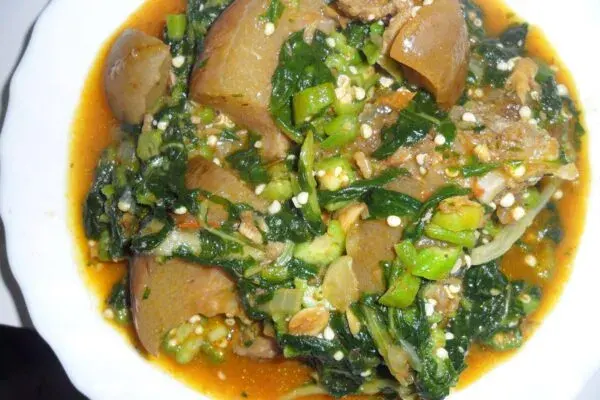
Okro Soup
Overview
Okro soup, or okra soup, is a Nigerian draw soup of chopped okra cooked briefly in a meat and fish stock. To cook okra soup, you simmer the chopped okra for a minute in the stock from assorted meat and dried fish, then stir in crayfish, pepper and palm oil and take the pot off the heat while the okra is still green. It's one of the quickest Nigerian soups you can make. Most of the work is the chopping. Once the meat is tender, the cooking is over in minutes, so have everything ready before the okra goes in. Sources disagree on where okra first grew. Some name East Africa, around Ethiopia, Eritrea and eastern Sudan, and others name West Africa. The English word okra itself probably comes from the Igbo okwuru. In West African cooking, that slippery, stretchy draw is what cooks are after, because it lets the soup slide down with a swallow instead of needing to be chewed. Okra soups go by many names across Nigeria, including ila asepo in Yoruba, okwuru in Igbo, miyan kubewa in Hausa and otong among the Efik, and each has its own way with it. Potash, called kaun, is the old way to boost the draw. Plenty of cooks now leave it out, and if you use it, keep it to a tiny amount, because too much kills the stretch it's meant to add. Eat it with eba, fufu, semo, amala or pounded yam.
AFN Heritage Note
Okra is native to Africa, with its origin generally placed in the Ethiopian highlands, and has been cultivated across the continent since antiquity. The soup is documented across Nigeria under regional names including ila asepo in Yoruba, okwuru in Igbo, miyan kubewa in Hausa and otong in Efik.
Ingredients
Dietary tags are provided by contributors as a guide, not verified by AFN, and they depend on the products you buy. If you have a serious allergy, check every ingredient yourself. Cooking, allergies and your own judgement
Directions
- 1
Chop the okra and set aside.
- 2
Place a pot on medium heat and add the beef, assorted beef, dried cod, salt, seasoning, onion, ginger, garlic and a little water. Bring to the boil until tender. A pressure cooker is quicker for this.
- 3
Once the meat and fish are tender, separate the stock and sieve it for a clean stock.
- 4
Place a clean pan on medium heat, add about 1.5 cups of the stock along with the beef, assorted beef and dried fish, and bring to a boil for 3 to 5 minutes.
- 5
Add the potash if using, then the chopped okra. Stir until well combined and cook for another minute.
- 6
Add the crayfish and cayenne pepper. Stir, add the palm oil, stir again and cook for about 2 minutes.
- 7
Add the seasoning and salt, adjusting to taste since the stock is already seasoned. Add the ukazi leaves if using, stir, add the smoked mackerel and cook for another 2 to 3 minutes.
- 8
Serve with a swallow of your choice.
Africook’s Notes
- Take it off the heat while the okra is still green. Overcooked okra turns brown and loses both its colour and its texture, and the residual heat keeps cooking it after the pot leaves the stove.
- Potash increases the draw and is entirely optional. Many cooks leave it out. If you use it, use a very small amount, since too much destroys the elasticity it is supposed to increase.
- Blending the okra briefly on pulse gives a coarser texture that many people prefer to hand chopping, and it works without potash.
- Add a little water if the soup is too thick, but do it before the final couple of minutes rather than at the end.
- For a meat free version, mushrooms substitute reasonably well for the assorted meat, though you lose the stock that carries much of the flavour.
Questions cooks ask
What are the ingredients for okro soup?
Our version uses 800g of fresh okra, 200g of beef and 800g of assorted meat and dried fish (ponmo, shaki, panla), plus smoked fish, ground crayfish, 2 tablespoons of iru (locust beans), palm oil, an onion, seasoning cubes, cayenne pepper and salt. Ukazi leaves, a tiny pinch of potash, ginger and garlic are all optional. You'll also need about 1.5 to 2 cups of water or stock.
Is okro soup the same as okra soup?
Yes. Okro is simply how most Nigerians say and spell okra, so okro soup and okra soup are the same pot. You'll also hear it called draw soup, after the stretchy texture the okra gives.
How do I stop okra going brown?
Cook it briefly and take the pot off the heat while the okra still looks a little underdone, and don't cover the pot once the okra is in. Okra turns brown when it's overcooked, and the soup keeps cooking in its own heat for a couple of minutes after it leaves the stove, so timing that moment is the main skill in this recipe.
Do I need potash to make okro soup?
No. Potash, or kaun, boosts the draw and it's the traditional way, but plenty of cooks now leave it out and still get a good soup. If you do use it, use very little, because too much kills the stretch it's meant to add. A few short pulses of the okra in a blender gives you a similar texture without it.
Can I blend the okra instead of chopping it?
Yes. A few short pulses in a blender give a coarser texture that a lot of people prefer to hand chopping, and you get a good draw without potash. Keep it brief.
How do I cook okro soup without meat?
Mushrooms stand in reasonably well for the assorted meat. The catch is that the meat also makes the stock that carries much of the flavour, so a meat free pot tastes lighter. Keeping the smoked fish and crayfish helps make up some of that depth.
Reviews
3 reviews
You Might Also Like
Browse all Nigerian recipes →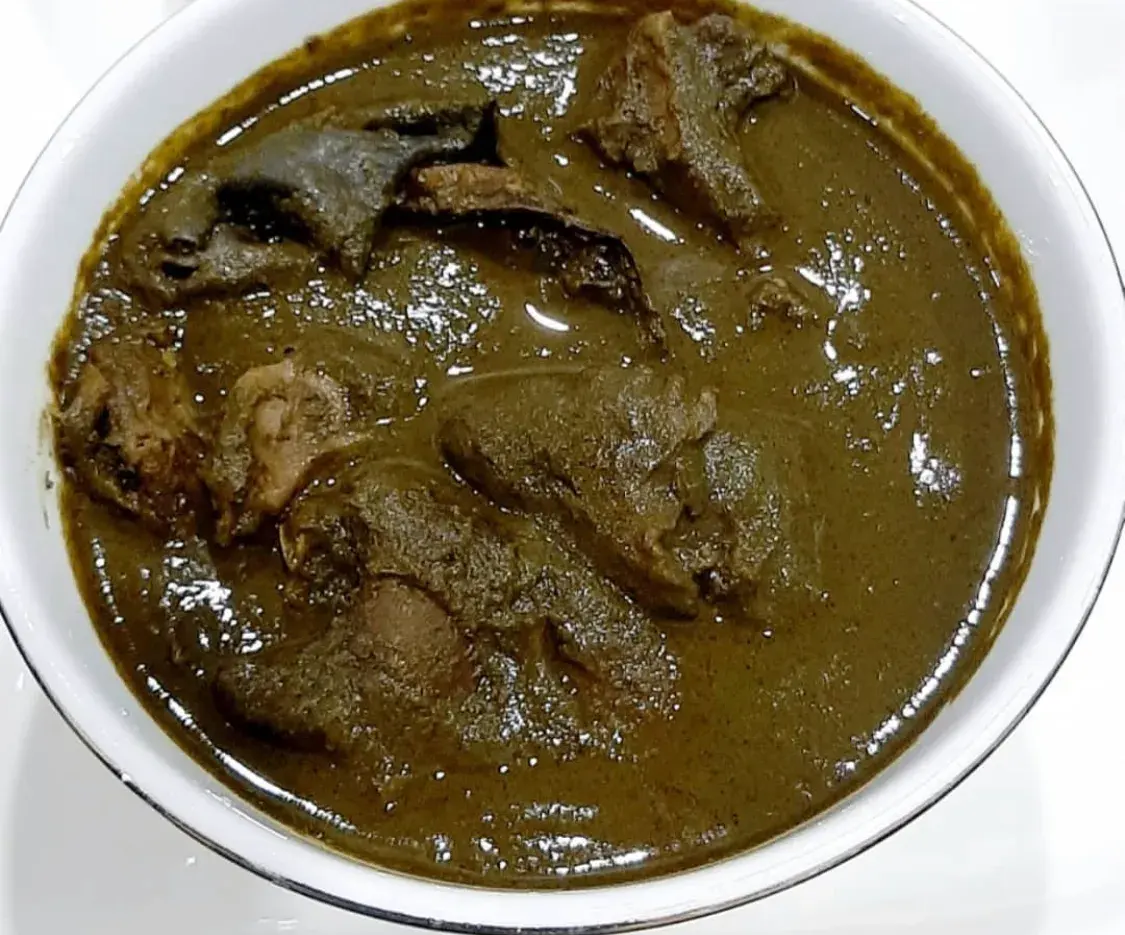
Edo Black Soup
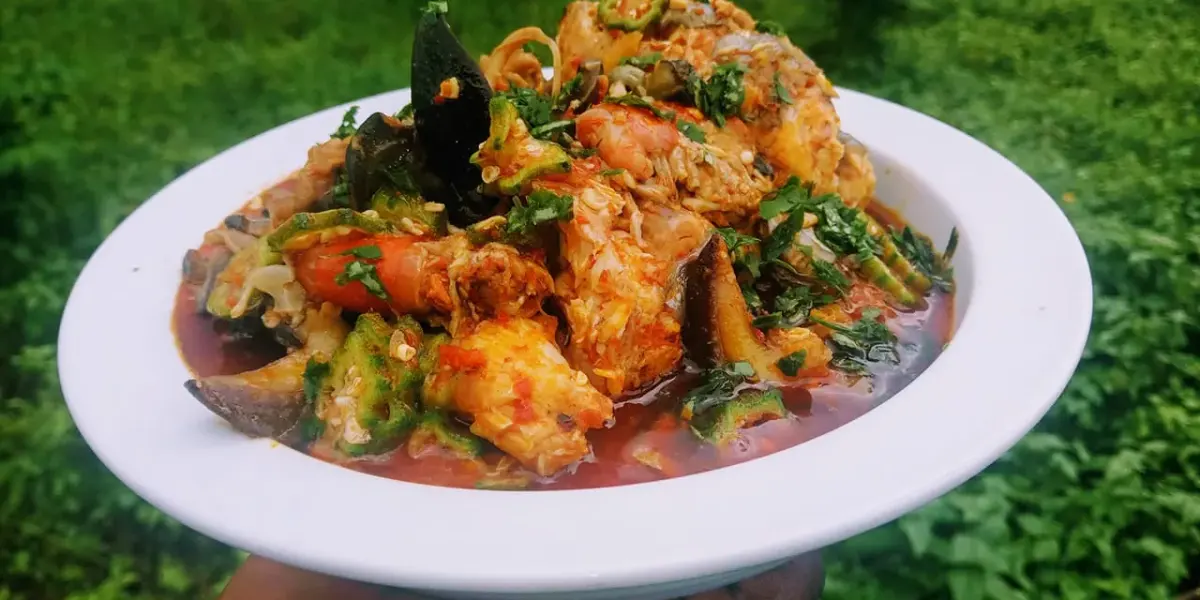
Nigerian Fisherman Soup
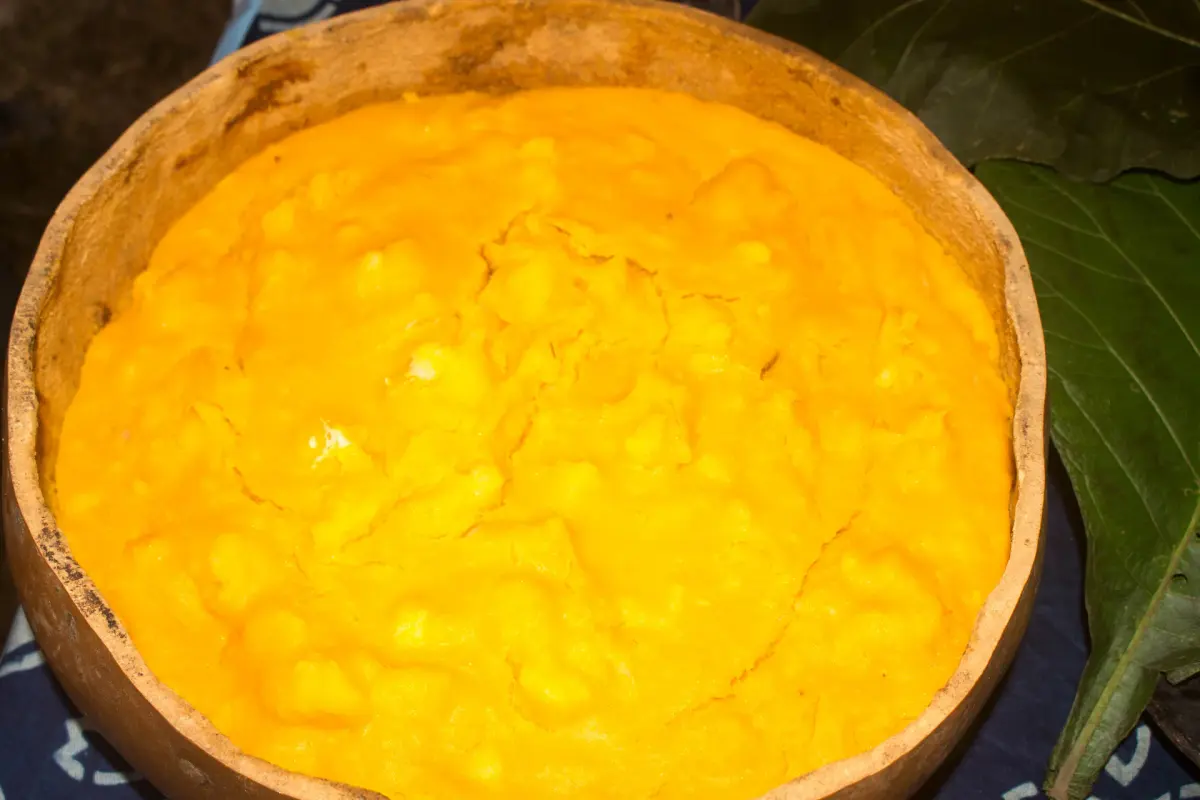
Igbo Yam Porridge
I managed to find dried panla and smoked fish at the African shop in Deira, but no ukazi leaves anywhere so I just skipped them. The stock with ground crayfish and nyama was so rich. Sawa, next time I will add a bit more cayenne pepper because we like it spicy.
The flavour profile with the palm oil and locust bean is proper lekker, but 1.5 cups of stock wasn't quite enough for 800g of okro and all that shaki and beef. Mine turned out way too thick, so I had to add another 250ml of warm stock to get it moving.
Adding the iru right before the okra gives it that deep local flavor my grandma used to make. I didn't even bother with potash sha, fresh okra draws just fine if you don't overcook it past that 1 minute mark. E sweet well well o!