

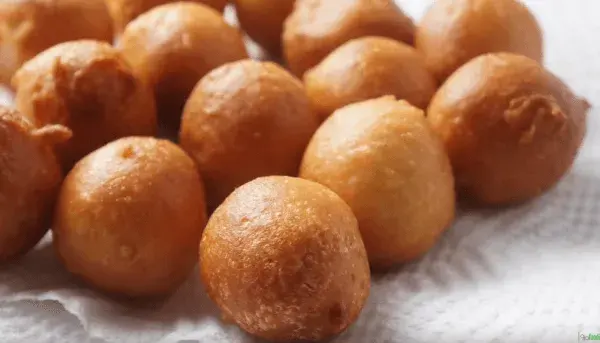
Puff-Puff
Overview
Puff puff is deep fried yeast dough, golden outside and chewy within, and it is the most widely eaten street snack in West Africa. Flour, sugar, yeast, water and salt are all it requires, which is a large part of why it is everywhere: the ingredients are in every kitchen and the technique needs no equipment. The names change with the border. Puff puff in Nigeria and Cameroon, bofrot or togbei in Ghana, and further variations across the region, but the dough and the method travel intact. It is sold from roadside stands in the evening, made at home for parties and children, and eaten hot from the oil with the fingers. What distinguishes it from a doughnut is the chew. Puff puff dough is a loose batter rather than a kneaded dough, scooped by hand and squeezed into the oil rather than shaped, and the long rise gives it a slightly fermented depth that a quick doughnut does not have. Variations run through the same base: habanero chopped into the batter for a peppered version, milk for a softer and sweeter one, nutmeg or cinnamon for warmth. It is late night food as much as party food, which is how most people who grew up with it remember it.
AFN Heritage Note
Puff puff belongs to the West African family of fried leavened dough snacks, eaten under regional names including bofrot and togbei in Ghana and puff puff in Nigeria and Cameroon. Its earliest documented date is uncertain.
Ingredients
Dietary tags come from contributors and AFN does not verify them. They also depend on the products you buy. Recipes here are published for learning, not as medical or dietary advice. If you have an allergy or a medical condition, check every ingredient yourself and talk to a doctor or dietitian. Cooking, allergies and your own judgement
Directions
- 1
Mix the water and sugar in a large bowl.
- 2
Sprinkle the yeast over the warm water and leave for 5 minutes to soften, then mix it in and leave for another 10 minutes until it becomes foamy.
- 3
Stir the salt and flour into the yeast mixture. Beat well to a smooth batter.
- 4
Cover and leave to rise for at least 2 hours, or longer.
- 5
Pour vegetable oil into a deep pan and set over medium heat. Add a piece of onion to test the heat if you like, which also adds flavour.
- 6
Scoop the batter with your fingers and drop it into the oil.
- 7
Fry for about 3 minutes on each side, turning when browned.
- 8
Lift out and drain.
Africook’s Notes
 Personal notes from Beatrice Ige
- The batter should be the consistency of pancake batter, not a kneaded dough. Too thick gives hard puff puff and too thin gives flat ones, and this is the fault behind most failed batches.
- Test the oil with one ball first. If it floats, the oil is ready. If it sinks and stays down, the oil is too cool and everything you fry will soak.
- Use enough oil. About four inches in a deep pot is the guide, because shallow oil will not let the balls float and turn, and they come out flat.
- Drain in a colander or a sieve rather than a bowl. Fried puff puff sitting in a closed container reabsorbs the oil it just gave up.
- Check the yeast date. Opened dry yeast keeps about four months refrigerated and six frozen, and dead yeast is the other main reason a batch will not rise.
Questions cooks ask
Why is my puff puff flat and not rising?
Four usual causes: the batter was too watery, the yeast was dead or expired, you used too little yeast, or you used too much. Add water gradually until the batter is the thickness of pancake batter rather than tipping it all in, and check the yeast is in date and was proofed until genuinely foamy before the flour went in.
Why does my puff puff soak up so much oil?
The oil was not hot enough, so the dough absorbed it instead of sealing on contact. Test with a single ball first: it should float. The other cause is draining them in a closed bowl, where the oil pools and gets taken back up. Drain in a colander or on kitchen paper.
What is the difference between puff puff and Nigerian buns?
The leavening and the richness. Puff puff is raised with yeast and needs a long rise, giving a light chewy interior from very few ingredients. Buns use baking powder and include egg, butter and milk, which makes them richer, crunchier outside and softer inside. Buns also absorb less oil during frying.
How do I get puff puff into a round shape?
Practice, mostly. The traditional method is to scoop batter in your hand, make a fist, and squeeze a ball out through the opening by your thumb, letting it drop into the oil. A deep spoon or a small ice cream scoop does the same job with less mess and slightly less round results.
Reviews
3 reviews
You Might Also Like
Browse all Nigerian recipes →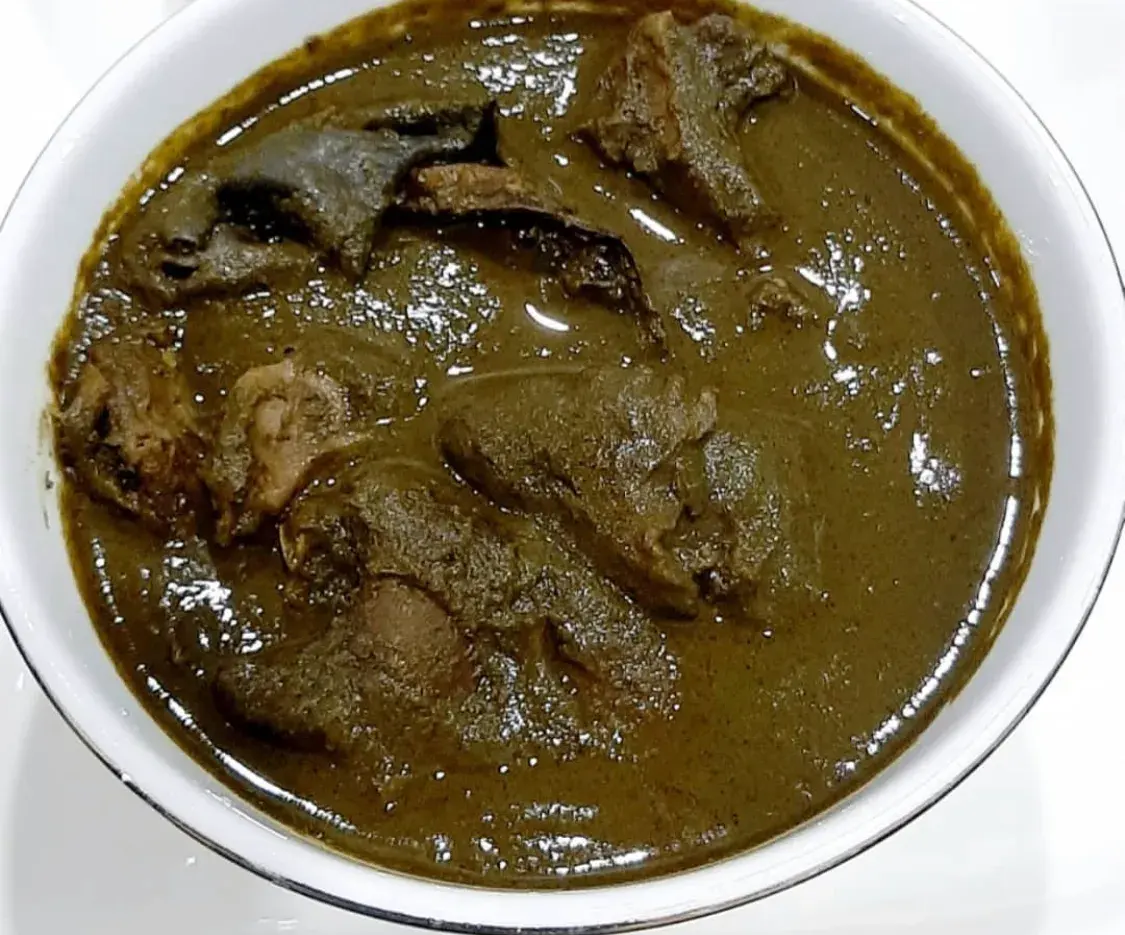
Edo Black Soup
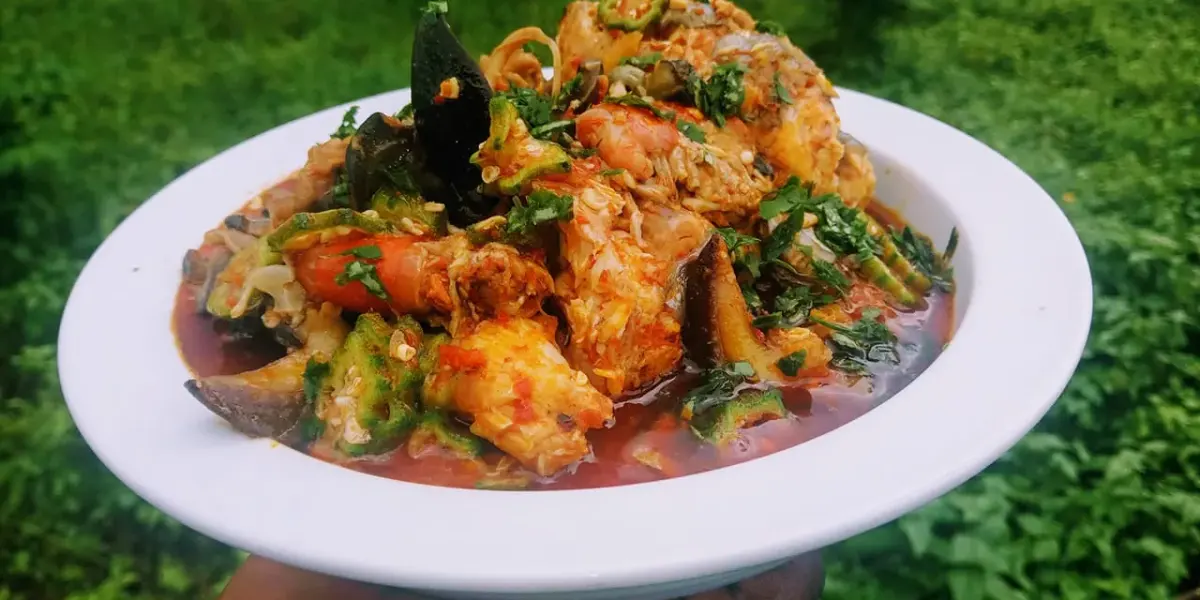
Nigerian Fisherman Soup
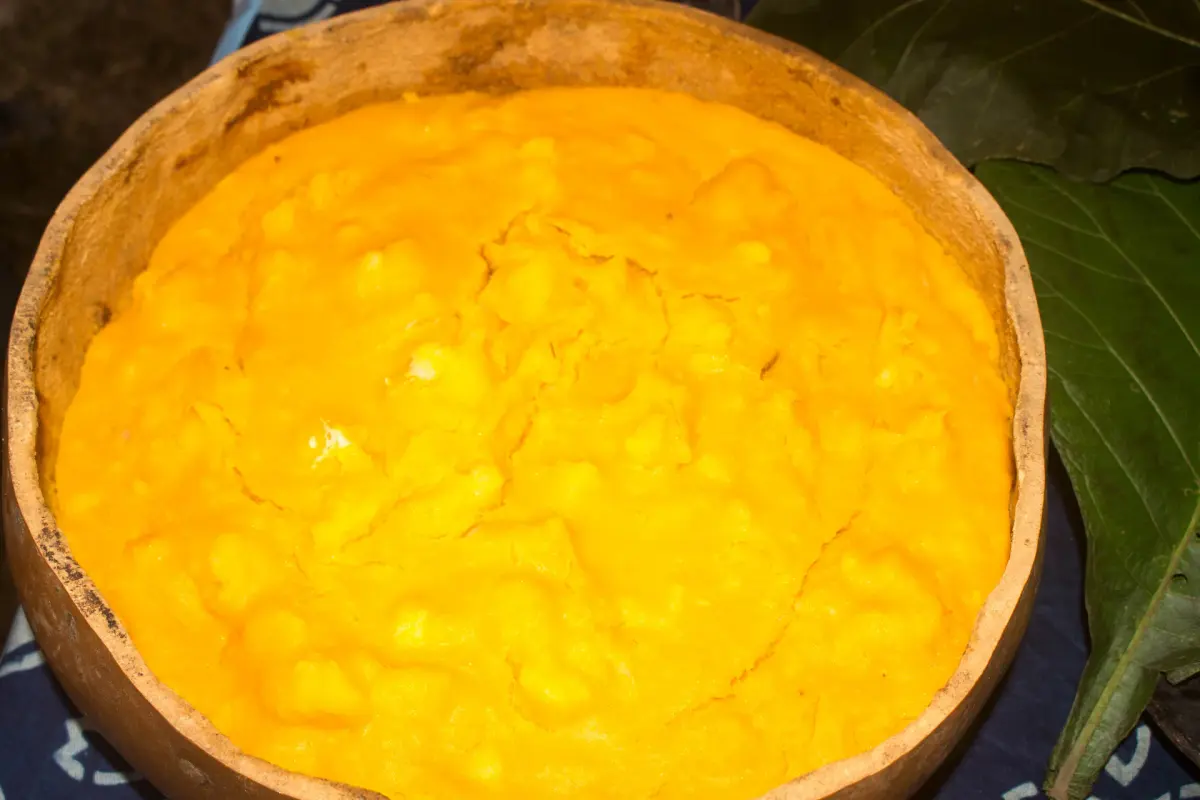
Igbo Yam Porridge
Throwing the piece of onion into the oil to test the heat is what my mama used to do, glad you mentioned it o! Used the dry yeast from Edeka because I couldn't get to the Afro shop, took about 15 minutes to go foamy in the warm water. Came out very light.
That onion trick is the real deal o! I do the exact same thing with Tesco dry yeast here in Manchester when I can't make it to the Afro shop. Takes a bit longer to bloom, but as long as it comes out light and airy, e sweet sha.
my UK kitchen is so cold right now so leaving the batter for 2 hours wasnt enough, had to put it in the oven with the light on for 3 hours before it swelled properly sha. added extra nutmeg and a bit of diced habanero into the mix. fried up golden and chewy just like back home.