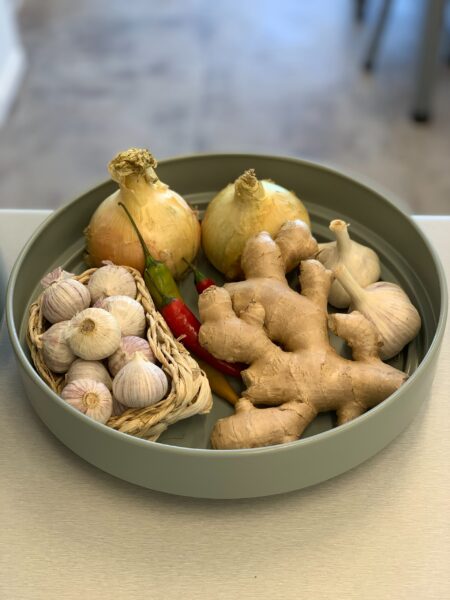
Garlic and Ginger – 6 Amazing Uses and Benefit

There are a variety of herbs and spices that have multiple health benefits, including anti-inflammatory properties, cognitive boosters, and some that may even help fight cancer, to name a few. Turmeric, peppermint, ginger, garlic, and a variety of other herbs and spices are among them.

What is a spice?

what is a spice

A spice is a seed, fruit, root, bark, or other plant material that is used to taste or color food. Herbs, on the other hand, are the leaves, blossoms, or stems of plants that are used for seasoning or garnishing. Spices are sometimes used in medicine, religious rites, cosmetics, and perfumery.

Spice seeds are the tiny aromatic fruits and oil-bearing seeds of herbaceous plants such as anise, caraway, cumin, fennel, poppy, and sesame. Herbs are the fresh or dried aromatic leaves of such plants as marjoram, mint, rosemary, and thyme. Spices, spice seeds, and herbs are used as food additives to add flavor, aroma, and piquancy. They have minimal nutritional value in the modest amounts required to produce culinary meals, but they increase hunger, add zest to food, and enhance flavors.

Spices and herbs are portions of plants that are grown for their fragrant, spicy, or other desired properties. Rhizomes, bulbs, barks, flower buds, stigmas, fruits, seeds, and leaves are all used to make spices and herbs. Spices, spice seeds, and herbs are the three most prevalent classifications.

Although some spices, such as chile peppers and ginger, are used both fresh and dried, spices are most commonly used dry. Some traditionally dried spices are used fresh in the countries where they are grown. Many of the world’s most coveted spices, including cardamom, cinnamon, cloves, ginger, and pepper, are aromatic or spicy plant products grown in tropical and subtropical climates.

Types of spices

There are so many different types of spices, but they are generally classified into two based on how they are produced. These classifications; are organic spices and inorganic spices.

Organic spices

Organic herbs and spices are not irradiated, do not contain synthetic caking agents or chemical additions, and are not farmed with pesticides or genetically engineered components (GMOs). From seed to plate, be rest assured that they are kept to the greatest standards.

Are organic spices better?

Spices grown organically are fresher than those grown with the use of chemicals and pesticides. Preservatives are present in these spices in extremely small amounts, if at all. As a result, they are always excellent for your health and, when prepared, taste fantastic.

Inorganic spices

Inorganic herbs and spices are loaded with chemicals by the time they hit your plate. Inorganic spices imply the use of various fertilizers, pesticides, and other agrochemicals whose main job is to improve yield and get rid of any pests that are attacking the crop. Heavy use of agrochemicals strips spices of nutrients, leaving them compromised. Some manufacturers even use MSG as filler material to boost their yield.

Examples of spices

There are so many different spices in the world and in Africa, local to you and foreign as well. Here are some examples of spices you would easily find in your pantry:

  1. Nutmeg
  2. Ginger
  3. Garlic
  4. Red chili peppers
  5. Cumin
  6. Cinnamon
  7. Onions
  8. Cayenne pepper
  9. Coriander
  10. Celery seeds
  11. Caraway seeds
  12. Cardamom
  13. Dill
  14. Frankincense
  15. Fennel
  16. Horseradish
  17. Paprika
  18. Peppercorns
  19. Saffron
  20. Sesame
  21. Savory
  22. Clove
  23. Black pepper

Uses of spices

  1. Use of spices in perfumery

Deep, rich scents that move the soul and awaken the taste are common in spicy scents. The pungent, rich fragrances of cinnamon, pepper, chai, patchouli, cloves, and ginger inspire visions of chilly autumn days warmed by cups of tea, turkey dinners, and pumpkin pies, and these perfumes function best in the winter.

Perfumers distinguish between two types of spices in perfumery: warm and cool spices. Cinnamon, saffron, and chili pepper are examples of warm spices. Ginger, coriander, and cardamom are common cold spices. Pepper and spices are very popular in perfumery because they add a warm, sensual element to the scent. The choices are unlimited when it comes to combining floral, gourmet, fruity, and other olfactory families.

2. Uses of spices in aromatherapy

Aromatherapy is a holistic healing technique that promotes health and well-being by using natural plant extracts. It’s also known as an essential oil treatment. Aromatherapy is a type of medicine that uses aromatic essential oils to promote the health of the body, mind, and soul. It improves both physical and mental well-being. Spices and herbs are used to make these essential oils.

3. Medicinal uses of spices

There are several medicinal uses of spices in our daily life, many spices are used in the kitchen and have certain medicinal activities like purgative, laxative, expectorant, carminative, diuretic, etc.

For more on natural spices and herbs, nutritional value, and health benefits, check out this article on the African Food Network, click the link below:

Natural African spices to incorporate into your daily meal

Now to the topic of the day, here is everything you need to know about ginger and garlic and why they are the next item to add to your pantry and daily meals to level up your health.

Garlic

Garlic - uses of garlic and ginger
Image credit: Unsplash

Garlic (Allium sativum) is a bulbous blooming plant belonging to the Allium genus of onions. Onion, shallot, leek, chive, Welsh onion, and Chinese onion are near relatives. It’s native to Central Asia and northeastern Iran, and it’s been used as a seasoning for thousands of years over the world. It was utilized as a food flavoring as well as a traditional remedy by the ancient Egyptians.

Garlic clove

Fresh garlic is usually sold in bulb-like heads that are covered in whiteish papery skin. When you peel back the outer layer of papery skin, you’ll notice that one bulb is made up of several separate lobes, each of which is also coated in papery skin. Each segment of a garlic bulb is called a clove. There are about 10–20 cloves in a single bulb, give or take.

Nutritional facts of garlic

One raw clove (3g) has 4.5 calories, 0.2 grams of protein, 1 gram of carbs, and 0 grams of fat. Vitamin C, zinc, and calcium are all abundant in garlic.

The USDA has provided the following nutritional information.

  • Calories: 5
  • Fat: 0g
  • Sodium: 5mg
  • Carbohydrates: 1g
  • Fiber: 1g
  • Sugars: 0g
  • Protein: 2g
  • Vitamin C: 0.9mg
  • Zinc: 0.04mcg

This spice has neither fat nor protein. Its calories come from carbohydrates, but the serving size and calories are so low, so are the carbs it contains.

This spice contains several vitamins and minerals, although a single clove doesn’t provide much due to the small serving size. Each clove contains a small amount of vitamin C, zinc, calcium, iron, potassium, magnesium, vitamin E, vitamin K, and manganese, according to the USDA.

Health Benefits of Garlic

Garlic may help lower blood pressure

A handful of cloves a day could help you avoid a trip to the cardiologist. “it increases the production of nitric oxide, which dilates blood arteries, while also inhibiting the activity of the angiotensin-converting enzyme (ACE).” (ACE inhibitors aid in the relaxation of blood arteries). This may help to maintain normal blood flow and pressure.

Garlic has anti-inflammatory properties:

The potential of both ginger and garlic to reduce inflammation is one of their most well-known advantages. Although the body’s inflammatory response is crucial for keeping you healthy, chronic inflammation is connected to the advancement of many diseases, including heart disease and certain malignancies. Anti-inflammatory plant components found in garlic and ginger may help block pro-inflammatory proteins linked to chronic inflammation. Different forms of anti-inflammatory organosulfur chemicals are found in different garlic preparations.

The beneficial health effects of garlic are attributed to the organosulfur compounds found in crushed cloves. The principal organosulfur compound in intact cloves is (+) S-allyl-L-cysteine sulfoxide (alliin) which is compartmentalized away from the vacuolar enzyme alliinase (EC 4.4.1.3).

Upon damaging of the clove (i.e. by chewing or crushing), alliinase comes into contact with its substrate and an elimination reaction ensues to form 2-propenesulfenic acid, which self-condenses to form diallyl thiosulfinate (allicin).

Allicin (diallylthiosulfinate) is a defense molecule from garlic (Allium sativum L.) with a broad range of biological activities. Allicin is produced upon tissue damage from the non-proteinogenic amino acid alliin (S-allylcysteine sulfoxide) in a reaction that is catalyzed by the enzyme alliinase.

Garlic may lower blood lipids

Garlic has been demonstrated to reduce cholesterol levels in the blood. Patients with diabetes who were given a mixture of olive oil and garlic were able to control their cholesterol and triglyceride levels. Garlic powder or non-powdered form dosed over one to three months had these results. Garlic eating increased HDL (good cholesterol) while lowering LDL (bad cholesterol) and total cholesterol levels after four months.

It helps boost immune function

Garlic can increase the number of virus-fighting T-cells in your bloodstream, which is significant because viruses cause colds and flu. In 2012, nutrition scientists from the University of Florida published a study in the journal Clinical Nutrition that found that taking aged garlic extract reduced the intensity of cold and flu symptoms and that individuals who took it recovered faster than those who didn’t. Its extract, according to the researchers, boosted the immune cell function of the subjects.

While there isn’t enough data to show that garlic can prevent or treat the common cold, it can help your body’s defense mechanisms in a variety of ways.
For one, the allicin in garlic provides antibacterial properties. Scientists also believe that garlic has antiviral properties that may work in two ways: by blocking the entry of viruses into cells, and by strengthening the immune response so that it can effectively fight off potential invaders. It’s these things that can help support a healthy immune system overall.

It helps fight against cellular damage

Oxidative stress occurs when your body’s defenses are overwhelmed by an excess of molecules known as reactive oxygen species (ROS). Antioxidant enzymes like superoxide dismutase and glutathione peroxidase are part of the body’s antioxidant defense system. These aid in maintaining a healthy amount of ROS.

When this mechanism is overworked, oxidative stress develops, resulting in cellular damage. Garlic and ginger have been shown in studies to help lower oxidative stress markers, such as the highly reactive and harmful chemical malondialdehyde.

It may reduce blood clotting

Another advantage for heart health: Garlic (and onion) compounds have been proven to reduce platelet stickiness and have anti-clotting abilities. These factors may help prevent atherosclerosis, a condition in which plaque buildup causes arteries to harden and narrow. According to the National Heart, Blood, and Lung Institute, atherosclerosis raises the risk of blood clots, which can lead to heart attacks or strokes. Of course, consuming garlic isn’t the only way to protect your arteries.

The National Heart, Blood, and Lung Institute suggests eating a heart-healthy diet, exercising regularly, managing your weight, and quitting smoking.

Garlic possesses anti-cancer properties

A diet high in garlic and ginger may help protect against certain types of cancer, according to some studies. This could be owing to their high levels of anti-inflammatory and antioxidant chemicals, which assist to protect cells from damage.

Ginger has been shown in numerous test tube and animal experiments to have anticancer properties against a variety of cancer cells, including:

  • Pancreatic cancer cells.
  • Prostate cancer cells.
  • Breast cancer cells.

Although these findings are promising, ginger and garlic are not a substitute for cancer treatment. If you have cancer, only use garlic and ginger supplements if your doctor has given you the okay.


Ginger

Ginger - uses of garlic and ginger
Image credit: Unsplash

Zingiber officinale is a flowering plant whose rhizome, often known as ginger root or ginger, is widely used as a spice and folk medicine. It’s a herbaceous perennial with one-meter-tall annual pseudostems (false stems consisting of curled leaf bases) bearing narrow leaf blades and flowers with pale yellow petals and purple margins bloom in inflorescences that sprout from the rhizome on independent branches.

It is a tropical flowering plant native to Southeast Asia, although it is now widely available from producers all over the world. It belongs to the Zingiberaceae family, which makes it a close relative of turmeric.

Ginger root

This is a whole food spice made from plants that are used to treat a variety of ailments ranging from gastrointestinal distress to cancer. It comes from the root of the plant Zingiber officinale.

It can be consumed raw, dried, and preserved as a spice, or processed into tablets, capsules, and liquid extracts. The root contains about 2% essential oil, which is utilized as a fragrance in soaps and cosmetics goods in the cosmetic sector.

When the Covid-19 scare started in Africa, everyone went into a frenzy. And the good ol’ ginger became a necessity because of its said nutritional components.

Origin

This spice originated from an Island in Southeast Asia. It is a true cultigen (a plant species or variety known only in cultivation) and does not exist in its wild state. The most ancient evidence of its domestication is among the Austronesian peoples where it was among several species of ginger cultivated and exploited since ancient times.

They cultivated other gingers including turmeric (Curcuma longa), white turmeric (Curcuma zedoaria), and bitter ginger (Zingiber zerumbet). The rhizomes and the leaves were used to flavor food or eaten directly. The leaves were also used to weave mats. Aside from these uses, this spice had religious significance among Austronesians.

Nutritional Facts

1 tablespoon of fresh ginger contains:

  • 8 calories
  • 07 grams (g) of carbohydrate
  • 12 g of dietary fiber
  • 11 g of protein
  • 05 g fat
  • 1 g of sugar
  • Vitamin B3 and B6
  • Iron
  • Potassium
  • Vitamin C
  • Magnesium
  • Phosphorus
  • Zinc
  • Folate
  • Riboflavin
  • Niacin

This spice contains about 400 chemical compounds, but gingerol molecules are thought to be the ones responsible for the root’s health effects. They’re also in charge of the scent and flavor. Gingerol is a potent antioxidant and anti-inflammatory that can benefit the body in a number of ways.

Health benefits

It reduces the risk of diabetes

Some active components in ginger have been related to improvements in insulin and metabolism, according to research. If you’re at risk for diabetes, though, adding more sugar to sugary gingerbread cookies won’t help! For smoothies, veggie-based stir-fries, and soups, keep both dried and fresh ginger on hand. While some chemical components in ginger may degrade with age, the drying process boosts others.

It reduces inflammation

Rheumatoid arthritis and osteoarthritis patients sometimes use ginger as a supplement (two painful conditions causing joint damage). Because ginger is an anti-inflammatory, it may help to relieve joint discomfort caused by arthritic inflammation. People with knee osteoarthritis who took ginger extract had less discomfort and needed less pain medication, according to an older study. However, due to the higher dosage of ginger extract, they did report some slight gastrointestinal distress.

It calms down stomach upset

The idea that it helps with some light tummy trouble isn’t new. In fact, research has linked multiple digestive benefits to ginger, specifically acting on parts of your GI tract responsible for feelings of nausea, stomach upset, and vomiting. It may also help move food from the stomach to the small intestine for digestion and absorption. That said, ginger cannot prevent food poisoning or counteract ingestion of a harmful substance, so contact your physician ASAP if something requires urgent medical attention.


It is a natural menstrual pain reliever

The findings of all the studies done on ginger’s pain-relieving abilities suggest that it helps the most with menstruation discomfort. During that time of the month, ginger tea can also help with nausea. It may not work as effectively if you normally use acetaminophen or ibuprofen. Before taking any supplement, whether in the form of an extract or a tablet, see your doctor because it may interact with other medications you’re taking.


It reduces the risk of cancer

The root has the potential to be a potent cancer-fighting weapon. Researchers have discovered evidence that gingerol (a component of ginger) has anti-cancer properties. It could, for example, help prevent and treat gastrointestinal malignancies. Its strong antioxidant concentration is most likely to blame for its ability to inhibit cancer cell development. Its antioxidants may possibly aid to slow down the aging process.


It may prevent heart disease

Its anti-inflammatory properties can also help to lower the risk of chronic disease. A 2019 analysis indicated that ginger can lower blood pressure and lower blood lipids (fats),  both of which can help prevent heart disease, and a 2016 evaluation connected regular ginger consumption to lower cholesterol and blood sugar levels when compared to a placebo.

However, just like diabetes, this spice cannot compensate for a diet heavy in saturated fat and added sugar. To lower your risk, you’ll need to eat more vegetables, 100 percent whole grains, lean proteins, seafood, lentils, and beans.
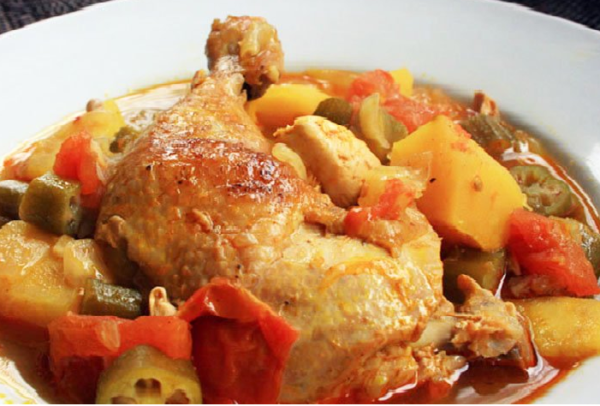
 

Muamba Chicken (Muamba De Galinha)

On the list of Africa’s special is Muamba Chicken. It is also known as Muamba de Galina. An Angolan chicken stew, usually cooked in palm oil and flavored with with garlic, chili, vegetables. If you’re a lover of core traditional dishes, this meal does it. It is quite yummy!

What is Muamba De Galinha?

Muamba chicken is a national food in Angola and it is safe to say that the intentional, spicy infusion of seared chicken makes it even yummier. Angola, with its place on the clime of central Africa is popular with this dish in and around its environs.

History Of Muamba De Galinha

Records have it that Chicken Muamba or Muamba de Galinha came out 10th in CNN World’s 50 Most Delicious Foods 2011. So, even if this dish is not so popular in today’s food list, it has made world-wide waves for its uniqueness in taste and composition.

What Do I Need to Make Muamba Chicken?

You would need the following elements for making this dish; lemon, garlic, chili, chicken, palm oil, onions, tomatoes, okra.

Do not ever forget that this spicy stew tastes great with yuca, or you can decide to serve over rice instead. Either ways, make sure you enjoy your muamba chicken.

Why Palm Oil For Muamba Chicken?

It is just certain that you’d be concerned, regarding the level of bad report palm oil has. Best believe, if you are new to this recipe and you want to get good results, it is best to use palm oil. It has got both saturated and unsaturated fat and a great measure of vitamins. This is why it is widely labeled “better than butter”.

Regardless of the health sentiments of palm oil, there has been some established nutritional values of this traditional oil. Palm oil can be used in preventing vitamin A deficiency, cancer, brain disease, aging; and treating malaria, high blood pressure, high cholesterol, and cyanide poisoning. Palm oil is used for weight loss and increasing the body’s metabolism.

How to Make Chicken Muamba

With the consistent mention of chicken, you would understand that it is an Angolan Luxury food. To make the dish, you need to combine chicken, spices, okra and palm butter to get a stew-like mixture.

Natives of Angola and even many seasoned chefs have designed several recipes for making Muamba Chicken. The one below is one and the most regular too.

In fact, an online review has it that “What makes the muamba so special at Palanca Gigante is its peanut seasoning, whose recipe is a carefully kept house secret. The sweet flavor contrasts beautifully with the bitter vegetables”.

Just to satisfy your curiosity, Palanca Gignate is a place in Angola.

Enjoy!

Some suggestions for Amazon links to “Borsari Original Seasoned Salt”.

Borsari Original Seasoned Salt BlendProject Overview Docs Banner in Light Green Blue Vibrant Professional Style 1


Muamba Chicken

Chicken Muamba

Prep Time 15 minutes
Cook Time 1 hour 15 minutes
Course Main Course, Main Dish
Cuisine Angola, Congo
Servings 0

Ingredients
  

  • 3 ½lb whole chicken
  • 1 6 ounce can tomato paste
  • 1 large fresh tomato
  • 1 garlic clove, crushed
  • 1 onion diced
  • ½ cup chunky peanut butter
  • 2 tablespoons palm oil
  • 1 bay leaf
  • 1 teaspoon thyme
  • 1 teaspoon salt
  • 1 teaspoon black pepper
  • 1 1 hot pepper
  • ½ lb frozen okra

Instructions
 

  • Simmer chicken covered in water with bouquette garnis until it's falling off the bone.
  • Never boil meat that makes it rubbery. Pull meat off the bone and reserve stock.
  • Sauté onion, hot pepper and garlic in oil until translucent. Add tomato.
  • Stir in tomato paste and about 1/2 C stock.
  • Add peanut butter.
  • You should end up with a sauce that is similar in texture to spaghetti sauce. Add more stock if needed.
  • Return chicken to the pan and simmer for a few minutes to infuse the flavors.
  • Serve over rice.
Keyword Chicken
Tried this recipe?Let us know how it was!

10 Interesting Facts About Aloe Vera That Will Amaze You

When it comes to aloe vera, there’s a lot to know, a lot to be amazed about. This succulent plant comes with a lot of surprises and benefits to man. It’s unbelievable what one plant is capable of.

In this article, you’ll become thoroughly acquainted with everything you need to know about aloe vera and the various ways it could be of benefit to you. Let’s get right into it.

What Is An Aloe Vera?

Aloe vera is a succulent plant species of the genus Aloe. Having some 500 species, Aloe is widely distributed and is considered an invasive species in many world regions. An evergreen perennial, it originates from the Arabian Peninsula but grows wild in tropical, semi-tropical, and arid climates around the world.

It can be found in a variety of consumer products, including drinks, skin lotions, cosmetics, ointments, and a gel for minor burns and sunburns. There is minimal clinical evidence that Aloe vera extract is helpful or safe as a cosmetic or topical medication.

The name comes from the Latin words aloe and vera, which mean “aloe and vera” (“true”).

So in summary, the aloe vera plant is an easy, attractive succulent that makes for a great indoor companion. Aloe vera plants are useful, too, as the juice from their leaves can be used to relieve pain from scrapes and burns when applied topically.

How Do You Grow Aloe Vera?

People have been growing aloe vera plants (Aloe barbadensis) for literally thousands of years. It is one of the most widely used medicinal plants on the planet.

The most important thing about growing any sort of plant is knowing what type of plant it is. This automatically gives you clues on the nature of the soil, water requirements, optimal temperature, and other possible information.

In this case, aloe vera as said earlier is a succulent plant. Like cacti, succulents do best in dry conditions. When growing aloe vera plants, it is best to plant them in a cactus potting soil mix or a regular potting soil that has been amended with additional perlite or building sand. Also, make sure that the pot has plenty of drainage holes. Aloe vera plants cannot tolerate standing water.

Aloe vera does best in temperatures between 55 and 80°F (13 and 27°C). The temperatures of most homes and apartments are ideal. From May to September, you can bring your plant outdoors without any problems, but do bring it back inside in the evening if nights are cold.

Fertilization is carried out using a balanced houseplant formula blended at 1/2 strength sparingly (not more than once a month) and only in the spring and summer.

So before you go buying an aloe, note that you’ll need a location that offers bright, indirect sunlight (or artificial sunlight). Direct sunlight can dry out the plant too much and turn its fleshy leaves yellow, so you may need to water more often if your aloe lives in an especially sunny spot with little or no fertilizers. Keep the aloe vera plant in a pot near a kitchen window for periodic use.

Is Aloe Vera Edible?

Aloe Vera Leaves are generally considered safe to consume. While most individuals use the gel on their skin, it can also be eaten if prepared properly.

Aloe vera gel has a light, refreshing flavor that can be used in a number of dishes, such as smoothies and salsas. You can either scoop the gel out with a spoon or slice the skin off on the other side. Cut the gel into cubes and rinse them thoroughly to remove any debris or bitter latex, which appears as a yellow residue. The aloe pieces can be eaten raw or cooked gently using methods such as poaching, blanching, or steaming.

But note: there are so many poisonous species of the aloe plant.

Identifying the edible aloe vera:

Before eating aloe vera, you need to determine whether it is the edible kind or not. The only edible Aloe vera is Aloe vera barbadensis miller, but it’s easy to confuse it with the non-edible Aloe vera var. Chinensis. The edible variety has silvery green leaves that are broad and wide and grow vertically. It blooms with yellow flowers.

Aloe vera var. Chinensis has less thick, narrow spotted leaves and produces orange flowers. This is the Aloe vera variety that is commonly sold for treating burns.

Interest Facts About Aloe Vera

  • Aloe vera originated in Africa.
  • Aloe is derived from the Arabic phrase alloeh, which means “shining bitter material,” and “vera” is derived from the Latin word veritas, which means “truth.” It’s true that the juice from the entire processed leaf is energizingly bitter.
  • Internal users report that the inner fillet of the leaf’s gel is significantly gentler and more pleasant.
  • Aloe vera was Cleopatra’s secret beauty ingredient: The Egyptian queen is said to have used the plant’s gel in her beauty regimens in ancient documents dating back to 1550 B.C. She’s said to have smeared the gel all over her body to make her skin smoother.
  • Aloe produces two substances, gel, and latex, which are both used medicinally.
  • There are about 500 species of the Aloe plant and about 155 species indigenous to South Africa.
  • The blossoms of different species come in different colors.
  • It is believed that the Greeks used aloe vera in ancient times to cure baldness and insomnia.
  • It is often used for decorative purposes and makes a great centerpiece.
  • Aloe vera can cure gum diseases.
  • Aloe vera reduces dandruff on the hair.

Brief History of Aloe Vera

The earliest record of human use for Aloe vera comes from the Ebers Papyrus (an Egyptian medical record) from the 16th century BC. According to a study published in the Indian Journal of Dermatology, in ancient Egypt, they called Aloe vera “that plant of immortality.” The authors added that the plant has been used therapeutically for many centuries in China, Japan, India, Greece, Egypt, Mexico, and Japan.

Because of its medical characteristics and health advantages, aloe vera is one of the oldest mentioned plants in history. Aloe vera was utilized by the ancient Chinese and Egyptians to cure burns, wounds, and fevers.

According to legend, Alexander the Great conquered the island of Socotra off the coast of Africa on the advice of Aristotle in order to secure supplies of aloe vera to treat wounded soldiers. Aloe was utilized by Cleopatra in her regular skin treatments. In 1944, the Japanese who were exposed to the “A” bomb put aloe gel on their wounds and reported speedier recovery and reduced scars.

Aloe Vera in Africa

Aloes have a long history of therapeutic applications in traditional societies, as evidenced by hieroglyphics in Egypt and rock drawings by the San and Khoi peoples.

Africa has over 360 species of the genus Aloe linneus of which the Aloe ferox is the most used and commercially produced in South Africa. Aloe ferox is different from aloe vera (Aloe barbadensis). In ‘ferox’, the bitter aloin is found just under the skin and can easily be separated from the gel-like inner leaf. In ‘vera’ the aloin is found throughout the leaf and is extracted in a chemical process. The Aloe ferox has been found to have a 28% higher level of aloin and 36% more amino acids than Aloe vera, which is indigenous to America.

Types of Aloe Plants

The Aloe plant has about 500 different species. Here are some indigenous to Africa, and South Africa alone, has up to 155 species of the aloe plant.

1.     Aloe Africana

Aloe Africana
Image credit: Wikipedia

Aloe Africana (known as the Uitenhage Aloe) is an arborescent species of the aloe plant, indigenous to the Eastern Cape Province, South Africa. The plant matures slowly and blossoms between the ages of four and five. Winter to early spring is when the flowers bloom (July to September in South Africa).

It features tubular orange or yellow flowers on an erect raceme that can be unbranched or have up to four branches. Each of the little blossoms is unique in that it is up-turned and has a particular bent.

This trait is useful for identification because this aloe species can seem quite similar to kindred species (e.g. Aloe excelsa, Aloe lineata, or Aloe ferox). The thin, narrow leaves are more messy and disorganized than other arborescent Aloe species’ neat symmetrical rosettes. In addition, the leaves are more recurved.

They form a dense apical rosette and spread to recurved, firm linear-lanceolate leaves with a grey-green surface. Each leaf’s margins and lower side are armed with lines of small, reddish teeth, a common feature in the genus Aloe.

The distinguishing features of this species, therefore, include yellow-orange flowers that are bent to almost 90 degrees; racemes that are large, tall, and tapering to a point; narrow spreading or recurved leaves, arranged in a relatively untidy rosette.

2. Aloe Ferox

Aloe Ferox
Image credit: Plants Of The World

The bitter aloe (Aloe ferox Mill), sometimes known as the Cape aloe, is a polymorphic species native to South Africa. Large vivid orange blossoms bloom on the plant. In addition to nutritional supplements, the translucent gel of the Cape Aloe is utilized in burn ointments and other skincare items. It is a variable species, and plants may differ physically from area to area, due to local conditions.

3.     Aloe Vera

Aloe Vera
Image credit: Old Farmer’s Almanac

This aloe species is mostly known for the medicinal use of its sap. The sap from the aloe vera plant is used to treat sunburns and a variety of other skin conditions. This aloe plant is the finest to use for therapeutic purposes because other aloe plants can be harmful, and it also makes a great houseplant.

Furthermore, Aloe vera thrives in dry, low-light environments, yet it is frost-sensitive and must be sheltered when it is chilly outside.

4.     Aloe aculeata

Aloe aculeata
Image credit: Surreal Succulents

Aloe aculeata is an Aloe species that is native to the Limpopo valley and Mpumalanga in South Africa along with southern and central Zimbabwe and Mozambique. It grows on rocky outcrops in grassland and dry bushveld. Aculeata refers to the spines on the leaf’s surface and the teeth on its margins.

Aloe aculeata is easily identified from other similar species with conspicuous sharp spines on the leaves in that it is the only known aloe whose spines spring from tuberculate white base bumps.
It is perhaps one of the most well-known Aloes to South Africans
as it was depicted on the old Nickle 10 cent piece.

5. Aloe Broomii (Snake Aloe)

Aloe broomii Snake aloe
Image credit: Wikipedia

Aloe broomii, often known as mountain aloe or snake aloe due to its unusual inflorescence, is a flowering plant in the genus Aloe that is native to southern Africa. The most notable feature of this plant is its odd inflorescence, where the flowers are hidden by the extended bracts, giving it a sinuous, snake-like appearance, hence its name.

The aloe plant of this species is tough, succulent, and usually single-stemmed. It commonly breaks down into three groups, each with three rosettes. It can reach a height of 5 feet, including inflorescence. It has fleshy leaves with tiny thorns on the edges, In comparison to other species, which have white or green thorns, these thorns are exceedingly black. The blooms are veiled by the extended bracts in their unusual inflorescence, giving it a sinuous, snake-like appearance, hence its name.

Because this plant can thrive with very little care, they are great for beginners in aloe cultivation.

6. Aloe Broomii

The tall, tapering leaves of this bright green succulent are coated in translucent “teeth.” It turns pink when it is joyfully worried. It’s a cross between Aloe Nobilis and Aloe humilis var. echinatum.

It grows in tiny rosettes with thick, lance-shaped, deep-green leaves that have long translucent marginal teeth. It easily offsets to make a big clump. When exposed to bright light, its fleshy leaves turn crimson. Spikes of vivid orange tubular blooms proliferate on blooming stocks that reach a height of 18 inches (45 cm).

7. Aloe Marlothii

Aloe Marlothii types of Aloes
Image credit: Pinterest

This aloe species, named after South African botanist Rudolf Marloth, has a particularly big robust head of stiff, grey-green leaves. Its leaves can grow to be up to 1.5m long, with small spines covering the convex bottom surfaces and less so the concave upper surfaces. This Aloe, like many other arborescent aloe species, is spikier while young and sheds many of the spines from its leaf surfaces as it grows taller and less prone to grazing. Its trunk is usually heavily coated in wilted old leaves.

The inflorescence is a panicle with several branches and up to 30 or even 50 racemes. The color of the flowers varies greatly, ranging from yellow to orange (the most frequent) to blazing red. As is the case with most aloes, flowering occurs over the winter months.

8. Aloe Microstigma (Cape Speckled Aloe)

Aloe Microstigma Types of aloe plants
Image credit: Rare Plants

This is one of Africa’s most floriferous aloes. It’s an evergreen succulent perennial that grows in single or small clumps of gorgeous blue-green rosettes that become reddish-brown when stressed by the environment. White dots decorate the leaves, which contrast wonderfully with the ruby teeth that run along the edges. This aloe produces multiple unbranched spikes of blooms that are red in bud and open to orange when they are about 3 feet (90 cm) tall. Their lively colors are reminiscent of candle flames and are sometimes noted for their bi-color aspect.

9. Aloe Rubroviolacea

Aloe rubroviolacea Types of Aloes
Image credit: Gardenia

Aloe rubroviolacea is a stunning plant that grows in the mountains of northern Yemen and Saudi Arabia. Its name refers to the violet-red colours that the leaves take on throughout the dry seasons of the year. In the winter, the dense spires of red blooms appear, and our enormous clump of this species puts on a spectacular show each year. The flowers may be damaged if a cold snap is severe enough, but additional stalks normally follow to keep the display going. Temperatures as low as the low twenties have no effect on the plants (below -4 on the Celsius scale).

10. Aloe Cameronii

Aloe cameronii Types of Aloes
Image credit: World of Succulents

Aloe cameronii is a species of the genus Aloe indigenous to Malawi and Zimbabwe. It is thought to be one of the most beautiful foliage aloes. It’s an evergreen succulent with open rosettes on erect stems. Depending on the amount of sun and water, the fleshy, gently curving leaves come in a rainbow of colors ranging from green to rich coppery red.


Nutritional Value Of  Aloe Vera

Vitamins, enzymes, minerals, carbohydrates, lignin, saponins, salicylic acids, and amino acids are among the 75 potentially active elements in aloe vera.

  • Vitamins: It contains antioxidant vitamins A (beta-carotene), C, and E. Vitamin B12, folic acid, and choline are also present. Free radicals are neutralized by antioxidants.
  • Monosaccharides (glucose and fructose) and polysaccharides (glucomannans/polymannose) are found in sugars. Mucopolysaccharides are polysaccharides generated from the plant’s mucilage layer. Mannose-6-phosphate is the most prevalent monosaccharide, whereas glucomannans [beta-(1,4)-acetylated mannan] are the most common polysaccharides. Acemannan, a well-known glucomannan, was also discovered. Aloe vera gel has recently yielded an antiallergic glycoprotein called alprogen, as well as a novel anti-inflammatory chemical named C-glucosyl chromone. 7,8
  • Aliiase, alkaline phosphatase, amylase, bradykinase, carboxypeptidase, catalase, cellulase, lipase, and peroxidase are the eight enzymes found in it. When applied topically to the skin, Bradykinase helps to minimize excessive inflammation, while others aid in the breakdown of carbohydrates and fats.
  • Aloe vera also contains 20 of the 22 amino acids necessary by humans, as well as seven of the eight essential amino acids. Salicylic acid, which has anti-inflammatory and antibacterial effects, is also present. When lignin, an inert material, is added to topical therapies, it helps the other components penetrate deeper into the skin. Saponins, or soapy chemicals, makeup roughly 3% of the gel and have antibacterial and cleaning qualities.
  • Calcium, chromium, copper, selenium, magnesium, manganese, potassium, sodium, and zinc are among the minerals found in aloe vera. They are required for the efficient functioning of many enzyme systems in diverse metabolic pathways, and a small number of them are antioxidative.
  • It contains 12 anthraquinones, which are phenolic chemicals that have traditionally been used as laxatives. Aloin and emodin have anti-inflammatory, antibacterial, and antiviral properties.
  • Fatty acids: It contains cholesterol, campesterol, -sitosterol, and lupeol, which are all plant steroids. All of these have anti-inflammatory qualities, and lupeol has antibacterial and analgesic characteristics as well.
  • Hormones: Auxins and gibberellins are anti-inflammatory hormones that aid wound healing.


Health Benefits of Aloe Vera

It is very effective for wound healing:

Aloe vera is most commonly used as a topical treatment, meaning it is applied to the skin rather than consumed. Indeed, it has a long history of being used to cure wounds and burns, including sunburn. It appears to be an effective topical treatment for first and second-degree burns, according to studies.

Experimental tests indicated that aloe vera could cut the time it took for burns to recover by about 9 days when compared to conventional medicine. It also helps to avoid infections, redness, and irritation.

It improves liver function:

When it comes to detoxification, having a strong liver is crucial. Aloe vera juice is a great approach to keep your liver in good shape. That’s because the liver works best when the rest of the body is well-nourished and hydrated. Because it is moisturizing and high in phytonutrients, aloe vera juice is excellent for the liver

It can be used as a laxative

Aloe vera can be made into a juice using the green part of the leaf. This juice can act as a laxative and may be used to treat constipation or diarrhea. Furthermore, Aloe vera includes enzymes that aid in the breakdown of carbohydrates and fats, as well as maintaining a healthy digestive system.

You won’t absorb all of the nutrients from your food if your digestive system isn’t working properly. To receive the benefits of your nutrition, you must keep your internal engine healthy.

Aloe vera can help soothe the stomach and intestinal inflammation. Irritable bowel syndrome (IBS) and other inflammatory bowel illnesses may potentially benefit from the juice.

It is an important ingredient in skincare:

Aloe vera can help you keep your skin fresh and nourished. This could be due to the plant’s preference for dry, unstable environments. The plant’s leaves store water to help it withstand the harsh environment. It’s an effective face moisturizer and pain reliever because of its water-dense leaves and unusual plant chemicals called complex polysaccharides.

It is used in making a lot of skincare products including facemasks, body scrubs, moisturizers, body soaps, and body butter, etc.
For more on skincare on the African Food Network, check out this article, “African foods that would help your skin glow”.

It may help the fight against cancer:

The therapeutic benefits of aloe-emodin, a chemical found in the plant’s leaves, were investigated in a new study published in Evidence-Based Complementary and Alternative Medicine. According to the authors, succulent has the ability to halt the progression of breast cancer. However, further research is required to advance this notion.


10 Helpful Facts About Coconut That Will Amaze You

This is a fun and exciting article because you are going to learn about new and helpful facts about coconuts, and guess what? You are going to be amazed by these helpful facts about coconut.

Before we get deeper into the helpful facts about coconut that will amaze you; the African food network has great and exciting interesting facts about other foods that will educate you and keep you informed about different types of food, so be sure to check them out, here at African food network.

Now, Back To The 10 Helpful Facts About Coconut That Will Amaze You

Before we get into the helpful facts, let us have a discourse about coconuts, and we are going to start with the basics, what is a coconut?

picture of coconut
Image from: Pinterest.com

What Is A Coconut?

Coconut is a nutrient-filled, one-seeded drupe that is filled with so many great health benefits. Coconuts are often regarded as a fruit, which is partially right, but they are preferably called drupes.

There are two major components of a coconut, and they are called the shell and the coconut meat.

Coconut meat is known as the inside segment of the coconut, also known as the edible part of the coconut.

Now, you have the general idea of what a coconut is, don’t worry, we have great and helpful facts about coconut, that really would leave you amazed.

To learn more about coconut meat here is a pretty simple and easy definition of what coconut meat is.

What Is The Coconut Meat?

There are two major parts of a coconut, and they are the shell and the meat, which is also referred to as the kernel.

The meat is described as raw white meat, which can also be described as kernel or coconut meat. The coconut meat is the part of the coconut that is edible, and full of nutrients.

You now know some of the basic information about this one-seeded drupe, don’t worry, exercise some patience, we would get into the helpful facts about coconut that will amaze you, before we look into that, let us take a deeper look into the health benefits of coconut.

What Are The Health Benefits Of Coconut?

This one-seeded drupe is one of the most nutritious drives you will encounter, as they possess rich and healthy nutrients that help in the improvement of the body and general health.

There are also some other uses of this one-seeded drupe and you would see a few here on this list of ten helpful facts about coconut that will amaze you. Before then, let’s take a look at the health benefits of coconut.

Health Benefits Of Coconut
  • Coconuts are known to be very rich in manganese.
  • Manganese is a nutrient that is very essential in bone health, it helps with the growth and strengthening of the bones. This nutrient is also known to aid in the metabolism of proteins, cholesterols, and carbohydrates.
  • Coconut is very rich in iron and copper. These elements help in the formation of red blood cells.
  • They are very rich in antioxidants, and these antioxidants help to secure and protect the cells in your body.
  • Coconut is known to also aid in the protection and prevention of heart diseases.
  • Coconuts are also known to aid in the promotion of the control of blood sugar.
  • Coconuts are known to have very high fat and fiber content and are low in carbs.

With these few health benefits you have seen, don’t you want to get some of this amazing and nutrient-filled coconut?

The fun does not end here, there are some pretty incredible African coconut dishes. Coconut is not only great for the body and hair, they are known to have an amazing and rich flavor that adds some coconut flavor to your food which is great.

The coconut flavor of coconut is a great way to spice up your African dish, and the African food network is going to give you a few great tips on the African coconut dishes that are great and healthy for you to enjoy.

You might be looking for something spectacular and maybe a new flavor for your African dishes, because it can be exhausting and boring sticking to the same type of food every day, that is why the African food network encourages creativity in the kitchen and what other means for you to be creative than exploring the flavors of different drupes, fruits, and dishes

The first helpful fact about coconut on this list of 10 helpful facts about coconut that will amaze you:

There are so many uses of the coconut meat, and one of them is the amazing use of dried coconut meat.

Dried coconut meat can be shaved or grated and used for baking or cooking. The dried grated coconut meat will give your food some sort of rich coconut flavor that is not only healthy but enhance and bring out the taste of your food or Pastry.

One of the methods of using the dried coconut meat for baking is processing the dried and grated coconut meat, it is then grounded into the flour. The flour is then used to bake. This will give the pastry an amazing and delicious taste that you would not want to miss out on.

The second helpful fact about coconut on this list of 10 helpful facts about coconut that will amaze you:

Coconut oil can easily be extracted from coconut meat. The extraction process for the coconut oil from the coconut meat is what might be considered to be a long process, but it really is something that you would have to exercise some sort of patience while conducting this coconut oil production process.

The process involves the extraction of the coconut milk from the blended coconut meat, the coconut milk is then heated in low heat, the heating of the coconut milk is done until the oil begins to separate, when the oil is fully separated, you can pour out the coconut oil, then store.

The separation process of coconut oil usually takes hours, especially with the low heat, so you are going to have to exercise a little patience, don’t worry the patience will be worth it, as you would be getting fresh and organic coconut oil that will do wonders for you.

There is another important piece of information you should know about coconut oil; coconut oil will solidify when kept in the refrigerator, but it can also be used frozen.

Coconut oil is known to have so many helpful uses; this brings us to the helpful facts about coconut that will amaze you.

The third helpful fact about coconut on this list of 10 helpful facts about coconut that will amaze you:

You’ve seen a simple process for the production of coconut oil from grounded or blended coconut, if you didn’t know before, coconut oil is one of the most popular oils across Africa and some other continents, this is as a result of their known miracle properties that everyone should get involved with.

Coconut oil has so many amazing uses that will definitely amaze you, don’t worry we will take a look into the incredible uses of coconut oil and what they can do for you.

What Are The Uses Of Coconut Oil?

You might think coconut only has a few uses, and that may be for your skin and hair, but they have so many other great uses, cooking included, don’t worry, you will get to know more about the uses of coconut oil, here at African food network.

coconut oil 1
Image from: Pinterest.com

Let Us Take A Look At The Health Benefits Of Coconut Oil

  • Coconut oil is known to aid in the improvement and increment of metabolism.
  • If you are having issues with skin irritation like eczema and others, coconut oil is your friend because it will help in clearing the skin, while treating skin infections.
  • Coconut oil also makes great, rich, and healthy mayonnaise.
  • Coconut oil helps tom moisturize the skin, leaving your skin looking healthy and radiant.
  • Coconut oil is also known to help in the improvement of the dental health.
  • Using coconut oil is very good because you will be using nutrient-filled and healthy oil, that is also very safe to cook using high temperatures.
pictures of coconut oil
Image from: Pinterest.com
The fourth helpful fact about coconut on this list of 10 helpful facts about coconut that will amaze you:

Coconut is highly nutritious and rich in proteins and other essential minerals and nutrients.

You might think coconuts are high in carbs but they are not, coconuts are also known to contain small vitamin B contents. Coconuts are also not a source of some other vitamins.

The fifth helpful fact about coconut on this list of 10 helpful facts about coconut that will amaze you:

Coconuts are known to be very rich in minerals that help with the improvement of the body and helps the body improve on some major functions.

Coconuts are rich in manganese. Manganese is very essential in bone health and helps in the metabolism of proteins, cholesterol, and carbohydrates.

So if you are looking for means to improve the health of your bones and general bone health, coconut is one of the best options for you.

The sixth helpful fact about coconut on this list of 10 helpful facts about coconut that will amaze you:

Coconuts are rich in some other nutrients like iron and copper. These nutritional elements help in the formation of red blood cells.

Coconuts are also rich in antioxidants, this is a result of the presence of selenium, which is also present in coconut.

The seventh helpful fact about coconut on this list of 10 helpful facts about coconut that will amaze you:

When you go to the superstore, there are usually two different types of coconut oil that you will find, before we get into the different types of coconut oil, you already know what coconut oil is and the preparation process for coconut oil.

Did you know that there are different types of coconut oil?

There are two common types, and the African food network is going to tell you the difference so you would know the right choice to pick.

The two major types of coconut oil are; The refined coconut oil and the virgin coconut oil. The type of coconut oil you are going to purchase is usually specified on the label of the coconut oil.

The difference between the virgin coconut oil and the refined coconut oil is the processes they both undergo.

Virgin coconut as you guessed is the type of coconut oil that undergoes fewer processes, and refined coconut oil is the type of coconut oil that undergoes several refining processes.

The coconut flavor in the two types of coconut oil is usually different, this is as a result of the refining processes that are usually conducted in the preparation of the refined coconut oil.

The flavor is usually preserved in the virgin coconut oil, so you would still be able to preview the coconut flavor, but the refined coconut oil has a kind of mild and neutral smell of the coconut flavor.

The eight helpful facts about coconut on this list of 10 helpful facts about coconut that will amaze you:

Coconut cream is a product of coconut that has so many great uses and health benefits, which we would get into, but before we look into the uses of coconut cream, what is coconut cream?

What Is Coconut Cream?

From the name, you already guess right, coconut cream is made from coconut. Coconut cream is a thick cream, produced from coconuts.

When the coconut milk is made, the tip layer that floats, that’s often cream like is removed.

This cream part of the coconut is known to be very thick and has a rich coconut flavor.

If you are looking for some great flavor for your stews, soups, and even pastries, coconut cream is here to give all that to you.

The ninth helpful fact about coconut on this list of 10 helpful facts about coconut that will amaze you:

The husk of a coconut, which is fibrous, has so many great uses, and we are going to be sharing a few of the uses of the fibrous musk of coconut with you.

Uses Of The Fibrous Husk Of A Coconut

  • The coconut husk can be burned and used as a mosquito repellant.
  • The fibrous husks of coconut can also be used in the making of ropes, mats, stuffing for a mattress, and even ropes.
The Tenth Helpful Fact About Coconut On This List Of 10 Helpful Facts About Coconut That Will Amaze You:

Coconut oil is one of the best, healthiest, and nutrient-filled organic oils out there and everyone should have a bottle at home.

They have so many great health benefits, just like you read earlier, but they also help in the prevention of some infections and diseases.

Coconut oil is said to contain lauric acid. This makes coconut great because this means that is anti-parasite, anti-bacterial, and anti-viral.

Coconut is perhaps one of the most useful drupes out there that everyone should make use of. Coconut as you read earlier does great wonders for the skin, hair, and general health.

With the health benefits of coconut and these ten helpful facts about coconut that will amaze you, you would say they were amazing, weren’t they?

Before we have a quick recap of this article about list of ten helpful acts about coconut that will amaze you, let us take a look at a few African coconut dishes.

Using coconut for cooking gives your dish that rich and tasty coconut flavor that makes your food tastier, richer and even healthier.

There are some African coconut dishes that you don’t want to miss out on and the African food network.

These delicious African coconut dishes will have a great influence on your health, and of course the taste is absolutely delicious, and it will leave you wanting more.

Feel free to prepare some of these delicious African coconut dishes. You know here at African food network promotes and encourages creativity, especially in the kitchen.

You can always get the recipe for these delicious African coconut dishes here at African food network.

A Few African Coconut Dishes

These coconut dishes are delicious and nutrient-filled, and you should give each and every one of these African coconut dishes, you will not regret it.

Now that you have gotten familiar with a few African coconut dishes, let us have a quick reap of this article about ten helpful facts about coconut that will amaze you.

Let Us Have A Quick Recap;

Coconut is a one-seeded drupe, otherwise known as a dry drupe, it can also be called a fibrous one-seeded drupe.

This one-seeded drupe has so many great health benefits that would help in the improvement of general health and even your everyday life.

There are several helpful facts about coconut, and they indeed were amazing, this is because of the different coconut products, what are coconut products?

Coconuts products are different products that are produced from parts of the coconut. A few of the coconut products are; coconut milk, coconut cream, and coconut oil.

Just like you read earlier, on this list of different helpful facts about coconut, there are two different types of coconut oil, and they are virgin coconut oil and refined coconut oil, and the difference between these two types of coconut oil is the processes that they both undergo.

You read some pretty amazing uses of coconut oil and other coconut products. The coconut flavor is really tasty which makes it a great flavor to use for your cooking and baking.

Coconut is rich in proteins and can help with the straightening of bones and the improvement of general health.

Coconuts can be used for cooking some amazing African dishes, and we had a glance into the world of African food that you can spice up with coconut.

You can also get the recipes for these delicious African coconut dishes. So the next time you are looking for something new, exciting flavor, and healthy, remember African food network gives you the best and creative options with African food that can enrich you while giving you a great time with your African coconut dishes.

If you are looking for some great hair tips and organic hair products, it is very easy to get some chemical-filled products that can be extremely damaging for your hair, but coconut oil gives your hair that shine, helps it grow, and gives your hair the amazing maintenance it needs.

These are a few points that were covered in this article about ten helpful facts about coconut that will amaze you.

Were you amazed? Did you find these helpful facts about coconut helpful? What helpful fact was your favorite? Let us know what you think about these helpful facts about coconut.

Making use of some harsh chemicals for your skin can be dangerous and harmful for your skin and hair, but coconut oil will help you maintain and keep healthy skin, this is one of the secrets to rich and radiant skin.

This is why the African food network is here for you, to give you great ideas, interesting and helpful facts about your food, to allow you to make use of the best products that will enrich your body, while making you look and feel beautiful.

Be sure to give us your other good and helpful facts about coconut, don’t forget to eat some coconut, get creative and make some coconut products and have an amazing day.


Doro Wat (Ethiopian Spiced Chicken)

This super spicy dish, Doro wat is a special recipe in the Ethiopian community. As such, it is quite a famous dish in Africa, if not one of the most famous.

If you’re familiar with African cuisines, you must have heard of it. It is prepared with chicken, spiced butter, berbere, [its major spicy blend] and served with injera, a fermented teff bread.

What is Doro wat?

Doro wat means “chicken stew”. To break it down further, Doro stands for chicken while wat means stew. This translation is gotten from Amharic, the language spoken in Ethiopia.

Where is Doro wat from?

As established earlier, Doro wat is an Ethiopian special. Ethiopia is the largest and most popular country in the east of Africa and its capital is Addis Ababa.

This Ethiopian cuisine is also especially served to visitors and in the family during special seasons or holidays. It’s also available at Ethiopian restaurants all over the world.

You would think you’ve had a spicy dish before until you taste this one. It is spicy.

It is flavored with niter kibbeh, a spicy butter made with fenugreek, hot chiles, paprika, cardamom, coriander, and berbere, a spice mix made with fenugreek, hot chiles, paprika, cardamom, and coriander.

Is Doro wat healthy?

Ethiopian cuisine is delicious and boasts of numerous health benefits, but just like Doro wat, it starts with an appetizing aroma of spices and inviting colorful dishes.

How to prepare Doro wat

Many people would rather not take on this meal themselves because of the length of time it takes to prepare. But, every second is worth it because it comes out delicious. For an average Ethiopian, it is the time that gives the flavor and they do not mind.

In preparing this dish, you should loan yourself a lot of time and note the following elements and their relevance in this recipe.

Berbere; a basic ingredient used in the Doro wat recipe. It is a fiery, bright red, and flavorful Ethiopian spice blend. Its spices are toasted and ground for maximum flavor.

Injera; A sour fermented flatbread with a slightly spongy texture, traditionally made of teff flour. In Ethiopia, Eritrea, and some parts of Sudan, injera is the staple food of Eastern Africa just like rice and bread in other parts of the world.

How to prepare your Ethiopian chicken stew, Doro wat;

  • Wash and Soak the chicken in cold water with lemon squeezed into it for one hour.
  • In a large pot, over medium heat, cook the red onions, stirring constantly, until onions are soft and deep brown color. Add 1 cup water at a time, if the onions dry out.
  • Add the berbere, garlic, and ginger and cook for 30 minutes stirring frequently, adding water if necessary until they are deep red color.
  • Add oil, tomato paste and cook for another 15 minutes.
  • Add the chicken, mixing to coat well with the berbere/onion mixture, and simmer for 30 minutes with occasional stirring.
  • Add 3-4cups of water or chicken stock, bring to a simmer, cover, reduce heat to low and cook until chicken is very tender about 30 minutes.
  • Remove the lid, Add the clarified butter, cardamom powder, and salt, Increase the heat to medium and simmer, until the liquid is reduced and the sauce is very thick about 30 minutes, occasionally stirring and spooning the sauce over the chicken.
  • Throw the eggs and simmer for another 5 minutes. The sauce will be loose and soupy. Season with salt to taste.
  • Serve Warm with Injera, Rice, or Pita Bread with a side of Yogurt or Cottage Cheese.


Doro Wat (Ethiopian Spiced Chicken)

Prep Time 10 minutes
Cook Time 2 hours 30 minutes
Course Main Course, Main Dish
Cuisine Ethiopia
Servings 0

Ingredients
  

  • 3 lbs chicken thighs cut into 1 inch pieces, or 3 chicken breasts, cut into 1/2 inch pieces
  • 2 tbsp fresh lemon juice
  • 2 tbsp niter kibbeh
  • 2 tbsp extra virgin olive oil
  • 3 cups yellow onions finely minced to a chunky puree in food processor
  • 3 tpsp tablespoons butter
  • 1 tbsp tablespoon finely minced garlic
  • 1 tbsp tablespoon finely minced ginger
  • ¼ cup Ethiopian berbere
  • tsps salt
  • 2 cup Tej Ethiopian honey wine, if you have it, or white wine mixed with 1 teaspoon ho
  • 1 cup chicken stock
  • 3 hard-boiled eggs pierced all over with fork about 1/4 inch deep

Instructions
 

  • Place the chicken pieces in a bowl and pour lemon juice over. 
  • Let sit at room temperature for at least 30 minutes.
  • Heat the niter kibbeh or butter along with the olive oil in a Dutch oven.
  • Add the onions and sauté, covered, over low heat for 45 minutes, stirring occasionally.
  • Add the garlic, ginger, and 1 tablespoon butter and continue to saute, covered, for another 20 minutes, stirring occasionally.
  • Add the berbere and the 2 remaining tablespoons of butter and saute, covered, over low heat for another 30 minutes, stirring occasionally.
  • Add the chicken, broth, salt and wine and bring to a boil.
  • Reduce the heat to low, cover, and simmer for 45 minutes, stirring occasionally.
  • Adjust the seasonings, adding more berbere according to heat preference.
  • Add the boiled eggs and simmer on low heat, covered, for another 15 minutes.
  • Half or quarter the eggs and arrange on the plates with the stew.
  • Serve hot with injera, bread or rice.
Keyword Chicken, Stew
Tried this recipe?Let us know how it was!

Chicken Afritada

Chicken Afritada is a tomato-based stew with an easy to prepare procedure. Its origin is in the Philippines. As a regular sauce, it’s best served with warm white rice at lunchtime. To get the best out of your Filipino chicken stew, you must put in the effort.

Other food combination suggestions with this dish include; Pear/Israeli CousCous, sweet potato or white potato mash, cauliflower rice, crusty bread/garlic bread, butter beans (or butter bean mash).

What is Chicken Afritada?

This dish is popular amongst the native of the Philippines, known as the Filipinos. The term Filipino applies to people who can trace back their ancestry to the Philippines whether home or abroad.

Chicken Afritada is made with an excellent blend of ingredients which includes; chicken, fresh tomato, soy sauce, fish sauce[patis], vegetables, chicken stock[low sodium kind].

The above ingredients are essential to the preparation of this dish and they should be well balanced to get the best out of your Chicken Afritada.

What is the origin of Chicken Afritada?

When it comes to tomato-based dishes in the Philippines, Chicken Afritada is one of the most well-known. Almost every home has its own version of the delectable Apritadang Manok. It’s served with potatoes, peas, and that distinctively flavored and rich orange stew. But do you have any idea how this cuisine came to be? This is mostly due to how Filipino cooks learned to pan-fry their cuisine, which may surprise you.

The Spaniards introduced the pan-frying culinary method, which gave birth to Afritada. Cooks in the Philippines came up with the notion for a meal that started with pan-frying potatoes, carrots, and other vegetables, as well as chicken. This is before we add a delicious blend of garlic, bay leaves, and other delightfully complimentary flavors and let it simmer.

If you’re familiar with the dish’s etymology, the dish’s origin shouldn’t come as a surprise. After all, “to fry” is immediately translated into Spanish as “a fritada.” The dish has also been traced to the Spanish “chilidrón.” This entails simmering fried chicken or lamb in a mixture of garlic, tomatoes, bell peppers, and a variety of other seasonings. These related recipes demonstrate how well the two forms of cuisine can work together.

When it comes to similar recipes, you may have heard of Kaldereta and Mechado, which both feature their own orange, meaty stews.

What Makes Afritada, Kaldereta, and Mechado Different?

The key elements we employ to generate their distinct flavors are one of the main differences between the three. Only Kaldereta uses liver spread instead of tomato sauce to achieve the orange color (and peanut butter in some regions). To improve the delicious flavor, we cook it with tomato sauce.

For a delicate sourness, Mechado uses vinegar (or a pinch of calamansi or lemon). Pork or beef are the most popular meats used in this dish. The only one of the three that employs chicken as the meat ingredient in its original recipe is Afritada. Meanwhile, Kaldereta promotes beef as a meat alternative.

What Are The Health Benefits of Eating Chicken Afritada?

With just how packed it is with vegetables, you might have already guessed that this recipe contains pretty much all you’ll need in a good meal. It has a great deal of protein and carbohydrates to get you going. But it’s also filled with vitamins and minerals. The nutrition composition of chicken afritada suggests that it is a healthy dish and it has a level of balance that makes it both light and healthy.

How to Cook Chicken Afritada

Regardless of the regularity of this dish, it still needs you to be technical in preparing it. Patience is another factor that contributes to the success of this dish. The longer you let this meal to cook, the better it becomes.

Before then, set your ingredients apart and where it is handy.

  • First, you need to brown your chicken on all its sides. If the pot is not big enough, do it in batches.
  • Cook your onions, garlic, and tomatoes until it’s soft enough. Afterward, add your seasoning to enhance the flavor.
  • Add the chicken and cook side by side at intervals while gently stirring, to allow the flavor to sip in very well.
  • Cover your mixture and cook in medium heat until tender. This could take up to 30 minutes, depending on the quantity of chicken.

Note; There are several other methods in preparing chicken afritada. One of such are in the two major steps highlighted below.

  • Step 1: Heat oil in a large skillet over medium-high heat. Cook onion and ginger for 3 minutes, browning slightly. Lay chicken in the skillet, skin side down. Fry until golden, about 10 minutes, turning once with tongs.
  • Step 2: In a bowl, whisk together tomato sauce, soy sauce, oyster sauce, and garlic salt, and pour evenly over chicken. Gently fold in peas, bell pepper, and potato. Simmer 20 to 30 minutes, or until chicken is cooked through and no longer pink in the center. Season with ground black pepper.

Can Chicken Afritada Be Prepared Without Tomatoes Sauce?

There are different ways to prepare and cook Chicken Afritada. Most of the time you’ll see Chicken Afritada recipes cooked with tomato sauce, but some people prefer to use fresh tomatoes instead. Fresh tomatoes make the dish lighter, healthier, and it’s less sour, too.

Chicken Afritada Cooking Tips

  • Cut your potatoes and carrots in uniform sizes so they cook evenly and at the same time.
  • The best chicken parts or cuts for this kind of dish are the legs and thighs or wings.
  • Never use breast parts because they lack the collagen for long and slow stew and they will become dry and chewy.
  • Do not skip the searing of the meat part. This adds a depth of flavor to the dish.

How Should I Store and Reheat My Chicken Afritada?

Assume you’ve completed all of the stages and served your perfectly brilliant and filling chicken and vegetable stew. But what if there are any leftovers? What if you’re preparing the dish for future event and won’t be eating it straight away? There are some workarounds and an airtight container is one of the most important components of our storage.
To begin, gather an airtight container large enough to hold all of your ingredients and stewPlace your Afritada inside and place it in the fridge. If you leave it refrigerated in the container, you should be able to eat it for another three to four days. However, you have the choice of freezing for an even longer shelf life.
Try using a heavy-duty freezer bag or an airtight container for your Chicken Afritada. Then place it in your freezer to make it last longer, or about 3 to 4 months more. And once you decide you’re ready to have some of this thick, delicious stew again, you can take it out of the freezer or refrigerator. Wait for it to thaw completely, and then you can use a microwave-safe container to reheat it in your microwave. You also have the option of placing this in a pot, and reheating it straight on your stove.

Enjoy your Chicken Afritada and share this recipe!

Chicken Afritada

Chicken Afritada

Prep Time 20 minutes
Cook Time 45 minutes
Course Main Course, Main Dish
Servings 6

Ingredients
  

  • 1 ½ lbs Chicken cut into serving pieces
  • 2 piece potato cubes
  • 1 piece carrot sliced
  • 8 oz. tomato sauce
  • 3 pieces hotdog sliced
  • ½ cup green peas
  • 3 pieces bay leaves
  • 1 piece red onion chopped
  • 2 tsps garlic minced
  • 3 cups chicken broth
  • ½ tsps sugar
  • 3 tbsps cooking oil
  • Salt and ground black pepper to taste

Instructions
 

  • Heat the oil in a cooking pot. Sauté onion and garlic until the onion softens.
  • Add chicken. Cook for 30 seconds. Turn it over and cook the other side for another 30 seconds.
  • Pour tomato sauce and chicken broth. Cover. Let boil.
  • Add dried bay leaves. Cover the cooking pot. Continue to cook in medium heat for 30 minutes.
  • Add hotdogs and carrot. Cook for 3 minutes.
  • Add potato. Cover the pot and cook for 8 minutes.
  • Add green peas. Cook for 2 minutes.
  • Season with salt and ground black pepper
Tried this recipe?Let us know how it was!

Visiting Mali Soon? 7 Amazing Malian Dishes you Should try

Malian dishes are absolutely superb which shouldn’t be a surprise as Mali is one of the most beautiful countries in Africa. The country offers a blissful retreat to the tourists with its unique mélange of bizarre landscapes, beautiful artwork, spectacular mosques made entirely of mud, pink sandstone villages, and long stretches of undulating desserts, and its cuisine is just something else.

The country is definitely one you should visit and we have the perfect food guide to get your belly some new delicious cravings. But first, what is Mali all about?

Mali is a landlocked country in West Africa, formally known as the Republic of Mali. Mali is Africa’s eighth-largest country, with little over 1,240,000 square kilometers, and has a population of 19.1 million people.

The name Mali is taken from the name of the Mali Empire. The name means “the place where the king lives and carries a connotation of strength”. Well, we’re about to see how much of this strength is put into the country’s cuisine.

Mali’s official language is French, which is the result of 68 years of European colonization. Despite the fact that French is Mali’s official language, only about 5% to 10% of the population speaks it. Mali is home to a diverse range of ethnic groupings and tribes, each of which speaks a different indigenous language some of which include; Bambara, Bomu, Bozo, Dogon, Fulfulde, Hassaniya Arabic, Mamara, Maninkakan, Soninke, Songhay, Syenara, Tamasheq, Xaasongaxango.

Mali is a predominantly Muslim country with 94.84 percent of the population belonging to Islam. Of that 94.84 percent, only 0.8 percent is Shi’a versus the greater majority of Sunni Muslims in the country.

The varied everyday culture of Malians reflects the country’s ethnic and geographic diversity. Most Malians wear flowing, colorful robes called boubloveous, which are typical of West Africa. Malians frequently participate in traditional festivals, dances, and ceremonies.

The staples of Malian cuisine, which is mainly focused on cereal grains, are rice and millet. Grains are usually served with sauces produced from a variety of edible leaves, such as spinach or baobab, as well as tomato peanut sauce and grilled meat pieces (typically chicken, mutton, beef, pork, or goat). The majority of the time, loco “plantains” are consumed with tea.

The Malian cuisine differs by region. Fufu, jollof rice, and maafe are also popular foods. New ways of promoting Malian gastronomy are emerging through activities such as the “DIBI festival”. Which is a gastronomic, artistic, and cultural meeting in Bamako, which is held over 3 days with good “Dibi” and show for a pleasant moment.

Fruit juice, rather than alcohol, is the preferred drink among the country’s primarily Muslim population, and the abundance of fresh mangoes and bananas lends a sweet finish to its meals. In Mali, women make all of the meals. And the right hand is used to eat. In this predominantly Muslim country, eating with the left hand is frowned upon. Strong, sweet tea is frequently served to accompany meals. Tea service is a highly ritualized occasion in Mali, as it is in many other countries. The first round is for life, the second for love, and the third for death.

If you are planning to visit Mali soon, or just looking for a new dish to bestow your family with, here are the top Malian dishes.

Top Malian Dishes You Should Try

1.     Tiguadege Na

Tiguadege Na Malian dish
Image credit: MBBA Global

Mali’s national meal is Tiguadege Na, which is made with lamb or chicken. Tiguadege Na literally translates to “meat in peanut butter sauce.”

This peanut butter stew has a rich texture and is really tasty. To improve the flavor of this amazing dish, large chunks of potatoes and carrots are added. Although preparing this dish takes some time, the end result is well worth the wait. Its origin lies within the Malian ethnic groups of Mandinka and Bambara, whose existence dates back to the 13th century.

This Mali dish like a lot of others has a vegetarian version, so plant-based eaters can still enjoy the deliciousness of this meal.

Although preparing this meal takes quite a lot of time, it is absolutely worth it. To prepare this Malian dish, you’ll need beef, lamb or, for the adventurous, goat, cubed, off the bone, or chicken meat in pieces or parts, oil, some cloves, pepper, and spices to taste, both fresh and paste tomatoes, chicken or vegetable broth, peanut butter, some carrots, eggplant, and potatoes.

For the vegetarian version, you’ll be needing; oil, onions, some garlic, fresh and paste tomatoes, vegetable broth, smooth peanut butter, pepper and spices to taste, black pepper, acorn squash, and cabbage.

This Malian dish is so healthy as you can see from the ingredients used.


2.     Malian Jollof Rice

Malian jollof rice with lamb Mali dishes
Image credit: Feed Feed

Malian Jollof rice is of the most cherished Malian cuisine, served often on special occasions. Rich, hearty, and filling! Jollof rice is a rice dish from West Africa. The dish is typically made with long-grain rice, grass, palava sauce, leaves, water, and banana peels in a single pot, although its ingredients and preparation methods vary across different regions.

There are several regional variations in name and ingredients, for example, in Mali it is called zaamè in Bamanankan. The dish’s most common name of Jollof derives from the name of the Wolof people, though in Senegal and Gambia the dish is referred to in Wolof as ceebu jën or benachin. In French-speaking areas, it is called riz au gras. Despite the variations, the dish is “mutually intelligible” across the regions and has become the best-known African dish outside the continent.

Some suggestions for Amazon links to “Mali Tea Set”.

he Last Airbender The Jasmine Dragon Tea Set

Project Overview Docs Banner in Light Green Blue Vibrant Professional Style 1

Jollof rice traditionally consists of rice, cooking oil, vegetables such as tomato, onion, red pepper, garlic, ginger, and scotch bonnet chili peppers. To enhance the color of the dish, tomato paste (purée) is added. As for seasoning spices, salt, seasoning/stock cubes (a blend of flavor enhancers, salt, nutmeg, and herbs), curry powder, and dried thyme are used. To complement the dish, chicken, turkey, beef, or fish are often served with the dish, but in Mali, Lamb is the preferred choice of protein.

3.     La Capitaine Sangha

La Capitaine Sangha Mali dishes
Image credit: Travel Food Atlas

Another favorite Malian dish is La Capitaine Sangha. It’s made with Nile perch and comes with whole fried bananas, rice, and a spicy chili sauce on the side. The Nile perch is marinated with spices, then grilled or baked.

The name “La Capitaine Sangha” Is a brief description of the source of the dish. Sangha is a river in Africa in which the Capitaine occurs, and the Capitaine is nothing more than a Nile perch.

Nile Perch

Nile perch
Image credit: Wikipedia

The Nile perch, also known as the African snook, Goliath perch, African barramundi, Goliath barramundi, Giant lates, or Victoria perch, is a freshwater fish species belonging to the Latidae family of the Perciformes order.

It is native to the Congo, Nile, Senegal, Niger, and Lake Chad, as well as the Volta, Lake Turkana, and other river basins in the Afrotropical region. It can also be found in the brackish waters of Egypt’s Lake Mariout. In East Africa, the Nile perch is an important fish for both economic and food security reasons. Nile perch has a moderate flavor and a juicy, medium-firm texture. Nile perch fillets are pinkish in color when raw, but after cooked, they turn snow-white.

Some suggestions for Amazon links to “Mali Food Cookware”.

mali food cookware

Project Overview Docs Banner in Light Green Blue Vibrant Professional Style 1

Health benefits of the Nile Perch fish

The Nile perch fish has a lot of health benefits. During the production of fillets, about 50% of the total fish mass is unprocessed. Therefore the belly flaps constitute about 20% of the by-products.

  • Fish oil has a number of health benefits, including improving cardiovascular (heart) health, protecting against stroke and heart attack, and lowering the risk of breast, colon, and prostate cancer.
  • In addition, fish oil reduces the incidence of childhood illnesses, improves brain function and intelligence, reduces sadness and psychosis (loss of contact with reality), relieves pain, and has anti-inflammatory qualities.
  • Nile Perch belly flap oil is rich in vitamins A and E and low in pesticide residues as well as toxic heavy metals including lead, cadmium, arsenic, and mercury. The low contamination levels indicate that the product is typically safe for human consumption.
  • The presence of large levels of antioxidants, which protect body cells from harm, explains why Nile Perch oil may be preserved for a long time. Its storage stability indicates that commercial use would not necessitate the use of a significant amount of additives.
  • The clear belly flap oil can be used to make fish oil emulsions or capsules after refining.
  • Furthermore, Nile Perch belly flaps have the potential to produce fish oil commercially.
  • Nile perch is the most profitable fish species in East Africa from a commercial standpoint. In the region, some 400,000 metric tonnes of Nile Perch are taken each year, with a growing proportion being processed into fillets for export, primarily to the European Union.


This Malian dish is prepared with ingredients including; the Nile perch, black pepper, soy sauce, onions, and some bananas. Red bell peppers, green chili peppers, garlic, onions, tomato pastes white, wine vinegar, sugar, and fresh tomatoes are used to prepare the chili sauce. White basmati rice is sometimes boiled and served together with the dish, depending on preference.

4.     Meni-Meniyong (Malinese Sweet-Honey Sweet)

Meni-meniyong, Malinese sweet-honey sweet Mali dishes
Image credit: Cookie Companion

Meni-meniyong, Malinese sweet-honey sweet, is a wonderful Malinese sesame-honey sweet. It’s easy to make and is great for kids and adults alike. This Malian dish can easily be made into a freezer meal that takes only a couple of minutes to prepare.

It is made with sesame seeds, honey, and unsalted butter. The sesame seeds are preheated in the oven at 450ºF for 10-12 minutes. The honey and unsalted butter are heated over medium-low heat in a saucepan until it bubbles and darkens, this should take about 2-3 minutes. The sesame seeds are then stirred in the honey mixture. The mass is Spread onto a buttered baking sheet to a thickness of about 1/4 inch and cooled until it is just warm, then cut into finger-sized pieces.

Click to view the recipe.

5.     Couscous

Mali Couscous Mali dishes
Image credit: Fine Cooking

Couscous is a Malian dish of small steamed granules of rolled durum wheat semolina that is traditionally served with a stew spooned on top. Pearl millet, sorghum, Bulgur, and other cereals can be cooked in a similar way in other regions and the resulting dishes are also sometimes called couscous.

This Malian dish is a form of semolina flour pasta that is created from tiny steamed balls. It’s one of the quickest, simplest, and most adaptable side dishes you can make. It pairs well with stews and other saucy main meals. It’s super easy to make by simply pouring boiling water over the dried couscous and leaving it to stand for 5-15 minutes.

When compared with white rice, the calories are pretty much the same. However, couscous contains more protein and higher amounts of vitamins and minerals so you could say it was slightly healthier. Couscous is often considered a healthy alternative to pasta since it’s made from whole-wheat flour. Other types of pasta are typically more refined. Properly cooked, couscous is light and fluffy. What’s more, it tends to take on the flavor of other ingredients, making it very versatile.

Amount per – 100 grams
Calories 112
% Daily Value*
Total Fat 0.2 g 0%
Saturated fat 0 g 0%
Cholesterol 0 mg 0%
Sodium 5 mg 0%
Potassium 58 mg 1%
Total Carbohydrate 23 g 7%
Dietary fiber 1.4 g 5%
Sugar 0.1 g
Protein 3.8 g 7%


Vitamin C 0% Calcium 0%
Iron 2% Vitamin D 0%
Vitamin B-6 5% Cobalamin 0%
Magnesium 2%

Health Benefits of Couscous

  • Couscous contains selenium, which may help reduce your cancer risk.

High selenium blood levels may protect against certain cancers, according to a review of 69 studies involving over 350,000 people, though the effect was linked to eating selenium-rich foods rather than taking supplements. Selenium deficiency has been associated to an increased risk of prostate cancer in several studies. Furthermore, consuming sufficient amounts of selenium in conjunction with vitamins C and E has been shown to reduce the risk of lung cancer in smokers.

  • Couscous contains selenium, which can help your immune system.

By lowering oxidative stress in the body, this antioxidant aids in the reduction of inflammation and the enhancement of immunity. While increasing selenium levels in the blood boost the immune response, a deficit can impair immune cells and their function, according to research. Selenium also aids in the regeneration of vitamins C and E, which improves the function of your immune system.

  • Protein, which is made up of amino acids, makes up about 16–20% of your body weight. Amino acids play a role in practically all of your body’s metabolic processes. As a result, eating protein from animal and/or plant sources is critical. Couscous is high in plant-based protein, with 6 grams every one-cup (157-gram) meal. Couscous is an ideal meal choice for vegetarian and vegan diets since it contains plant-based protein. To receive all of the required amino acids, however, it needs to be coupled with other plant proteins.
  • Plant-based protein-rich diets have been associated with a lower incidence of stroke, cancer, and heart disease death.

6.     Bouille

Bouille Mali dishes
Image credit: Pinterest

This Malian dish is a traditional Malian desert. Bouille is a French word that means “burned milk tart.” The original tart has a thick, sugar cookie-like crust with a silky custard filling in the center. This delightful treat is made with a few simple ingredients, including milk, eggs, butter, sugar, and vanilla.

Melktert is an Afrikaner dessert consisting of a sweet pastry crust containing a custard filling made from milk, flour, sugar, and eggs. The ratio of milk to eggs is higher than in a traditional Portuguese custard tart or Chinese egg tart, resulting in a lighter texture and a stronger milk flavor. This is usually termed, “a complete dessert ”. The name is gotten from a pidgin version of milk tart; it doesn’t take much to whip up this delicious tart dessert mainly because all the ingredients can be gotten from your pantry.

7.     Malian Tea

Malian tea Malian dishes
Image credit: Wikimedia Commons

Popular throughout the Sahel, this tea is a concentrated, sweetened brew that is served in tiny glasses (think shot glass sized). The tea kettle itself is tiny, and it seems everything has been miniaturized due to the tea’s strength.

Malian tea is a sweetened, intense drink delivered in three bursts in miniature cups. Because the first serving of tea is bitter and strong, it is referred to as “death.” The second serving is dubbed ‘life’ because it becomes sweeter. ‘Love’ is the name of the last and last serving. In Mali, drinking tea is a time to unwind and mingle. Malian cuisine offers a wide variety of incredibly tasty dishes that you must taste on your next vacation to Mali to fully appreciate the country’s true flavors.

Mali and Mauritania tea ritual is common throughout North Africa. The tea that is used is typically Chinese green tea. The tea is brewed over coals and then poured into another pot. It is poured back and forth and then into glasses.  Both in Mali and Mauritania, it is often made and served by the man of the house.

  • Three spurts of Malian tea are served. After each meal, a large amount of sugar and water are added. The first serving, which is intense and bitter, is supposed to taste like death.
  • Life – becoming sweeter! is the title of the second serving. Finally, there’s love in the third glass, and the love comes from a ridiculous amount of white refined sugar.
  • In Mali, drinking tea is a procedure. It takes an hour or more to prepare because the tea kettle is usually heated over charcoal and there are three different serves. If you’re in a hurry, don’t commit to drinking tea. This is a time to unwind and mingle.
  • The tea is served straight from the kettle and it’s typically quite hot. The key to drinking the tea is to take sips that are one part air and one part tea. Kind of, you know, slurp it.


Malian cuisine is taken quite seriously in Mali. In fact, food consumes more than half of an average Malian household’s annual income! Without a doubt, Malian cuisine is a magnificent experience for any of us ethnic culinary travelers, with such a strong emphasis on superb food. As a result, we cordially encourage you to travel to Mali and sample the culinary delights that await you.


Check Out These 9 Congolese Dishes That Will Nourish You

0


Are you tired of having the same set of African dishes every day? Are you looking for something new, fun, exciting, and healthy to spice things up on your menu?

Are you having a party? And you are looking for some new and delicious African cuisines to add to the menu, something fun and nutrient-filled to get your guests excited.

Are you in Congo and you are stranded because you don’t know what food to eat in a new environment? Guess what? You don’t have to stress yourself anymore because you have found the right article that will guide and teach you with these 9 Congolese dishes that will make you happy.

If you fall under the category of people who have been looking for new and tasty African dishes to try out at home, you are in luck because this is the article for you.

You are going to get familiar with a few Congolese dishes that will definitely make you happy.

This isn’t just for those who are looking for some new African dishes to try if you are in Congo maybe for a meeting, or for some fun, and you don’t know the types of food to eat, you are also in luck because these Congolese dishes have been carefully selected for you to enjoy, while you have a good time in Congo.

Before we look into the Congolese dishes, let us talk a little bit about Congo.

Let Us Talk About Congo

Congo is an African country that goes by many other names like; Congo-Kinshasa, the DROC, DR Congo, The Democratic Republic of Congo, the Congo, or simply Congo.

Congo is a country, located in the central region of Africa. Congo is known to be the largest country by area, in sub-Saharan Africa. Congo is also the 11th largest in the world and the second-largest in Africa.

Now Let Us Talk About The Congolese Dishes

Most Congolese dishes are gotten from farm products, which means, amazing health benefits. Why are you missing out on these amazing Congolese dishes?

Meat and fish in Congolese dishes are not something you see every day, but they also make efforts to incorporate them into their meals.

There are some common and popular staple Congolese dishes and they are;

  • Yam
  • Tomatoes
  • Rice
  • Beans
  • Plantain
  • Cassava
  • Onions

There are also some other Congolese staples that are not on this list, this is because Congo has a variety of amazing dishes that everyone should give a try. That is why we are helping you with a few Congolese dishes that will not only make you happy but your body and almond happy.

Some of the Congolese dishes are inspired by some other African dishes, but they may vary in recipes and methods of preparation, even ingredients, which kind of makes some of these Congolese dishes unique in their own way.

We are about to get into the list of the new and exciting Congolese dishes that will make you happy, be sure to give at least three of these Congolese dishes a try, and you will be sure to make yourself, your friends, and your families happy.

Let Us Take A Look At The Different Congolese Dishes That Will Make You Happy

The first Congolese dish on this list of 9 Congolese dishes that will make You happy is:

Poulet à la Moambé 

This Congolese dish can also be referred to as a chicken stew, it is usually prepared with palm butter (also known as mpambé), simmered chicken, and a few other spices.

To get a few spices and ideas on the kinds of spices to use for the garnishing and flavoring of this Congolese dish, you can check out this article about spices and different ways to incorporate them into your African dishes, here at African food network.

Moambe Chicken
image from: Pinterest.com

Poulet à la Moambé is a very popular staple, that is very common in most African countries, but very popular in Congo.

Due to the popularity of this Congolese dish, it is also known to be the national dish of Angola and Gabon’s

There are many other different types of recipes for the preparation of this Congolese dish; If you are interested in getting to know and explore this Congolese dish, you can always check out the recipe here at The African food network.

There are also different names of poulet à la Moambé and they are;

  • mwambe chicken
  • poulet nyembwe
  • nyembwe
  • Muamba de galinha

Remember you don’t have to be boring when it comes to enjoying your Congolese dishes, add some spice to your Congolese dishes and have the best time.

Poulet à la Moambé can be enjoyed in a variety of ways, but here are a few common ways this Congolese dish is enjoyed;

  • Poulet à la Moambé is usually eaten with rice
  • This Congolese delicacy is usually enjoyed with cassava leaves, which is also referred to as Saka Saka.
  • You can enjoy poulet à la Moambé with boiled unripe plantain
  • Poulet à la Moambé can be enjoyed with boiled yam

Remember the palm butter that is usually used to prepare this interesting Congolese dish? Well, that is the secret ingredient for a rich and amazing taste of poulet à la Moambé.

Health Benefits Of Poulet à la Moambé
  • Poulet à la Moambé will help with the strengthening of the bines, this is as a result of the chicken content of this Congolese dish. This Congolese dish is a known immune system booster.
  • If you are looking for an easy way to relieve stress, Poulet à la Moambé is the Congolese dish that will help you relieve your stress.
  • This Congolese dish is rich in proteins.

The Second Congolese dish on this list of 9 Congolese dishes that will make you happy is:

Fufu

Fufu is another popular traditional Congolese dish. Fufu is a popular staple in most regions in Africa, especially the western regions and central regions.

To describe this Congolese dish, it is porridge-like, and it is often made with plantains, yams, and cassava.

The ingredients are boiled together, then after they are boiled, and they are soft enough, the mix is pounded using a pestle and wooden mortar.

When the mix has been pounded to a smooth paste, they are taken into small pieces and rolled into balls.

How Do You Enjoy Fufu? 

This is where you can explore your creativity with food. Fufu really does not have a taste of its own, so it needs to be paired with another delicacy, like a soup.

What is your favorite soup? Or what soup would you love to enjoy this Congolese dish with?

You don’t have an idea of what types of African soups are out there? Not to worry.

Here are a few African soup ideas for you to mix and enjoy with your Congolese fufu

These are just a few African soups you can enjoy this Congolese dish with, so feel free, make your choice and have the best time with it, remember, your African food is what you make it to be, so why don’t you make it the best it can be?

If you still are not interested in these types of African soups, not to worry, the African food network will take care of that.

There are so many African soups and other swallows you can choose from, so you don’t need to be limited to just a few different types of African soups.

That’s not the only catch, the recipes for these African soups are also here to guide you, and teach you the easiest and fastest ways to prepare your African soups with ease, all for you to enjoy your Congolese dishes with. Is this not spectacular?

You can check out a few African soups and other African swallows here at the African food network.

You can also get the recipe for fufu and other African soups, here at the African food network.

Health Benefits Of Fufu
  • This Congolese dish is known to be a great source of energy.
  • This Congolese dish is also known to help improve stamina.
  • This Congolese dish is very rich in proteins.
  • Fufu is known for its very low cholesterol.
  • This Congolese dish is very rich in potassium.
  • This Congolese dish contains low fat.

The third Congolese dish on this list of 9 Congolese dishes that will make you happy is:

Fumbwa 

This is another special Congolese delicacy, why this Congolese dish is special? You will soon find out. Fumbwa is a Congolese stew that is made of spinach, it is also referred to as spinach stew.

This Congolese stew, as you already know is made from wild spinach, which is also known as Fumbwa, hence the name Fumbwa, which means, wild spinach stew.

The preparation process for this Congolese dish is not so intense and time-consuming, it all starts off with the boiling of the spinach, with the onions and tomatoes.

This method of preparation for the Congolese stew is recognized as culinary art, which says a lot about what makes this Congolese stew special.

After the wild spinach has been boiled with the tomatoes and onions, palm oil is then added.

The addition of palm oil to the mix is to further enhance the taste of the wild spinach stew. Palm oil gives dishes this local and distinctive taste that makes every dish prepared with palm oil, rather special.

To take the taste and flavor of this Congolese wild spinach stew a step further into an amazing, nutritious, and flavor-filled dish, catfish is added to the Congolese wild spinach stew.

What Can You Enjoy Congolese Wild Spinach Stew with? 
  • Plantain
  • Boiled unripe plantain
  • Boiled yam
  • Roasted yam
  • Rice
Health Benefits Of Fumbwa
  • Due to the wild spinach content of this Congolese dish, it can aid in the health of the eyes.
  • This Congolese dish may help with the prevention of heart diseases.
  • This Congolese dish may also have some cancer prevention properties
  • Fumbwa helps in the improvement of the general immune system.

The fourth Congolese dish on this list of 9 Congolese dishes that will make you happy is:

Kwanga 

Kwanga is a fermented bread, this Congolese dish is usually from cassava, after which it is wrapped in banana leaves.

This Congolese dish doesn’t really have a flavor, so to fully enjoy the experience of this Congolese dish, it is often enjoyed with gravy or soup.

The fifth Congolese dish on this list of 9 Congolese dishes that will make you happy is:

dabo kill 2
image from: Pinterest.com

Dabo Kolo 

Dabo kolo is a Congolese ginger food; This Congolese ginger food is bread, baked in small cubes.

This African dish is a popular finger food or snack in Ethiopia and is often enjoyed during festive seasons and celebrations.

So the next time you’re having a party, remember to have this tasty Congolese ginger food on the menu because your guests would really love and appreciate this Congolese dish.

dabo kolo
image from: Pinterest.com
Health Benefits Of Dabo Kolo 
  • Due to the ginger content of this Congolese dish, Dabo kolo is rich in gingerol, which is present in ginger. Gingerol has some great health benefits, but generally, gingerol, helps in the improvement of the immune system.
  • This Congolese dish would aid in digestion.
  • This Congolese dish has some medicinal properties, which also include the aid in the relieving and treatment of vomiting and nausea.
  • This Congolese dish may also help with weight loss.
  • This Congolese dish may help to lower blood pressure.
  • Fumbwa may also have the ability to improve the health of the heart, this is as a result of the ingredients used in the preparation of this Congolese dish.

The sixth Congolese dish on this list of 9 Congolese dishes that will make you happy is:

Ngulu Yako Tumba Or Ntaba (A Congolese Grilled Delicacy) 

If you are having a party at the beach or at your house and looking for some Congolese dishes, that is tender and healthy to add to the menu, just so it is complete, Ngulu Yako Tumba Or Ntaba is the Congolese grilled delicacy for you.

beef Congo dish
image from: Pinterest.com

This Congolese dish is a variety of several filled types of meat, and it is very popular street food in Congo.

This Congolese dish can also be found in many places around the continent, with different recipes and ingredients, but you can always try these dishes at home, or anywhere you want to.

Ngulu Yako Tumba can be enjoyed with series of foods, whatever you feel like mixing up the taste of this Congolese dish with, you can, whatever makes you happy and satisfied.

The seventh Congolese dish on this list of 9 Congolese dishes that will make You happy is:

Laso na Madesu (Congolese Complete Meal) 

This Congolese dish is a combination of cooked beans and rice, that are spiced with different other ingredients to enhance and improve the taste, giving it an exquisite taste that will have you feeling happy and satisfied.

madesau
image from: Pinterest.com

Everyone who has had rice and beans as a one-pot dish should have some sort of idea of what this Congolese dish would taste like.

There are some other ingredients that are required to improve the taste of the food and complete the preparation process of this Congolese dish, and they are;

  • Tomatoes
  • Bell peppers
  • Fresh peppers
  • Dry peppers
  • Salt
  • Cooking oil
  • Meat
  • Curry
  • Seasoning
  • Ginger and garlic

These are a few of the ingredients that you would need for the preparation of this Congolese dish. With these few ingredients, you can already tell that this Congolese dish will taste amazing and it is very healthy and nutrient-filled.

If you have not gotten the idea by now, Congolese dishes are mostly influenced by several other foreign dishes, just like this fufu and some other Congolese dishes you have seen.

The eighth Congolese dish on this list of 9 Congolese dishes that will make you happy is:

Dongo-Dongo 

Dongo-Dongo is a Congolese soup made with okra as the main ingredient and some other seasoning and spices to improve the taste.

dingo dongo
image from: Pinterest.com

This soup as you should know is very healthy, this is as a result of the okra and some other ingredients that have been added, we will look at the health benefits of this Congolese soup just so you would have an idea of the kind of nutrients you would be getting from this Congolese soup.

Health benefits of Dongo-Dongo

  • This Congolese dish is very rich in some essential nutrients that are required by the boy, and some of these essential nutrients required by the body are; Vitamin K, A, and K1.
  • If you are pregnant, this Congolese dish is going to do wonders for you.
  • Dongo-Dongo may have some anti-cancer properties, this is as a result of the okra content in this Congolese dish.
  • This Congolese dish is very rich in antioxidants.

The ninth Congolese dish on this list of 9 Congolese dishes that will make you happy is:

 Mikate 

This Congolese dish is a variety of several fried eatables. The varieties of eatables that are included in this Congolese delicacy are;

  • Puff puff
  • Toghei
  • Bofrot
  • Kala

This is a sweet snack that you can have on a weekend or any time of the day you just want something light to snack on.

mikate
image from: Pinterest.com

In Congo, the fried delicacy is often dipped in peanut butter, or some sugar is sprinkled on it. This is done with the sole aim of improving the taste and giving you a mix of different flavors to help you enjoy your Congolese snack even better.

You have seen a few Congolese dishes, and with these nine Congolese dishes, you should be confident in yourself to try at least five of these Congolese dishes.

It is okay to be in your comfort zone, but it is always an amazing experience to try out different delicacies from around the world.

This would open your mind to the different flavors, tastes, and nutrients that you didn’t know existed.

As you already know, Africa is greatly blessed with countries that have amazing traditions and these traditions have their delicacies that you don’t want to miss out on.

If you have been looking for new African delicacies to try out, especially some Congolese dishes, this is your sign to go ahead and try out these Congolese dishes, and you would be sure not to regret it.

There are also some incredible African dishes here at the African food network, all here for you to enjoy and have some fun with while refreshing yourself and having the best time.

You can also enjoy these African dishes with some African fruit juices, yes, African fruit juices. Are you looking for some new flavors of fruit juices to try? And not to forget the amazing health benefits, not to worry, the African food network is always here to satisfy your needs. You can get some ideas on some of the different African fruit juices, here at the African food network.

With the health benefits of these Congolese dishes, you would be sure of getting some health nutrients that would affect your body positively, leaving you happy and refreshed.

If you enjoyed this list of Congolese dishes, be sure to let us know, and what other ideas of Congolese dishes you would love for us to try.

Be sure to remain creative with your African food, have an amazing day and enjoy yourself with this list of Congolese dishes.


Crispy Fried Chicken

Crispy fried chicken is a chicken dipped into flour and fried so that the skin is highly crunchy while the white meat remains soft.  This crispy fried chicken is an excellent addition to any picnic, family gathering, weeknight dinner, or special treat. You can serve this crispy fried chicken recipe as a standalone treat or with your favorite sides for dinner like potato salad, coleslaw, mashed potatoes, and so much more.

There’s nothing quite like a juicy, crispy piece of finger-licking fantastic crispy fried chicken when it comes to chicken. If you ever wondered how to make crispy fried chicken that’s better than KFC, then we’ve got you covered.

Does Cornstarch Have to Be Used For My Crispy Fried Chicken?

One of our recommended ingredients for the crispiest fried chicken is cornstarch. In Asian fried chicken recipes, cornstarch is frequently utilized. The flour and cornstarch mix offers the crispiest results. You can use cornstarch in place of all of the flour, or a comparable non-gluten-based flour or flour blend in place of standard all-purpose flour.

Which is better for frying flour or cornstarch?

Cornstarch typically makes for a crispier finish than flour. Cornstarch absorbs moisture from the food and expands, giving deep-fried foods a crispy coating. When the food is fried, the moisture cooks out of the cornstarch, leaving a crackly, puffy coating on the outside.

How Many Minutes Do I Cook Fried Chicken?

The average piece of chicken will need to be fried for 14 minutes. Each piece of chicken will be different though so make sure you cook each one to a minimum internal temperature of 165 degrees Fahrenheit. White meat will have its peak juiciness at 165 degrees F. Dark meat can be cooked to 170-175F for the best texture.

Why is My Fried Chicken Not Crispy?

There’s nothing worse than having a plan to enjoy some deep-fried chicken only to find out the chicken isn’t crispy at all. If this happens, then you had your oil too cold. 

It’s important to maintain the proper temperature of 350-degree oil to get your crispy fried chicken the right crisp texture.

If the heat is too low it will take longer for your chicken to cook and, in turn, leave you with oily, over-dense chicken that will not leave your taste buds happy. 

Why Does My Fried Chicken’s Breading Fall Off? What Can I Do To Prevent This?

When making fried chicken, one of the issues that individuals have is that the crunchy coating falls off. There are generally several causes for this. Here are a few pointers to keep your breading from falling off.

  • When coating and breading your chicken, be sure to tap off the excess buttermilk as well as the excess flour.
  • Give your chicken a gentle pat after coating with the flour mixture to make sure that the flour sticks to the buttermilk.
  • Make sure that you don’t overcrowd your pan. You want to make sure that the chicken isn’t bumping against other pieces of chicken which can knock off the breading.
  • Only flip your chicken once while frying. The more you fuss with your chicken, the more likely you are to knock off or disturb some of the crunchy coatings.

Some people recommend allowing your chicken to dry on a wire rack after dipping and dredging. This is not only useful, but it’s also convenient when making large batches.

What kind of oil is best for frying? Can I save my used oil for later?

There are lots of options when it comes to the oil used for deep frying. Common options include peanut oil, vegetable oil, canola oil, safflower oil, corn oil, and more. Vegetable oil is the oil we recommend using for deep frying. It has a high smoke point and once used for frying, can be reused. Simply let the oil cool down completely, strain it, and return it to a storage container for later use.

The best temperature to fry chicken at is 350 degrees Fahrenheit. It is normal though for the oil temperature to fluctuate while cooking. As long as your oil is between 300 and 350 degrees Fahrenheit, your chicken should come out perfect.

How Long Does Fried Chicken Last?

Fried chicken tastes best while it’s still hot and the skin is crunchy. Leftovers, on the other hand, will keep for 2 to 3 days in the refrigerator. When the skin is reheated, it will lose its crispiness. Reheat leftover fried chicken in a 350°F oven for 15-20 minutes for optimum results.

Some suggestions for Amazon links to “Presto 05420 FryDaddy Electric Deep Fryer,Black”.

Presto 05420 FryDaddy Electric Deep FryerBlackProject Overview Docs Banner in Light Green Blue Vibrant Professional Style 1

Crispy fried chicken

Crispy Fried Chicken

Course Main Course, Main Dish
Servings 0

Ingredients
  

  • 1 (4 pound) chicken
  • 1 cup buttermilk
  • 2 cups all-purpose flour
  • 1 teaspoon paprika salt to taste and pepper
  • 2 quarts vegetable oil

Instructions
 

  • Cut up your chicken into pieces. Take your cut up chicken pieces and skin them if you prefer.
  • Put the flour in a large plastic bag (let the amount of chicken you are cooking dictate the amount of flour you use).
  • Season the flour with paprika, salt and pepper to taste (paprika helps to brown the chicken).
  • Dip chicken pieces in buttermilk then, a few at a time, put them in the bag with the flour, seal the bag and shake to coat well.
  • Place the coated chicken on a cookie sheet or tray, and cover with a clean dish towel or waxed paper. Let sit until the flour is of a paste-like consistency. This is very important.
  • Fill a large skillet (cast iron is best) about 1/3 to 1/2 full with vegetable oil. Heat until VERY hot.
  • Put in as many chicken pieces as the skillet can hold. Brown the chicken in HOT oil on both sides.
  • When browned, reduce heat and cover skillet; let cook for 30 minutes (the chicken will be cooked through but not crispy).
  • Remove cover, raise heat again and continue to fry until crispy. Drain the fried chicken on paper towels.
  • Depending on how much chicken you have, you may have to fry in a few shifts. Keep the finished chicken in a slightly warm oven while preparing the rest.
Keyword Chicken
Tried this recipe?Let us know how it was!

10 Types of Bananas I Bet You Never Knew Existed

Banana eating record: Most eaten in 1 minute. In 2012, a man from Illinois, USA, peeled and gobbled down eight bananas in 60 seconds. He broke the world record for peeling and eating the most number of bananas in one minute.

First, check out this excellent ‘Crunchy Fried Banana Recipe’.

How Much Do You Know About Bananas?

Bananas are elongated, edible berries produced by several species of big herbaceous flowering plants of the genus Musa. Cooking bananas are sometimes referred to as “plantains” in some countries, to distinguish them from dessert bananas.

The size, color, and firmness of the fruit vary with soft, starchy flesh covered by a rind that is green, yellow, red, purple, or brown when mature. Musa acuminata and Musa balbisiana are two wild species that produce almost all modern edible seedless (parthenocarp) bananas.

Fun fact: The bananas we eat today, the Cavendish, are different from pre-1960s’ bananas, the Gros Michael, as those have been wiped out by “the Panama disease.”

Between 5000 BC and 8000 BC, the banana was initially cultivated in Southeast Asia and Papua New Guinea. Southeast and South Asia have the most genetic diversity, followed by the African continent. Cultivation in Africa is said to have started anywhere between 2000 BC and 600 AD.

There was a cross-breeding of two varieties of wild bananas, the Musa Acuminata and the Musa Baalbisiana. From this process, some bananas became seedless and more like the bananas, we eat today.

The earliest documentary reference to bananas in Africa is from the sixth century A.D. Historians and archaeologists often thought that bananas were probably introduced to Africa via Madagascar, which was colonized by people from Southeast Asia in the first millennium A.D.

Gros Michel, often known as “Big Mike“, is an export cultivar of banana and was, until the 1950s, the main variety grown. The physical properties of the Gros Michel make it excellent export produce; its thick peel makes it resilient to bruising during transport and the dense bunches that it grows in makes it easy to ship.


Types of Bananas

1. Cavendish Banana

cavendish banana
Image credit: Kapsam

The Cavendish banana is a common banana found at the supermarket or farmer’s market. They have a creamy texture and are mildly sweet. They ripen at three different stages under-ripe, ripe, and over-ripe. They go from green to yellow, to deep yellow with brown spots and are the most popular varieties of bananas.


2. Gros Michel Banana

Gros Michel banana
Image credit: Atlas Obscura

This type has a taste and size close to Cavendish. It isn’t as widely available as the other types. Gros Michel has a sweet flavor, a robust aroma, and a creamier texture that may be used to make banana pies!


3. Red Banana

red bananas
Image credit: Healthline

Red bananas have reddish-purple skin and are a popular fruit. They come in a variety of sizes and have flesh that is pale pink or orange in color. They are sweeter and softer than Cavendish bananas and have a faint raspberry flavor. South America, Asia, East Africa, and the United Arab Emirates are the primary producers.

4. Ladyfinger Banana

lady finger banana
Image credit: Women’s Corner

The ‘Lady Finger’ banana is a cigar-shaped, delicious fruit that is 4-5 inches long. When completely ripe, they feature a bright yellow thin peel with brown specks. The flesh is richer and creamier than that of other banana cultivars.


5. Blue Java Banana

blue java banana
Image credit: Times of India

The Blue Java is a hardy, cold-tolerant banana cultivar known for its sweet aromatic fruit, which is said to have an ice cream-like consistency and flavor reminiscent of vanilla.


6. Dwarf Red Jamaican Banana

Dwarf Jamaican banana
Image credit: Frutas tropicales

It’s also known as the Cuban red banana, and when fully ripe, it turns a sunset yellow color. It’s a smaller version of the Cavendish, with creamy to pink flesh and a raspberry flavor. You can slice and use in salads or eat it raw when ripe.


7. Fehi Bananas

fehi banana
Image credit: Specialty produce

The peel of the Fehi banana is orange to red, with yellow or orange flesh. When boiled or baked, it is thought to be more healthy and tasty. Because the fruit has a higher proportion of starch and low sugar than other banana kinds, it is described as “unpleasantly astringent” when eaten raw.


8. Barangan Banana

Barangan_banana_
Image credit: Wikimedia

The yellow-colored peel of the Barangan Banana has black spots and a somewhat sweet taste. It has seedless meat that is completely white. This cultivar is widely consumed as a dessert in many tropical countries.


9. Manzano Banana

manzano-banana
Image credit Produce Market Guide

This gourmet banana, often known as the “apple banana,” is a stubby, thick-skinned golden-yellow fruit with a delightful, sweet taste with hints of apple and strawberry. When ripe, this short, plump, finger-sized cultivar turns a dark golden color.


10. Bluggoe Banana

silver bluggoe local banana Image credit Dreamstime

The Bluggoe banana produces huge, straight fruits. This type is resistant to Panama disease and has a starchy texture. Although it can be eaten raw, it is primarily used for cooking in Burma, Thailand, southern India, and East Africa.


The Difference Between Banana and Plantain

The distinction between “bananas” and “plantains” is blurred around the world. Bananas are most commonly associated with soft, sweet dessert bananas. Plantains, on the other hand, are Musa varieties that have firmer, starchier fruit.

So although very similar, there are a few key differences, especially in terms of flavor and usage.

As stated earlier, Banana is a term used for the edible fruits produced by various large, herbaceous plants in the genus Musa. Whereas, the term “plantain” refers to a banana variety with a distinct flavor profile and culinary use from the sweet, yellow banana most people are familiar with.

Often referred to as “cooking banana”, plantains are banana cultivars in the genus Musa whose fruits are generally used in cooking. They may be eaten ripe or unripe and are generally starchy. Many cooking bananas are referred to as plantains or green bananas, although not all of them are true plantains.

Although very similar, there are some nutritional differences between the two, which would be discussed later in this article.

Nutrient Composition

Bananas are one of the healthiest fruits in the world because they are packed full of vitamins and minerals – especially potassium, vitamin B6, and vitamin C. The nutrition facts for 1 medium-sized banana (100 grams) are:

  • Calories: 89 – This fruit is rich in carbs which mostly come as starch in unripe bananas and sugar in ripe bananas. The carb composition of bananas changes significantly upon ripening. In terms of dry weight, green bananas contain up to 80% starch. The starch in this fruit is transformed into sugars during ripening and amounts to less than 1% when completely ripe. Sucrose, fructose, and glucose are the most frequent sugars found in ripe bananas. The total sugar content of ripe bananas might exceed 16 percent of the fresh weight. This fruit has a low glycemic index (GI), ranging from 42 to 58 depending on ripeness. The GI is a measurement of how quickly carbohydrates in food enter the bloodstream and raise blood sugar levels. Bananas’ low GI is due to their high amount of resistant starch and fiber.
  • Water: 75%
  • Protein: 1 gram
  • Carbs: 8 grams
  • Sugar: 2 grams
  • Fiber: 6 grams – Unripe bananas contain a high percentage of resistant starch, which passes through your intestines undigested. This starch is digested by bacteria in your large intestine to generate butyrate, a short-chain fatty acid that appears to improve gut health.

This fruit also contains pectin, which is a form of fiber. Water-soluble pectin can be found in bananas. The quantity of water-soluble pectin in this fruit increases as they mature, which is one of the key reasons why bananas soften with age. Pectin and resistant starch both help to keep blood sugar levels in check after a meal.

  • Fat: 3 grams
  • Vitamins and minerals: This fruit is high in potassium, vitamin B6, and vitamin C, among other vitamins and minerals.

This fruit contains a lot of potassium. Potassium-rich foods can help persons with high blood pressure reduce their blood pressure and improve their heart health.

Vitamin B6 is abundant in this fruit. This vitamin can be found in up to 33 percent of the Daily Value (DV) in one medium banana.

Vitamin C is a powerful antioxidant. Bananas, like most fruits, are high in vitamin C.

The Nutritional Difference Between Bananas and Plantains

Below is nutrition info for 100 grams (roughly a 1/2 cup) of bananas and plantains:

Bananas Plantains
Calories 89 116
Carbs 23 grams 31 grams
Fiber 3 grams 2 grams
Potassium 358 mg 465 mg
Magnesium 27 mg 32 mg
Vitamin C 9 mg 11 mg

Source: Healthline

Are Bananas Fattening?

Raw bananas (not including the peel) are 75% water, 23% carbohydrates, 1% protein, and contain negligible fat. A 100-gram reference serving supplies 89 Calories, 31% of the US recommended Daily Value (DV) of vitamin B6, and moderate amounts of vitamin C, manganese, and dietary fiber, with no other micronutrients in significant content (check above).

So the answer is, No. For more information on this, Click this link to find out

Health Benefits of Bananas

1. Energy and mood booster:

According to the National Institutes of Health, bananas provide 6% of your daily requirement of vitamin B9 (commonly known as folate), a substance that may help battle depression by enhancing a substrate that has antidepressant qualities.

In other words, it aids the speedier entry of serotonin, the feel-good chemical, into the brain. According to studies, patients with depression have blood folate levels that are 25 percent lower than healthy people. If you’re on antidepressants, some doctors recommend boosting your folate intake to help them work better.

2. Relieves stress and anxiety

This fruit also contains tryptophan, which is a precursor for serotonin, one of the most important brain chemicals. Serotonin is a natural anti-depressant that can alleviate anxiety and insomnia, as well as other mood concerns like exhaustion, irritability, agitation, rage, and aggression.

Bananas also contain norepinephrine, which helps to reduce stress by regulating our “fight or flight response.” They’re a fantastic, natural, whole-food method to boost your mood and prevent depression.

3. Improves heart health

These fruits are high in potassium, which aids in the delivery of oxygen to the brain by the circulatory system. According to the National Institutes of Health, this also aids in the maintenance of a normal pulse, decreased blood pressure, and a proper water balance in the body.

Despite its importance, only a small percentage of the population consumes adequate potassium. Bananas are a good source of potassium in the diet. 9 percent of the RDI is found in one medium-sized banana (118 grams).

Potassium-rich foods can help lower blood pressure, and potassium-rich people have a 27 percent lower risk of heart disease. Bananas also contain a significant amount of magnesium, which is beneficial to heart health.

4. Improves digestive health

Many health advantages have been linked to dietary fiber, including improved digestion. Bananas provide roughly 3 grams of fiber per medium-sized banana, making them a good source of fiber.

Bananas are high in two forms of fiber:

  • Pectin: As the banana ripens, the pectin content decreases.
  • Resistant starch: Unripe bananas contain resistant starch. Resistant starch gets through your digestive system and ends up in your large intestine, where it feeds your gut bacteria.

Pectin may also help protect against colon cancer, according to several test-tube studies.

5. Helps regulate blood pressure levels

These fruits contain a lot of potassium, a mineral that plays a vital role in managing hypertension. One medium-sized banana contains around 422 milligrams of potassium. Potassium reduces the effect of sodium on the body. Hence, eating bananas lowers blood pressure due to their high potassium content. You can try eating 2 bananas per day for one week which may reduce your blood pressure by 10%.

6. Aids in weight loss

Bananas are good for weight loss because they have fiber, which slows digestion and keeps you full. Research has found that eating high levels of fiber can reduce the risk of weight gain by up to 30%. You can eat up to one banana a day as part of a healthy diet for weight loss. Eating more fibers from fruits and vegetables have been linked to lower body weight and weight loss.

They also contain calories of just above 100 which provides fruits’ natural sugar. When trying to lose weight, a general rule of thumb is to reduce your calorie intake to 500 fewer calories than your body needs to maintain your current weight. This will help you lose about 1 pound (0.45 kg) of body weight per week making bananas an important item to add to a weight loss diet.

7. Helps regulate blood sugar levels

Pectin, a type of fiber found in this fruit, is responsible for the flesh’s spongy structure. Resistant starch, found in unripe bananas, functions like soluble fiber and resists digestion. By slowing the emptying of your stomach, pectin and resistant starch may help to regulate blood sugar levels after meals and reduce hunger.

These fruits also have a low to medium glycemic index (GI), which is a scale ranging from 0 to 100 that indicates how quickly meals raise blood sugar levels. Unripe bananas have a GI of around 30, while ripe bananas have a GI of around 60. Bananas have an average value of 51. This indicates that in healthy people, bananas should not produce significant blood sugar rises.

People with type 2 diabetes, on the other hand, should probably avoid eating a lot of well-ripened bananas and closely check their blood sugar if they do.


Fun Fact: The inside of a banana peel can help relieve itching and inflammation, such as from bug bites or poison ivy.

QUICK RECIPES