
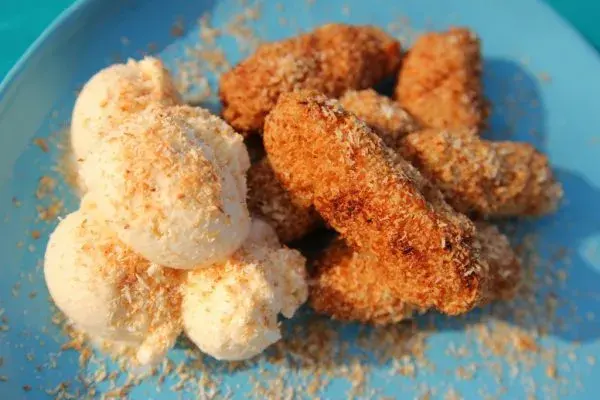
Crunchy Fried Bananas
Birmingham, United Kingdom · View all recipes
Overview
Ripe bananas in a coconut batter, rolled in desiccated coconut and cornflour and deep-fried. The source places it in Thailand and Southeast Asia, where it is known in Malaysia, Indonesia and Singapore as pisang goreng. The double coating is what the name is promising and what makes this different from a plain banana fritter. The banana is dipped in a wet batter, then rolled in a dry mixture of desiccated coconut and cornflour. The wet layer seals the fruit; the dry layer gives a rough, shaggy surface that fries into something genuinely crunchy rather than smooth. Cornflour is doing specific work in that dry coat, it contains no gluten, so it crisps rather than turning bready, which is why it appears in so many Asian frying batters. Ice-cold water in the batter is the other technique worth noting. Cold liquid slows gluten development and produces a lighter, crisper coating, which is the same principle behind tempura. Fried bananas are eaten across an enormous stretch of the world, and Africa has its own long tradition of frying bananas and plantains, West African banana fritters, kelewele, dodo, accra banana. This particular version is Southeast Asian, and it sits in Worldwide Recipes with its URL unchanged. The source gives no quantities; those below are working proportions.
Ingredients
Dietary tags are provided by contributors as a guide, not verified by AFN, and they depend on the products you buy. If you have a serious allergy, check every ingredient yourself. Cooking, allergies and your own judgement
Directions
- 1
Whisk the eggs, coconut milk and ice-cold water together in a bowl. The water should be genuinely cold, it keeps the batter light.
- 2
Sift the cake flour, cornflour and bicarbonate of soda into a second bowl with a pinch of salt, then mix in the brown sugar.
- 3
Combine the wet mixture with the dry and mix to a smooth batter.
- 4
Put the desiccated coconut and a little extra cornflour on a plate and mix them together.
- 5
Cut the bananas into whatever shapes you like, halved lengthways, or into thick diagonal slices.
- 6
Dip each piece into the batter until well coated, then roll it in the coconut and cornflour mixture until covered.
- 7
Bring the oil up to frying temperature and fry the coated bananas on both sides until golden and crunchy.
- 8
Drain on kitchen paper. If you are not serving straight away, set them on a baking sheet, cover loosely with foil and keep warm.
- 9
Serve with coconut ice cream and toasted coconut flakes.
Africook’s Notes
 Personal notes from Beatrice Ige
- Use ice-cold water in the batter. It slows gluten development and gives a lighter, crisper coating, the same principle as tempura.
- The double coating is the point. Wet batter alone gives you a smooth fritter; the dry coconut and cornflour layer is what makes it crunchy.
- Use bananas that are ripe but still firm. Very soft fruit collapses out of the coating in the oil.
- Fry in batches. A crowded pan drops the oil temperature and the coating soaks up fat instead of sealing.
- Serve them quickly. The coating softens within minutes of coming out of the oil, and no amount of keeping warm prevents it.
- Cornflour rather than more wheat flour in the dry coat is deliberate, with no gluten, it crisps instead of going bready.
Questions cooks ask
What makes them crunchy rather than just fried?
The double coating. The banana goes first into a wet batter, which seals the fruit, and then into a dry mixture of desiccated coconut and cornflour, which gives a rough, shaggy surface. That rough surface is what fries into something genuinely crunchy rather than smooth. Cornflour in the dry coat matters too: with no gluten in it, it crisps rather than turning bready in the oil.
Why ice-cold water in the batter?
Cold liquid slows down gluten development in the flour, which keeps the batter light and produces a crisper, more delicate coating. It is the same reasoning behind Japanese tempura batter, which is famously mixed with iced water and deliberately left lumpy. Room-temperature water gives a heavier, more bread-like coating. Mixing the batter just before you fry, rather than letting it stand, has the same effect.
What are these called elsewhere?
Pisang goreng across Malaysia, Indonesia and Singapore, which translates simply as fried banana, and kluay khaek in Thailand. Versions of fried banana or plantain are eaten across an enormous stretch of the world. Africa has its own long tradition, West African banana fritters, Ghanaian kelewele, Nigerian dodo and Cameroonian accra banana, all of which have their own pages on this site and are quite different preparations.
Can I use plantain instead?
Not directly for this recipe. Plantain is starchier and much less sweet than banana, and it needs longer cooking to soften, which does not suit a quick fry in a delicate coating. Very ripe plantain, black-skinned and soft, comes closest and would work at a push. If you want fried plantain, the West African preparations, dodo and kelewele, are designed around what plantain actually does.
Reviews
Be the first to rate this recipe
Cooked it? Your rating helps the next person decide whether to try it.
No reviews on this one yet. If you have cooked it, yours would be the first.
You Might Also Like
Boeber (Cape Malay Sweet Milk Drink)

How to Make Crispy Fried Chicken Feet
Mufete