Balah El Sham
Overview
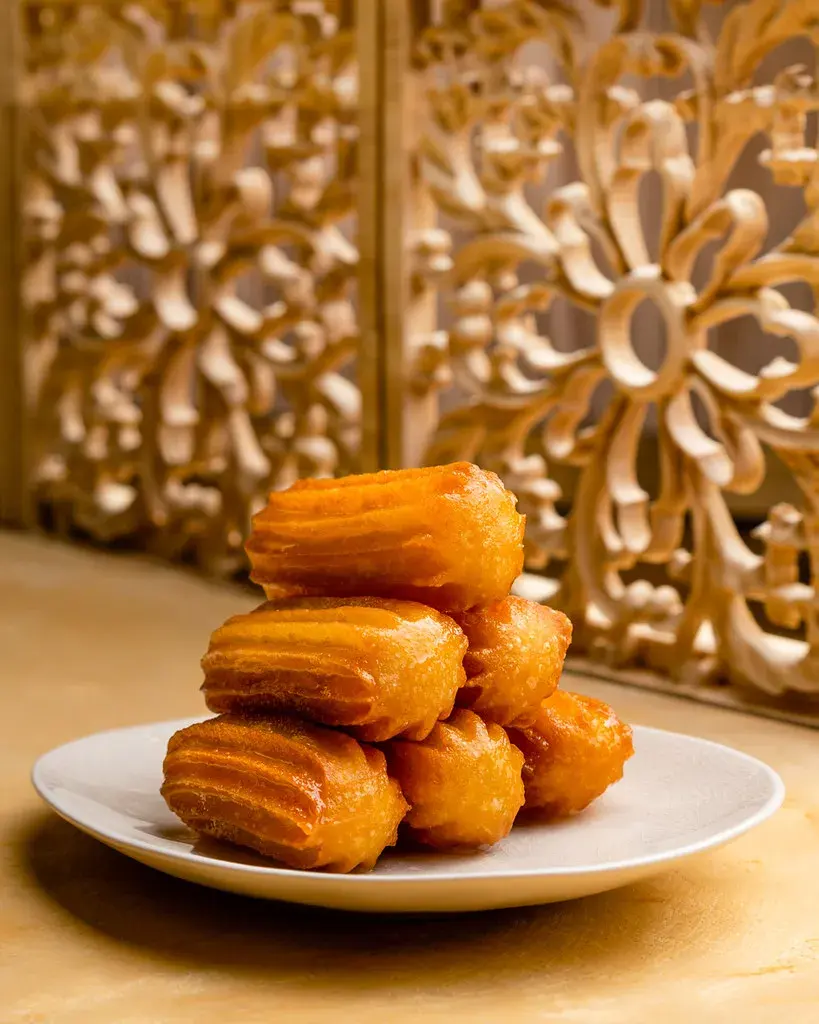
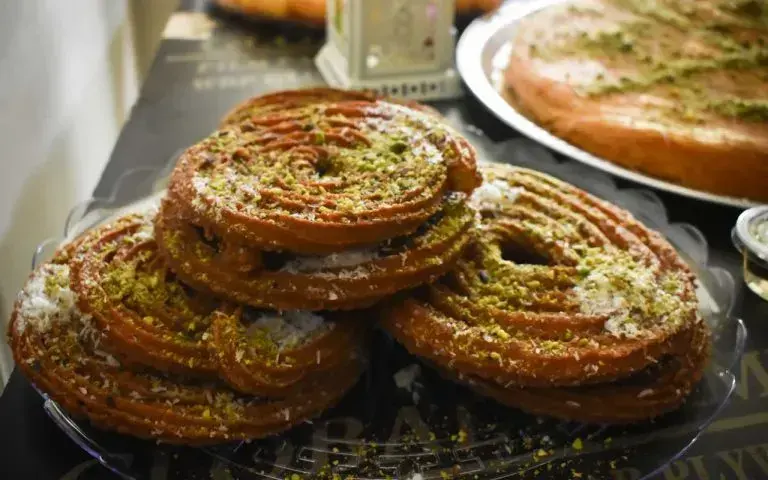
Balah el sham is fried choux pastry soaked in syrup, and it is one of the desserts Egyptians most associate with childhood. It is piped into short lengths through a star nozzle, fried until golden and ridged, then dropped into cool sugar syrup, which seeps into every groove. The name translates from Arabic as Levant dates, and it contains no dates at all. It is called that for its size and shape, and Sham for the Levant region where it originated. It is eaten across much of the Middle East and in parts of Eastern Europe under other names, and the closest familiar comparison is churros, with one important difference: churros are rolled in cinnamon sugar, while balah el sham is submerged in syrup. Choux is the technique, and it is the same pastry used for éclairs and profiteroles. Flour is cooked into hot liquid until it forms a ball and turns glossy, then eggs are beaten in off the heat, one at a time. What is unusual here is that it is fried rather than baked, which gives a crisp ridged shell around a hollow, airy centre. It is often split and filled with cream, custard, mascarpone, chocolate or nuts, and pistachios on top are standard. It can be eaten hot or cold.
AFN Heritage Note
Balah el sham takes its name from the Arabic for Levant dates, referring to its shape rather than its ingredients, and to the Levant region of its origin. It is eaten across Egypt and much of the Middle East.
Ingredients
Dietary tags are provided by contributors as a guide, not verified by AFN, and they depend on the products you buy. If you have a serious allergy, check every ingredient yourself. Cooking, allergies and your own judgement
Directions
- 1
Combine 1 cup of water and 1 cup of sugar in a saucepan over high heat and bring to the boil, stirring until the sugar dissolves.
- 2
Reduce the heat to medium and add the lime juice.
- 3
Simmer for about 10 minutes until the flavours combine, then remove from the heat.
- 4
Stir 1 teaspoon of vanilla extract into the syrup and let it cool completely.
- 5
In a pot over medium-high heat, combine 2 cups of water, 1 cup of sugar, the vegetable oil and the salt, and bring to the boil.
- 6
Reduce the heat to medium and add the flour, stirring vigorously with a wooden spoon until the batter forms a ball.
- 7
Cook for about a minute until the batter is shiny, then transfer to a bowl and let it cool for about 5 minutes.
- 8
Flatten the batter into the bottom of the bowl, then add the eggs one at a time, mixing well after each.
- 9
Stir in the remaining teaspoon of vanilla and mix until the batter is creamy.
- 10
Transfer to a piping bag fitted with a large star nozzle.
- 11
Heat the corn oil in a deep saucepan over medium heat until bubbling, then reduce to medium-low.
- 12
Pipe about 5cm of batter onto an oiled spatula and lower it into the hot oil. Repeat until the pan is full.
- 13
Fry, turning occasionally, until golden brown, about 5 minutes.
- 14
Drain briefly, then drop the hot pastries into the cool syrup.
Africook’s Notes
- Cool syrup onto hot pastry. Hot syrup onto hot pastry makes it soggy, and this is the rule for almost every syrup-soaked pastry in the region.
- Cool the choux base for the full five minutes before the eggs go in. Added to a hot mixture they scramble.
- Add the eggs one at a time and beat well between each. Adding them together gives a slack batter that will not hold its ridges.
- Use a star nozzle. The ridges are not decoration: they hold the syrup, which is the whole point of the dessert.
- Fry at a moderate heat. Too hot and the outside colours before the inside has expanded and dried out.
- Do not leave them in the syrup indefinitely. A minute or two is enough; longer and they lose all their crispness.
Questions cooks ask
Does balah el sham contain dates?
No. The name translates as Levant dates, and it refers to the size and shape of the pastry rather than to any ingredient. Sham refers to the Levant, the region where the dessert originated. It is a common source of confusion and the answer surprises most people who ask.
How is it different from churros?
The finish, mainly. Both are fried choux-type doughs piped through a star nozzle. Churros are rolled in cinnamon sugar and eaten dry, usually with chocolate for dipping. Balah el sham is submerged in a sugar syrup that soaks into the ridges, making it far sweeter and stickier.
Can I fill them?
Yes, and it is common. Split them once cooled and pipe in whipped cream, pastry cream, custard or mascarpone, and finish with crushed pistachios. Chocolate, fruit and nuts all work. Fill them shortly before serving, since a filled pastry softens quickly.
Why did my pastries collapse?
The batter was too wet, or the oil was too hot. Choux needs to be stiff enough to hold a piped shape, so add the eggs gradually and stop if it starts to slacken. Frying too hot sets the outside before the inside has expanded, and the shell then collapses as it cools.
Reviews
1 review
You Might Also Like
Browse all Egyptian recipes →
Tarb (Grilled Kofta Wrapped in Lamb Fat)
Egyptian Meshabek
This took me back and it tasted like home. Next time I will start the stock the night before. Saved to my collection.