

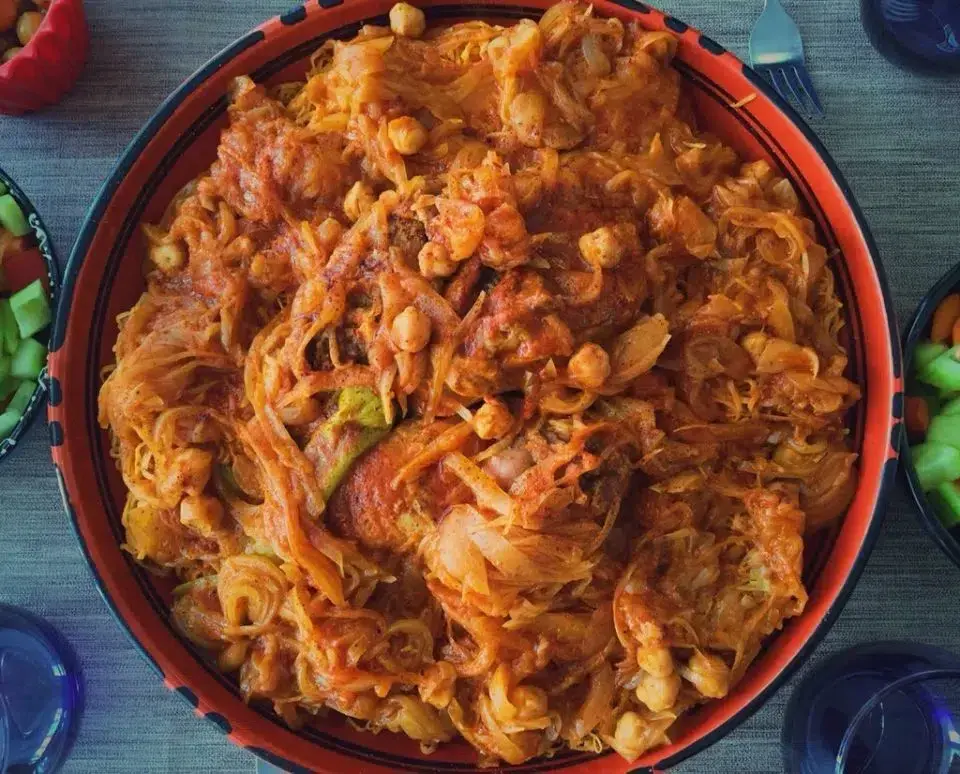
Rishta (Libyan-Style Pasta)
Overview
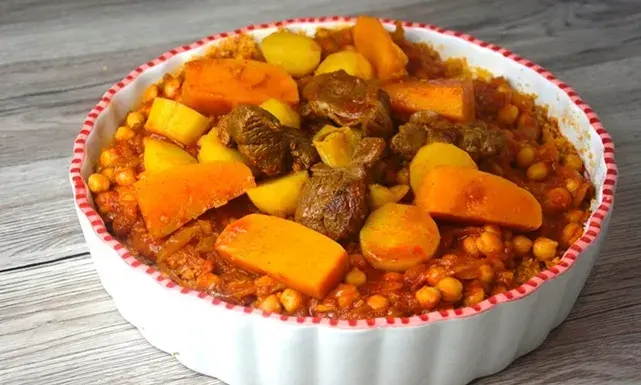
Rishta is Libyan pasta, and the important thing about it is that it is steamed rather than dropped into water. Fresh noodles are cut fine, set in a couscoussier over a sauce, and cooked in the rising steam, which is the same method Libya and the rest of the Maghreb use for couscous. That single decision separates rishta from every Italian pasta it superficially resembles. The sauce beneath is busla, built on a large quantity of onion cut into thin wings, cooked down with chickpeas, cinnamon and cloves. Lamb goes in with tomato paste and a warm spice mix of turmeric, ginger, cinnamon, black pepper and chilli. In Tripoli, where the dish is most closely associated, it appears under the names rishdat cascas and rishda imbaukha, meaning steamed rishda. The wider North African context is worth knowing. Dry meat called gedid, salted and sun cured, is used across the region to give dishes a smoky depth, and its use is generally traced to Amazigh practice. Rishta is also easily confused with makaruna imbaukha, another Libyan steamed pasta, which is made with dry angel hair rather than fresh cut noodles. The two look similar on a plate and are made from different things.
AFN Heritage Note
Rishta is documented as a Libyan dish of Tripoli, where it is also known as rishdat cascas and rishda imbaukha, and is steamed in a couscoussier by the same method used for couscous across the Maghreb. The name belongs to a family of hand cut noodle dishes found across the eastern Mediterranean and Persian speaking world.
Ingredients
Dietary tags are provided by contributors as a guide, not verified by AFN, and they depend on the products you buy. If you have a serious allergy, check every ingredient yourself. Cooking, allergies and your own judgement
Directions
- 1
Mix the flour with the egg and salt. Add water gradually until you have a firm dough.
- 2
Knead the dough. Sprinkle cornflour under and over it on a clean surface, and roll it out.
- 3
Cut into strips and pass through a pasta machine repeatedly, first to thin the sheets and then to produce fine noodles similar to angel hair.
- 4
Put the onions, spices, tomato paste and oil in the bottom section of the couscoussier.
- 5
Stir, add the lamb, and cook until the meat is done.
- 6
Cook the chickpeas. Slice the onions into rings and add them to the sauce.
- 7
Place the rishta in the top of the couscoussier and steam uncovered for around 15 minutes. Take it down, turn it into a bowl and fluff the noodles so they do not clump. Return it to the couscoussier and steam again until fully cooked, around 20 minutes.
- 8
Add the potatoes and pumpkin to the sauce in the bottom section.
- 9
Turn the rishta out into a wide bowl for a communal serving, or onto separate plates. Pour the sauce over the noodles, then add the meat, potatoes and pumpkin.
Africook’s Notes
- Steam the noodles in two stages with a fluffing in between. That interruption is what stops the rishta clumping into a solid mass, and it is not a step to skip.
- Soak the chickpeas overnight, or for at least two hours. Cooking them from dry in the sauce will not work in the time the rest of the dish takes.
- The dough should be genuinely firm, not soft. Soft dough will not hold its shape through the pasta machine and the noodles will stick together before they reach the steamer.
- Cook the chickpeas ahead and freeze them in portions if you make this often. It removes the longest piece of preparation from the day itself.
- Gedid, sun dried salted meat, is used across North African cooking to add a smoky depth in the way a stock cube is used elsewhere. If you can find it, a small amount goes into the sauce.
Questions cooks ask
Why is rishta steamed instead of boiled?
Because it belongs to the Maghrebi couscous tradition rather than to any European pasta tradition. Steaming over the sauce lets the noodles absorb the aroma of what is cooking underneath while keeping them separate rather than waterlogged. Boiling gives you noodles with sauce poured over; steaming gives you noodles that have been cooking in the sauce's steam for half an hour.
What is the difference between rishta and makaruna imbaukha?
The pasta. Rishta uses fresh dough that is rolled and cut into fine noodles by hand or machine. Makaruna imbaukha uses dry shop bought angel hair pasta. Both are Libyan, both are steamed in a couscoussier, and they look similar once plated, which is why they are frequently confused. The texture is noticeably different.
Can I make rishta without a couscoussier?
Yes, with a large pot and a steamer basket or colander that sits above the liquid without touching it, sealed at the join with a damp cloth so steam does not escape at the sides. The seal is what matters. Without it the steam bypasses the noodles and they stay raw while the sauce reduces away.
What is busla?
Busla is the onion rich sauce that rishta is served with, built on a large quantity of onion cut into thin wings and cooked slowly with chickpeas, cinnamon and cloves until it is sweet and thick. The onion is the point rather than a background aromatic, which is why the recipe uses four or five of them on top of the one in the meat base.
Reviews
4 reviews
You Might Also Like
Browse all Libyan recipes →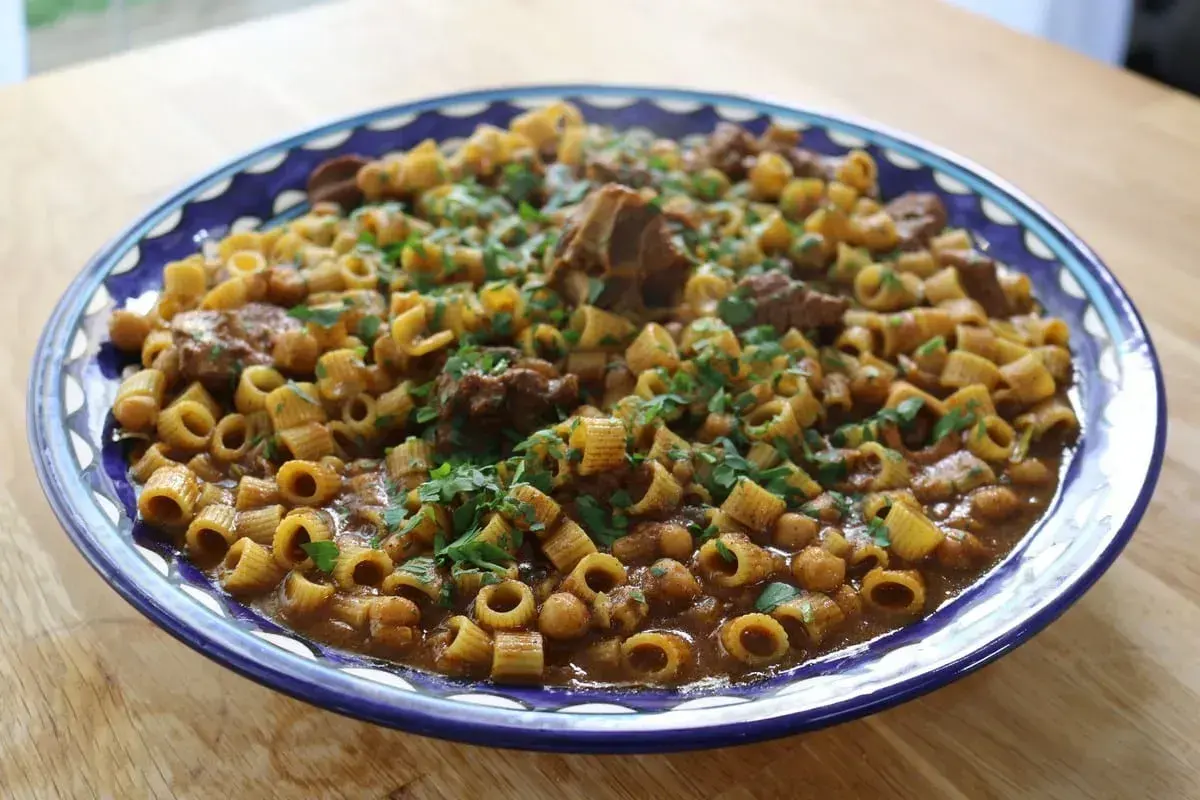
Mbakbaka (Libyan Pasta Stew)
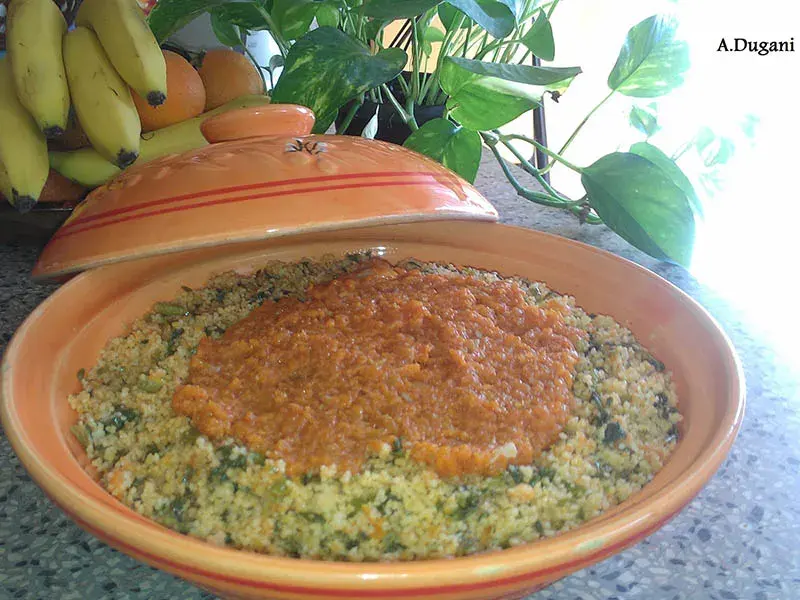
Aslooz (Libyan Couscous-Based Dish)
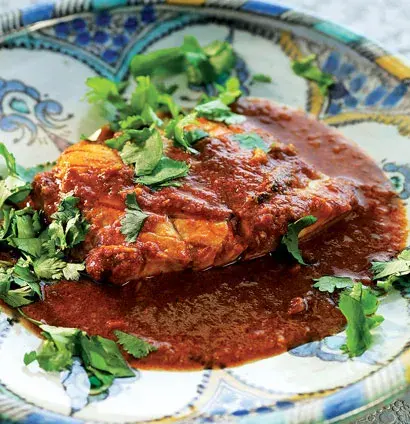
Haraimi (Libyan Spicy Fish Stew)
Running the dough through the pasta machine down to the angel hair setting was nerve-wracking because I was scared it would stick, but dusting heavily with cornflour saved it. My husband and I loved how light the noodles were with the cinnamon and turmeric lamb sauce. Is there a trick to keeping the rest of the dough firm while you work through the batches?
Sourcing fresh lamb here in Dubai at Union Coop was easy, but getting the noodles thin enough without a special rishta cutter was the real challenge. I used my standard pasta machine shredder setting. The sauce with the chickpeas and all those thin onion wings turned out so fragrant with the ginger and cinnamon, absolute perfection for weekend dinner.
Alhamdulilah, the aroma of turmeric, cinnamon and lamb coming from the couscoussier filled the entire house this afternoon. Making such fine noodles from flour and water takes patience, but steaming them over the tomato broth makes them so tender. A very blessed meal for our family.
Kneading that firm dough no be small thing o, my arms almost gave up! But once those fine strands cooked over the lamb and tomato sauce, e sweet die. The cinnamon and turmeric balance nicely, though next time I will add more red chilli powder for extra heat.