


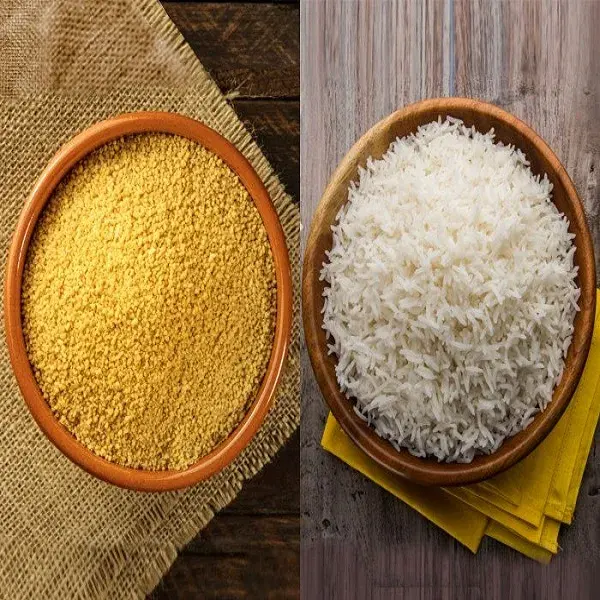
Couscous is a North African food made from tiny balls of durum wheat semolina that are moistened, rolled and steamed. It looks like a grain, but it's closer to a very small pasta. You'll also see it spelled cous cous or kuskus. It's shared at tables across Algeria, Mauritania, Morocco and Tunisia, the four countries whose couscous traditions UNESCO recognised in 2020.
Per 100g cooked, it has fewer calories than white rice and a little more protein, and the numbers are further down.
What is couscous made of?
Classic couscous is made from semolina, the coarse flour milled from durum wheat. The semolina is sprinkled with water and rolled, by hand or by machine, until it clumps into little balls. Then it's steamed and dried. That's why it cooks so fast at home: most of the work has already happened before it reaches the packet.
So couscous isn't a grain in its own right. It's a wheat product, the same family as pasta, which matters if you're cooking for someone who can't eat gluten. In West Africa there's a second kind made from millet instead of wheat. In Senegal it turns up in both savoury bassi salté and the sweet yogurt dish thiakry, further down this page.
You'll see three common sizes in shops. Moroccan couscous is the smallest and finest, Israeli or pearl couscous is about the size of a peppercorn, and Lebanese couscous is the largest. All three are made from wheat.
Where couscous comes from
Couscous belongs to the Maghreb, the north-west corner of Africa. It's eaten across Morocco, Algeria, Tunisia, Libya and Mauritania, and each country has its own way with it.
In 2020 UNESCO added the knowledge, know-how and practices around couscous to its Representative List of the Intangible Cultural Heritage of Humanity. It was a joint nomination from Algeria, Mauritania, Morocco and Tunisia, which tells you how widely the region shares it. UNESCO's file follows the whole chain, from growing the cereal and grinding it to semolina to rolling it by hand, steaming it and cooking it. The work uses clay utensils made by potters and wooden ones made by cooperatives and artisan workshops. The file also ties couscous to sharing, solidarity and eating together.
How couscous is made and cooked in North Africa
The traditional way has nothing to do with pouring boiling water over a bowl. North African cooks steam couscous in a couscoussier, a two-tier pot. Stew bubbles in the bottom, and the couscous sits in a perforated basket on top, taking in the steam and the smell of whatever's cooking underneath.
The grains come out, get rubbed between the hands to break up any lumps, and go back in to steam again. For a proper meal that can happen several times. It's slow, hands-on work, and it's the reason home-steamed couscous is so much lighter and fluffier than the instant kind.
What goes underneath depends on where you are. Inland, the stew is usually lamb or chicken with turnip, carrot, courgette, pumpkin and chickpeas. In Sfax and the other Tunisian coastal cities, it's often fish. Tunisian cooks stir harissa into the broth, so their couscous comes out orange to deep red, while Libyan couscous leans on pumpkin and a spiced tomato sauce.
The couscous sold in most supermarkets has been pre-steamed and dried. That's the only reason the quick method works: you're rehydrating it, not cooking it from raw.
Couscous vs rice: what's the difference?
The short version is that couscous is made from wheat flour, while rice is a grain cooked whole. Couscous is semolina rolled into shape. Rice is eaten whole as brown rice, or with the bran polished off as white rice. That difference shows up in the pot.
Couscous is quicker. Instant couscous only needs to sit covered in boiling water or stock, while rice has to simmer. Couscous is also lighter and drier in texture, and it soaks up a sauce rather than sitting under it. Rice holds its shape better in dishes like jollof, where you want each grain separate after a long cook in tomato and pepper.
When I first wrote about couscous for AFN, this is what I put down after making it for the first time:
"So, I made couscous for the first time. Stir fry way with shrimps, carrots, chicken francks, onions, garlic and scotch bonnet. Tasted real nice, I know it's a better option instead of rice. But to be honest, lowkey, rice is tastier."
I don't feel the same way now. The second time I made it, I had a change of heart, and these days I'd call couscous both tasty and a lighter swap for rice.
Is couscous healthier than rice?
Couscous is a little healthier than white rice on paper: per 100g cooked it has fewer calories, more protein and more fibre, though brown rice still has slightly more fibre. Here's how 100g of each compares once cooked, using figures from the USDA's FoodData Central database. These are plain couscous and rice cooked in water, with nothing added.
| Per 100g, cooked | Couscous | White rice (long grain) | Brown rice (long grain) |
|---|---|---|---|
| Calories | 112 kcal | 130 kcal | 123 kcal |
| Carbohydrate | 23.2g | 28.2g | 25.6g |
| Protein | 3.8g | 2.7g | 2.7g |
| Fibre | 1.4g | 0.4g | 1.6g |
| Fat | 0.2g | 0.3g | 1.0g |
| Sodium | 5mg | 1mg | 4mg |
| Selenium | 27.5µg | 7.5µg | 5.8µg |
Gram for gram, cooked couscous has fewer calories and carbohydrates than either rice and a little more protein. It has more fibre than white rice, but brown rice edges it there. The biggest gap is selenium, a mineral the NHS says helps your immune system work properly, and couscous comes out well ahead on it.
Don't read too much into a few calories either way. What you cook it with, the butter, oil, stew or sauce, will change the plate far more than the choice between couscous and rice.
Is couscous healthy and good for you?
Yes, couscous is good for you as part of a meal. It's a fair swap for white rice if you want a bit more protein and fibre for fewer calories. The table above backs that up. Cooked plain, it's very low in fat and salt, so whatever you add on top decides how light the meal really is.
The big caveat is gluten. Couscous is made from wheat, and the NHS lists wheat, barley and rye as the sources of gluten that people with coeliac disease must avoid. That rules wheat couscous out for them. Millet couscous is made from a different grain, but if you're cooking for someone with coeliac disease, check the packet for a gluten-free label rather than assuming.
If you want more fibre on the plate, pile in the vegetables and chickpeas the way North African cooks do. A bowl of couscous with a vegetable stew is a very different meal from a bowl of plain couscous with butter.
AFN couscous recipes to cook next
These are all on AFN now, and between them they cover the quick everyday method, the slow North African classics and the West African millet versions.
How to cook couscous the quick way
Start here if you've bought a packet and want it right. Our how to cook couscous guide pours boiling water or stock over the grains, covers them tightly for 10 to 15 minutes, then fluffs them with a fork. It's the base for everything else.
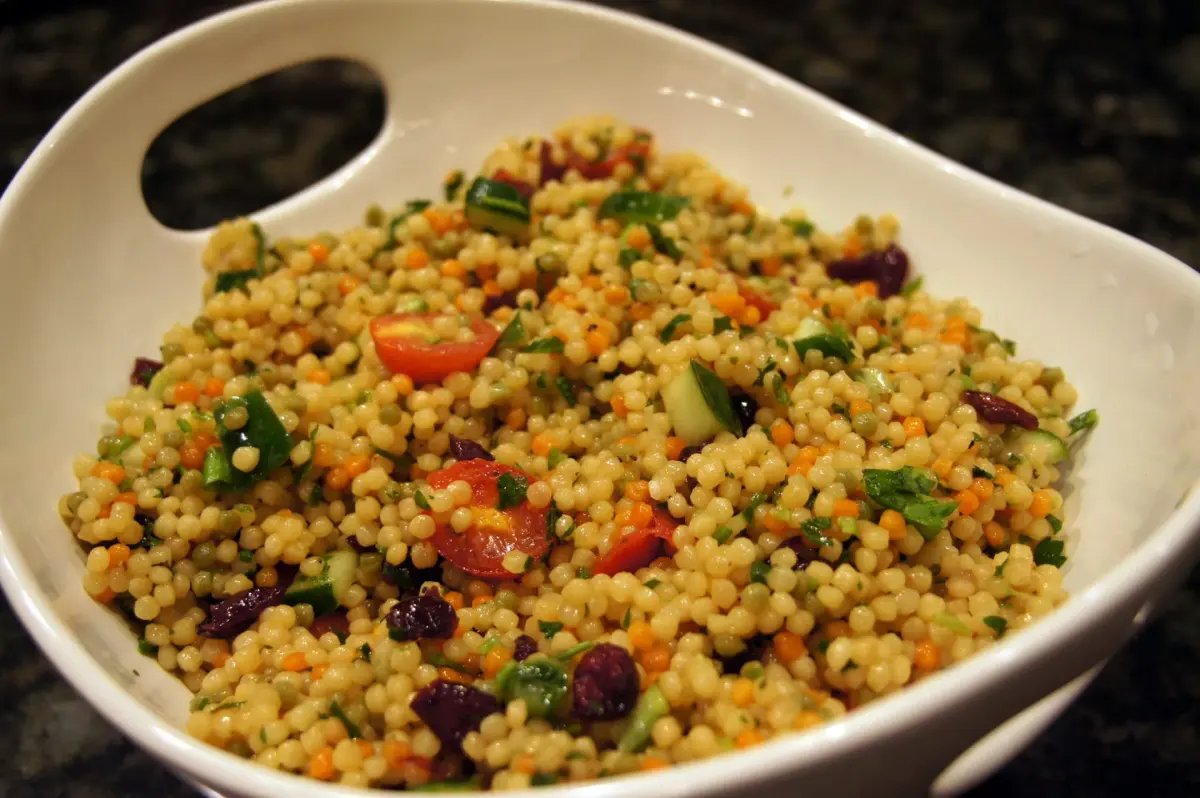
Moroccan couscous salad
Fine Moroccan couscous soaked in turmeric-tinted broth, then folded through with roasted vegetables, chickpeas, raisins and almonds. It's served at room temperature, so a tub of Moroccan couscous salad makes a good packed lunch.
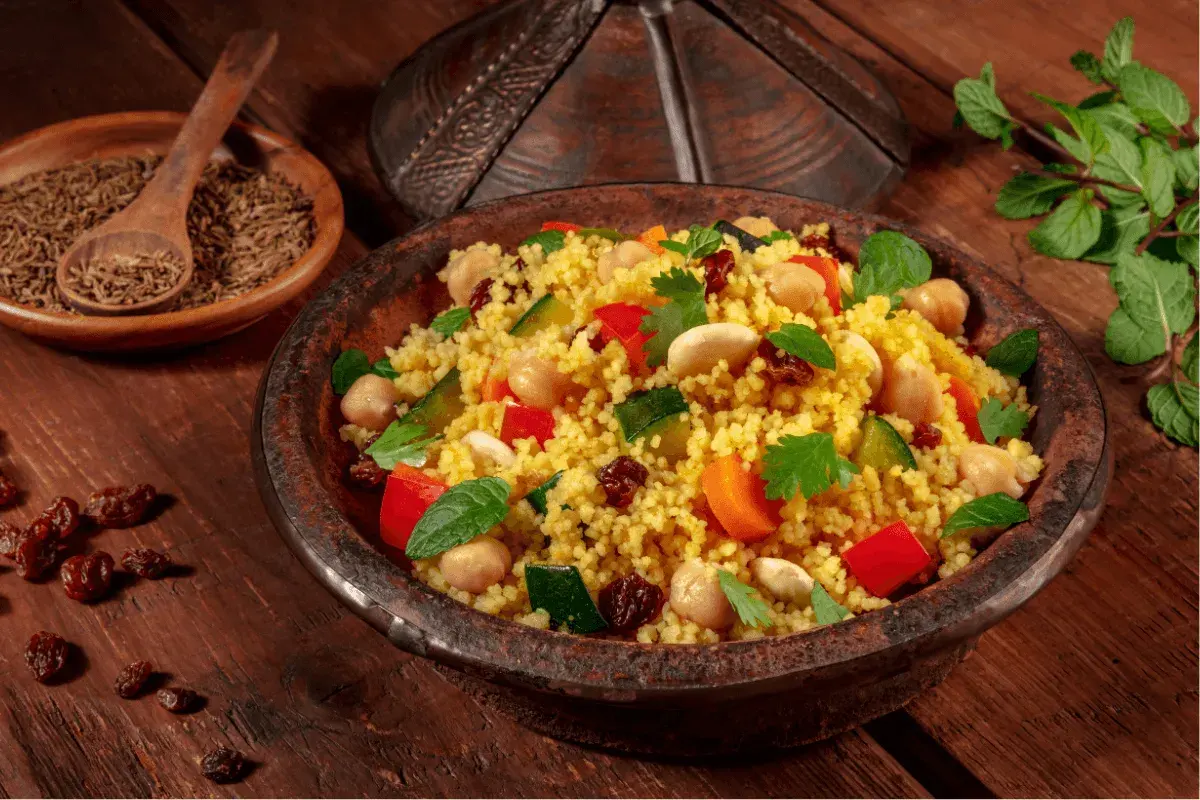
Tunisian couscous with harissa
Lamb, turnips, carrots, courgettes and chickpeas go into a broth spiced with caraway and harissa, and the harissa is what turns the couscous red. If you like heat, start with this Tunisian couscous.
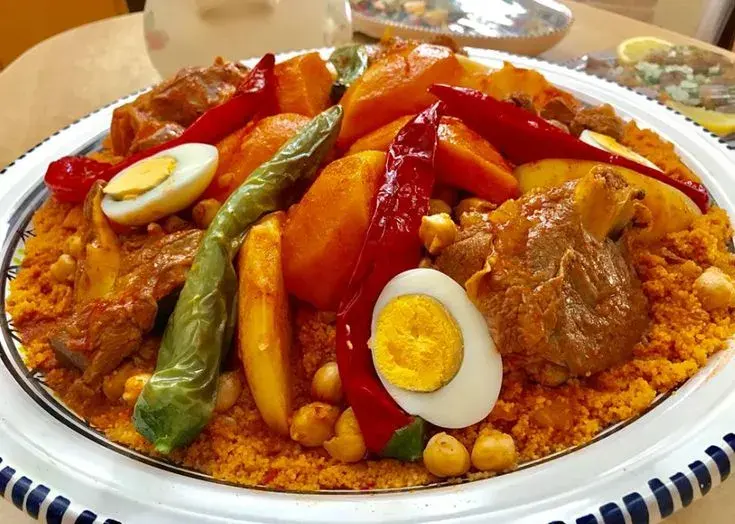
Couscous royale
This is celebration food: fluffy couscous piled with grilled lamb, chicken, meatballs and merguez over a saffron-scented chickpea and vegetable stew. Treat couscous royale as a project and start the chickpeas the night before.
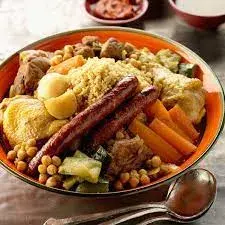
Fish and vegetable couscous
The coastal version, and the one that skips the shortcut. Our fish and vegetable couscous starts from raw semolina, worked by hand and steamed twice, served with whole fish in a harissa and tomato broth.
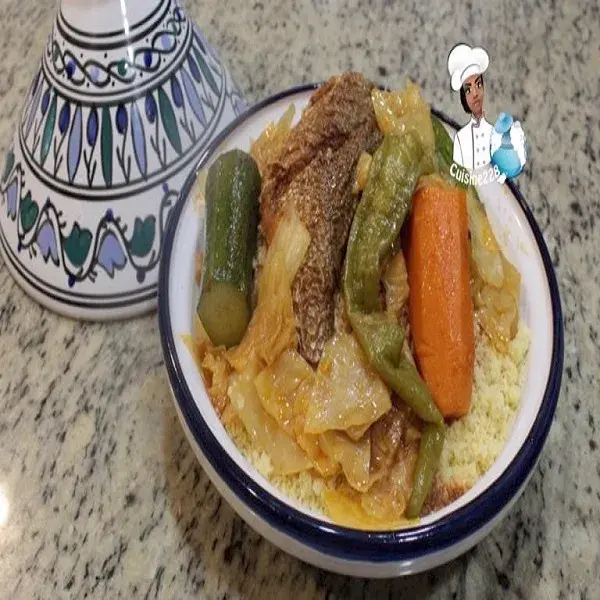
Bassi salté, Senegal's millet couscous
Millet couscous bound with lalo, powdered baobab leaf, and served with mutton, root vegetables, chickpeas, beans and raisins. Bassi salté is festival food in Senegal, traditionally eaten at Tamkharit.
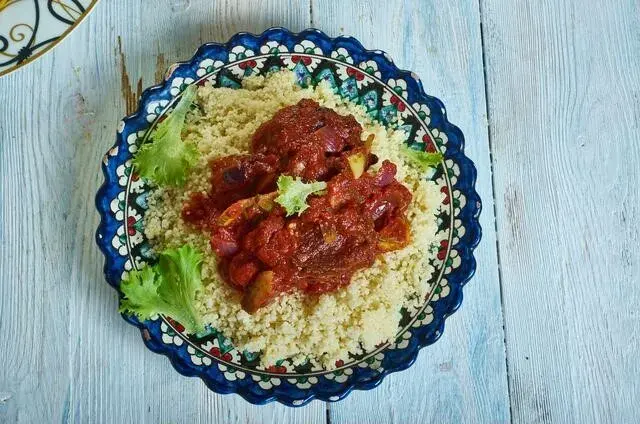
Thiakry, the sweet millet couscous
Millet couscous stirred into sweetened yogurt and milk with vanilla and nutmeg, then chilled. Thiakry couscous is a Senegalese favourite eaten cold at breakfast or after a meal.

Jollof couscous
The jollof method, tomato, pepper, onion and stock, with couscous standing in for rice. Jollof couscous is a modern adaptation, and it's ready in about half an hour.
Couscous questions people ask
Is couscous a grain or a pasta?
Couscous is closer to pasta. It's made from durum wheat semolina rolled into tiny balls and steamed, so it's a wheat product rather than a grain you'd harvest as it is.
Is couscous healthier than rice?
Per 100g cooked, couscous has fewer calories and carbohydrates than white or brown rice, more protein, and more fibre than white rice. Brown rice has slightly more fibre. Unlike rice, wheat couscous contains gluten.
Is couscous gluten-free?
No, not wheat couscous. It's made from wheat semolina, so it contains gluten. Millet couscous is made from a different grain, but check the label for a gluten-free mark if it matters.
What do you eat couscous with?
In North Africa it's served under a stew of meat or fish with vegetables and chickpeas. It also works cold in salads, sweet with yogurt as Senegalese thiakry, or cooked jollof-style.
How long does couscous take to cook?
Instant couscous needs 10 to 15 minutes covered, after you pour boiling water or stock over it, with no simmering. Traditional couscous, steamed from raw semolina in a couscoussier, takes much longer because it's steamed more than once.
You missed mentioning how easy couscous clumps if you dont fluff it with a fork immediately after adding the hot water paa! In Tottenham I pick up the Scotch bonnets from the market stalls because Tesco ones lack proper flavour, but using couscous instead of long grain rice for a quick stir fry is pure genius chale.
Herh, couscous jollof has saved me so many times here in New York when I don't have patience to wait for jasmine rice to steam oo. But chale you really need the proper red scotch bonnet from the West African store on 181st, those regular supermarket habaneros don't give that same sweet heat at all.
couscous is definitely way faster when you just boil 250ml water and let it sit for 5 mins, especially with loadshedding nowadays. But to be honest it doesnt absorb braai gravy the same way Tastic rice does. Rice still wins for a proper Sunday lunch, lekker as couscous is with chicken franks.
Ah oui, couscous is so much lighter than heavy white rice or fufu when you serve it with pondu. Here in Silver Spring I buy the fine grain one from the halal market near Georgia Ave because the coarse ones don't absorb the palm oil sauce properly. C'est tres bon for a fast weeknight dinner.