

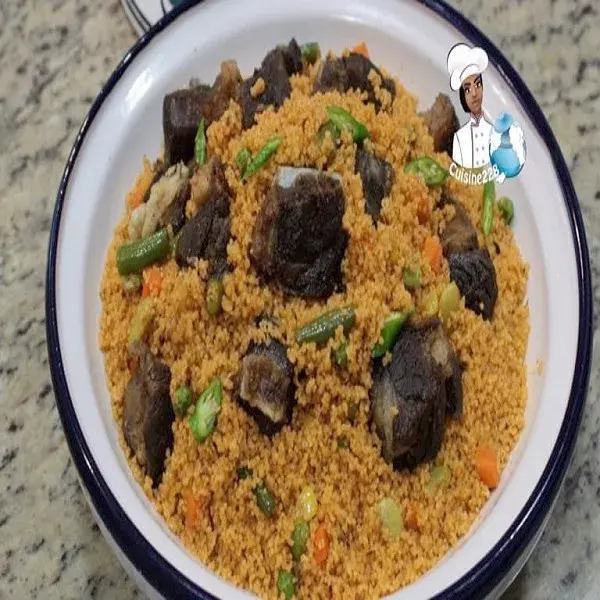
Jollof Couscous
Overview
Jollof couscous applies the jollof method to North African couscous, and it sits at the meeting point of two quite separate West and North African traditions. The tomato and pepper base is built as it would be for jollof rice; the grain is steamed couscous rather than long grain rice. Couscous itself is North African, rolled from semolina and traditionally steamed several times in a couscoussier until it is light and separate rather than gummy. In Morocco, Algeria and Tunisia it is served with a spiced vegetable stew and meat, which is a different proposition entirely from what happens here. Its texture is often compared to attiéké, the fermented cassava of Côte d'Ivoire, though the two share only appearance. Jollof itself is contested territory between Nigeria, Ghana, Senegal and beyond, and applying it to couscous is a modern move rather than an inherited one. The source attributes this version to Senegal, which is where the jollof tradition originates in the thieboudienne of the Wolof people, though the framing in the original text is Nigerian. It is quick food, twenty minutes from start to finish, and it is honest about being an adaptation.
AFN Heritage Note
Couscous is a North African preparation of rolled semolina, traditionally steamed repeatedly in a couscoussier. The jollof method it is combined with here derives from the Senegambian rice tradition. This particular combination is a modern adaptation rather than a documented traditional dish.
Ingredients
Dietary tags are provided by contributors as a guide, not verified by AFN, and they depend on the products you buy. If you have a serious allergy, check every ingredient yourself. Cooking, allergies and your own judgement
Directions
- 1
Heat the oil and add the onion, garlic and ginger.
- 2
Add the chopped tomato and the tomato paste.
- 3
Cook for 5 minutes, then add the meat broth, frozen vegetables, bouillon cube and salt to taste.
- 4
Bring to a boil, then add the couscous grains in a steady stream while stirring.
- 5
Cook the couscous for 5 minutes and adjust the salt.
- 6
Mix well and turn off the heat. Cover tightly and let the couscous absorb the liquid for 10 minutes.
- 7
Fluff and serve hot, with a little extra sauce spooned over.
Africook’s Notes
- Work to a ratio of one and a half cups of liquid to one cup of couscous, scaling up as needed. Too much liquid gives you porridge.
- Cook the tomato paste properly in the oil before any liquid goes in. Raw tomato paste tastes metallic and no amount of seasoning covers it.
- Cover tightly for the resting period and do not lift the lid. The steam is doing the cooking.
- Fluff with a fork rather than stirring with a spoon, which compacts the grains.
- Use hot broth rather than cold. Cold liquid poured onto couscous gives an uneven texture.
Questions cooks ask
What is couscous and where does it come from?
Couscous is North African, made from semolina rolled into small granules and traditionally steamed several times in a couscoussier until light and separate. It belongs to Morocco, Algeria, Tunisia and Libya, where it is served with a spiced vegetable and meat stew. The instant couscous sold in most shops needs only hot liquid and a few minutes.
Is jollof couscous a traditional dish?
No, it is a modern adaptation and this entry says so. Jollof is a rice tradition with roots in Senegambian thieboudienne, and couscous is a separate North African tradition. Combining them is something contemporary West African cooks do, alongside jollof spaghetti and jollof pasta, rather than something inherited.
Why is my couscous gummy?
Too much liquid, or the grains were stirred rather than fluffed. Keep to roughly one and a half parts liquid to one part couscous, let it absorb undisturbed under a tight lid, then separate the grains with a fork. Stirring with a spoon compacts them into a paste.
Can I make it vegetarian?
Yes, easily. Replace the meat broth with vegetable stock and the bouillon cube with a vegetable one, and the dish works exactly the same way. The frozen vegetables are already the bulk of what is in it. Check the bouillon, since many brands contain animal products even when they look vegetable.
Reviews
4 reviews
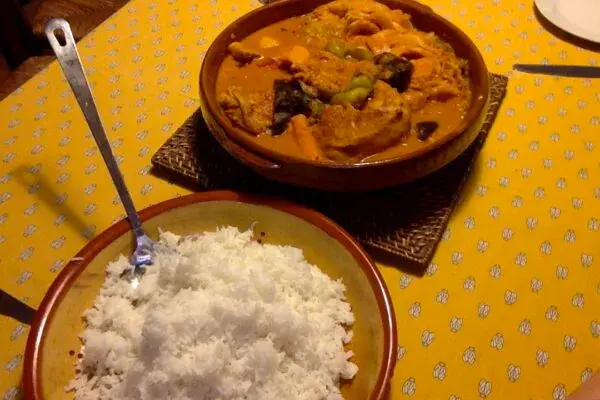
i made this last night with beef broth cause i had extra from Sunday. I was panicking thinking 1.5 litres of liquid was way too wet for the 600g couscous maar it sommer soaked it all up in five minutes. my broer six cloves of garlic sounds plenty but it really needed that kick in the kitchen.
Used a Knorr beef bouillon cube and a bag of frozen mixed veg. I found 1.5 litres of broth was just a bit too much liquid for 600g of couscous, it turned out slightly mushy instead of light and fluffy. Next time I will cut the stock back to 1.2 litres. Lekker flavour overall though.
Chale jollof couscous saves so much time compared to rice paa. Just watch out when frying the fresh tomatoes and tomato paste for those 5 minutes, if your fire is high it will burn before you even add the meat broth oo. I added a little extra ginger too and it was sweet.
Abeg make sure your meat broth is well seasoned before you pour the couscous in a steady stream o. The smell of the garlic and ginger frying in the oil was no be small thing. My kids finished the whole pot in ten minutes sha, e sweet!