
Farofa (Toasted Cassava Flour)
London, United Kingdom · View all recipes
Overview
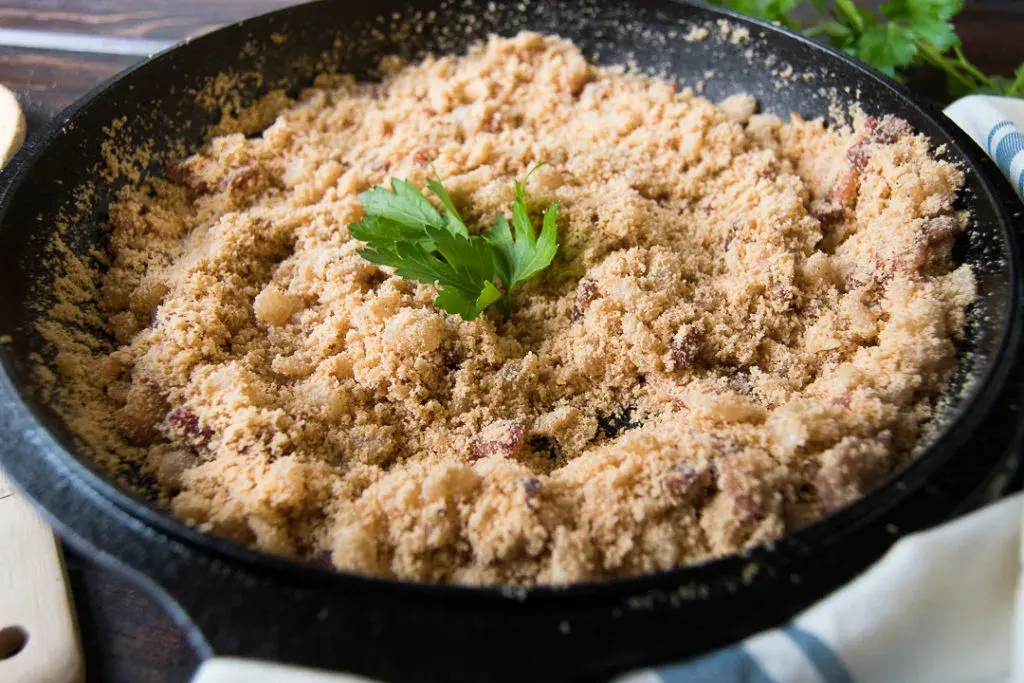
Farofa is cassava flour toasted in fat with onion, garlic and usually bacon, until it turns golden and sandy. It is Brazilian, and it appears on the table at almost every Brazilian meal that involves a stew or grilled meat. Its job is texture. Brazilian cooking produces a great deal of rich, soupy food, feijoada above all, and farofa is scattered over it to absorb the liquid and give a dry, crunchy contrast. Eaten on its own it makes little sense; eaten over a wet dish it makes complete sense, and that is how it is used. The African connection is direct and worth stating. Cassava is South American in origin, but the technique of toasting cassava meal into a dry accompaniment moved across the Atlantic in both directions with the transatlantic slave trade, and farofa's closest relatives are West African. Garri, the fermented and toasted cassava granules eaten across Nigeria, Ghana and Benin, is made by essentially the same process. Brazilian cooking, and Bahian cooking in particular, carries an enormous amount of West African influence, and farofa sits squarely in that history, which is precisely why it belongs in a Worldwide collection on an African food site rather than being simply foreign. The method is short and the one instruction that matters is to keep it moving. Cassava flour burns quickly and unevenly.
AFN Heritage Note
Farofa is a Brazilian side dish of cassava flour toasted in fat, served scattered over stews and grilled meats. Cassava is South American in origin, and the technique of toasting cassava meal has close relatives in West Africa, including garri; Brazilian cooking, particularly in Bahia, carries substantial West African influence.
Ingredients
Dietary tags are provided by contributors as a guide, not verified by AFN, and they depend on the products you buy. If you have a serious allergy, check every ingredient yourself. Cooking, allergies and your own judgement
Directions
- 1
Put the diced bacon into a cold skillet and bring it up over medium heat, so the fat renders slowly rather than seizing.
- 2
As the fat begins to melt, work in one tablespoon of the butter.
- 3
Once the bacon starts to fry, put in the second tablespoon of butter.
- 4
Tip in the diced onion and cook until translucent, about 2 minutes.
- 5
Mix in the garlic and cook until golden.
- 6
Pour in the cassava flour and season with salt and pepper.
- 7
Toast it, turning gently and constantly so it does not burn, for about 2 minutes, until it is golden and sandy throughout.
- 8
Serve scattered over feijoada, grilled meat or any stew.
Africook’s Notes
 Personal notes from Nympha Nzeribe
- Keep it moving constantly once the flour is in. Cassava flour catches quickly and burns unevenly, and burnt farofa is bitter throughout.
- Start the bacon in a cold pan. The fat renders gently and evenly, which is the base of the whole dish.
- Do not skimp on the fat. Farofa needs enough to coat every grain, or it stays powdery and dusty in the mouth.
- For a vegetarian version, replace the bacon with more butter or a good olive oil. It works, though the smokiness is missed.
- It is meant to go on top of something wet. Farofa alone is dry by design.
- It keeps for a few days in a sealed container and can be refreshed in a dry pan.
Reviews
Be the first to rate this recipe
Cooked it? Your rating helps the next person decide whether to try it.
No reviews on this one yet. If you have cooked it, yours would be the first.
You Might Also Like
Pork Trotters
Pap En Vleis

Amasi Recipe