Let’s dive into the wonderful world of Ethiopian cuisine and discover a dish that’s truly special—Atakilt Wat. The traditional Ethiopian delight is no doubt a real crowd-pleaser, often savoured as a side dish or as part of a larger meal.
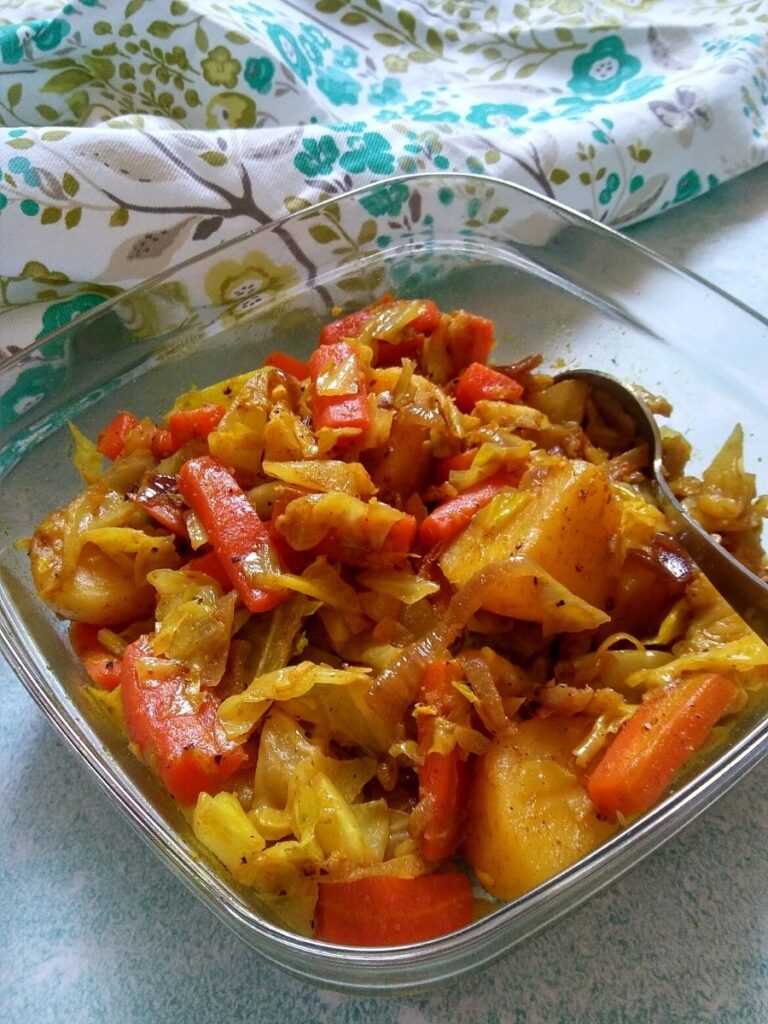
Atakilt Wat (Ethiopian Cabbage, Carrot, and Potatoes)
The name “Atakilt Wat” translates to “cabbage stew” in Amharic, the official language of Ethiopia. So you can already guess that this dish puts the spotlight on the humble cabbage in a delightful way!
This vegetarian delight shows the simplicity and, at the same time, complexity of Ethiopian cuisines, combining the humble cabbage with a tantalizing spice blend known as berbere.
Berbere
Now, let’s talk about the star of the show in Atakilt Wat—berbere! This incredible spice blend is like a flavour that’s essential to Ethiopian cuisine. Picture a medley of chilli peppers, garlic, ginger, fenugreek, and an array of aromatic herbs coming together in a harmonious dance. It’s a party for your taste buds!
Berbere works its magic by infusing the cabbage and other veggies with a blend of flavours. It’s the secret ingredient that takes it from ordinary to extraordinary.
In addition to the cabbage, Atakilt Wat often includes other vegetables, such as carrots and onions, to add texture to the dish.
Ethiopian cuisine is loved around the world for its special mix of spices, aromatic herbs, and different dishes.
Some Suggestions links for Amazon to “Simply Organic Bay Leaf”.
Ethiopian Berbere Cabbage - Atakilt Wat
Atakilt Wat is a vegetarian delight that shows the simplicity and complexity of Ethiopian cuisine. This quick and easy Ethiopian stir fry can be enjoyed as a side dish or with injera (traditional Ethiopian flatbread) for a complete meal. Its star ingredient is berbere, a sweetening spice blend, essential to Ethiopian cooking, berbere adds a taste to elevate Atakilt Wat. With its vibrant taste and versatility, this dish captures the essence of Ethiopian cuisine. Prepare to be amazed!
Add the chopped onion and minced garlic to the pan. Sauté until the onion becomes translucent and fragrant.
Add the berbere spice blend, turmeric powder, and ginger powder to the pan. Stir well to coat the onions and garlic with the spices.
Add the shredded cabbage sliced carrots and potatoes to the pan. Stir to combine the vegetables with the spice mixture and cover with a lid and let the vegetables simmer for about 10-15 minutes or until they are tender but still have a slight crunch.
Add salt to taste and stir occasionally to prevent sticking and ensure even cooking.
Adding water is optional, it depends on individual texture. If you want it crunchy you may not add water.
Serve hot as a side dish or with injera (traditional Ethiopian flatbread) for a complete meal.
As an aspiring Chef or a food enthusiast looking to explore African cuisines?
The first thing you need is a guide; your guide could be a pro chef or a visual African cookbook that perfectly displays all you need to know to get started even without a chef present; there are African cookbooks for beginners written by chefs with years of experience in the field.
There has been an exciting wave of interest in African cuisine lately. It’s no surprise that more and more beginners are curious about the continent’s vibrant recipes and rich culinary traditions. Ofcourse, Africa is rich in delicious mouth-watering delicacies.
But where does one start? Well, fret not because I’ve got you covered! Here, I will help you find the perfect cookbook to embark on your culinary journey. I understand the importance of finding the right resource to guide beginners like you through the diverse recipes and techniques that make African cuisine so special.
So from my personal research, here are the best African cookbooks specifically for beginners.
Top Recommendations on the Best African Cookbooks for Beginners
The Ghana Cookbook by Fran Osseo-Asare and Barbara Baëta
The Africa Cookbook: Tastes of a Continent by Jessica B. Harris
The Soul of a New Cuisine: A Discovery of the Foods and Flavors of Africa by Marcus Samuelsson
Zoe’s Ghana Kitchen: Traditional Ghanaian Recipes Remixed for the Modern Kitchen by Zoe Adjonyoh
Hibiscus: Discover Fresh Flavors from West Africa by Lope Ariyo
Eat, Habibi, Eat!: Fresh Recipes for Modern Egyptian by Shahir Massoud
The Ghana Cookbook by Fran Osseo-Asare and Barbara Baëta
The book is a culinary treasure specializing in Ghana’s rich and diverse cuisine. It is known for its emphasis on bold flavours and vibrant dishes that truly represent the essence of Ghanaian cooking.
The Ghana Cookbook is particularly notable for its beginner-friendly and visually appealing structure. The authors have crafted the book with clear and concise instructions, making it accessible if you are new to Ghanaian cuisine.
The recipes are presented in a user-friendly manner, guiding you through each step and ensuring that as a novice you can successfully recreate the dishes at home.
The book also includes a comprehensive collection of popular Ghanaian dishes, showing the diversity of the country’s culinary landscape. From the iconic jollof rice, a flavourful and delicious rice dish cooked with tomatoes and spices, to kelewele, a spicy and sweet plantain snack, and banku, a fermented corn and cassava dough served with various stews.
About the Author: Both Fran Osseo-Asare and Barbara Baëta possess extensive expertise in Ghanaian cuisine, ensuring that the recipes featured in the book are authentic and true to the country’s culinary traditions.
Fran Osseo-Asare, a Ghanaian-American food writer and cooking instructor. She brings a deep understanding of the recipe and techniques of Ghanaian cooking to “The Ghana Cookbook.”
Barbara Baëta, on the other hand, is a Ghanaian culinary expert who has worked as a caterer, cooking instructor, and restaurateur. Her vast knowledge of Ghanaian food culture and traditions greatly contributes to the book’s authenticity.
The Africa Cookbook: Tastes of a Continent by Jessica B. Harris
Ready to explore traditional African recipes from various regions across the continent? This is a must-have African cookbook. Its unique approach to the different African cuisine makes it more interesting.
It outlines a wide range of recipes in the continent, providing a taste of the culinary traditions of different African regions. From West African jollof rice to East African injera and South African bobotie, the book offers a rich tapestry of flavours and dishes that capture the essence of African cooking.
One thing that makes it stand out is its comprehensive pantry guide. Harris took the time to introduce the essential ingredients used in African cooking, including spices, grains, and herbs. This guide is a helpful reference, helping you stock your kitchen with the necessary items to recreate African dishes.
Additionally, it offers tips and guidance on navigating African markets, should you want to visit and see things for yourself which can be an exciting and enriching experience if you try.
About the Author: Jessica B. Harris, the author, is a renowned culinary historian and authority on African diaspora cuisine. Her expertise in African cuisine makes “The African Cookbook” a reliable and trustworthy resource, especially for beginners who are eager to dive into the world of African cooking. With her extensive knowledge and passion for the subject, Harris provides readers with authentic recipes and valuable cultural insights.
The Soul of a New Cuisine: A Discovery of the Foods and Flavors of Africa by Marcus Samuelsson
Unlock a new world of flavour with Samuelsson; this book is known for its accessibility and beginner-friendly approach to explaining each cuisine, he understands that not everyone may be familiar with African cooking techniques or ingredients, so he takes time to guide you through each recipe with clear and concise instructions.
Alongside the recipes, Samuelsson shares personal stories and anecdotes that bring the food to life, making the culinary journey an immersive and engaging experience one you would love to read through. The inclusion of stunning photography adds an extra layer of visual appeal; sure, you would love the bold colours and textures of the dishes.
From the spices and recipes of North African dishes to that of West African cuisine and the nuanced tastes of East African delicacies, the book provides a well-rounded understanding of Africa’s culinary heritage.
About the Author: Marcus Samuelsson and his captivating culinary journey through African cuisine in his book “The Soul of a New Cuisine: A Discovery of the Foods and Flavors of Africa.” He is a world-renowned chef and restaurateur born in Ethiopia and raised in Sweden.
His unique background and passion for food have led him to explore the rich culinary traditions of Africa, resulting in this remarkable book.
Zoe’s Ghana Kitchen: Traditional Ghanaian Recipes Remixed for the Modern Kitchen by Zoe Adjonyoh
This is another detailed and easy to recreate Ghanian cookbook of all time. The book is designed to be approachable and inviting, perfect if you’re new to Ghanaian cuisine. With the step-by-step instructions and clear explanations, you can easily follow along and recreate the dishes confidently, even as a novice.
In “Zoe’s Ghana Kitchen,” traditional Ghanaian recipes are given a modern twist, reflecting the evolving nature of cuisine in the globalized world. She skillfully incorporates her own creative touches while staying true to the essence of Ghanaian flavours and ingredients.
There is a range of dishes, from street food favourites like kelewele and jollof rice to hearty stews and delicious desserts, all with a contemporary flair that will intrigue and delight you with adventurous cooking.
About the Author: Zoe Adjonyoh, the author, is a Ghanaian-British chef and food writer who has a passion for cooking. With her book, she aims to make Ghanaian cuisine accessible to a wider audience, showcasing Ghana’s delightful flavours and ingredients in a fresh and contemporary light.
Hibiscus: Discover Fresh Flavors from West Africa by Lope Ariyo
“Hibiscus” takes you on a delicious journey through the recipes of West African dishes, offering comprehensive coverage of dishes from various countries in the region. From Nigeria to Senegal, Ghana to Cameroon, Ariyo presents a broad introduction to the rich and diverse cuisines found in West Africa.
The recipes are designed to be accessible and achievable for cooks of all skill levels. Whether you’re a novice or an experienced chef, Ariyo’s friendly and knowledgeable tone encourages you to dive into the world of West African cuisine confidently.
The book provides a strong foundation for those new to West African cuisine while also offering inspiration and new ideas for those already familiar with the cuisine.
You’ll find a delightful array of recipes that represent the essence of West African cooking. From delicious stews and soups to vibrant salads and snacks, it embodies the freshness of West African flavours.
About the Author: Lope Ariyo and her captivating culinary exploration of West African dishes in “Hibiscus: Discover Fresh Flavors from West Africa.” Lope Ariyo, a Nigerian-born chef and food writer, has dedicated herself to showcasing the diverse and vibrant culinary traditions of West Africa.
Recipes and Traditions from the Horn of Africa” by Yohanis Gebreyesus
If you are looking to explore more deeply into African dishes? You can try Recipes and Traditions from the Horn of Africa, it’s an African cookbook like a class. Compiled the recipes and cultural heritage of Ethiopia’s African continent.
Something exciting about this book is its emphasis on preserving the rich cultural heritage surrounding Ethiopian cuisine. In addition to providing a collection of traditional recipes, It dived into Ethiopia’s cultural context, rituals, and customs.
This inclusion of cultural traditions adds depth and richness to the book, offering a more interesting experience and a deeper appreciation for Ethiopian food beyond its flavours alone.
About the Author: Yohanis Gebreyesus, the author, is an Ethiopian-born chef who possesses exceptional expertise in African cuisine. His deep understanding of Ethiopian culinary traditions, flavours, and ingredients inspired him to write an African cookbook as a guide for chefs.
Gebreyesus establishes himself as a reliable guide for chefs, particularly beginners, who are eager to explore different recipes; his knowledge and passion make “Ethiopia” an authoritative resource, ensuring that the recipes presented are true to Ethiopian culinary traditions.
Conclusion
To help you get started on your culinary journey, I’ve compiled a list of the top 6 African cookbooks specifically written for beginners. These books will guide you through the diverse recipes and techniques that make African cuisine so special.
So, whether you’re craving Nigeria jollof or Ghana jollof rice, injera from Ethiopia, or the bold dishes of West African cuisine, these cookbooks will be your guide on this exciting culinary adventure. Happy cooking and exploring the rich flavours of Africa!
This is a popular type of pasta consumed in the Maghreb region of Northwest Africa. It is traditionally cooked in the top section of a pot known as a couscousière. The bottom section contains a stew, or tagine, whose boiling vapors flavor the couscous.
What Is Couscous Pasta?
It appears like a grain, but it’s pasta produced from durum wheat semolina flour and water. It comes in three varieties: Moroccan, which is the tiniest; Israeli or pearl couscous, which is about the size of peppercorns; and Lebanese, which is the largest of the three.
It’s intended to be eaten with brothy stews, so it’s a fantastic vehicle for many kinds of seasonal vegetables and legumes. A tiny amount of mutton or lamb may be used for flavor in traditional meals.
Couscous Pasta – Preparation
This pasta is quick and simple to make. Most times, it has already been cooked before being dried, so it simply requires the addition of boiling water or stock to rehydrate. It can then be used in salads or as a side dish with meat, fish, or vegetables.
Because it is mostly marketed as “instant,” meaning it has already been steamed and dried, it is quick and simple to prepare. Pour boiling water over couscous and set aside for 5 minutes before fluffing with a fork.
This pasta has wide flexibility that allows it to be used in a variety of ways. It can be served as a cold salad or warm pilaf as a side dish; add protein and veggies and it becomes a main dish; use it in soups and stews; or make it into an oatmeal-like dish for morning or a pudding for dessert.
Like most pasta, it is primarily starch but searches for whole-wheat couscous for additional fiber and other minerals.
Zobo drink is a familiar beverage loved by Nigerians. Just like the fruit juice, you wouldn’t require any artificial ingredients or coloring in most cases. I would personally recommend just natural ingredients (zobo leaves, ginger, cloves).
But most Nigerians wouldn’t have zobo without the accompanying sweetness. It is said to have health benefits, I love how it’s easy to prepare and how refreshing it is.
Image from Sorrel
About The Zobo Drink Recipe
Just in case you’re still confused as to what I’m talking about, the more generally accepted name for this Nigerian drink recipe is Hibiscus Tea or Sorrel drink depending on what part of the World you come from.
It is a refreshing drink, made out of steeping mauve-colored dried leaves in warm water. It is caffeine-free and has calcium, carotene, and iron, which are all nutritionally necessary.
Benefits Of Zobo Drink
This drink has many advantages: easy to make, affordable, tasty, refreshing, and has a lot of healthy benefits.
Improve kidney health and strengthen heart health.
To enjoy the health benefits of Zobo, you’ve got to retain its natural goodness as much as possible. The addition of artificial sweeteners may interfere with its natural nutrients.
Is Zobo Drink Good For Pregnant Women?
It is not safe for pregnant women in their first trimester though, because it induces menstruation and may lead to a miscarriage.
How To Make Zobo Drink
This one is not Indomie that you’ll just pour inside the pot and start cooking. Some preparations precede the directions.
If you neglect them for one reason or the other, whatever you end up with, drink it like that.
Before you make
Rinse out the dust from the zobo leaves with cold water.
Grind the cloves into powder.
Wash and peel the skin of the ginger and blend roughly.
Wash, peel and cut the pineapple into thin slices.
How To Preserve Zobo Drink
Since this drink is easy to produce at home, packaged in polyethene containers, and sold as a source of income for most families, lime juice as a preservative is recommended to prolong the shelf life.
Here are other preservative methods I recommend; I suggest you use either of the following methods to preserve your drink.
Freeze it: Mind you, this is for people who have a constant electricity supply (don’t look at me, I’m not among them). If you’re also not in that category, look at option 2.
Ration & Dry it: Properly measure the exact quantity you and your family need and dry the rest under the Sun. Leave it always crispy and dry.
Use food preservatives: A small number of food spices can significantly contribute a great deal to the preservation of this drink, some of which are Lime, Garlic Ginger mixture, Kola nut, Cinnamon, and Nutmeg.
Do you now know how to make a Zobo drink (Hibiscus Tea/Sorrel drink)? Let us know in the comments section.
Zobo Drink
Beatrice Ige
Zobo is a refreshing drink, made out of steeping mauve colored dried leaves in warm water. It is caffeine free.
Vitamin A is an essential nutrient for bodily function. It is essential to build the body’s vitamin A composition because a deficiency could lead to a whole number of problems ranging from partial blindness to bad skin.
In this article I am going to be sharing 10 African foods that are rich considerably in vitamin A. Disclaimer, number 9 might shock you a little.
What is Vitamin A?
Vitamin A is a fat-soluble vitamin that embodies several chemically related naturally occurring compounds or metabolites. The primary dietary form of vitamin A is retinol which has a fatty acid molecule attached, that creates a retinyl ester when stored in the liver. Retinyl is the most abundant form of vitamin A in the human body. It is in the same family as retinol which is needed for vision, cellular development, maintenance of the skin and the mucous membrane as well as improved immune function and development.
Importance of Vitamin A to the Human Body.
Vitamin A is important to the human body as it is essential for normal vision, improved immune system, reproduction, and growth and development. Vitamin A helps your heart, lungs, and other organs function at par.
Vitamin A has two different sources which are Preformed vitamin A and Provitamin A.
Preformed vitamin A is usually found in fish, organ meat such as liver, dairy products such as cheese and milk, and eggs as well. While provitamin A is turned into vitamin A in the human body and they are gotten from fruits, vegetables, and plant-based products.
There are two different sources of vitamin A:
People who eat a lot of foods containing vitamin A or beta-carotene might have a lower risk of certain kinds of cancer. It also helps slow down the rate of vision loss in older people suffering from Age-related macular degeneration. Vitamin A is also essential in protecting the body against measles and children with measles are encouraged to increase their vitamin A intake.
What Deficiencies occur as a result of a lack of Vitamin A?
The deficiency of vitamin A comes from a dietary intake of vitamin A that is not enough to satisfy physiological needs. It is sometimes escalated by high rates of infections such as diarrhea and measles. Vitamin A deficiency is a public health problem and it is prevalent in Africa and South- East Asia. The most intense effects of this are usually seen amongst pregnant women and young children.
Night blindness is one of the first signs of vitamin A deficiency. In more intense forms, this deficiency contributes to blindness by making the cornea very dry and therefore damaging the retina and the cornea. It is said that an estimated two hundred and fifty thousand to five hundred thousand children who are vitamin A deficient become blind every year and about half of them die after losing their sight within a year.
Vitamin A deficiency also influences maternal mortality and other poor outcomes of lactation and pregnancy. It also reduces the body’s ability to fight infections. If the slightest subclinical deficiency can cause problems as it may increase children’s risk for respiration and diarrhea infections. It also decreases growth rate, slows bone development, and reduces the chances of surviving a serious illness. Lack of vitamin A can also cause dry, scaly, and itchy skin. It also plays a major role in the reproductive system and a deficiency in vitamin A can lead to problems in conceiving as well as infertility.
African Foods that are Rich in Vitamin A
I mentioned earlier that the deficiency of vitamin A is very prevalent in Africa, so therefore it is essential that the meals we eat are rich in vitamin A and we learn to infuse them into our daily diet to avoid blindness, bad skin, infections, and even death.
Here are some African foods that are highly rich in vitamin A.
Beans is known for its high composition of vitamin A and this is one meal we Africans love eating in whatever form we can have it.
Beans, in general, are members of the legume crop family. There are many different types of beans around the world, each with its own shape, size, color, and flavor; nevertheless, kidney-shaped, black-eyed, and brown beans are the most popular in Nigeria.
Nigerian beans porridge goes well with Agege bread (a type of Nigerian bread) or any bread. Aside from bread, fried plantain, and yam is a popular and delicious combination. It can also be eaten as a side dish with rice or relished with the almighty garri.
What are The Best Beans To Use For Porridge Beans?
Many chefs have confirmed that honey beans are the best to use because they have a unique and somewhat sweet flavor that truly ups your dish, but any of the other beans would suffice.
The Nigerian brown beans appear almost identical to the honey beans, so if you opt to pick them up in an African Market, make sure to ask for honey beans specifically.
How To Prepare Beans Porridge
Beans porridge can be made in a variety of simple ways, depending on the chef in charge of the dish.
However, you’ll need to pick the beans first. This is the first stage in the preparation of any Nigerian bean recipe. The beans are prepared locally and may contain stones or soil particles. Spread out the beans on a tray so you can see them all, then search for and remove any foreign bodies.
Except for slicing the onion, cooking Nigerian beans porridge requires no preparation. However, Nigerian beans require a lot of water to cook, so make sure you have plenty on hand. Check out the recipe below:
Tomatoes are a good source of vitamin A and a whole lot of other nutrients. Therefore Tomato stew is a must-include as an African into your diet.
Tomato stew is a soup made primarily of tomatoes. It can be served hot or cold and prepared in a variety of ways.
Tomatoes are one of the most important vegetables used in preparing various kinds of dishes. Tomato stew, made from this vegetable, is a tasty, spicy mixture of flavors, usually eaten with rice and a lot of carbohydrate-based foods.
Tomatoes can be used in a variety of dishes. There are diced tomatoes, whole plum tomatoes, stewed tomatoes, tomato paste, and other forms such as crushed tomatoes and tomato puree.
Meat, poultry, or fish are frequently cooked with vegetables and seasonings in a tomato stew. So, a tomato stew can contain any mix of vegetables as well as meat, particularly tougher meats that can be cooked slowly, such as beef, hog, lamb, chicken, sausages, and seafood.
How To Prepare Tomato Stew
Tomato stew is a soup made primarily of tomatoes. It can be served hot or cold and prepared in a variety of ways. It is a West African staple, with various ingredient modifications based on culture and personal tastes.
Because of the ease of preparation, this is more popular in Nigerian families than stew, another Nigerian red stew classic. The fact that all stews are produced with blended tomatoes (occasionally with onions and peppers), cooked with some oil, and some form of protein is what unites them.
The type of oil used, the other veggies combined with the tomatoes, the quality of the tomato stew, and the protein used to make the stew vary depending on who cooks it for you.
How To Get Rid of Sour Taste When Cooking Your Tomato Stew
If you’ve ever spent a lot of time and effort preparing a full pot of stew and it came out sour, you’re not alone. You don’t have to give up on this one chance just yet. You can always try again and again by making the following conscious efforts to make it better.
To remove the sour taste from tomato stew, steam or boil the fresh tomatoes before combining. The sour water escapes or evaporates during the steaming or boiling of the tomatoes, leaving the true tomato content with less water.
When tomato stew is thoroughly fried, it removes any water and acidic contents. This must be done properly by continuously stirring the stew as it is fried; continuous stirring keeps the stew from burning before the water content is completely evaporated. It takes time, but it is well worth it in the end.
When you remove the seeds from fresh tomatoes before blending, you reduce the amount of acid in the tomatoes because tomato seeds have a high concentration of amino acids, which contribute to the acid content of the tomato and make it sour.
Kamounia is a meal that is prepared using liver and beef which are top food sources of vitamin A.
Kamounia, also known as Kamouneya, is a cumin-flavored beef and liver stew. It is used in Sudanese and Tunisian cuisines.
Lamb is also occasionally utilized as a key ingredient, and extra spices are included. It is occasionally served with or on top of cooked rice. Broth, garlic, olive oil, and parsley are examples of fundamental ingredients.
Kamounia is a classic beef meal that is actually a stew. This dish is quite excellent and heavily influenced by cumin powder. This meal is similarly cooked in Egyptian cuisine, although the Tunisian version includes Harissa and cumin powder, which the Egyptian version does not. There are various varieties of this meal, and lamb is sometimes used to prepare it. This stew goes best with rice.
This is another dish you need to put into the hat as it is extremely nutritious and provides your body with a whole lot of other vitamins besides vitamin A.
This East Africa Mango Cucumber Salad is wonderful on its own or as a side dish to accompany grilled meats, thanks to its fresh ingredients and a hint of spice.
This salad is as easy as cutting up some produce, adding some spices, and mixing it all, it also offers fantastic combinations of crunchy and soft, sweet and tart.
Where Does African Mango and Cucumber Salad Come From?
African Mango and Cucumber Salad are the most popular in East Africa. East Africa includes the countries Kenya, Tanzania, and Ethiopia. East Africans have been eating mangoes since Persian traders brought them to Africa in the 10th century.
Fumbua is also known as wild spinach stew. Spinach is a nutritious leafy, green vegetable that may benefit skin, hair, and bone health. It is rich in multiple vitamins and minerals. One cup of spinach contains about 141 micrograms of vitamin A.
Fumbua is a delicious cuisine from the Democratic Republic of the Congo that is also famous in Angola. It’s both filling and healthy.
This wild spinach stew mixes delicious tastes with healthy fats and proteins to create a delicious low-carb dinner.
Catfish is popular in Nigeria today, because of the boom in catfish farming, both as home-farming and large-scale fish farming. Catfish is high in protein and vitamins, and moderate in fat.
How To Prepare Catfish and Carrot Sauce
For quick prep, use your food processor to shred the carrots (or buy them pre-shredded). Sweet red Chile sauce is available in the markets; it keeps for ages in the fridge and dresses up any cooked vegetables, tofu, or seared meats.
You can use catfish as a whole, in filets, or as nuggets for this recipe. Any way you cook it, you get the full richness of nutrients in the fish. To achieve a carrot-based consistency, use a 3-part carrot, and 1-part tomato.
The sauce’s delicious richness also tames the bold, smoky spices we’re using to coat our pan-seared catfish. This sauce can be eaten with rice, potato, or yam dishes.
Edikaikong soup is a nutritious Nigerian soup recipe made with a large amount of fresh green vegetables, dried fish, and various types of meat. It is one of the indigenous soups of Nigeria’s south-southern states.
This soup, like most from these coastal regions, is loaded with various seafood delicacies like periwinkles, a variety of rich proteins, and assorted meat cuts typical to Nigerians.
This whole vegetable soup originated among the Efik people of Southern Nigeria‘s Cross River and Akwa Ibom states. It is considered a delicacy by some Nigerians and is occasionally offered on important occasions.
Edikang ikong is a nourishing soup that is difficult to cook and is said to be consumed primarily by Nigeria’s wealthy. Beef and dried fish, bush meat, crayfish, shaki (cow tripe), kanda, pumpkin leaves, water leaves, ugu, onion, periwinkle, palm oil, salt, and pepper are all used in edikang ikong.
Edikang ikong is usually served with fufu, wheat flour, eba, or pounded yam after it has been prepared.
How To Cook Edikaikong Soup
It is often made with a mix of two vegetables- Pumpkin leaves (Ikong Ubong/Ugwu leaves) and water leaves. However, pumpkin leaves and water leaves are unavailable, Spinach, Kale, and Lamb lettuce/Mache (Valerianella locusta) can be substituted.
This meal is literally 2 in one. You are probably more focused on the Pumpkin which is a great source of vitamin A but so is Sweet potato.
Sweet potato is one of the main sources of beta-carotene which is a precursor to vitamin A.
Pumpkin and sweet potato soup is a delicious pumpkin soup dish with soothing flavors that are needed to warm you up on a cold night. The combination of pumpkin, potato, and vegetable stock yields a thick consistency with a fragrant blend of tastes and flavors.
Dairy products such as milk, yogurt, cheese, and eggs are major foods that are rich in Vitamin A.
Shakshuka is a meal that is rich in vitamin A as most of its ingredients are dairy products.
There are various variations of this dish, however, a traditional shakshuka recipe is basically made of eggs poached in a spicy warm tomato-based stew with onions, garlic, and bell pepper. Some recipes include minced meat, yogurt, fresh herbs, feta cheese, and more.
Origin of Shakshuka
The exact origin of this meal is not totally known, but it is said to have originated in North Africa, particularly Tunisia, and has been brought to Israel and become a popular Middle Eastern Dish.
Is Shakshuka Spicy?
There is no right or wrong way to spice up this egg and tomato meal. You definitely need some cumin, paprika, and chili powder to add to it. We can say that this meal is more warm and flavorful as opposed to spicy.
Shakshuka Recipe
The major ingredients used in cooking this meal are more often than not sitting in your kitchen as they are daily used ingredients. The major ingredients needed are oil, onion and garlic, bell pepper, tomatoes, cumin, paprika, chili powder, eggs, cilantro, parsley, avocado, bread, or crumbled cheese for serving.
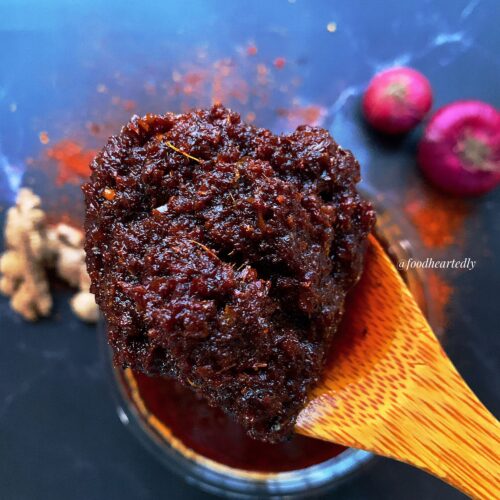
Shito or black pepper sauce is the most authentic of all sauces originating from Ghana. It is so versatile and can be paired with literally any meal of your choice. Even bread! And the best part about this sauce is that, when fried really well, it can last for weeks or months on your shelf without refrigeration and can be carried along to any place of your choice when packed in portable containers. In case you’re still wondering what you can eat this sauce with, let me help you: most rice dishes (fried rice, jollof, braised rice), waakye, banku, kenkey, gari, fried yams or fried ripe plantains, the meat just to name a few.
Ingredients Used in Making Shito
The ingredients needed to make shito are listed below;
1.5 liters Vegetable Oil
1-2 cups Powdered pepper
2 cups Smoked Herrings
2 cups Smoked Shrimps
2-3 medium-sized Onions
3-4 thumb-sized Ginger
1 Stock tablet
Salt
This sauce is one of a kind and can be used to eat so many meals across West Africa. You should try it.
Shito (Black Pepper Sauce)
Shito or black pepper sauce is the most authentic of all sauces originating from Ghana. It is so versatile and can be paired with literally any meal of your choice
Blend or grind the herrings and shrimps into a either a smooth or rough consistency (based on your preference)
2 Cups Smoked Herrings, 2 Cups Smoked Shrimps
Blend the onions and ginger together with some oil (this will prevent splashes when you’re cooking)You can add garlic if you want
3 pcs Medium sized Onions, 4 Pcs Thumb-sized Ginger
Pour the powdered pepper, blended herrings and shrimps into a big bowl and mix. Add a little water to the bowl and stir till you arrive at a very thick paste. (It shouldn’t be watery)
2 Cups Powdered pepper
In a pot, heat up about 800 ml of oil for about 3-5 minutes on medium heat. Add the blended onions and ginger to the oil and cook for about 20 minutes.
1.5 Litres Vegetable Oil
add the powdered pepper, herrings and shrimp paste to the pot and keep stirring to prevent the mixture from sticking to the pot.
Add the stock tablet to the pot and taste. You can add salt to adjust the taste to suit your preference
Salt, 1 pc Stock Tablet
Turn off the heat and allow the shito to cool off. It’s advisable to dish out the shito into a glass jar, bowl or container and cover tightly. A plastic jar works fine too but a glass jar is preferable.
Notes
Store the shito in a cool and dry place and it will last for as long as possible provided it is cooked really well.An important point to note is that always use a clean and dry spoon to fetch the shito. Using a wet spoon will make it go bad in no time.
Shakshuka is a healthy and hearty breakfast, lunch, and dinner meal made with poached eggs in a well-spiced tomato stew. It can be paired with bread or even your favorite salad
What is Shakshuka?
Credit: Tasty Recipes
There are various variations of this dish, however, a traditional shakshuka recipe s basically made of eggs poached in a spicy warm tomato-based stew with onions, garlic, and bell pepper. Some recipes include minced meat, yogurt, fresh herbs, feta cheese, and more.
Origin of Shakshuka
The exact origin of this meal is not totally known, but it is said to have originated in North Africa, particularly Tunisia, and has been brought to Israel and become a popular Middle Eastern Dish.
Is Shakshuka Spicy?
There is no right or wrong way to spice up this eggs and tomato meal. You definitely need some cumin, paprika, and chili powder to add to it. We can say that this meal is more warm and flavorful as opposed to spicy.
Shakshuka Recipe
The major ingredients used in cooking this meal are more often than not sitting in your kitchen as they are daily used ingredients. The major ingredients needed are oil, onion and garlic, bell pepper, tomatoes, cumin, paprika, chili powder, eggs, cilantro, parsley, avocado, bread, or crumbled cheese for serving.
This is a very simple recipe that you ought to try out. Share with us on our social media platforms if you do try this recipe out.
Shakshukah
Shakshuka is a healthy and hearty breakfast, lunch, and dinner meal made with poached eggs in a well-spiced tomato stew. It can be paired with bread or even your favorite salad.Credit: Immaculate Bites
Heat a large cast-iron (12 inches) or saute pan over medium heat.
Pour in oil into the pan. As soon as oil sizzles, add diced onions and garlic saute for about 1-2 minutes until fragrant.
4 tbsp Oil, 1 pc medium sized onion
Throw in bell pepper and continue cooking for about 10 minutes, stirring occasionally, until onion and bell pepper mixture is soft and slightly browned. If needed, add an extra 1 to 2 tablespoons oil or as needed. Do not let it burn.
2 pcs bell pepper
Add whole tomatoes together with all its juice smashed with a wooden spoon to desired texture, followed by all the spices – cumin, paprika, and chili pepper,
A healthy diet is essential for human growth and development. It is said that people who maintain a healthy diet have a longer life expectancy.
The African continent has a lot of staple foods as the main dishes for most countries, so it can be tough maintaining a healthy diet if the major foods and dishes are very high in carbs.
However, in this article, I would be sharing ways that Africans can maintain a healthy diet, improve their health and not have to relinquish some of their favorite meals.
What is a Healthy Diet?
Healthy Diet
A healthy diet is a health-promoting and disease-preventing meal or meal. It provides adequacy without an excess of nutrients and health-promoting substances from nutritious foods and avoids the consumption of harmful health substances.
The key to a healthy diet is to eat the right amount of calories. A healthy diet entails eating a wide variety of foods in the right proportions and consuming the right amount of food and drinks to achieve and maintain healthy body weight.
There are a few things to do if you are considering having a healthy diet and improving your living via food;
Eat at least 5 portions of a variety of fruits and vegetables every day
Base meals on higher fiber starchy foods.
Have more dairy or dairy alternatives to carbonated drinks
Infuse more beans, fish, eggs, and other proteins into your meals.
Drink lots of fluids
If you are having foods and drinks that are high in fat, salt, and sugar, have them less often and in small amounts. Try to choose a variety of different foods from the main food groups to have access to a wide range of nutrients for a healthy diet.
Popular Foods Consumed by Africans
The African continent has a variety of meals that are eaten across borders and we will be mentioning a few from across the five regions in Africa such as domada, wasawasa, malva pudding, efo riro, gbegiri soup, dorowat, nyama choma, kenkey, waakye, mhajeb, chicken tagine and a whole host of other delicious meals.
Ways to Maintain a Healthy Diet as an African
There are a lot of ways to maintain a healthy diet as an African contrary to popular opinions that the majority of the meals are not healthy.
Infuse Vegetables into Meals
One way to maintain a healthy diet as an African is by infusing vegetables into the majority of your meals. Eating vegetables provides health benefits, and is an integral part of a healthy diet. Including vegetables in your meals reduces the risks of some diseases. Vegetables provide nutrients that are essential for the health and maintenance of the body. Most vegetables are low in calories and fats and this is essential for a healthy diet. The nutritional components of vegetables are numerous as it helps reduce the risk of heart diseases, including heart attacks and stroke.
Also eating meals rich in vegetables as part of an overall healthy diet may protect against certain types of cancers. Vegetables help increase fiber and potassium levels in the human body.
Eating Meals Rich in Vitamins
It is important to eat meals that are rich in vitamins such as A and C. There are varieties of African foods and fruits that are rich in vitamins such as Guava, African horned melon, broccoli, palm oil, sweet potatoes, carrots, eggs, spinach, liver, green beans as well as plantains.
Eating meals rich in vitamin A is very essential for a healthy diet because it is a fat-soluble micronutrient. It is found naturally in foods and can also be gotten through supplements. The body’s vision, immune system, reproduction, growth, and development rely on vitamin A. It helps in the proper functioning of organs such as the heart and lungs. Infusing vitamin A into your healthy diet also helps you have healthy teeth, skeletal and soft tissue, mucus membrane, and skin.
Vitamin C is also an essential nutrient for a healthy diet. The benefits of vitamin C are numerous, it helps maintain healthy skin and bones as well as reduces the risk of heart disease. Including vitamin C in your diet helps reduce iron deficiency and boosts the body’s immunity. Its antioxidant properties help fight free radicals and enhance brain function.
The intake of meals rich in vitamins A and C is very essential for survival, so therefore to have a healthy diet try to infuse such foods and fruits into your meal plan.
Reduce Carb Intake
Carbs also called carbohydrates are a type of macronutrient found in certain food and drinks. Sugars, starches, and fibers are carbs.
Most of the major African dishes are made up, mostly of carbs and they lead to weight gain and risk of diabetes, heart disease, and high cholesterol. The digestive system of the human body breaks down carbs into glucose or blood sugar which is absorbed in your bloodstream and used as energy to fuel your body. Taking a lot of carbs can raise your blood sugar levels and high blood sugar (hyperglycemia) can put you at risk for diabetes.
Reducing your sugar intake is necessary for keeping blood sugar levels and maintaining a healthy diet. Also, sugary foods and drinks are often higher in calories which contributes to weight gain. It s advisable, that for a healthy diet reduce your intake of refined foods and foods that contain added sugar such as white flour, desserts, candy, juices, fruit drinks, carbonated drinks, and sweetened beverages.
Include Exercise in the Routine
There is a popular saying in Africa, that you need to be really overweight before you bother with routine exercise, because Africans are said to exercise daily through their different day jobs.
Exercise refers to physical activities carried out for fitness and body health. It is good to watch what you eat, but a healthy diet also requires some exercise.
There are so many ways exercising can benefit the human body for its growth and development, and I will be listing some of them;
Exercise helps control weight: Exercising helps prevent excess weight and helps maintain weight loss. Involving in physical activity helps burn calories and the more intense the physical activity, the more calories that are lost.
Exercise helps prevent health conditions and diseases: Regular exercise helps prevent or even manage many health problems and concerns such as stroke, metabolic syndrome, high blood pressure, type 2 diabetes, depression, anxiety, cancer as well as arthritis. it also helps boost cognitive functions and lowers the of death from all causes.
Exercise boosts energy: Regular physical activity can improve your muscular strength and boost your endurance. Exercises help deliver oxygen and nutrients to your tissues to help your cardiovascular system work more efficiently.
Exercise improves sleep: Exercising regularly helps you fall asleep better. Ensure you do not exercise before bedtime, you might be too energized to sleep.
Eat More Fruits
Fruits are very essential for a healthy diet as they are highly nutritious. Fruits are an excellent source of essential vitamins and minerals, and they are high in fiber. Fruits also provide a wide range of health-boosting antioxidants, including flavonoids. Eating a diet high in fruits and vegetables can reduce a person’s risk of developing heart disease, cancer, inflammation, and diabetes. Because they are low in saturated fat, salt, and sugar, fruits, and vegetables are part of a well-balanced diet that can help you lose weight or prevent weight gain. Plus, they can help you decrease inflammation, and lower cholesterol levels and blood pressure.
Trying to enforce the above-mentioned tip into your daily meals and routine will definitely create the perfect healthy diet that would lead to a healthier life expectancy. You do not have to let your favorite meals go, you only have to learn to add other nutritional items to your diet. I already started implementing some of the tips I shared, you should too and share them with us in the comments.
I was on my way home one faithful day and I saw a signboard showing a new amala spot in Abuja! I was super excited as this particular spot comes with a twist! They sell Amala in a Danfo (BUS). Immediately, I changed direction and was on my way to Maitama to eat Amala in a Bus!
Only to get there and it was just a normal building with a drawing of a bus *tears*. I went in to find out what they sold and they had Amala and different soups, they also sell Ewa Agoyin (Beans) and Bread. Unfortunately, it’s a take out restaurant with no place to I got a plate of Amala with plenty orishirishi (meat) and I’ll give it a 5/10. It was not hot and it wasn’t giving what correct Amala should give. I don’t know why I did not buy the Ewa Agoyin and bread but I’m definitely going back to try it out and I’ll be back to tell you about it!
The Amala is from N200, Bread from N400, Ewa Aganyin( Beans) from N700 and Meat from N200.
Generally, I love the concept and I love how local food spots are available everywhere you go in Abuja!