

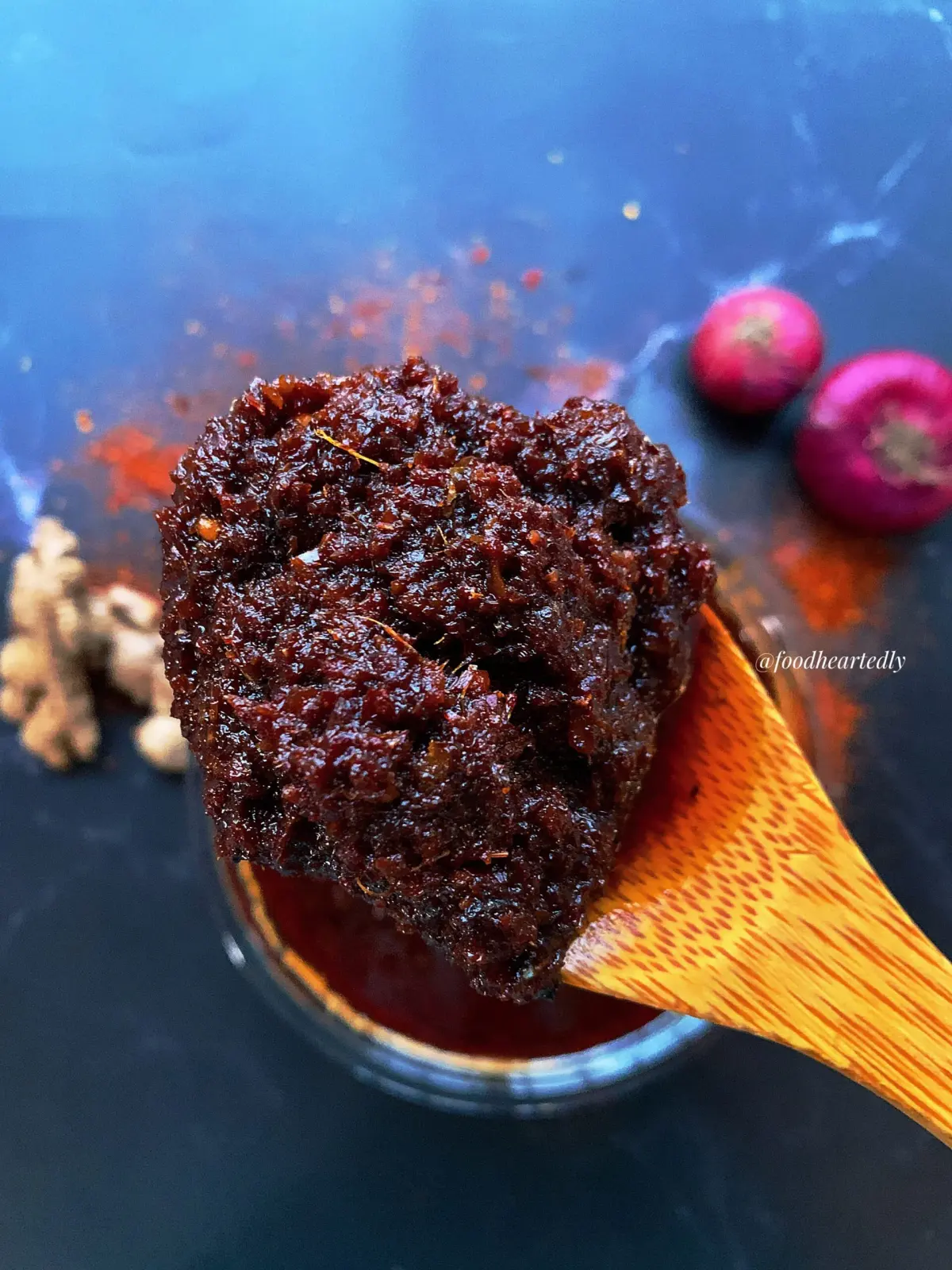
Shito (Black Pepper Sauce)
Overview
To make shito, Ghana's black pepper sauce, you blend smoked herrings and shrimps and mix them with powdered pepper into a thick paste. Then you fry blended onion and ginger in oil for about 20 minutes. Add the paste and keep stirring until it turns nearly black and the oil separates and rises to the top. The name comes from the Ga language, and its full form, shitor din, means black pepper. It's savoury and properly hot, so you use it a spoonful at a time. Fried until the oil separates, shito is known for keeping for weeks or months without a fridge. There's almost no water left in it, and the oil seals the top. That's why it's so popular with boarding school students in Ghana, and why people make it in big batches. The one rule is to use a clean, dry spoon every time. A wet spoon brings in water, and water is what spoils a jar. Banku and shito, kenkey and shito, and waakye with shito are everyday pairings in Ghana. It's just as happy next to fried rice, gari or a slice of bread.
AFN Heritage Note
Shito is documented as a Ghanaian condiment built on dried fish, dried shrimp and ground pepper cooked in oil, and takes its name from the Ga word for pepper. Its preservation relies on frying until the water content is driven off and the oil seals the sauce, allowing months of unrefrigerated storage.
Ingredients
Dietary tags are provided by contributors as a guide, not verified by AFN, and they depend on the products you buy. If you have a serious allergy, check every ingredient yourself. Cooking, allergies and your own judgement
Directions
- 1
Blend or grind the herrings and shrimps to a smooth or rough consistency depending on your preference.
- 2
Blend the onions and ginger together with some of the oil, which prevents splashing during cooking. Garlic can be added here if you want it.
- 3
Put the powdered pepper and the blended herrings and shrimps into a large bowl and mix. Add a little water and stir to a very thick paste. It should not be watery.
- 4
Heat about 800ml of the oil in a pot for 3 to 5 minutes over medium heat. Add the blended onions and ginger and cook for about 20 minutes.
- 5
Add the pepper, herring and shrimp paste to the pot and keep stirring so it does not stick.
- 6
Add the stock tablet and taste. Adjust with salt.
- 7
Continue cooking until the sauce darkens and the oil separates and rises to the surface.
- 8
Turn off the heat and leave the shito to cool completely.
- 9
Transfer to a glass jar or container and cover tightly.
Africook’s Notes
 Personal notes from Amanda Dadson
- Cook it until the oil visibly separates and rises. That is the point at which the water has gone and the shito will keep. Stopping earlier gives a sauce that spoils within days.
- Use a clean dry spoon every single time you take shito out of the jar. Water introduced on a wet spoon is the one thing that reliably ruins a properly made batch.
- Keep the paste thick before it goes into the oil. A watery paste means a much longer cook and a greater risk of catching.
- Stir almost continuously once the paste is in. The mixture is dense and catches on the base readily, and burnt shito is bitter throughout.
- A glass jar is better than plastic. Store somewhere cool and dry with the oil covering the surface of the sauce.
- If you plan to keep shito at room temperature, make sure a layer of oil covers the whole surface of the sauce. If it doesn't, store the jar in the fridge.
Questions cooks ask
What are the ingredients for shito?
This recipe uses vegetable oil, powdered pepper, smoked herrings, smoked shrimps, onions, ginger, a stock tablet and salt. Some cooks add garlic when blending the onion and ginger. The mix of fish and spice changes from region to region.
Is shito the same as black pepper sauce?
Usually, yes. The oil-fried shito on this page is Ghana's black pepper sauce, and its Ga name, shitor din, means black pepper. In Ghana the word shito also covers fresh ground pepper sauces made without oil, which are red or green. The black comes from the fish, shrimp and ground pepper frying down in oil.
Is kpakpo shito the same as shito?
Not quite. Kpakpo shito is a green ground shito, made fresh without oil by mashing pepper, onion, tomato and salt together, and the red version is called shitor tsulu. The shito on this page is the black, oil-fried kind, shitor din.
Can you eat shito with banku?
Yes, banku and shito is a classic pairing in Ghana, alongside kenkey and waakye. Use it a spoonful at a time beside the banku, like a hot relish, rather than pouring it over as a sauce.
What gives black shito its flavour?
This black shito gets its depth from the smoked herring and shrimp.
Should shito be refrigerated?
Shito that was fried until the oil separated, with oil covering the whole surface, is often kept out of the fridge in a cool, dry place. If yours wasn't cooked until the oil separated, or the oil doesn't cover it, keep it in the fridge. Either way, always use a clean, dry spoon.
Reviews
4 reviews
You Might Also Like
Browse all Ghanaian recipes →
Easy and Simple Way to Make Banku
Garden Egg Stew (Earthenware Bowl Method)
Kontomire Stew
Made this over the weekend because my husband wanted something hot for his food. The smell when that ginger and onion mixture hits the hot oil is insane! I sommer ground the smoked shrimps extra fine. You really have to stand there and keep stirring once the fish paste goes in or it catches at the bottom of the pot.
Getting proper smoked herrings in Berlin is a serious struggle sha, had to buy ground smoked fish from the afro shop near Osloer Straße. Blending the onions and ginger with oil first stopped all that heavy splashing though. Taste came out so dark and rich, just like the shito my Ghanaian roomie used to bring back.
Got the smoked shrimps and herring from woolwich market yesterday. my arm almost pain me from the constant stirring o! Cooking the onions for 20 mins was fine but it took me way longer than 60 mins total to get that deep dark colour without burning the paste. still e sweet sha, eating it now with rice.
Asante sana for this clear recipe. In Dar we love spicy relishes as well. I have a gentle question please regarding the third step: when adding water to the powdered pepper and smoked herring to form a thick paste, about how much water should be used? I want to make sure it does not become too thin before adding to the hot oil.