Fried Whole Tilapia

Tilapia are primarily freshwater fish that live in shallow streams, ponds, rivers, and lakes, with brackish water being less prevalent.

They are incredibly delicious if you can overlook their bony structure. One of the greatest ways to enjoy this wonderful fish is to fry it whole, which can then be served with any meal. It is the idea of frying it whole that inspires the name ‘Fried Whole Tilapia’

Fried Whole Tilapia is a simple-to-prepare, nutrient-dense, and reasonably priced dish. However, it is best to be aware of where your fish comes from, for hygienic/health concerns.

Tilapia

This is a plant-eating fish that lives in freshwater, and chances are you ate it last year. Every year, the average American consumes more than 1 pound (lb) of fish. After tuna, salmon, and Alaskan pollock, it is now the fourth most popular fish in the United States.

This fish is a low-cost, mild white fish that is simple to prepare and cook, making it a good supper option. But it’s the farming procedures, not the taste, that has caused it to become so popular. It is often known as the “aqua-chicken,” and can be mass-produced on a large scale, allowing the fish to be widely available at a low cost.

Is Tilapia Safe To Eat?

It is safe to consume when raised inadequate circumstances on farms. Before consuming, people should store it properly and thoroughly cook it.

Tilapia is one of the finest fish choices for pregnant or breastfeeding women, as well as children over the age of two, according to the United States, Food and Drug Administration (FDA)Trusted Source. This is owing to the low levels of mercury and contaminants in the water.

How To Fry Whole Tilapia

Amongst other varieties of fish such as; Alaskan cod, catfish, flounder, and perch, tilapia makes the list of fishes suitable for frying due to their light nature and low oil composition.

Asides from this factor and its popularity, It is also a choice because of its low cost, ease of preparation, and mild flavor.

You can experiment with frying this fish with strong flavorings and batters according to your preference.

Fried Whole Tilapia Combo

After frying your fish, you can serve it alone(it’s a whole meal after all) or together with vegetable sauce, rice, roasted potatoes, baked French fries, mac, and cheese, etc. The choice is yours to make.

Some suggestions for Amazon product links to “Gorton’s Premium Breaded Haddock Fish Fillets”.

Gortons Premium Breaded Haddock Fish FilletsProject Overview Docs Banner in Light Green Blue Vibrant Professional Style 1

Fried Whole Tilapia

Fried Whole Tilapia

Prep Time 10 minutes
Cook Time 20 minutes
Total Time 30 minutes
Course Sauces and Soup
Cuisine Togolese
Servings 0
Calories 67 kcal

Ingredients
  

  • 1 Tilapia whole
  • 2 habanero pepper
  • 6 garlic
  • 1 rosemary batch
  • 1 tsp turmeric
  • ½ tsp black pepper
  • 1 tsp garlic powder
  • salt to taste
  • oil for frying

Instructions
 

  • Ask your fishmonger to gut, trim, and scale the fish. Once you get the fish home, clean the it thoroughly, specially the inner cavity. Trim the fins and tail if desired. Score a diagonal criss-cross pattern across the fish body on both sides.
  • Rub some salt, black pepper, garlic and turmeric powder on the fish. 
  • Mix the spices and rub the spice paste generously on to the inner cavities and outside of the whole pomfret.
  • Heat oil on medium heat in a flat-bottomed non-stick pan. The oil should come up to the side of the fish. Heat the oil until it is smoking hot. Add habanero pepper, garlic and rosemary branch 
  • Fry the fish for about 8-10 minutes on each side. To turn the fish, slowly scrape the bottom of the pan to loosen the fish. If the fish is ready, it should be very easy to loosen the fish. While frying, occasionally tilt the pan from side to side, so that the head and tail get submerged and crisped along with the mid-section of the fish.
  • Serve the fried whole tilapia

Nutrition

Calories: 67kcal
Keyword Fried Tilapia, Tilapia Recipes
Tried this recipe?Let us know how it was!

Homemade Yogurt

Yogurt is a fermented milk product that has wild popularity, all over the globe. This global relevance has kept it on the lips of many, helping them survive a craving that has never been defined yet.

The tangy flavor of this meal is also due to the fermentation process. In this process, Lactobacillus bulgaricus produces lactic acid, to give it a sour, acidic, and refreshing flavor.

Cooking is not the same as making yogurt. Not at all. Making it is a call to ignite your inner man’s creativity. The aftermath of this meal is more than meets the eye.

It can be made in a variety of ways, some of which require complex equipment and others that require little more than what the medieval Turk had on hand: milk, lactic acid bacteria, and a basic container in which the two ingredients can work their magic.

Where Does Yogurt Come From?

The Turkish word “yogurmak” which meaning to thicken, coagulate, or curdle, is thought to have inspired the name “yogurt”. It is a centuries-old meal that has been consumed by humans for a long period and counting.

There is a story that claims that ancient herdsmen began the habit of milking their animals between 10,000 and 5,000 BC, they stored their milk in bags fashioned of the animals’ intestinal guts, according to one idea.

Natural enzymes in the intestines cause the milk to curdle and sour. The ranchers discovered that keeping milk this way extends its shelf life and preserves it. They liked the fermented milk so much that they decided to keep making it.

Since then, yogurt has survived the test of taste, decade after decade.

Can Yogurt Be Frozen?

Of course. It is made especially for the freezer; there couldn’t have been any better match made in heaven.

Yogurt is Better When You DIY

While store-bought yogurt is convenient, it lacks the subtle creaminess of a homemade one. The good news is that producing a healthy one is almost guaranteed, as long as you keep your instruments clean and don’t jostle the mixture while it’s setting.

This method is simple and does not involve the use of a sophisticated machine, a Crockpot, or an Instant Pot. All you’ll need is good whole milk and a creative conjuration of other bacterial elements.

Note: A homemade Yogurt done right is super tasty and satisfying.

homemade yoghurt

Homemade Yoghurt

c867516bb037627a6ef0a809bab520905a07a369cc10fcb9571f42d9956011df?s=30&r=gAnthony Johnson
Prep Time 30 minutes
Cook Time 2 hours
Total Time 2 hours 30 minutes
Course Dessert
Cuisine American
Servings 0

Ingredients
  

  • ½ gallon milk whole or 2% are best, but skim can also be used

Instructions
 

  • Warm the milk to right below boiling, about 200°F. Stir the milk gently as it heats to make sure the bottom doesn’t scorch and the milk doesn’t boil over.
  • Cool the milk. Let the milk cool until it is just warm to the touch, 112°F to 115°F. Transfer the to storage containers
  • Add ½ cup commercial yogurt containing active cultures and 1 cup of powder milk. Then whisking gently
  • Take advantage of the heat during the hot summer months by culturing outside. Simply set your yogurt jars in a closed cooler and then set it in the sun.
  • After the set time, take the jars out of the yogurt maker, close them with their lids, and put the yogurt jars in the refrigerator for storage.
  • Serve with some sugar (or honey) and some fruits.

Video

Keyword Yoghurt, Yoghurt Recipe, Yogurt
Tried this recipe?Let us know how it was!


Placali

Placali is an Ivorian fermented cassava paste (yucca) also consumed in Togo (Agbélimakoumè). Ivorian cuisine is the cuisine of Côte d’Ivoire, a West African country and by extension, it affects its neighboring countries’ cuisines as well.

These countries include; Burkina Faso, Ghana, Liberia, Guinea, and Mali all have cuisines that are inspired by the country’s neighbors. This cuisine is also affected by France and Portugal’s colonization of the country.

What is Placali?

Plakali is a traditional cuisine cooked mostly by the Ahanta and Nzema peoples of Ghana’s Western region. Plakali is served with a soup made from palm nuts or groundnuts.

It’s made from cassava bread boiled in boiling water, and it’s comparable to banku and fufu, two other Ghanaian staple foods. Cassava has successfully made its way into diverse African dishes. No worries, we love to see all of it.

To know the benefits of cassava, for health and nutrition purposes, you can check here

Cultural Background of Plakali

During the colonization era, Ivorians hustled to supply cassava to some French and Portuguese merchants as a barter for their gold and valuables, which they sought forcefully for in Côte d’Ivoire.

The cassava they traded came from Brazil and other South American countries occupied by the Portuguese at the time. As more Ivorians learned about cassava, they began to cultivate land for its cultivation and experiment with novel cassava recipes. Cassava has become one of Côte d’Ivoire’s staple foods as a result of this.

In addition to Placali, cassava is also used for Attiéké, tapioca and gari.

Some suggestions for Amazon links to “Kitchen Aid Classic Soup Ladle, One Size, Black”.

KitchenAid Classic Soup Ladle One Size Black

Project Overview Docs Banner in Light Green Blue Vibrant Professional Style 1

Placali Recipe

Placali Recipe

c867516bb037627a6ef0a809bab520905a07a369cc10fcb9571f42d9956011df?s=30&r=gAnthony Johnson
Placali is an Ivorian fermented cassava paste (yucca) also consumed in Togo (Agbélimakoumè). Cassava is a root tuber, rich in starch and has a nutty flavor. 
Prep Time 20 minutes
Cook Time 30 minutes
Fermentation Time 2 days
Total Time 2 days 50 minutes
Course Side Dish, Swallow
Cuisine Ivoirian, Togolese
Servings 0

Ingredients
  

  • cassava

Instructions
 

  • Chop the tip and tail of the cassava root. Using a sharp knife, carefully cut the entire length of the cassava. Peel the brown skin and the thick white layer. Once the root is peeled, cut it into pieces, wash, grate and crush the cassava. If the crushed cassava contains a lot of fiber sieving.
  • Transfer the crushed cassava to a bowl, cover and let ferment for 2 days.
  • Put the crushed cassava in a saucepan, add a little water and mix until the consistency is liquid, then set aside.
  • Before cooking remove the water that has been formed on the top of the casserole. The more water you keep, the more Placali will be soft.
  • Put the saucepan on the heat and cook while turning using until the mixture becomes compact.
  • Put the rest in a saucepan. Heat over low heat by turning constantly with a spatula without pause until the dough thins and begins to get more compact turn energetically. Cook for 5 ~ 10 min (or until the dough does not thigh).
  • Placali can be enjoyed with Palm nut soup, Okra or Kpala.

Video

Keyword Cassava Recipe, Placali, Placali Recipe
Tried this recipe?Let us know how it was!

Merveilles Donut

Merveilles donut is popular street food in Togo and Senegal. It is a crunchy delicacy similar to the local fried Pankere in Nigeria.

Origin of Merveilles

It has a European origin, with an irresistible taste that makes adults and kids keep craving more. The pastry’s original name is Fasnachtschuechli in German; It’s known as “Fritelle di Carnavale” in Italian, which roughly translates to “Carnival fries”.

To characterize this unique dessert, French speakers took the name of a carnival pastry from France: Merveilles, which translates to “wonders” in English.

This snack has pretty much become a national Winter tea-time delicacy, with different brands, in different countries. During the months of January and February, it is also available at almost all bakeries.

How To Make Merveilles Donut

You need for this easy recipe is a few cups of flour, butter, egg and sugar. Follow the easy steps below to make yours.

Merveilles donut

Merveilles Donut

c867516bb037627a6ef0a809bab520905a07a369cc10fcb9571f42d9956011df?s=30&r=gAnthony Johnson
Merveilles donut is a popular street food in Togo and Senegal. It is a crunchy delicacy similar to the local fried Pankere in Nigeria.
Prep Time 15 minutes
Cook Time 15 minutes
Total Time 30 minutes
Course Snack
Cuisine Senegalese, Togolese
Servings 0

Ingredients
  

  • 200 g all purpose flour
  • 40 g butter
  • 2 eggs
  • 50 g sugar powder
  • 30 cl oil
  • 1 tsp nutmeg
  • icing sugar

Instructions
 

  • Make a fountain with flour and yeast. Pour in the center the powdered sugar, the eggs, the nutmeg and the melted butter. Knead by hand to obtain a homogeneous paste.
  • Form a ball with the dough and Spread each slice finely on a floured work surface and cut.
  • Heat the oil in a large pan and put the pieces of batter. Drain the ear cups on paper towels, place them on a dish, sprinkle with icing sugar and serve.

Video

Keyword Merveilles Donut, Merveilles Snack
Tried this recipe?Let us know how it was!


Boerewors Stew

Boerewors stew has become a South African classic over the years, with a creative extension in other countries. Regardless of his clime, every chef wants to explore a unique dish, after all!

Boerewors stew is made from Boerewors sausage and can be served over several side variants.

Boerewors is a fresh South African sausage that is ideal for grilling. Loosely translated, the name means “farmer’s sausage” and it’s a sausage grilled to have a chunky, coarse texture. It is slightly different from the regular sausage you may be used to.

Usually made of beef, it has an iconic spiral shape and is flavored with vinegar, nutmeg, and cloves.

Who Invented Boerewors?

This sausage comes from South Africa. It is widespread throughout Southern Africa and is a staple of South African, Zimbabwean, and Namibian cuisines. The name combination has its roots in Afrikaans, with wors meaning farmer and Boer meaning sausage.

A fun fact about Boerewors Sausage is it was so well-loved by South Africans that their legislators wrote a law to protect it by legally stipulating the ingredients allowed to be put in it.

It’s frequently eaten with pap, a typical South African cereal made with mielie-meal (maize meal) and topped with a tomato-onion sauce (see Maize Meal and Tomato & Onion)

How Boerewors Is Made

Boerewors is a dish made of finely minced beef (occasionally with minced pork, lamb, or both) and spices (usually toasted coriander seed, black pepper, nutmeg, cloves, and allspice).

It cannot be purchased at a local meat market outside of South Africa, despite its popularity and great demand. Many South Africans are prompted to make their own, and many recipes, such as the one below, have been around for a long time.

Boerewors is traditionally designed to be a spiral sausage. To make your stew, you would need to mince or cut it into bits, as you please.

Making Boerewors Stew

This relish is achieved with the flavors of the boerewors sausage and tomato sauce. In less than 30 minutes, you can make a tasty stew with just a few simple ingredients. It’s delicious with this yeast-free bread, pap, yellow rice, or these incredibly simple fat cakes.

Some suggestions Amazon links to “Lodge 6 Quart Enameled Cast Iron Dutch Oven with Lid – Dual Handles“.

Lodge 6 Quart Enameled Cast Iron Dutch Oven with Lid Dual Handles

Project Overview Docs Banner in Light Green Blue Vibrant Professional Style 1

Boerewors stew

Boerewors Stew

This dish is made from coarsely minced beef (sometimes combined with minced pork, lamb, or both) and spices (usually toasted coriander seed, black pepper, nutmeg, cloves, and allspice). Like many other forms of sausage, it contains a high proportion of fat, and is preserved with salt and vinegar, and packed in sausage casings.
 
Prep Time 10 minutes
Cook Time 20 minutes
Course Main Course
Cuisine South African
Servings 0

Ingredients
  

  • 1 Onion
  • Canola oil For frying
  • 1 t Cumin
  • 1 t Smoked paprika
  • 1 t Turmeric
  • 350 g Grabouw boerewors
  • 2 2 cloves garlic chopped
  • 1 Pinch Dried chilli flakes
  • 1 t Dried oregano
  • 1 t Organic tomato paste
  • 1 x 400 g Italian organic chopped tomatoes

  • 1 cup Organic beef stock

Instructions
 

  • Slice the onion and fry in hot canola oil with the cumin, smoked paprika and turmeric.
  • Cut the boerewors into bite-sized pieces and brown with the onions.
  • Add the chopped garlic, chilli flakes, dried oregano, organic tomato paste, Italian organic chopped tomatoes and organic beef stock.
  • Simmer for 15 minutes and season.
  • Serve with mashed potatoes.
Keyword Boerewors Sausage
Tried this recipe?Let us know how it was!

Pickled Fish

Pickled fish is a Cape Malay traditional dish, and it’s especially popular during the Easter season. Easter in Cape Town would be incomplete without the city’s favorite delicacy: pickled fish. Travelers have also found pleasure in consuming pickled fish, while on tours in South Africa.

Some say this dish was created to feed the crowds on Good Friday following the morning’s three-hour church service, but others argue that this is not the case because the meal is also amongst the Muslims.

Pickled fish is not expressly tied to Easter, despite its relationship with the Christian event. It is believed to have come from Cape Malay cookery, which was used to preserve fresh fish during the early days of the Cape colony.

What Does It Mean To Pickle?

Pickling is the preservation or extension of a food’s shelf life through anaerobic fermentation in brine or immersion in vinegar. Vegetables, fruits, meats, fish, dairy, and eggs are all other examples of foods that can be pickled.

The texture and flavor of the food are usually affected by the pickling process. The resulting food is known as a pickle, often prefaced with pickled to avoid ambiguity.

Your pickle, whether a fish, meat or vegetable is usually lightly curried, sweet and tangy meal that is traditionally served with freshly baked bread or hot-cross buns.

It can be kept for up to six weeks, but it’s usually so popular and delicious that there may not be need for preservation. Watery mouths matter! haha!

Pickled Fish Combos

Pickled fish is consumed in a variety of ways. Some prefer to eat it plain, while others prefer to serve it with warm bread, buns, lemon, salad, or rice.

It should be kept in the refrigerator at no more than 40⁰F (refrigerator temperature) and consumed within 4 to 6 weeks for optimal flavor.

The combination ideas surrounding this dish, is totally up to you.

Is Pickled Fish Healthy?

Just like fresh fish, it is a great natural source of vitamin D3 and omega-3 fatty acids. It also contains a lot of selenium and vitamin B12.

Note: Pickling is used to preserve only a few species of fish commercially, but almost any type of fish can be pickled at home. Killing the larvae of the broad fish tapeworm, a parasite that can infect humans, is the first step in making safe home-pickled fish.

Pickled-fish

Pickled Fish

Here is a quick and easy recipe
Cuisine South African
Servings 0

Ingredients
  

  • 2 kg firm white fish fillets, I am using Hake
  • 6 large onions, peeled and sliced
  • Salt to taste
  • 1 cup of flour
  • 1 tsp ground black pepper
  • 2 tsp turmeric
  • 1 cup vinegar
  • 1 cup water
  • 3-4 tbsp sugar
  • 2 tbsp apricot jam
  • 1 tbsp black pepper corns
  • 1 tbsp coriander seeds
  • 5 bay leaves

  • 2 tbsp roasted masala
  • 1 tbsp corn flour mixed with 3 tbsp. of water
  • Vegetable oil

Instructions
 

  • Take the fish pieces and dust with the flour and season with salt and pepper. Heat the oil, shallow fry the fish in a large frying pan, about 2 minutes on each side. Put aside on draining paper.
  • Next, in a large pot, heat the vinegar and water on a medium heat. Add the onions, sugar, salt, spices, jam, bay leaves and cook for 8-10 minutes.
  • Add the corn flour mixture and stir well. Transfer the fish, onion and curry sauce mixture to large heat proof dish, making sure the sauce covers all the fish.
  • Allow to cool and cover the bowl or container and store in the fridge overnight or for a few days.
Keyword Pickled, pickled fish
Tried this recipe?Let us know how it was!


Fried Yam

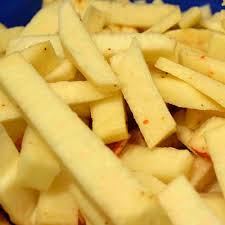
Fried yam is a simple dish, but it tastes absolutely delicious. The crispy fries are made from African yam and they result in fantastic eating. They can be eaten for breakfast, lunch, or dinner with sauce and a choice of protein.

What is Fried Yam?

Fried yam is a crispy dish that can be eaten with a variety of sauces or even alone. It can be served as an appetizer or as a side dish. It is also popularly known as “dundun”

The ingredients needed to fry yam is just few, easy and handy.

Traditional Nigerian Dundun can be enjoyed in a few distinct ways. Fried yam is one of the most common ways to make a crispy side dish like this. If you prefer a healthy option, you can bake yam in the oven. This is not, however, the usual manner to prepare this dish.

Methods of frying Yam

You can either fry your yam or bake them, depending on the method you feel most comfortable with.

Method 1

  • Frying yam is one of the easiest things to do; with an easy procedure as well
  • First, The yam should be peeled, washed, and chopped. After that, soak the yam pieces for 5 minutes in water.
  • In a saucepan or deep fryer, heat the oil and fried the yam chunks for a few minutes.
  • Then, in the same saucepan, add 3-7 tbsp salted water and boil till golden yellow.
  • Depending on how many yam fries you’re cooking, you’ll need to add more water. By adding water to the oil, the yam fries will cook on the inside as well as the outside.

Note: This is the most expedient technique. However, determining when the yam is cooked enough on the inside can be tricky. To see if the yam fries are done, take one out of the oil and poke it with a fork.

Method 2

  • The yam should be peeled, washed, and chopped.
  • Then, in a saucepan, add the yam chunks and enough water to cover them.
  • Cook for 7-10 minutes, seasoning to taste.
  • When the yam is done cooking, drain the water and deep fried the yam for 5- 7 minutes, or until golden yellow.

Note: Because you must parboil the yam before frying, this approach takes a little longer than the last one. Parboiling the yam, on the other hand, guarantees that the yam is soft on the inside, so you won’t have to worry about it being undercooked.

Method 3 (baked method)

Baked products typically include less calories than fried foods.  To start, Preheat the oven at 230°C/446°F/Gas 8 @ 230°C/446°F/Gas 8. Then, set aside a foil-lined oven pan that has been lightly greased with oil.

  • As with the other methods mentioned above, the yam should be peeled, washed, and chopped.
  • Then, in a saucepan, add the yam chunks and enough water to cover them.
  • In a saucepan, place the yam chunks and enough water to cover them. Cook for 7-10 minutes, seasoning to taste.
  • Drain the water from the yam and place the pieces in a lightly greased baking tray (make sure they are not touching).
  • Bake for 12-15 minutes, or until golden brown, turning occasionally.

Whether you decide to bake or fry your yam, the end product should be crispy; that’s the only way to enjoy “fried yam”. The whole preparation process before the crispiness is entirely up to you.

The following recipe is the basic frying method for yam.

Fried Yam

Fried Yams

c867516bb037627a6ef0a809bab520905a07a369cc10fcb9571f42d9956011df?s=30&r=gAnthony Johnson
Fried yam is a simple dish, but it tastes absolutely delicious. The crispy fries are made from African yam and they result in fantastic eating.
Prep Time 10 minutes
Cook Time 25 minutes
Total Time 35 minutes
Course Breakfast, Dinner, Lunch, Main Course, Snack
Cuisine Nigerian
Servings 0
Calories 253 kcal

Ingredients
  

  • yam as much as you can eat
  • vegetable oil
  • salt to taste

Instructions
 

  • Peel and cut the yam tuber into 1 inch cylindrical discs. Make several cuts across the discs to get large chips. Wash the yam chips and place in a bowl.
  • Add a little salt and toss the contents to distribute the salt. Set aside for 20 minutes.
  • Fry the yam at 350°F.
  • When the oil is heated, add a few yam chips, leaving enough room for flipping the chips.
  • Stir the chips till they have turned golden.
  • Remove the chips and place in the paper towels to absorb the oil.

Video

Nutrition

Calories: 253kcal
Keyword Fried Yam, Yam Recipes
Tried this recipe?Let us know how it was!

Yellow Rice

Yellow rice is a traditional dish that is popular across several continents of the world. In Spanish, Iranian, West Asian, Moroccan, Ecuadorian, Peruvian, Caribbean, Portuguese, Filipino, Afghan, Indian, Sri Lankan, South African, and Indonesian cuisines, it is a typical yellow-colored rice dish. It’s cooked using white rice that’s been tinted yellow with annatto, saffron, or turmeric, among other things.

This traditional South African recipe, which comes from the great culinary tradition of the Cape Malays — originally brought in as slaves in the 17th century. It’s easy and plain but great with meats like venison, corned beef tongue, or any meat with gravy.

Few Facts about Yellow Rice

  • With origins in Cape Malay cuisine, South African yellow rice is traditionally cooked with raisins, sugar, and cinnamon, yielding an extremely sweet rice dish that is served as a side dish to savory dishes and curries.
  • It’s known as Kaha buth in Sri Lanka, and it combines Indonesian and Sri Lankan influences.
  • It’s known as nasi kuning in Indonesia.
  • It’s known as kuning in the Philippines.

Truthfully, recipes vary from country to country. This also makes the preparation processes and spices different as well. But, In addition to the spices, coconut milk and onions are frequently included in its recipes. This dish is a symbol of traditional cuisine in many cultures, particularly in Indonesia. To commemorate important cultural ceremonies, it is customary to serve them.

Why Yellow Rice?

There may not be any distinct reason why you should prefer yellow rice but it could be a good alternative for the popular fried rice.

Fried rice and yellow rice have a lot in common. This rice’s yellow tint comes from shrimp and seasonings. The dish appears to be delicious, but it tastes much better. Serve with braised chicken for a great dinner.

Is Yellow Rice Healthy?

It has about 8% protein and 2% fat, mostly in the form of omega-6 fatty acids, which are pro-inflammatory. It provides certain health benefits, according to Ricepedia, despite lacking beta-carotene, vitamin A, vitamin C, or lutein+zeazanthin and being poor in fiber.

Minerals such as calcium, iron, magnesium, phosphorus, potassium, sodium, and zinc are also abundant in them. Thiamine, riboflavin, niacin, vitamin B-6, and folate are all vitamins found in yellow rice.

Is yellow rice harmful to your health?

The majority of the yellow rice boxes and packages available in supermarkets are high in chemicals, additives, and MSG. So, in theory, that type of yellow rice is dangerous for you if you eat too much of it.

These recipes are created from scratch, which is far superior to store-bought versions. You may also use brown rice instead of white rice if you want to make it healthier.

How To Make Your Yellow Rice Healthier

By making a few tweaks to this dish, you can make it healthier, especially for weight reduction. Use brown rice instead of white rice to increase fiber and save calories. Cooked brown rice has 218 calories per cup, compared to 242 calories in white rice, and 3.5 grams of fiber, compared to 0.6 grams in cooked white rice. Fiber, iron, and zinc are all increased when beans or peas are added to rice. You may also minimize the sodium level of your yellow rice by using low-sodium broth and eliminating or reducing the quantity of additional salt. (source: Livestrong)

Yellow rice with shrimp and braised chicken

Yellow Rice with Shrimp and Braised Chicken

c867516bb037627a6ef0a809bab520905a07a369cc10fcb9571f42d9956011df?s=30&r=gAnthony Johnson
Yellow rice is closely related to fried rice. The shrimp and seasonings is what gives this rice its yellow color.
Prep Time 20 minutes
Cook Time 1 hour 30 minutes
Total Time 1 hour 50 minutes
Course Main Course
Cuisine Nigerian
Servings 0

Ingredients
  

For the Yellow Rice

  • 4 tbsp butter
  • 2 cloves garlic minced
  • 1 tsp turmeric
  • ¼ tsp cumin
  • 1 tsp ginger
  • 2 cup jasmine rice long grain (uncooked)
  • 3 cup water or chicken broth
  • 2 cup cleaned shrimp
  • 1 onion
  • 1 bouillon cube
  • salt to taste

For the Chicken

  • 1 tbsp freshly squeezed lemon juice
  • salt and pepper
  • 1 tbsp ginger
  • ¾ tsp garlic powder
  • cup olive oil
  • 1 bouillon cube
  • salt to taste

Instructions
 

For the Yellow Rice

  • Add the butter, onion, Shrimp, garlic, turmeric, cumin, cube and ginger to a medium sauce pot. Sauté over medium heat for 5-7 minutes, or just until the onion has softened.
  • Add the dry rice to the pot. Stir and cook over medium heat for about 2 minutes to slightly toast the rice. You may hear a slight popping or crackling noise as the rice toasts.
  • Add the water and place a lid on top, increase the heat to high, and bring the pot to a rolling boil. As soon as it reaches a full boil, reduce the heat to low and let it simmer (with the lid in place) for 20 minutes.
  • After letting it simmer for 20 minutes, turn the heat off and let it rest (do not remove the lid) for an additional 10 minutes. Fluff with a fork and serve.

For the Chicken

  • Preheat oven to 400°F.
  • Combine the lemon juice, salt, pepper, ginger, garlic powder and olive oil. Whisk well. 
  • Marinate the chicken and refrigerate for 4 hours.
  • Cook for 20 minutes, uncovered. Lower oven temperature to 375°F and cook for another 20-25 minutes, or until chicken reaches 160°F.

Video

Keyword Yellow Rice, Yellow Rice with Shrimp and Braised Chicken
Tried this recipe?Let us know how it was!


Chicken Feet

Chicken feet can be served as a beer snack, cold dish, soup, or main dish in a variety of regional cuisines. They were first used in Asian dishes as a result of the Chinese ethos of not wasting food.

Truth be told, the least appetizing of all chicken parts, by all standards are the feet. It has the texture of crocodile skin and contains very little meat. Despite the stigma attached to it, chicken feet are a delicacy in China and are offered in most restaurants with other chicken parts.

In several countries, chicken feet are cooked and eaten. The majority of the edible tissue on the foot consists of skin and tendons, with no muscle when an exterior layer of hard skin is removed. The feet have a different texture than the rest of the chicken meat as a result of this.

Where Is Chicken Feet From

Much of Asia, as well as areas of Mexico, Peru, and Jamaica, consider chicken feet to be delicacies. They’re usually served chilled and with a beer in China. However, demand for the snack has grown to the point where a black market has formed a market alliance, to ensure that supplies can keep up.

What Chicken Feet Tastes Like

If prepared properly, it tastes really nice. Chicken feet are high in collagen and are commonly boiled as part of a stew. The feet, unlike other parts of the chicken, have very little edible meat, consisting primarily of skin and tendons. Also, they can be chewy if they aren’t cooked properly.

Chicken Feet Preservation

To preserve your chicken feet, the first thing you will want to do is thoroughly wash the feet. No detergent is necessary, you’ll simply want to wash them in plain water. If the feet are fresh like ours are, you’ll want to let them soak to remove all of the dirt first. This part of your chicken freezes well and can stay for at least six months as they are wrapped airtight to protect them from any freezer burn.

When you’re ready to prepare your it, the feet should be submerged in hot water, so that the outer layer of the skin can be removed by peeling it off, and thereafter, covered in seasonings and grilled for consumption.

chicken feet recipe

Chicken Feet

Here's a quick, easy and delicious chicken feet recipe.
Servings 0

Ingredients
  

  • 32 chicken feet (about 2 pounds)
  • Kosher salt
  • 1/2 cup sake
  • 1/3 cup water
  • 6 large thin slices fresh ginger
  • 1/3 cup soy sauce
  • 1/4 cup sugar
  • 2 dried hot chiles, crushed
  • 2 tablespoons oyster sauce
  • 2 tablespoons hoisin sauce
  • 2 pods star anise
  • 1 stick cinnamon
  • 1 cup sliced scallions (1-inch pieces)
  • 2 tablespoons minced scallions, garnish
  • 1 tablespoon sesame seeds, toasted, garnish.

Instructions
 

  • Add the chicken feet, in batches if necessary, to a large pot of boiling and cook for approximately 30 seconds.
  • While you can add more than 1 chicken foot at a time, make sure not to overcrowd the pot.
  • Set each chicken foot on a plate to cool. Once cool enough to handle, begin peeling off the skin one foot at a time.
  • You may find it easier to peel the top layer of the nails first before removing the skin from the rest of the foot, but either way is fine. The goal is to remove the top layer of skin and nails.
  • Proceed to fully cut the nails off of each chicken foot at the first joint. The scaly skin and nails are unusable and should be discarded.
    You can clean the chicken feet up to a day prior to cooking. Just place them in the refrigerator until you are ready to proceed with the recipe.
  • Rub the cleaned chicken feet with kosher salt and let stand for 10 minutes.
  • Rinse the salted chicken feet under cold water.
  • Boil another pot of water, salt it generously, and add the chicken feet; blanch for 5 minutes and drain well.
  • Blanch chicken feet in a pot of water.
  • Place a 14-inch sauté pan over high heat. Add the chicken and dry-sear until lightly brown.
  • Dry-sear chicken feet in a pot.
  • Add the remaining ingredients and bring to a simmer. Cook, covered, for about 10 minutes.
  • Add the remaining spicy chicken feet ingredients to the pot.
  • Uncover and simmer until the sauce has become thick and cooked down, tossing frequently to coat the feet as the sauce reduces.
  • Chicken feet cooking in the sauce
  • Garnish with minced scallions and toasted sesame seeds. Serve and enjoy.
Tried this recipe?Let us know how it was!


No Corn Starch Rice cakes (Ablo)

Abolo, sometimes known as ablo, are bouncy steamed rice cakes popular in Western African countries. It is a tasty gluten-free steamed rice cake prepared from rice, corn, yeast, sugar, and salt. It is primarily consumed by Togolese, Beninese, Ghanaians, and Ivorians, and is ideal for parties or at home.

How Rice Cakes Are Made

Corn starch, cornflower, and rice flour are combined to make them. The steamed buns are somewhat simple on their own, but when coupled with a thick stew or soup, they make for a satisfying dinner.

The traditional method takes time, although most of it involves inactive waiting periods. The process spans three to four days from the first rice soaking to taking the finished product out of the steamer.

The best part apart from being really tasty dumplings that can be eaten with any sauce of your choice is that they are quite easy to prepare. There are baking powder variants, but I preferred the yeasted variety. Fermentation will give you a better flavor.

They are steamed in Benin and wrapped in banana leaf bundles. I’m sure they’d add a lot of flavor to the bun. In the original recipe, the mixture of rice four is steamed in a banana leaf or an aluminum mold lined with plastics.

Some Suggestions for Amazon links to “Ethnic Cooking Utensils”

Wooden Spoon Set

Project Overview Docs Banner in Light Green Blue Vibrant Professional Style 1

Ingredients

Rice, granulated sugar, baking powder, yeast, salt.

Are Rice Cakes Healthy?

Rice cakes are frequently consumed as a low-calorie alternative to bread and crackers. Summarily, Essential vitamins and minerals are few in rice cakes. They’re essentially fat-free and low in protein and fiber. To enjoy a balanced meal with rice cakes, you’d need to combine your rice cake with a nutritious sauce with proteins and vegetables.

No cornstarch rice cakes ablo

No Cornstarch Rice cakes (Ablo)

c867516bb037627a6ef0a809bab520905a07a369cc10fcb9571f42d9956011df?s=30&r=gAnthony Johnson
Le Ablo is a Togolese (Abolo Beninese) steamed rice and corn flour dish.
Prep Time 30 minutes
Cook Time 1 hour 40 minutes
Resting Time 12 hours
Total Time 14 hours 10 minutes
Course Main Course
Cuisine Beninese, Togolese
Servings 0

Ingredients
  

  • 2 cup rice
  • 4-6 tbsp granulated sugar or more according to your taste
  • 1 tbsp baking powder
  • 1 tbsp yeast
  • ¼ tsp salt

Instructions
 

  • Soak the rice overnight.
  • The next day, drain the water and blend the rice with  1 cup water.
  • Boil 1 cup of water and ⅓ of the blended mixture and cook for 3 minutes.
  • Mix the cooked mixture, the remaining blended rice, sugar, yeast (and water if needed). Place in a warm place for 30 minutes.
  • While the mixture is rising, prepare your molds. 
  • Add baking powder and salt. Whisk the batter until just smooth. 
  • Fill the mold to the ¾. Let the mixture rise in the mold for 30 min.
  • Bring a steamer with water to a running boil.
  • Working in batches and placing the mold in the steamer. Steam for 25 minutes, or until the Ablo has risen and is firm to the touch.
  • Remove from the molds and enjoy warm or at room temperature.

Video

Notes

It is not recommended to use rice flour for this recipe as it will yield a slightly sticky cake with a tint of yellow instead of snow-white rice cake.
Make sure the rice-sugar mixture is cooled completely before adding the dissolved yeast. You will need a steamer for this recipe. Make sure your steamer is ¾ filled with water. Let the steamer boils on high heat for at least 10 minutes before steaming the cakes.
If your yeast isn’t frothy or bubbly after 10 minutes, it’s probably expired. The active dry yeast is the key ingredient in this recipe.
Keyword Ablo Recipes, No cornstarch Rice Cakes
Tried this recipe?Let us know how it was!

QUICK RECIPES