Ofada Stew Recipe

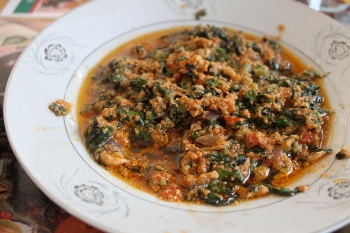
Ofada stew is a very popular delicacy originating from the Yoruba Tribe in western Nigeria. A delicious stew rich in assorted meats and with a super unique flavor.

According to what I’ve been told, this stew is the real deal from Ofada. I used to think my favorite green bell pepper stew, also known as ayamase stew or designer stew, was Ofada stew, but it appears that I was mistaken for a long time? I even thought it was also similar to the Buka stew.  Hmmm, it seems like we learn something new every day.

Difference Between the Buka Stew And Ofada Stew

Buka Stew has some tomatoes in the mix though the ratio of the red bell peppers to the tomatoes is usually higher. On the other hand, the Ofada Stew is made with Red peppers (red bell peppers, red chili peppers).

Difference Between the Ayamase Stew And Ofada Stew

The only difference between these two delightful delicacies is the choice of bell peppers used. The Ayamase stew is made with green peppers which include green bell peppers green chili peppers etc. The real Ofada stew is made with the red pepper varieties; Red bell peppers, red chili peppers.

Since the major difference is in the color of peppers used. My Ayamase stew recipe can easily be swapped to make this Ofada stew which is exactly what I did. Swapped the green peppers in that recipe for red bell peppers with a little added twist in the Ofada recipe pepper flakes. It worked like a charm and was de-li-cious of course ??

How To Make Ofada Stew

Ofada stew is easy to make. So don’t fret. If this is your first time making any of the Nigerian stews that require bleaching the palm oil, I suggest you read this post on Tips for Bleaching Red Palm Oil Like an Expert.

I always bleach my palm oil ahead of time because it saves me time. It ok if you don’t have some bleached palm oil. Simply follow the steps below to bleach your palm oil safely.

  • Pour a good quality palm oil in a clean, dry pot (I prefer stainless steel)
  • Cover pot, turn on heat to medium and cook for 10 to 12 minutes until the palm oil becomes transparent and no longer red.
  • Let oil cool completely before opening the pot. Use immediately or store for later.

To make ofada stew, you can take care of your bell peppers in any of the three ways I would be listing below.

1. Wash and blend peppers and use immediately by frying in the oil till all moisture is absorbed

2. Wash and blend peppers then cook it down till water content reduces before frying

3. Wash and roast peppers in the oven then Blend and use ( my preferred method.)

What Kind Of Meat Can I Use For Ofada Stew?

Ofada stew is usually made with a mix of meats. That’s what assorted meats mean. Beef, cow skin, honey comb tripe, cow feet etc. A mix of these meats would be perfect. You can also use just one type of meat if you prefer.

How To Make Vegan Ofada Stew

  • Easy peasy. Swap out the meats for tofu or any other vegan meat substitute.
  • Leave out the eggs.
  • Swap out the meat stock for vegetable stock or water.

What To Eat With Ofada Stew

Ofada stew is typically served with ofada rice which is a short grain rice locally grown in Nigeria. Because it is unpolished it is healthier and richer in fiber than the regular parboiled rice. This rice is served along side this delicious ofada stew on a plate of leaves aka banana leaves.

Ofada stew can be enjoyed with any other rice of your choice and can also be served with boiled or fried yams, fried plantains or potatoes.

Tips To Get Your Ofada Stew Ready In Less Time

  • I precook and fry the meats a day before or up to a week before and store in the refrigerator or freezer
  • I freeze my meat stock.
  • I always roast and blend OR blend and dehydrate my pepper mix and freeze ahead of time.
  • I bleach the palm oil ahead as well
  • The day before I make my stew, I thaw my frozen ingredients in the refrigerator overnight on on the counter. That way its ready for me when I want to cook.

Storage

This stew can stay frozen for up to 3 months. To store, let stew cool completely then transfer cooked stew into freezer friendly bowls and freeze. When ready to enjoy, thaw in the refrigerator overnight then warm up in the microwave or on the stovetop.

Did you Enjoy this recipe? Or found the post helpful? Remember to share with family, friends and in your favorite.

Ofada Stew Recipe

Recipe by Chichi Uguru
Ofada stew is a delectable Nigerian stew made with palm oil, fermented locust beans, and bell peppers. Serve with rice for a delicious lunch or dinner!
Prep Time 20 minutes
Cook Time 30 minutes
Total Time 50 minutes
Course Soup
Cuisine African, Nigerian
Servings 25
Calories 240 kcal

Ingredients
  

INGREDIENTS

The peppers

  • 10 Red bell peppers tatase
  • 2 red chili peppers Shombo
  • 2 onions chopped
  • 1 habanero pepper
  • ¼ cup red pepper flakes optional 

The meats

  • 200 g honey comb tripe
  • 500 g Beef
  • 100 g cow skin
  • 150 g cow foot

Other ingredients

  • 2 cups bleached palm oil
  • 3 cups Beef stock
  • 1 Tbsp Bouillon powder (add more to taste)
  • 7 hard boiled eggs
  • ¼ cup iru (Locust beans)
  • 2 Tbsp ground crayfish

Instructions
 

INSTRUCTIONS

  • Clean and deseed the red bell peppers. Blend with one onion and red chili peppers if using. Use as little water as you can manage without over working your blender. Then set aside.
  • Pour palm oil in a sauce pan with a lid. Bleach palm oil for 7 minutes in the covered pot. Leave pot covered for at least 20 mins before opening to allow the oil cool down completely.
  • Saute onions in the bleached oil then add the iru. Pour in the puréed peppers fry for 5 mins then add in the meat stock , Bouillon powder and the Crayfish
  • Cook till the sauce thickens, stirring frequently to prevent burning.
  • Finally add the precooked and fried assorted meats, stir and taste for seasoning. Adjust accordingly.
  • Lower heat and allow to simmer for about 5 minutes then turn heat off.
  • Add boiled eggs to the sauce.
  • Serve over rice

Notes

Notes
If you didn't fry the meats prior to making the dish, You can fry the precooked meats in the oil, then scoop out meats and set aside before sautéing the onions.

Nutrition

Calories: 240kcal
Tried this recipe?Let us know how it was!


South African Pig Trotters (Maquina)

0

A pig’s trotter, often known as a pettitoe or pig’s foot, is the culinary word for a pig’s foot. Pig trotters are a recognized dish in many countries.

Trotters (pig or ox feet) are a worldwide dish that is cooked in many nations. It is how they are prepared that differs from one culture to the next. Hairs are usually yanked out with a hot tank and beaters.

They are commonly used in cooking to produce stocks because they thicken gravy, but they can also be served as a regular cut of meat. This recipe is for pig trotters, and it’s incredibly easy to make, using a traditional Southern African method.

What is Pig Trotter?

The culinary word for a pig’s foot is a pig’s trotter, sometimes known as a pettitoe or occasionally referred to as a pig’s foot. The cuts are used in a variety of recipes all around the world and saw a comeback in popularity in the late 2000s.

They’re traditionally eaten as a snack using one’s fingers. They’re frequently served with beets, mustard, and fresh bread, as well as lefse or flatbread. Pig trotters can be used as a protein source in soups and stews, or they can be pickled and served on their own. They’re one of the pig’s most coveted components.

Pig trotters have been adopted by several countries as a dish. In Norway, it is known as Syltelabb, a word made up of the terms system and labb. The word “sylte” means “kept.” Pig feet or paws are what the name labb refers to.

Are Pig Trotters Healthy?

Pig feet are low in fat and abundant in protein, especially collagen in the edible parts such as; the tendons and skin. Many experts believe that this is beneficial to joint and skin health. Protein contains 44 percent of the calories found in fat, or about 113 calories per ounce.

Generally, healthy skin, muscle strength, and joint pain relief are the most notable potential health benefits of trotters. These statements are based on research on dietary collagen’s health benefits.

Variations of Pig Trotters

Patitas de Cerdo is a tomato-based stew of pigs’ trotters with chickpeas popular in Puerto Rico. Potatoes or butternut squash are sometimes included.

Pigs’ feet are salted, cooked, and served as syltelabb in Norwegian custom. Because the pig was slain before Christmas and everything was used, this is a pre-Christmas dish. Syltelabb is traditionally served with traditional Norwegian julel, beer, and spirits. This is because Syltelabb is a salty dish.

Pig trotters aren’t the only ones who trot. Cow trotters, lamb trotters, and other trotters are also available.

How To Prepare Pig Trotters

The best way to prepare pig’s trotters is to cook them slowly over a long period. Many wonderful recipes call for braising, which allows the meat to tenderize gently in delectable stock. As long as you follow the basic rule of lengthy, slow cooking, stewed and roasted pig’s trotters are winning meals.

There are several methods you can cook your manquina. You can boil them, then pan roast them till they almost melt off the knuckle, or you can pan barbeque them in a spicy, sweet, tomato-based sauce. The choice is yours.

Some suggestions for Amazon links to “West Bend Stir Crazy Popcorn Machine Electric Hot Oil Popper”.

West Bend Stir Crazy Popcorn Machine Electric Hot Oil PopperProject Overview Docs Banner in Light Green Blue Vibrant Professional Style 1

Manquina (Trotters)

Servings 0

Ingredients
  

  • 1 packet washed packet of trotters
  • 1 tin tomato tin/chopped
  • 1 onion chopped
  • salt
  • beef stock/cubes
  • pepper
  • 1 tbsp canola oil

Instructions
 

  • Wash the trotters in water and allow to dry.
  • Fry your onions and tomatoes and add some salt and pepper for taste.
  • Next, add the trotters and seal them for 10 minutes.
  • Add two cups of water and the beef stock.
  • Cover and reduce the heat and leave to cook for 2-3 hours onvery low heat.
  • Once done the trotters should be tender and ready to serve.
Tried this recipe?Let us know how it was!

Nkatenkwan

Nkatenkwan is a hearty and satisfying Ghanaian stew which combines the richness of peanuts or groundnuts with palm oil, tomatoes, mixed chillies, onions, garlic, and meat or fish.

Super easy to make with minimal prep work.

What Is Nkatenkwan?

Nkatenkwan is one of Ghana’s most famous national dishes. It is a soup made from peanuts. Many people refer to it as peanut butter soup, peanut or groundnut soup.

There is a wide variety of peanut soups and stews across West Africa. This version is simply made by adding peanut sauce to an onion, tomato and pepper soup base. It is almost always served with omo tuo, but also goes very well with any kind of fufu.

Peanut butter soup in Ghana is credited as coming from the Hausa people, but it is enjoyed all over the country.

History Of Peanuts In West Africa

Peanuts are not indigenous to Africa yet are well travelled; originating from South America, spreading to Europe, Asia and Africa, then back to North America through African slaves in the 1700s.

Their introduction to Africa came via the Portuguese in the 16th century, as early as 1502; possibly to the Senegambia region of West Africa or the Angola and Congo regions of Central West Africa. Their use in culinary applications spread throughout the rest of the continent and are an important food today throughout West, East, South and Central Africa.

It is interesting to note that peanuts are not actually nuts but legumes closely related to peas and beans. Prior to the introduction of peanuts, Bambara beans, also referred to as Bambara nuts, were more prevalent on the continent.

It is highly possible that when peanuts were introduced to Africa, they replaced Bambara beans in most dishes, although it is not certain why this happened. Similar dishes which use peanuts can also be found where Bambara beans are the main ingredient.

Bambara beans are used to make kangu cake, similar to kuli-kuli. They are also boiled or roasted and salted then eaten as a snack, much like peanuts. Furthermore they are used to make a famous Igbo dish called okpa, which resembles moin moin.

Whatever the case, peanuts were introduced to Africa centuries ago, and were adopted into the most traditional of dishes. They are very much loved today and used as thickeners, spice or flavor (in the case of suya) and a simple snack.

Their acceptance and adoption into African cuisine is remarkable, even though they are not the original goober in Africa.

How To Make Nkatenkwan

To make the nkatentwan, the first step is to make a soup or broth by adding whole onions, tomatoes and peppers to a pot of meat such as chicken, goat or beef. These ingredients are topped off with water and stock cube or seasoning and allowed to simmer.

While this is happening, a peanut sauce is made in various ways. Some people opt to fry peanut butter in a saucepan with a little tomato puree, like a roux, prior to adding water to create a thick but runny peanut sauce.

Others simply mix the peanut butter with water until smooth prior to heating until peanut oil separates and rises to the surface of the sauce.

From the broth, the whole vegetables are removed and processed before reintroducing them to the pot. The peanut sauce is then poured into the pot and soup is allowed to simmer until ready.

Like many other Ghanaian dishes, there are no hard and fast rules to making nkatenkwan. Some people opt to fry the onions and tomatoes as they would in a stew prior to following the steps to introduce the peanut sauce.

They would then finish off by adding enough water to create a soup consistency. The thickness of the soup is down to the preference of the cook and using less water will result is a peanut stew.

Notes / Variations

  • Replace 1 pound chicken breast or thigh, cut into pieces or beef stew. Adjust the cooking time and add more soups as needed.
  • Replace okra with green beans, kale, or cabbage.
  • Replace peanut butter with other nuts

Different Variations Of Peanut Soups

In West Africa alone we have a variety of peanut soups and stews.

  • Senegal is famous for a peanut stew called mafé (or maafe), and it has a thicker consistency than peanut soup. Maafe is thought to originate from the Bambara and Mandinka people of Mali.
  • Gambia has a peanut stew called domoda.
  • Across to East Africa, binyebwa in Uganda is a ground nut sauce made from ground peanut powder.

What To Serve With Nkatenkwan

It is traditionally eaten with fufu but it can also be eaten by itself or with rice.

Enjoy!

Ghana Peanut Soup (Nkatenkwan)

Recipe by Freda Muyambo
Nkate nkwan is one of Ghana’s most famous national dishes. It is a soup made from peanuts, also known as peanut butter soup, peanut or groundnut soup.
Prep Time 10 minutes
Cook Time 40 minutes
Total Time 50 minutes
Course Main Course
Cuisine African, Ghanaian
Servings 6

Ingredients
  

Ingredients

  • 3 lb chicken (with bone)
  • 6 kpakpo shito peppers (pettie belles)
  • 2 onions , whole
  • 3 cloves garlic (optional)
  • 1 (1-inch) piece fresh ginger
  • 3 large ripe tomatoes
  • 4 cups chicken stock
  • 2 bay leaves
  • Scotch bonnet pepper or chili power (according to taste)
  • ½ cup unsweetened peanut butter
  • 2 cups water (plus extra as needed)
  • 10 whole okra pods

Instructions
 

Directions

  • Place the chicken pieces into a pot. Cut off the top and bottom edges of the onions and add them whole into the pot.
  • Add the tomatoes whole into the pot, removing the core tips. Add the garlic and ginger into the pot. They may be grated or added whole, then processed afterwards.
  • Add the bay leaves, kpakpo shito and chicken stock then bring to the boil and simmer until tender.
  • Prepare the peanut sauce while the soup is simmering by placing the peanut butter into a pot and mixing it with ½ a cup of water. This will allow the peanut butter to meld well with the water prior to adding the rest.
  • Place the peanut sauce on a high heat and add the remaining water. Simmer for about 20 minutes until peanut oil rises to the surface.
  • When the onions and tomatoes are soft, remove them from the broth and place them into a blender. If you want the soup to be very spicy, you may add some of the kpakpo shito now. Process them in the blender, then pour back into the soup and stir. Simmer for 5 minutes.
  • Pour the peanut sauce into the soup and allow to simmer for 15 minutes.
  • Cut off the head and tail of the okra and boil them briefly before adding them to the soup. This is used as a garnish.
  • Check for seasoning and add salt and chili powder if desired. The dish is now ready to be served alongside fufu.
Tried this recipe?Let us know how it was!

Superkanja

Superkanja is an okra stew that packs a nutritional and flavorful punch with its combination of leafy greens, such as spinach, collards, okra and sweet potato leaves. Combined with onions, chilli peppers and fish or meat, variations of this dish are found all over West Africa, such as the Ghanaian kontomire.

Where Does Superkanja Comes From?

Gambia! Known as Gambia’s super soup, this tasty bowl of deliciousness is found in various countries. Its name comes from the Portuguese word for soup (sopa), and a West African word for okra (kanja), which gives the dish its distinct texture.

Superkanja is also called supa kanjasupakanja and kanjadaa.

Is Superkanja Healthy?

Yes, it is! Packed with the nutrients of various leafy greens, meat and vegetables, this is heartiness in a bowl.

Okra’s are low in saturated fat, sodium and very low in cholesterol. It is also a good source of protein, riboflavin, niacin phosphorus, potassium, zinc, and copper. Okra is a good source of dietary fiber, vitamins A, C & K, vitamin B6, folate, calcium, magnesium, and manganese

What To Serve With Gambian Okra Stew (Superkanja)

It is normally served on Saturday at lunchtime and you can eat it with;

Whether you want to eat it as soup or serve it with rice as a stew, this dish is super!

Enjoy this Gambian superkanja recipe, it’s a comforting recipe packed with flavor. Don’t forget to leave a comment below if you made this great dish!

Some suggestions for Amazon links to “Malaysia Best Brand / Baba’s Hot & Spicy Meat Curry Powder “.

Malaysia Best Brand Babas Hot Spicy Meat Curry PowderProject Overview Docs Banner in Light Green Blue Vibrant Professional Style 1

SUPERKANJA (GAMBIAN OKRA STEW)

SuperKanja is a Gambian okra stew, usually served over rice, and is very nutritious. It is popular among Gambians in both the rural and urban areas. There are many variations of the dish, but the basic ingredients are the same.
Prep Time 20 minutes
Cook Time 1 hour 30 minutes
Total Time 1 hour 50 minutes
Course Side Dish
Cuisine African, Gambia, West-African
Servings 3
Calories 1960 kcal

Equipment

  • pot

Ingredients
  

Ingredients

  • 2 lbs lean beef
  • 2 cups of palm oil
  • 2 medium onions
  • 1 lb smoked catfish or any fish
  • 2 lbs okra diced into small cubes
  • Pepper and salt to taste
  • ¼ teaspoon of baking powder
  • 8 cups of water

Instructions
 

Directions

  • Cut the meat into chunks and wash thoroughly
  • Boil the meat and fish in a pot with enough water for 15 minutes. Then remove the fish from the pit.
  • Add salt, onions, pepper, and diced okra to the pot and mix well.
  • Cook over medium heat for 15 minutes, and then add the palm oil.
  • Reduce heat to low and simmer for 20 minutes. Stir occasionally
  • Add the fish back to the pot and simmer for 6-10 minutes on low heat.
  • You can also add crabs and shrimps to the dish if you so wish.
  • Serve with white rice or fufu.

Notes

Notes: You should make sure that the okra has broken down into small pieces.

Nutrition

Calories: 1960kcal
Tried this recipe?Let us know how it was!

Eddoe Soup

Eddoe soup is from Liberia. The eddoe soup is a fragrant and hearty soup is simmered with delicate seasonings and meat or fish of choice. Eddoe is a tropical root vegetable similar to yams or sweet potatoes.

Eddoes Soup takes the root vegetable and sautés them with local seasonings to create a deliciously creamy and savory soup dish.

What Is Eddoe?

Eddoes (Colocasia esculenta), also known as taro, dasheen or cocoyam, is a starchy edible root vegetable that belongs to the Araceae family.  It has tiny hairs all over. Its taste is similar to that of the potato, but with a nutty flavor. It is grown in exotic nations around the world.  They can be boiled, roasted, fried or added to homemade breads and puddings. Eddoe is commonly called the potato of the tropics!

In Guyana, the eddoe root is usually added to soup. The leaves of the eddoe plant is cooked with coconut milk with meat of your choice and eaten with either dhal and rice or just the plain rice and also sada roti.

What Does Eddoe Taste Like?

Eddoe have a light crumbly texture with a slightly sweet flavor, somewhat like a potato. Like a potato, eddoes can be roasted, fried or boiled.

Origin Of Eddoe

Eddoes seems to have originated in India and spread eastwards to Burma and China and southwards to Indonesia. Afterward, it was taken to Japan, Hawaii, Melanesia and Polynesia; in historical times, it spread to Egypt and the eastern Mediterranean, thereafter to Africa, to the Guinea coast and to the Caribbean (Guyana, Jamaica, Barbados) etc.

It has been vigorously grown throughout tropical and subtropical regions. Today, it is grown throughout the West Indies and in West and North Africa. In Asia, it is widely planted in south and central China and is grown to a lesser extent in India. It is now a staple food in many islands of the Pacific including Papua New Guinea.

Is Eddoe Soup Healthy?

Yes eddoe soup is healthy! Eddoe root contains a wealth of organic compounds, minerals, and vitamins that can benefit our overall health in a number of ways. It has a very significant amount of dietary fiber and carbohydrates, as well as high levels of vitamin A, C, E, vitamin B6, and folate, according to the USDA National Nutrient Database.

There is magnesium, iron, zinc, phosphorous, potassium, manganese, and copper in it. The plant also provides some protein in your diet.


Check out the step-by-step printable recipe below. Enjoy!

Eddoe soup

Eddoe is a tropical root vegetable similar to yams or sweet potato. This fragrant and hearty soup is simmered with delicate seasonings and a meat or fish of choice.
Prep Time 10 minutes
Cook Time 40 minutes
Total Time 50 minutes
Course Soup
Cuisine African, Liberian
Servings 4

Ingredients
  

Ingredients

  • 1 lb. (450 g) Eddoes (white or nut)
  • 1/4 salt meat1/4 (100 g) fresh meat (pork, beef or chicken, salted or fresh)
  • 4 pts. (2 liters) water
  • Sprig of thyme3-4 blades eacholot
  • 2 onions
  • 1 tbsp. butter
  • Salt & pepper to taste

Instructions
 

Directions

  • Peel eddoes and put in water to boil with salt and fresh meat cut into small pieces.
  • When tender, crush eddoes. Return to saucepan, add onions, thyme and eschalot. Salt and pepper to taste.
  • Simmer until smooth.
  • Lastly add 1 tablespoon butter and serve with or without pieces of meat.
Tried this recipe?Let us know how it was!


Egusi Pudding

Egusi Pudding – savory bites cooked with African egusi seeds, protein pieces, and spices that are incredibly addicting. It’s great as a snack bite or a side dish.

When you do get the chance to indulge in Egusi Pudding, you’ll experience an extraordinary play on texture and flavor from moist and sponge-like to smoky and savory.

To make the pudding, the seeds are blended and mixed with water, fish, seasoning, and cooked in plantain leaves or aluminum foil in the absence of plantain/banana leaves.

What Is Egusi?

Egusi is a seed that comes from a type of pumpkin/melon. It is usually in a yellowish-orange shell, which when cracked open, reveals a white seed. This highly valued seed, egusi is also known as melon seeds or pumpkin seeds.

They are extremely nutritious- high in protein and oil. According to nourishing planet, they are Composed of nearly 50 percent edible oil and contain another 30 percent pure protein and pack a lot of nutrition into a very small package- who knew they are so nutritious. Now am going to make them more often.

These nutritious seeds are widely consumed in West African Countries like Nigeria, Ghana, Sierra Leone as a thickening agent in soups, and to add depth to most soups.

Egusi can be cooked with green leafy vegetables or used to make soups and stews in several parts of Africa. 
The Nigerian Egusi Soup, boiled with bitterleaf or Ugwu and served with Pounded Yam, is one of my all-time favorite Egusi recipes. However, Egusi Pudding remains top on my list. I could give an arm for a slice of Egusi Pudding… and I won’t be guilty because it is so healthy.
Unfortunately, Egusi can only be purchased in an African store or online, but if you are in West Africa, they are available in most markets. You can store it in the refrigerator and it will stay fresh for more than a year.

Where Does Egusi Pudding Originates From?

Cameroon! Egusi pudding is usually a hit at Cameroonian parties! It is just so good! It is a highly addictive, exotic savory dish that is widely enjoyed in Cameroon. I am pretty sure there are other West African countries that have a fondness of this pudding but don’t know which ones.

How To Make Egusi Pudding

In this recipe, I used fresh beef, smoked fish and crayfish. You may use any one protein, or any combination. I love the smoky taste of the fish; it adds depth of flavor to this savory pudding.

This is an easy way of making egusi pudding instead of using foil paper or plantain leaves. I use muffin cups to make the egusi. Then steam it in the oven-it cuts my labor in half.

What To Serve With Egusi Pudding

You can enjoy egusi pudding as it is or with any starchy side of choice. Options include boiled ripe plantains, boiled yams or bobolo/miondo (fermented and boiled cassava).
Check out the step-by-step printable recipe below. Enjoy!

Egusi Pudding

Recipe By Immaculate Bites
Egusi Pudding - highly addictive savory bites made with African egusi seeds and chunks of protein and spices. Makes a wonderful snack bites or as side dish.
Prep Time 10 minutes
Cook Time 1 hour 15 minutes
Total Time 1 hour 25 minutes
Course Snacks
Cuisine African
Servings 5

Ingredients
  

Ingredients

  • 1 cup dried fish
  • ½ pound beef boiled (cut in bite size) , reserve about 1 ½ cup broth
  • 2 cups ground egusi
  • 1/3 ground Cray fish
  • 1 small scotch bonnet pepper minced or 1 teaspoon dried pepper
  • 1-2 bouillon cube or Maggie
  • Salt as needed

Instructions
 

Instructions

  • Boil beef with salt, pepper and some chopped onions in a medium pot until tender. You can add the smoked fish depending on its texture. . Reserve the stock for later use.
  • Add the stock and meat, fish, crayfish, pepper to the egusi. Mix well, until fully combine. Adjust for salt add more if needed.
  • Place egusi mixture into prepared baking cups. Cover with mixture until about three quarters full. Gently place ramekins pans to the large baking pan.
  • Bring the water (to place in the large baking dish) to a light simmer on top of the stove; carefully pour hot water into the baking pan to come halfway up the sides of the ramekins cups.
  • Cover the pan with aluminum foil and bake at 350 degrees for about an hour. Let it rest for about 10 minutes or more before removing aluminum foil.
  • Carefully remove aluminum foil with an oven mitten.
  • Let egusi pudding rest for about 10 minutes or more before serving.
Tried this recipe?Let us know how it was!

Easy Cachupa Recipe

Cachupa is without doubt Cape Verde’s most popular meal. If you grew up in Cape Verdean family, you’ve probably eaten cachupa since you were toddler. 
Hominy, beans, seasoned meats, and veggies make up this hearty stew. Every family has its own variation, and even within families, no two cachupa pots are the same.

What Is Cachupa?

It is a famous dish from the Cape Verde islands, West Africa. It is a slow-cooked stew of corn, beans, cassava, sweet potato, fish or meat, and often morcela. Referred to as the country’s national dish, each island has its own regional variation.
There are many different versions, but most are based on some kind of pork or perhaps freshly caught fish, although vegetables may be substituted.

Cachupa Vs. Munchupa

This topic is so controversial that I initially promised myself that I wouldn’t touch it with a 10 foot pole. But I changed my mind, because it’s healthy discourse.

Cachupa vs. munchupa seems to be generational debate. In Cape Verde, cachupa is the only name that is used, regardless of which island you’re on. People who were raised in Cape Verde (and many 1st generation-ers) sometimes cringe when they hear the word munchupa.

On the other hand, some Cape Verdeans who have lived in the United States for generations say munchupa. That’s the name of the dish that has been passed down through the generations in their family. 
Whether you’re on Team Cachupa or Team Munchupa, most individuals have strong attachment to their chosen name and strong opinion about which is the correct one. 
am adamant about my position, but also respect people’s family customs. What is my recommendation? Put whatever label you choose on it and move on with your life. 
The issue has been resolved! and even within families, no two cachupa pots are alike.

Main Ingredients For Cachupa

Here’s a quick look at the main ingredients grouped by category:

Meat: While there are versions of this dish in Cape Verde that are meatless, or that use fish, meat is usually a staple in cachupa. I use meat because it’s rich in flavor. Some people go heavy on the meat, I don’t, but feel free to use more or less depending on your preference.

Hominy and Beans: Cachupa is a corn and legume-heavy dish. Hominy (dried corn) is the main ingredient and beans always accompany the corn. I use a combination of dried cranberry beans, feijão pedra (translates to “rock beans”, and white lima beans.

Using dried beans is a must, because the starch that comes off of the beans while cooking helps to thicken the stew. This dish is intended to simmer for a long period of time and canned beans won’t hold up in this dish.

If you have a hard time finding feijão pedra (rock beans), a good substitute is navy beans. Pink beans (frijoles rosados), or small red kidney beans are good substitutes for cranberry beans if need be.

Vegetables: Root vegetables are used for this dish, since they’re a staple in Cape Verde. I personally use yuca, but sweet potatoes, squash, and carrots are all good additions and are often used in combination with each other.

I cut the mandioca into 1 and ½ inch rounds and then cut the rounds in half, remove the peel and then cut each half round into 2 (I hope that makes sense!).

Mandioca is a hard vegetable to cut through so make sure to use a sharp knife and safely apply pressure. Use a wooden cutting board! The peeling shouldn’t be too hard once you’ve cut the rounds in half. There’s a faint line where the skin meets the flesh of the yuca. Place the knife under the skin to loosen it from the flesh.

Greens also give this dish a great flavor! Collard greens are by my far my favorite and what I recommend. Cabbage is another tasty option. If someone tells you that people don’t put cabbage in cachupa, you can kindly let them know that’s false.

Spices and Seasonings: The great news is that you don’t need to run out and buy any special seasonings for this dish. Crushed garlic, yellow onions, smoked paprika, a bay leaf, salt, pepper and a bouillon cube or 2, are all you need for this recipe.

Depending on the meats you use, you can reduce the amount of salt you use. Cured meat with high salt content, such as salt pig and chouriço, are common. 
Another thing to remember is that the flavors in cachupa develop gradually because the ingredients are added in stages. You can wind up with an overly salted meal if you apply too much salt at the start.
start with one bouillon cube at the beginning of the cooking process and then add anotherat the finish if the cachupa needs extra flavor.

How To Make Cachupa

The full recipe is below so I’m just going to keep this very high level. Cachupa takes about 5 hours to make.

  • Season the corned beef and salt pork together in the same bowl overnight. There is no need to season the chouriço.
  • Also, soak the feijao pedra (rock beans) overnight. They take a very long time to cook otherwise.
  • Saute the aromatics, brown the salt pork and corned-beef and add the tomato paste and bouillon to the pot.
  • Bring the rinsed hominy and water to a boil, and let simmer for 1 hour.
  • Add the rinsed cranberry beans and feijão pedra (rock beans), and let simmer for another full hour.
  • Discard the pork fat, shred the corned-beed if desired, and return it to the pan with the fava beans, mandioca and greens. Let the pot simmer for about 45 minutes.
  • Add the chouriço to the pot, and let it cook for about 20 minutes. Once this time is up, taste the cachupa and add another bouillon cube if needed. The beans should be soft by now. You can test this by pinching each type of bean between 2 fingers. The hominy should be tender when you cool it and into it. Let the cachupa simmer for another 10-15 minutes.
  • Turn the flame off, and let the cachupa rest for 20-30 minutes. This step allows the flavors to settle.

Cachupa Cooking Notes & Tips

  • Cachupa takes a good 4-5 hours to cook so start it early in the day!
  • Some people soak the hominy overnight so that the cachupa cooks faster.
  • Keep a kettle of boiling water on-hand to add more water to the dish as needed. If you keep the pot covered and the flame low at all times, the liquid shouldn’t evaporate too much. If the liquid level falls below the handle of the pot, just level it off with some more hot water. Don’t add cold water to the pot!
  • Make sure to stir the pot every 30 minutes with a spoon that’s long enough to reach the bottom of the pan. Reaching the bottom of the pan helps to ensure that nothing sticks and burns.
  • It’s a great idea to shred the meat after a few hours of cooking, to make room in the pot. Press a fork against the meat, you’ll be able to shred it using barely any pressure. No need to use 2 forks.
  • This dish tastes great with a few drops of hot sauce.

Now let’s eat with our eyes!

Some suggestions for Amazon links to “Canned tuna”.

Tonnino Yellowfin and Albacore Tuna BundleProject Overview Docs Banner in Light Green Blue Vibrant Professional Style 1

CACHUPA: TRADITIONAL DISH OF CAPE VERDE – FULL RECIPE

Recipe by Crystal DaCruz
Cachupa is a rich stew from Cape Verde that’s made with hominy, beans, vegetables and seasoned meats. This scaled down recipe feeds 8 people.
Prep Time 30 minutes
Cook Time 4 hours
Total Time 5 hours
Course Main Course
Cuisine Cape Verdean
Servings 8

Ingredients
  

Ingredients

  • 1 and ½ pounds corned beef brisket, cut into pieces
  • 1 pound salt pork, cut into large chunks
  • 2 tablespoons of crushed garlic, divided
  • 2 teaspoons of white vinegar or apple cider vinegar
  • 1 bay leaf
  • 1 teaspoon of smoked paprika
  • 1 teaspoon of salt
  • ½ teaspoon of black pepper
  • 2 tablespoons of olive oil
  • 1 medium onion, chopped
  • 1-2 extra-large bouillon cubes
  • 2 teaspoons of tomato paste
  • 18 cups of water
  • 1 and ½ cups of dried yellow hominy (or samp)
  • ½ cup of feijão pedra (rock beans) (soak them overnight)
  • ½ cup of cranberry beans (soak them overnight)
  • ⅔ cup of large white lima beans
  • 1 medium sized mandioca (yuca)
  • 4 cups of chopped collard greens or kale, rinsed
  • 1 pound of chouriço or linguiça, sliced into rounds

Instructions
 

Directions

  • Season the corned beed and salt pork the night before with the vinegar, bay leaf, smoked paprika, salt, pepper and 1 tablespoon of the crushed garlic. Let the meat marinate in the refrigerator overnight.
  • Soak the feijao pedra (rock beans) overnight as well.
  • Heat the olive oil over medium heat in a large stockpot and add the chopped onions, and other tablespoon of garlic. Transfer the bay leaf from the seasoned meat to the pot. Saute the onions until they are fragrant.
  • Add the marinated meats to the pan (in a single layer if possible) and let the meat brown for about 10 minutes (5 minutes on each side). Remove the meat from the pan and set aside.
  • Add 1 bouillon cube and the tomato paste to the pot and whisk until the bay leaf has dissolved and the the tomato paste is smooth. Add the meat back to the pot and add the water. The water level should reach the handles of the pot. Cover the pot with a lid.
  • Bring the pot to a boil and thoroughly rinse the hominy and add to the pot. Let it reach a boil again, and then turn the flame down to low. Cover the pot with the lid and simmer for 1 hour. Check on the hominy every 30 minutes to give it a stir and make sure that there is plenty of water. (It helps to have a kettle of boiling water on-hand throughout the cooking process, so you can add more water at any point if needed. Do not use cold water.)
  • After the first hour is up, add the feijão pedra and cranberry beans to the pot, stir and cover it again with the lid. Stir and check the water level every 30 minutes. The liquid will thicken as it cooks.
  • Once the second hour is up, remove the meat from the pan (if desired), and “shred” it by lightly pressing a fork against the meat. This step is optional but helps break up some of the pieces of meat, and make more room in the pan for the remaining ingredients. You may notice that the fat from the salt pork will become detached from the meat. Feel free to discard the fat.
  • Add the meat back to the pot, stir it again and add the fava beans, yuca, and greens. (If the greens are too bulky add about half the greens at first, let them cook for 10 minutes and then add the rest) Let everything cook for about 45 minutes.
  • The chourico is the last ingredient to get added to the pot. Once you add it, let it cook for about 20 minutes. At this point you want to stir and taste the cachupa. Add another bouillon cube if desired. Let everything simmer for another 10-15 minutes.
  • Turn of the flame and let the cachupa rest (covered) for 20-30 minutes. Ladle it into bowls and serve with a few drops of hot sauce or chili paste.

Notes

NOTES

  • You can cut the beef brisket into bite-sized chunks or into rib-sized pieces. Do whatever your preference tells you to.
  • White hominy or a mixture of yellow and white can be used (yellow and white are not packaged together). There is no difference in taste between white and yellow, I just like the color of the yellow.
Tried this recipe?Let us know how it was!

Tonnino Yellowfin and Albacore Tuna Bundle


Poulet DG

Poulet DG is a one-of-a-kind, easy-to-adore dish. In a flavorful tomato sauce, it includes an amazing combination of chicken, luscious plantains, and vegetables. And believe me when I say that nothing beats this combination.

This one-pot meal will unquestionably become a household favorite. Make sure everyone is ready to eat right away because this chicken dish tastes 100% better when it is hot.

What Is Poulet DG?

Poulet is the French word for chicken. DG is the acronym for Directeur Général in French, which means managing director or CEO in English. To translate directly, Poulet DG in French means Chicken CEO in English. An unusual name for a dish, right?

It is a delicious chicken and plantain dish that is usually served on special occasions in Cameroon and a totally perfect recipe for father’s day.

Where Does Poulet DG Comes From?

This dish originates from Cameroon. Its name suggests that it is superior to other chicken meals and made for the boss (Directeur General). It has evolved from being served in fine restaurants to being included in special occasion meals at home, during festivities, and for honored guests.

What You Need To Make Poulet DG

  • Ripe plantains: Now you shouldn’t use plantains that are overripe here because we don’t want them to get mushy and ruin your precious meal. They should be firm to the touch.
  • Whole Chicken: This meal is traditionally made with skin- on, bone-in whole chicken cut, for extra flavor. You could equally use chicken parts like chicken thighs or drumsticks.
  • Tomatoes: You also need some lovely tomatoes. If they are not lovely, well don’t use them.
  • Spices & Vegetables: Then you need some spices and herbs. Garlic, ginger, celery. And some vegetables too. I typically use carrots, green beans, bell pepper and green onions.

How To Make Delicious Poulet DG

There are different variations to this meal depending on the preparation but generally, the chicken is marinated before being cooked with a blend of fresh herbs, adding another layer of taste. After that, the skin is browned to give it a lovely crispy texture.

Plantains are probably one of my favorite things. Here the semi-ripe plantain gives this dish the perfect sweetness and a nice texture with each bite. Temperature, storage conditions, and other environmental factors all influence how long plantains take to ripen. Green plantains take about 2-3 days to ripen to the right consistency for this dish. On the skin, there should be no dark spots (too ripe).

For this recipe, I sautéed the chicken in oil for a few minutes to add some flavor, then to intensify the flavor, I  added the green spice blend, cook for a couple of minutes, followed by the vegetables. You should add the fried unripe plantains immediately before serving to retain its crunchiness.

Storage & Reheating

You can store in air tight container for few days in the fridge and will last some weeks in the freezer. Allow to defrost before warming in the microwave.

If you like this recipe you might also like some of my other chicken recipe. Check them out below:

Remember this meal is for CEOs and you my friend, you are a CEO in your own right. Make sure you enjoy this with a chilled glass of juice or something.

If there’s anything better than Poulet DG, I haven’t found what it is. If you know anything better than this please let me know below and I will chase after it. Everyone needs to eat now and then so if you are going to eat, make it memorable. Make it DG! Full printable recipe below;

Poulet DG

Immaculate Bites
Poulet D.G (Chicken Plantains and Vegetables) -- a cross between stir-fried chicken meal and fricassee - classic French stew of chicken and vegetables. Perfect for holidays and gatherings!
Prep Time 2 hours 15 minutes
Cook Time 40 minutes
Total Time 55 minutes
Course Main Course
Cuisine African, Cameroonian
Servings 4

Ingredients
  

Ingredients

  • 1 whole chicken , 3 1/2 to 4 pounds skin on, cut into small chunks
  • Salt and pepper to taste
  • 1 large onion
  • 1 1/2 cup parsley
  • 1 1/2 cup celery
  • 3/4 - 1 cup oil
  • 1 pound carrots cut into 1/2 inch slices , frozen preferable
  • 1 pound cut green beans , I used frozen
  • 1 garlic bulb
  • 2 -3 green pepper
  • 5-6 unripe – to medium -ripe plantains
  • 2 large Maggie or 2 Tablespoon chicken bouillons
  • Oil for deep frying the plantains

Instructions
 

Instructions

  • Brown Chicken Season chicken on both sides with 1 tablespoon salt, 1 tablespoon 1/2 teaspoon pepper. Preheat a Dutch oven or other large heavy pot over medium-high heat.
  • Add ½ cup oil to pot. Add half the chicken, Fry chicken, turning once, until golden brown on both sides, about 10 minutes total, and transfer to a plate. Repeat with remaining chicken or you can just place all the chicken tin the pot like I did and let it brown for about 10 minutes.
  • Blend the onions, parsley, and celery, garlic in a food processor or blender into a fine paste. Pour all the mixture into the pot, scraping up any browned bits with a wooden spoon. add Maggie , stirring occasionally, for about 8-10 minutes . Add about ½ a cup of water if need be.
  • Mix the carrots and green beans into the pot of chicken; let it simmer for 2 to 3 minutes. Finally add the green peppers stir and let it blend, turn off the stove.
  • Using a sharp knife cut both ends off the plantain. This will make it easy to grab the skin of the plantains. Slit a shallow line down the long seam of the plantain, peel only as deep as the peel. Remove plantain peel by pulling it back.
  • Cut plantains into rounds about an inch thick.
  • Heat up a large skillet or cast iron with oil up to ½ inch- medium-high heat until hot but not smoking.
  • Fry the plantains until golden brown , then toss plantains with medley of chicken and vegetables . Hold off ,on this part, until you are ready to serve the meal
  • Serve immediately.
Keyword Chicken Recipes, Poulet DG
Tried this recipe?Let us know how it was!


What Does Ogbono Taste Like?

Ogbono soup, also known as Draw Soup is a unique Nigerian delicacy made from these wild mango seeds (ogbono seeds). The Igbos call it ogbono, and the Yorubas call it apon.

To make Ogbono soup powder, the seed is dried and then blended with crayfish. This is without a doubt one of the easiest and quickest Nigerian soups to make. You may use any protein you choose — beef, dried fish, and fresh fish all work well in this soup.

After Okra soup, this is one of the first soups offered to children when trying to expose them to Nigerian soups.

What Is Ogbono?

Irvingia gabonensis, often known as African mango, wild mango, bush mango, or dika, is a fruit that contains ogbono seeds. Parts of Central and West Africa, as well as Southeast Asia, are home to this species. While the entire fruit is edible, ogbono soup is solely made with seeds.

Origin of Ogbono Soup

Ogbono is a unique variety of Irvingia, which produce edible mango-like fruits and are quite prized for its fat and protein-rich nuts. They originated in Southern Nigeria and were initially planted there. There are still a lot of regional varieties with ogbono soup.

It is an indigenous forest tree connected with plants designated as “non-timber forest products,” according to Chris Chinaka and J.C. Obiefuna’s research. In Nigeria, it is known by a variety of indigenous names. It is known as ‘ogbono/ugiri’ in the Igbo-speaking region, as ‘pekpeara in Nupe,’ as ‘ogwi’, in Bini as ‘uyo,’ in Efik and as ‘oro’ in Yoruba.

Ogbono Soup’s Health Benefits

Ogbono soup is a nutrient-dense soup that is high in vitamins and minerals. The health advantages of African mango are well known, and it is a good source of calcium, magnesium, potassium, and iron. Bush mango seeds have been proven in studies to:

  • Assist in the stabilization of blood sugar levels.
  • Assist in weight loss
  • Lower your blood pressure.
  • Assist in lowering cholesterol levels.

How To Cook Ogbono Soup

There are so many varieties of Ogbono soup preparation and some of these are contingent on individual differences and preferences.

Some individuals prefer their Ogbono soup plain, without any added veggies, while others refuse to eat it unless it has some sort of vegetable. Ogbono Soup with Okra is a favorite of a third group. Some people even go so far as to include Egusi.

How To Cook Ogbono Soup With Okra

Some people add Okro, Ugu, or Bitter leaves to this soup. If using okra, prepare the okra separately and add it in just before the 3rd step below.

Can I Make Ogbono Soup Without Palm Oil?

If you live outside Nigeria, palm oil might not be very common where you are. You can always substitute palm oil in the recipe with olive oil, groundnut oil, or your choice of oil. The taste will be slightly different but the soup will still be very delicious!

What Can I Eat Ogbono Soup With?

It can be served with either fufu or pounded yam. In some markets that specialize in Western African dishes, the soup may be offered in an already prepared and packaged form in other countries. Like okra soup, ogbono soup has a slimy texture.

Tips To Make Ogbono Soup Perfect Every Time!

  • When you add the ogbono to the palm oil, make sure it’s on low heat and watch it carefully so it does not burn. If it burns, it will lose its texture.
  • If you buy pre-ground ogbono seeds and it loses their freshness, the texture of the soup might be off. Keep in an airtight container or better still, buy whole seeds and grind them when you need them.
  • To avoid having a bitter or bland-tasting ogbono soup, cook for at least 20 minutes on low heat after adding the ogbono. This is when the flavor begins to emerge and combine with the other elements. Another reason could be that the Ogbono seeds have become moldy, in which case the taste will be slightly bitter.
  • Then add the stock/water to the soup, add one cup and keep stirring until it gets thick and begins to get its mucilaginous texture. Then add more liquid very slowly, watching the texture carefully. The ogbono soup will start very thick but will begin to thin out. Stop when you reach your desired consistency. If you add too much liquid, the soup will be watery.

Substitutions When Making Ogbono Soup

Pumpkin leaves, collard greens, or bitter leaves can be used in place of spinach (which is a slightly bitter leafy vegetable commonly used in West African soups). If you like, you can completely exclude the vegetables.

Use the meat of your choosing. You don’t have to use what’s listed; whatever you have on hand will suffice. The beauty of this soup is that you can personalize it.

Check one out of the variety of Ogbono recipes below;

Ogbono Soup

Prep Time 20 minutes
Cook Time 20 minutes
Servings 0

Ingredients
  

  • 1/2 cup dried and blended apon/ogbono
  • 1/3 cup palm oil
  • Your choice of meat and fish (precooked)
  • 2 cubes Knorr (bouillon cubes)
  • Salt to taste
  • 1 tbsp dried pepper
  • 1/4 cup blended crayfish
  • 2 cups warm water

Instructions
 

  • Set a medium sized pot on medium heat, add in the palm oil.
  • When the oil is hot, add in the dried ogbono.
  • With a cooking spoon continuously stir the mixture until you have a smooth paste
  • Incorporate the water into the paste bits at a time and continuously stir, the mixture will get thicker as you stir.
  • Continue until you have incorporated all the water
  • Add in the precooked meat, Knorr cubes, pepper, crayfish and salt.
  • Simmer for 4-6 minutes more
  • Your soup is ready to serve.
Tried this recipe?Let us know how it was!

Your ogbono soup is ready to serve and enjoy!

Enjoy these other African soups and stews!

Egusi Soup

Efo Riro

Bitter Leaf Soup

Okra Soup

Ox Tongue

Ox tongue, mainly known as beef tongue, is a piece of meat that is similar to pig’s trotters, lamb kidneys, and pig’s ear. They’re cuts of meat that we may be hesitant to taste, but once we do, we’ll realize what we’ve been missing out on.

It’s a staple of many Asian cuisines and may be found in a variety of recipes from throughout the world, including those from South Africa. And we believe it’s past time for us to embrace this delectable and simple-to-cook cut of beef.

Beef tongue is exported in great amounts by some countries, notably Canada and specifically Alberta. Ox tongue has significant fat content, accounting for up to 72 percent of its calories.

Some Suggestions for Amazon Links to “Cooking Equipment”

Cast Iron Square Grill Pan

Project Overview Docs Banner in Light Green Blue Vibrant Professional Style 1

What Does Ox Tongue Taste Like?

Because the beef tongue has a high-fat content, it has a strong flavor and a great texture. It’s also nutrient-dense, particularly in zinc and iron.

Health Benefits of Ox Tongue

There is a list of hygienic issues with organ meats, yet the benefits of ox tongue are highlighted below;

Ox tongue meat is high in calories, fatty acids, zinc, iron, choline, as well as zinc, iron, choline, and vitamin B12. This meat is thought to be especially useful to persons recovering from illness or pregnant ladies.

Folate is a nutrient found in organ meats that is thought to help with fertility and the prevention of fetal abnormalities such spina bifida and heart difficulties. Furthermore, vitamin B6 can aid with morning sickness during pregnancy.

How to prepare Ox Tongue

Boiling, pickling, roasting, braising in the sauce are all options for prepping this beef cut prepared from a cow’s tongue. It’s used in taco fillings in Mexico and open-faced sandwiches in the United States, and it’s present in many national cuisines.

Beef tongue is frequently seasoned with onion and other spices before being cooked in a pot. The skin is removed once it has cooked. Because the pickled tongue is already seasoned, it is frequently utilized. It can be used as a sauce for meatballs or any other food item.

Another method for cooking beef tongue is to scald it in boiling water and remove the skin before roasting it in the oven with the pan drippings used to make a gravy.

The following recipe is a step by step procedure on how to prep your ox tongue.

ox tongue

Ox Tongue

The tongue can be boiled, pickled, roasted, or braised in sauce.The preparation is minimal but it does take a good few hours to cook. The result, however, is delicious, with the cooked muscle often cubed or finely sliced (rather than being served whole on the plate, which would be a challenge for even the most adventurous gourmand!).
Servings 0

Ingredients
  

  • 1 lamb's tongue, ox tongue, pig tongue or veal tongue
  • 1 onion, peeled and quartered
  • 1 carrot, washed and roughly chopped
  • 3 garlic cloves, bashed
  • 1 bunch of thyme
  • 1 tsp black peppercorns
  • Butter, for frying
  • Salt to taste

Instructions
 

  • Scrub the tongue under cold water, then place in a large saucepan and cover with water. Bring to the boil, skimming off the scum that rises to the surface
  • Once the water is boiling, add your onions, carrots, garlic, thyme and peppercorns.
  • Continue to boil until tender. This takes about 3 hours for ox, pig and veal tongue, or 1–1.5 hours for lamb and smaller tongues.
  • Once cooked, it will have turned white and the top of the tongue will start to blister.
  • Remove the tongue from the liquor, and when cool enough to handle peel off and discard the rubbery skin.
  • Make sure you do this whilst still warm as it’s near impossible to do cold. Remove the rough, bony end of the tongue and discard.
  • At this stage, the tongue can be pressed with a little of the cooking liquor and some gelatine, left in the fridge overnight, then thinly sliced for sandwiches. Or, due to its rich, fatty texture, dice it up and fry in butter until crispy for a luxurious melt-in-the-mouth finish.
Tried this recipe?Let us know how it was!


QUICK RECIPES