
Egusi Pudding
Abuja, Nigeria · View all recipes
Overview
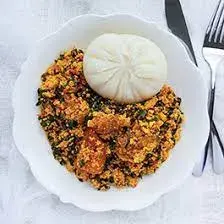
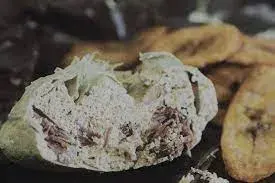
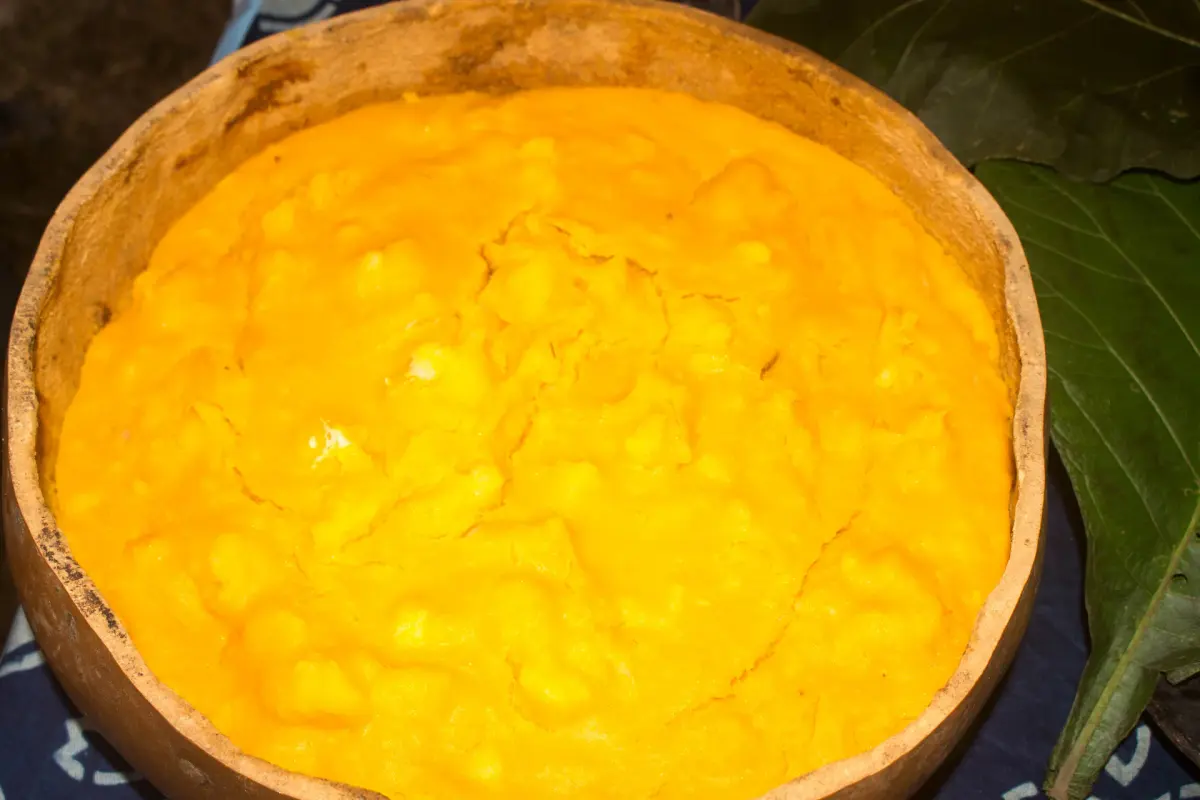
Ground melon seeds mixed with meat stock, fish and seasoning, then steamed in a water bath until set into a firm savoury pudding. It is Nigerian, and it is a different use of egusi from the soup that the seed is best known for. Egusi is the seed of a melon grown across West Africa for the seeds rather than the flesh. Shelled, the kernels are pale and mild, and they are around half oil and a third protein, which is what makes this dish work at all, ground egusi has enough fat and protein to set into a solid pudding when steamed, in the same way a custard sets. The construction is a direct relative of moi moi, the steamed bean pudding, and the technique is the same: a wet, seasoned mixture poured into moulds and cooked in a water bath, traditionally wrapped in plantain or banana leaves, now often in ramekins or foil. The leaves flavour the pudding as it steams, which foil does not. The bain-marie is not optional. Direct heat would set the outside and curdle the mixture before the middle cooked; surrounding it with water holds the temperature down and gives an even, moist set throughout. The source's nutritional discussion of egusi has not been carried across, though the oil and protein content is genuinely what makes the technique possible.
AFN Heritage Note
Egusi is the seed of a West African melon grown for its seeds rather than its flesh, used ground as a thickener and protein across Nigeria, Ghana and Sierra Leone. Egusi pudding is steamed in a water bath in the same manner as moi moi, the Nigerian bean pudding, traditionally wrapped in plantain leaves.
Ingredients
Dietary tags are provided by contributors as a guide, not verified by AFN, and they depend on the products you buy. If you have a serious allergy, check every ingredient yourself. Cooking, allergies and your own judgement
Directions
- 1
Cook the beef with salt, pepper and chopped onion in a medium pot until tender. Put the smoked fish in towards the end if it is firm enough to take it. Keep the stock.
- 2
Combine the reserved stock with the meat, fish, ground crayfish and pepper, and work it into the ground egusi until completely smooth and evenly mixed. Taste and adjust the salt.
- 3
Spoon the egusi mixture into ramekins or leaf-lined moulds, filling each about three-quarters full.
- 4
Set the filled moulds into a large baking pan.
- 5
Bring water to a gentle simmer on the hob and pour it carefully into the baking pan so it comes halfway up the sides of the moulds.
- 6
Cover the whole pan with foil and bake at 350°F / 180°C for about an hour.
- 7
Take it out and let it stand for 10 minutes or more before removing the foil.
- 8
Lift the foil off carefully with an oven glove, the trapped steam is hot.
- 9
Let the puddings rest for a further 10 minutes before serving.
Africook’s Notes
- Do not skip the water bath. Direct heat curdles the mixture and sets the outside long before the middle cooks.
- Get the mixture completely smooth before it goes into the moulds. Lumps of dry egusi stay dry and grainy through the steaming.
- Fill the moulds three-quarters full. The pudding expands as it sets and will overflow otherwise.
- Plantain or banana leaves flavour the pudding as it cooks in a way foil cannot. Use them if you can find them.
- Let it rest before unmoulding. A hot egusi pudding is fragile and will collapse.
- Ground egusi goes rancid quickly because of its oil content. Keep it in the freezer rather than the cupboard.
Questions cooks ask
What is egusi?
The seed of a melon grown across West Africa for its seeds rather than its flesh. Shelled, the kernels are pale, mild and around half oil and a third protein. That composition is why egusi works as both a thickener and a protein source, and it is used across Nigeria, Ghana and Sierra Leone, most famously ground into egusi soup, but also as here, where the fat and protein let it set into a firm pudding when steamed.
How is this different from egusi soup?
Almost completely, despite the shared ingredient. Egusi soup is a thick stew in which ground egusi thickens a broth with leafy greens, meat and fish, and it is eaten with a swallow. Egusi pudding is a set, sliceable savoury pudding steamed in moulds, its closest relative is moi moi, the Nigerian bean pudding, rather than any soup. Same seed, entirely different technique and result.
Why does it need a water bath?
Because the mixture sets like a custard, and custards curdle under direct heat. Surrounding the moulds with hot water holds the temperature steady and moderate, so the pudding sets evenly from the outside in and stays moist. Without it, the outside would firm up and split while the centre was still liquid. This is the same reason cheesecakes and crème caramel are baked in a bain-marie.
Can I use foil instead of leaves?
Yes, and the recipe assumes you might. Foil or ramekins hold the shape perfectly well and the pudding will set properly. What you lose is flavour: plantain and banana leaves impart a distinct grassy fragrance to anything steamed inside them, which is why they are traditional for both this and moi moi. Frozen banana leaves are sold at African and Asian grocers and are worth seeking out.
Reviews
Be the first to rate this recipe
Cooked it? Your rating helps the next person decide whether to try it.
No reviews on this one yet. If you have cooked it, yours would be the first.
You Might Also Like
Browse all Nigerian recipes →
Edo Black Soup
Nigerian Fisherman Soup
Igbo Yam Porridge