
Tomato Stew
London, United Kingdom · View all recipes
Overview
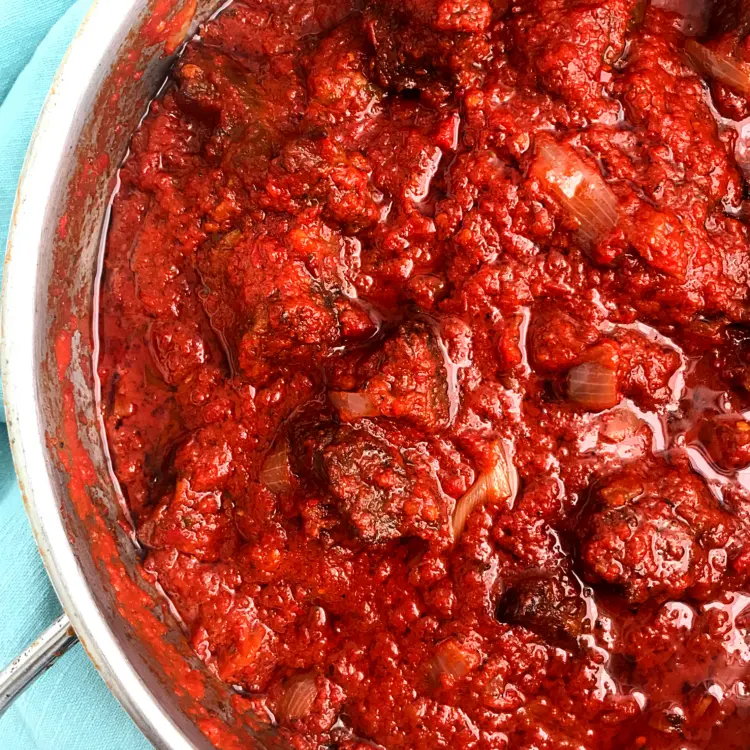
Tomato stew is the foundation of West African home cooking, the red base that sits in a pot in the fridge and turns into half a dozen different meals across a week. It is not really a single recipe so much as a technique with a very wide licence. Tomatoes, red bell peppers, onions and chilli are blended, then cooked down hard in oil until the water drives off, the colour deepens and the oil separates and rises to the top. That separation is the signal that it is done, and it is the step people most often cut short. What it becomes afterwards is open. Served over white rice it is stew. Rice cooked in it is jollof. It goes with yam, plantain, beans, spaghetti and every swallow. Meat, chicken or fish can be cooked in it, or it can be kept plain and used as a base. In many Nigerian households a large pot is made at the weekend precisely so the week's cooking becomes quick. The variations follow region and household. Some cook it with palm oil, some with vegetable oil; some add crayfish, some do not; the ratio of tomato to pepper shifts the colour from bright red to deep rust. It keeps for several days refrigerated and freezes well in portions, which is much of the point.
AFN Heritage Note
The blended tomato, pepper and onion base cooked down in oil is common to cooking across West Africa, and is the foundation from which jollof rice, stewed rice and a wide range of household dishes are built.
Ingredients
Dietary tags are provided by contributors as a guide, not verified by AFN, and they depend on the products you buy. If you have a serious allergy, check every ingredient yourself. Cooking, allergies and your own judgement
Directions
- 1
Wash the tomatoes and blend alongside the fresh pepper, also blend the crayfish alongside the nutmeg seed.
- 2
Slice the onion and set aside. You need 1 cup of sliced onions.
- 3
Wash the meat (Goat meat in my case) and parboil with three stock cubes, a teaspoon of salt, teaspoon each of curry and thyme and half cup of sliced onions.
- 4
Also sprinkle a teaspoon of your favorite beef spice.
- 5
Most times I chose to fry the tomatoes in a frying pan separately and then add it to the cooked meat in the pot.
- 6
Set your frying pan on heat.
- 7
Add 400 ml of vegetable oil. Add the sliced onions and fry for about 2 minutes to release the scent into the oil.
- 8
Then pour in the ground tomatoes/pepper and fry (stirring occasionally to avoid burning).
- 9
You have to keep stirring for the next 20-30 minute, you don’t wanna end up with burned tomato stew.
- 10
Add extra stock cube (optional), add the ground crayfish/nutmeg and allow to cook for ten minutes.
- 11
Taste for salt
- 12
If you are using vegetable, you can add it now, allow to simmer for 3 minutes are you are done with making tomato stew.
Africook’s Notes
 Personal notes from Nympha Nzeribe
- Cook it until the oil separates and rises. This is the whole test of whether it is done, before that point it still tastes raw and sharp.
- Blend the peppers and tomatoes, then drain off the excess liquid before frying. Less water means less time reducing.
- Fry the tomato paste, if using, separately in oil until it darkens before it meets the blend.
- Make more than you need. It is the same effort for double the quantity and it freezes in portions.
- Adjust pepper to tomato for the colour and heat you want, more red bell pepper gives a sweeter, brighter stew.
Questions cooks ask
What is the difference between tomato stew and jollof rice?
They start from the same base. Tomato stew is the sauce, cooked down and served alongside or over rice. Jollof is what happens when you cook the rice in that base so it absorbs the colour and flavour all the way through. If you have a pot of stew you are most of the way to jollof, which is one reason the stew is such a useful thing to have made.
How do I know when it is properly cooked?
When the oil separates and floats to the top. Until that happens the mixture still holds water and tastes raw and acidic. This usually takes considerably longer than people expect, often thirty to forty minutes of steady frying, and it is the difference between a stew that tastes finished and one that tastes like blended tomatoes.
Palm oil or vegetable oil?
Both are used and it changes the dish. Palm oil gives a deeper red colour and a distinct, slightly earthy flavour that is traditional in many households. Vegetable oil is more neutral and lets the tomato and pepper lead. Neither is more correct, it is a regional and family preference.
How long does it keep?
Four to five days in a covered container in the fridge, and it freezes very well for two to three months. Freezing it in meal-sized portions is common practice, since the whole point of making a large pot is to make the rest of the week's cooking fast.
Reviews
Be the first to rate this recipe
Cooked it? Your rating helps the next person decide whether to try it.
No reviews on this one yet. If you have cooked it, yours would be the first.
You Might Also Like
Browse all Nigerian recipes →
Edo Black Soup
Nigerian Fisherman Soup
Igbo Yam Porridge