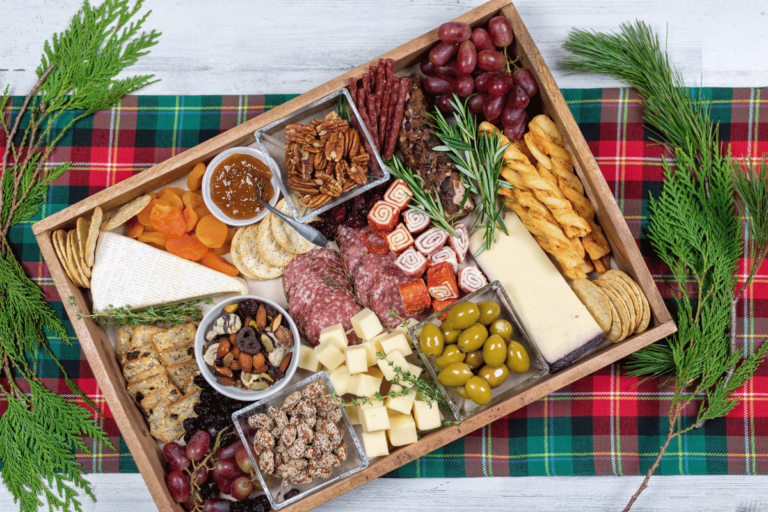
How to Make a Christmas Charcuterie Board (African Edition)

The holidays are a time for celebrating with family and friends and as we come together, food often takes center stage. This year, why not try something different and create an African-inspired Christmas charcuterie board? These meat and cheese boards are loved by many, but giving it an African twist makes it even more special.

For those unfamiliar, a charcuterie board is an assortment of cured meats, cheeses, fruits, nuts, jams, pickles and bread. Though European in origin, the concept can easily be adapted to celebrate flavors from around the world.

Africa has a diverse culinary landscape, with each region offering its own unique ingredients. Building an African charcuterie board allows you to sample flavors from across the continent and turn a simple appetizer into a culinary adventure.

Christmas Charcuterie Board 3

The key is choosing ingredients that represent the complex tastes of African cuisine. Smoky, spicy and herbaceous flavors pair nicely with rich meats and creamy cheeses. Dried fruits and nuts also make an appearance, along with sweet and savory jams.

Served on a rustic wooden board, this African-inspired spread makes a stunning centerpiece for any holiday gathering. Read on to learn how to assemble your own.

How to Make an African Christmas Charcuterie Board

Base and Board

Start with a quality charcuterie board made from wood, marble, slate or bamboo. Look for one with a ridge to prevent food from sliding off. For an African feel, seek out hand-carved boards or etched patterns and designs. Place the board on a tray to catch any crumbs.

Meats

Charcuterie boards traditionally contain cured meats like salami, prosciutto and ham. For an African spin, look for spiced, smoked or dried meats. Options include:

  • Biltong – Spiced and dried beef strips from South Africa, with a texture like jerky. Flavors include coriander, black pepper and vinegar.
  • Chorizo – Spicy Spanish-influenced sausage from countries like Mozambique, Namibia and Angola. Contains paprika and garlic.
  • Suya – A Nigerian skewered meat dish. Opt for ready-made sticks or mix beef, lamb or chicken with peanut powder, or the main suya spice paprika and chili peppers.
  • Merguez – Spicy lamb sausages from North Africa, seasoned with garlic, cumin and harissa.
  • Landsbendel – South African beef sausage with coriander, nutmeg and allspice.
  • Ndagaa – Tiny dried sardines and anchovies from Lake Victoria. Provides a salty kick.

Cheeses

For variety, include an assortment of soft, hard and blue cheeses. Try:

  • Chèvre – Tangy, soft goat cheeses. Select natural, herbed or peppered.
  • Halloumi – Salty, firm Cypriot cheese that can be fried or grilled.
  • Feta – Crumble creamy feta over other ingredients.
  • Blue cheeses like gorgonzola or stilton to add bold flavor.

Christmas Charcuterie

Fruits and Vegetables

Fresh fruits and vegetables add color, textures and flavors. Good options include:

  • Dried apricots, mango, pineapple, banana chips
  • Roasted beets, butternut squash, sweet potatoes
  • Olives
  • Roasted red peppers
  • Carrot sticks
  • Grape tomatoes
  • Pomegranate arils

Nuts and Seeds

For crunch, incorporate:

  • Cashews
  • Pistachios
  • Pecans
  • Peanuts
  • Pumpkin seeds
  • Sunflower seeds
  • Sesame seeds

Breads and Crackers

Serve an assortment of crispy breads and crackers on the side:

  • Pita chips
  • Wasa crackers
  • Water crackers
  • Bagels
  • Flatbread
  • Puff pastry crackers
  • Biltong sticks

Spreads and Dips

Include spreads for spreading on breads and crackers:

  • Babaganoush – Smoky eggplant spread
  • Hummus – Chickpea dip with tahini
  • Labneh – Thick strained yogurt cheese
  • Muhammara – Red pepper and walnut dip
  • Olive tapenade
  • Spicy harissa

Jams and Chutneys

Add a dollop of sweet and savory jams:

  • Fig jam
  • Apricot jam
  • Caramelized onion jam
  • Mango chutney
  • Tomato jam

Garnishes

Finish with fresh herbs and spices:

  • Mint
  • Parsley
  • Cilantro
  • Rosemary
  • Thyme
  • Crushed red pepper flakes
  • Smoked paprika
  • Ground cumin
  • Harissa powder
  • Za’atar seasoning

Beverages

Quench your thirst with:

  • South African wines like Pinotage red and Chenin Blanc white
  • Ethiopian honey wine
  • Moroccan mint tea
  • Tusker beer from Kenya
  • Amarula cream liqueur
  • Jungle juice punch with tropical fruits

Desserts

Satisfy your sweet tooth with:

  • Coconut macaroons
  • Almond florentines
  • Baklava
  • Dates stuffed with almonds
  • Turkish delight
  • Shortbread cookies
  • Hot chocolate truffles

Christmas Charcuterie Board 1

How to Assemble Your African Christmas Charcuterie Board

With your ingredients selected, it’s time for the fun part – assembling your African Christmas charcuterie board! Follow these tips:

  • Arrange ingredients from largest to smallest down the board. Place meats and cheese at the top, followed by fruits, nuts, jams and garnishes.
  • Aim for color variety – don’t cluster all red or orange foods together.
  • Alternate textures – crunchy, creamy, juicy.
  • Stack and overlap ingredients for height.
  • Keep bites accessible by slicing larger items.
  • Use rosemary sprigs between ingredients to mimic pine needles.
  • Drizzle jams, oils and sauces artistically.
  • Garnish with fresh herbs and spices.
  • Chill completed boards until ready to serve.

African Christmas Charcuterie Board Ideas

With so many wonderful ingredients at your disposal, the possibilities are endless for African inspired Christmas charcuterie board! You can get these ingredients in marts or supermarkets in your locale. Here are combination ideas to get you started:

The Spice Route – biltong, merguez sausage, chorizo, manchego, peppers, olives, tomato jam, za’atar pita chips

A Taste of North Africa – hummus, babaganoush, labneh, feta, Moroccan dried fruits, toasted nuts, herbs

Safari Sunset – thinly sliced kudu loaf, springbok salami, dried apricots, dates, pumpkin seeds, gooseberry chutney

Cape Town Classic – droewors sausage, pickled fish, halloumi, naartjies, melktert squares, koeksisters

The Zanzibar Feast – mishkaki sticks, kachumbari salad, chapati crisps, passionfruit curd, pistachios, coconut chips

The Veld Gathering – biltong, boerewors rolls, gem squash, sweet potato chips, prickly pear jam

The Pan-African – suya, ndagaa, pimento cheese, plantain chips, peanut stew, ginger beer

After you assemble your Christmas charcuterie board, You can now relax and enjoy. Sip wine, enjoy a wonderful Christmas celebration with friends and savor the rich diversity of African flavors. Let me know if you try this African Christmas charcuterie board – I’d love to see pictures and hear how it turned out. Happy holidays and eating!

Koeksister

0

Koeksister is a traditional Afrikaner confectionery prepared by frying plaited dough strips in hot oil, then dipping it into ice-cold sugar syrup or honey.

It has a golden crunchy crust and liquid syrup center which is very sticky, sweet, and tastes like honey. Absolutely perfect for snack or tea time and even breakfast.

What Is the English Name for Koeksister?

First things first: koeksisters are pronounced like, ” cook sister”.  It is a super popular South African sticky doughnut.

Koeksiste
Image Credit: Pinterest


Why Is It Called a Koeksister?

The name comes from a Dutch word “koek”, a wheat flour confectionery. “Sister” is basically the oral tradition of two sisters plaiting their doughnuts then dipping them in syrup or “sis” the sizzling sound it makes when the dough is put in the oil.

How To Make Koeksister

There are two versions of this popular doughnuts: this  is the Afrikaner version –sticky, braided, crunchy and crunchy –drenched in syrup, laced with cinnamon, lemon and ginger. The end result… a taste bud explosion.

I know these doughnuts take a bit of advanced preparation before deep-frying but are fun to do especially if you have kids.

Koeksister
Image Credit: Facebook

Why Are My Koeksisters Dry?

When you make a dry and tight dough, yeast will not make it rise; hence they will be dry and tough to chew.

Follow our easy recipe below step by step to avoid making dry ones. Enjoy!

Koeksister

Koeksister

Avatar photoJennifer Ezeokoli
Koeksister is a traditional Afrikaner confectionery prepared by frying plaited dough strips in hot oil, then dipping it into ice cold sugar syrup or honey. The name comes from a Dutch word “koek”, a wheat flour confectionery. “Sister” is basically the oral tradition of two sisters plaiting their doughnuts.
Prep Time 10 minutes
Cook Time 30 minutes
Total Time 40 minutes
Course Appetizer, Breakfast
Cuisine South African
Servings 0

Ingredients
  

  • 1.4 ltr water
  • 1.5 kg sugar
  • 12.5 ml tartar cream
  • 40 ml lemon juice
  • sunflower oil
  • 500 g cake flour
  • 25 ml baking powder
  • 20 ml margarine
  • ½ egg

Instructions
 

For the Syrup

  • Place the water, sugar and tartar cream in a saucepan and bring to the boil. Bring to boil, then add the lemon juice and continue to simmer for 10 minutes.
  • Allow the syrup to cool down to room temperature. Pour half into a bowl, keep over ice to cool rapidly and place the remaining syrup in the fridge to cool.
  • Moving on to the dough, Put sifted flour and baking powder into a bowl and add the margarine with your fingertips.
  • Add the beaten ½ egg to the water and whisk to incorporate.
  • Make a well in the center of the flour mixture. Pour in the water mixture and then start to mix until smooth dough has formed. Knead thoroughly.
  • Cover with cling film and leave to rest for at least 15 minutes or up to 5 hours. Heat the oil to 160 °C

Plaiting the Koeksisters

  • Using an oiled rolling pin, roll out the dough on an oiled surface to a thickness of 5 mm, cut the dough into rectangles of 6 x 15 cm. Cut each rectangle length ways into 3 strips, leaving one side uncut. Plait the 3 strips and press the cut ends together firmly as done in the image.
  • Fry in batches of 6 in the hot oil for 6–7 minutes, or until dark golden brown. Drain them for a few seconds on paper towels. Keep the rest of the koeksisters covered to prevent them from drying out.
  • Dip the koeksister into the ice-cold syrup while they are still hot. Remove from the syrup with a slotted spoon and place on a wire rack. The syrup will gradually become hot with use, so when you have done about half of the koeksisters take the remaining syrup from the fridge and use this for the balance.

Notes

For a yummy flavor, add a piece of dried ginger and a stick of cinnamon to the syrup when the lemon juice is added and the colder the syrup is, the better.
Keyword Flour, Koeksister, Lemon Juice, Tartar Cream
Tried this recipe?Let us know how it was!

Chef Spotlight: Thandolwethu Nkomo

0

Today, we’ve got the amazing Thandolwethu Nkomo, also known as Chef Black! She’s a self-taught private chef and we’re thrilled to have her with us.

AFN: Tell us about yourself!

Chef Black: My name is Thandolwethu Nkomo, popularly known as Chef Black. My first attempt at entering the culinary industry was through a restaurant review blog titled ‘The Restaurant Explorer’.

After realising that my audience prefers interactive content encompassing the food creation process, I rebranded.

I then established my brand, ‘Chef Black’, and I haven’t looked back since. I found my way around the kitchen through passionate trial and error.

As a proudly self-taught private chef, my experiences in various food establishments sparked my aspirations to be a restauranteur and heavily influenced the food I create in my kitchen.

Thandolwethu Nkomo


AFN: Why do you cook?

Chef Black: Firstly, I cook because I’m gifted, and it is my purpose to share my creativity with people and feed them some really good food.

I also cook because I enjoy the business side of the food industry. I was born with an entrepreneurial flair, and I’ve been fortunate enough to bring the two worlds together.

image4 1

AFN: What is your favorite memory in the kitchen?
Chef Black: It must be when I did a restaurant takeover event collaborating with the restaurant, and on the morning of the event, we found out that 90% of their kitchen staff had quit.
I wasn’t meant to cook that evening as I had shared the recipes with the staff- I was in heels and make-up hosting my guests, but I went in that kitchen and cooked like my life depended on it (in heels).
I served three courses to 30 guests who had no idea what I had just pulled off in that kitchen. It was one for the books.
Thandolwethu Nkomo
AFN: What is your biggest cooking fail?
Chef Black: I was preparing a 5-course fine dining experience for a couple on Valentine’s Day, and I had food poisoning. That was the worst day on the job.
image8 1 1
AFN: What kitchen equipment do you use more and can’t do without? 
Chef Black: My knives, wherever I go and cook, I carry them. Blunt knives can really throw you off.
AFN: What are your favorite foods to cook and why?
Chef Black:   It must be curries and stews. I love food that is rich in flavour and aroma. My cooking style is also ‘creative but underpinned by the classics’, and there isn’t anything more classic than a curry or stew.
image5 1
AFN: What would you like to share with our audience?
Chef Black: If you want to set yourself apart, you must let your personality authentically show through all your dishes. Attention to detail is also imperative.
image1 1 1
AFN: How can your fans reach you on social media?

They can follow me on;


15 FAQs About The Upcoming African Food and Drinks Festival 2023

0

You’ve probably heard your friends and family talking about the African Food and Drinks Festival for a while now and you want to know more about the event. No worries, I have compiled a list of the most frequently asked questions and answered them below.

Take a look, satisfy your curiousity and join us at the festival in Lagos on Sunday the 19th of November. Tickets can be purchased here.

1. What is the African Food and Drinks Festival? 

The African Food and Drinks Festival is an annual event, hosted by the African Food Network, that celebrates the diversity of African cuisine. There will be a cooking masterclasses, cultural displays, food, an eating competition, games, drinks and much more.

2. When exactly is the festival? 

The festival is set to hold in Lagos on November 19th at the Muri Okunola Park, Victoria Island and in Abuja on November 26th at Tobix Garden, Along Banex Kado Expressway.

3. How do I register for the festival?

Visit here to register. Early bird registration costs 2k only.

4. Is the food free?

You will get the chance to taste some free samples. However, for the full experience, we encourage you to come prepared with your wallets.

5. What do I bring to the event?

Your e-ticket is absolutely necessary. Besides that, you simply need to bring yourself, your friends and your appetite, leave the rest to us.

6. How do I get to the venue?

We have partnered with Rida to give you a 50% cash back when you attend the event. Simply screenshot your ride while coming to the venue.

7. What type of food will be there?

Anything and everything African will be there. There will be tens of vendors working to satisfy your every craving. Come with full expectations, you won’t be disappointed.

8. Besides food, what else is there to do?

Besides food, there will be friendly competitions, masterclasses, games, drinks, music and good vibes.

9. Will I learn anything?

Of course. During our chef masterclass, you will learn about new recipes and techniques to improve your kitchen.

10. Which celebrities will be there?

We will have Chef Giggles and Zen Master George in attendance at the festival. More celebs will be unveiled soon.

11. How much is the ticket?

Early bird ticket costs 2k. However, if you wait to buy the ticket at the venue, you’ll pay 5k.

12. I already registered, why haven’t I gotten an e-ticket yet?

The e-tickets will be sent before the event day. Kindly keep a close eye on your mailbox.

13. What time does the event start?

The event starts from 11AM.

14. I’m coming with my friends, is there any discount on the ticket?

Yes, tickets for a group of 5 costs 8k, instead of 10k. Register online to benefit.

15. I have children. Do I need to buy tickets for them too?

No, you don’t. Children get free access into the venue as long as they are accompanied by a guardian.

Full Event Guide To The 2023 African Food and Drinks Festival Lagos

0

There’s just 3 days left till the biggest food festival in Africa. So, we have created an event guide for you to help you get the best of the 2023 African Food and Drinks Festival Lagos.

#1: Confirm E-Ticket

First, make sure you have your e-ticket ready.

After registration, you will begin to receive weekly festival updates from African Food Network in your mailbox. Included among the weekly festival updates is your entry e-ticket, it contains your personal information which will be used to confirm your identity and grant you access into the venue.

If you didn’t get the e-ticket in your primary mailbox, you may check promotions or even spam.

P.S: There is no entry into the venue without an e-ticket.

#2: Location and Time

The location for the 2023 African Food and Drinks Festival Lagos is Muri Okunola Park in Victoria Island. For easy commute, we suggest prior road planning to get familiar with the route.

The festival begins at 11AM and lasts all through the day. There will be events specifically for the night so make sure to stick around and find out.

#3: Dress Inspo

Since we’re all going to be having a good time and exploring dishes, it’s best you come wearing something comfortable. Breezy, light materials will allow for easy movement and if you happen to eat too much, at least your clothes will cover your belly.

#4: Chop Money

Although there will be lots of freebies at the event, it is still important to bring enough money so you can chopulate fully. You wouldn’t want to spend the whole day tasting freebies alone, come with your wallets stuffed and ready to spend. Cash, transfers and cards are all acceptable.

#5: Use Rida

Get to and from the event for less.

We have partnered with Rida to offer you a 50% discount when you ride with them to the 2023 African Food and Drinks Festival Lagos. Simply take a screenshot of the ride information, with the African Food and Drinks Festival Lagos as the destination, to get your 50% cash back.

#6: What’s In My Bag?

You might also want to consider coming with suncreeen, a facecap or hat to block the sun. You’ll want to avoid sunburns and excessive sunlight getting into your eyes. After all, the venue is an open field and you’ll be moving around frequently.

#7: Empty Tummies

Last but definitely not least, come with your stomach empty and ready to taste the diverse perfection of African cuisine.

9 Astounding Somalian Dishes You Would Instantly Fall In Love With

Somalia is the easternmost country on the continent of Africa. Sitting on the horn of Africa, Somalia is the link between Africa and the Arab world but still manages to be unique in its own way. In this article, we’ll be focusing on astounding Somalian dishes you most likely would obsess over once you taste them.

A past of grim and violent history has virtually destroyed Somalia’s economy and made Somalians refugees on all parts of the planet but notwithstanding it’s still a land teeming with people’s colorful, culture and delicious foods.

The food and culture of Somalis are a result of the amalgamation of traditions developed independently and through interactions between neighboring and faraway civilizations including but not limited to aspects of North Eastern African Culture, Arabian Culture, Indian and South-Eastern Asian Cultures.

Rice, garlic, coriander, chili, cumin, cloves, and many more spices were introduced by Arab and Persian traders who created the ancient coastal towns of Mogadishu, Barawa, Marca, and Kismayo. Paratha (sabaayad in Somali) and samosa, spicy triangular-shaped pastries stuffed with meat or vegetables, were brought by Indian traders.

Pasta, the popular English pudding, and delectable croissants and exquisite pastries available in Djiboutian patisseries were all added by British, French, and Italian colonialists, who impacted Somali cuisine.

Their nomadic lifestyle also aided in the transmission of new cuisines as well. Some of their relatives emigrated from Somalia to Kenya, Tanzania, and Uganda. Others traveled to Yemen, the United Arab Emirates, Egypt, and even the United Kingdom and Italy, among other Arab countries, wherever they found themselves, they managed to incorporate elements of the local people’s cuisine in their traditional Somali dishes.

For centuries livestock has formed the backbone of the Somalian economy, Camels are especially highly valued by Somalian herdsmen and loved more than any other animal pertaining to the fact that Camel is a source of Milk, Meat, Transportation, etc.

Apart from camel, most other Somalian staple food comes from their livestock, however, the Somalian cuisine varies from region to region and consists of diverse culinary influences.

The cuisine in the interiors is mostly native, with Ethiopian grains and vegetables, whereas the cuisine on the coast is a product of Somalia’s long history of trade and commerce.
Despite the differences in their cuisine compositions, there is one thing that all Somali cuisines have in common: all food is served halal.

Halal means it’s served in accordance with Muslim rules and regulations, therefore there are no pork dishes, no alcohol, nothing that died on its own, etc.

Meat dominates Somali cuisine, which is almost always prepared by women. goat, beef, lamb, and occasionally chicken fried in ghee or grilled or broiled. It’s made with turmeric, coriander, cumin, and curry and served with basmati rice for lunch, dinner, or brunch. Over pasta, ground pork cooked in tomato sauce is served.

Vegetables tend to be mostly used as a side dish, and are frequently included in a meat dish, such as producing a stew with potatoes, carrots, and peas. Green peppers, spinach, and garlic were also mentioned as the most popular vegetables.

Breakfast (Quraac) is a very important meal to Somalians, it usually consists of Tea (Shahi), Coffee (Quxan), the main dish which is a pancake styled bread (canjeroo). This bread can also be eaten with stew at dinner or with soup at lunch.

Lunch is often elaborate, varieties of rice, the most popular being basmati are usually served as the main dish alongside goat, lamb, fish. Spices like cumin, cloves, cinnamon, and garden sage are used to aromatize these rice delicacies.

Dinner is often served late and usually consists of (casho) is often boiled with red beans (anbuulo) served with sesame oil or ghee and sugar.
There is also cornbread (Mufo) in many different variants, depending on the region, served with sesame oil and honey, sliced meat, or scrambled eggs with onion.

The most popular sweet is halwa. A firm jelly of sugar, spices like saffron and cardamom, and ghee, which is a popular confection eaten during festive occasions such as Eid celebrations or wedding receptions.
After meals, homes are traditionally perfumed using frankincense and incense.

Owning to the fact that the majority of Somalians are nomads, they often eat ‘okta’ while on their numerous sojourns.
Okta is dried camel meat that’s been deep-fried in butter and spices, Its preparation allows the meat to be preserved for a long time, making it ideal to be taken on long trips and nomadic expeditions.

Now let’s get to your favorite Somalian dishes and how to make them!

9 Somalian Dishes You Would Instantly Fall In Love With

Samosa, or Sambusa Somalian dish

Samoa somalian dish
Image from cookpad

First, the world-renowned Samosa, or Sambusa Somalian dish as it’s originally known as, is much-loved snack food, they are deep-fried and usually reserved for special occasions such as the evening meals that end the daily fast during the Islamic month of Ramadan.

The pastry for this Somalian dish is usually a thin filo-like pastry, and since they are a celebratory food, they are normally filled with minced (ground) beef, which like other meats tends to be kept back for special occasions.

Some suggestions for Amazon links to “Safe for Non-Stick Cookware”.

Safe for Non Stick CookwareProject Overview Docs Banner in Light Green Blue Vibrant Professional Style 1

Ingredients;

  • 1 (14 ounces) package spring roll wrappers
  • 2 tablespoons olive oil
  • 2 pounds ground beef
  • 1 leek, chopped
  • 2 teaspoons ground cumin
  • 2 teaspoons ground cardamom
  • 1 teaspoon salt
  • 1 teaspoon pepper
  • 1 small onion, finely chopped
  • 1 clove garlic, minced
  • 1 tablespoon all-purpose flour
  • 1 tablespoon water, or as needed
  • 1 quart oil for frying

Directions;

  • Heat olive oil in a large skillet over medium heat. Add onions, leek, and garlic, and cook, stirring until the onions are transparent. Add ground beef, and cook until about halfway done. Season with cumin, cardamom, salt, and pepper. Mix well, and continue cooking until beef has browned.
  • In a small dish or cup, mix together the flour and water to make a thin paste. Using one wrapper at a time, fold into the shape of a cone. Fill the cone with the meat mixture, close the top, and seal with the paste. Repeat until wraps or filling are used up.
  • Heat the oil to 365 degrees F ( 170 degrees C) in a deep-fryer or deep heavy pot. There should be enough oil to submerge the wraps. Fry the Sambusa a few at a time until golden brown. Remove carefully to drain on paper towels.

Your lovely Sambusa is now ready to be enjoyed as a meal or as a snack.
Have fun!

Next is Baasto

Baasto Somalian Dish

Baasto Somalian dish
Image from GratifyCooking

This Somalian dish, Baasto literally translates from the Somali as ‘pasta’, and entered Somali cuisine during the Italian colonization of southern Somalia, which lasted from the 1880s until independence in 1960.

Baasto doesn’t simply refer to the pasta itself, It translates to a popular dish made from it that’s served as lunch.

The pasta for this Somalian dish, normally spaghetti, is flavored with a rich array of spices, including cloves, cardamom, and cumin.

It is topped with a thick meaty stewing sauce which bears a resemblance to Bolognese sauce.
Despite its similarity to spaghetti Bolognese, it is often served alongside grilled or barbecued chicken.

Ingredients;

  • ½ kg pasta (spaghetti)
  • ½ kg minced beef
  • 1 onion, diced finely
  • 2 cloves garlic, minced
  • 5 ripe tomatoes, diced
  • 3 tablespoons tomato puree
  • A small bunch of coriander leaves, chopped
  • Salt to taste
  • 2 tablespoons olive oil

Directions;

  • Making the bolognese sauce
  • Fry the onion until it becomes translucent.
  • Add the minced meat and brown the meat.
  • Add the garlic and cook for about 1 minute.
  • Add the diced tomatoes and tomato puree and stir continuously until thoroughly absorbed. This should take about 5 minutes.
  • Reduce to low heat and simmer for about 10 minutes to allow the sauce to thicken.
  • Add salt and coriander leaves. Stir and remove from the pot.
  • Making the pasta
  • Boil a large saucepan of salted water.
  • Add the pasta, stir occasionally to ensure the pasta doesn’t stick to the pan
  • Cook the pasta until it’s cooked, but firm to the teeth when you bite it.
  • Drain the pasta, but don’t rinse as this will wash away the starch which helps absorb the sauce.

You can now serve this delicious Somalian dish. Fill a plate with pasta and add your sauce on top and that’s it!

Some suggestions for Amazon links to” Food Containers”.

OXO Good Grips POP Container Airtight Food Storage Big Square Medium 4.4 Qt Ideal for 5lbs of flour or sugar

Project Overview Docs Banner in Light Green Blue Vibrant Professional Style 1

Cambuulo iyo Maraq

Cambuulo iyo Maraq Somalian dish
Image from AshleyParamore

Cambuulo iyo Maraq (Rice with Adzuki Beans in a Spicy Tomato Sauce).

Cambuulo (ambulo) is a famous Somalian dish usually served with sesame oil and a drizzle of sugar. It can be a mix of rice and adzuki beans or any kind of beans or lentils, corn, and beans, or sometimes just adzuki beans. Cambuulo is usually eaten for dinner.

Ingredients;

  • 1 cup long-grain Basmati rice
  • 1 cup cooked adzuki beans or any
  • kind of lentil (soak overnight and boil for about 20 minutes if using dried beans)
  • 400g can of diced tomatoes or 6 fresh tomatoes, diced (keep aside a handful for garnish or use toasted nuts and fresh coriander)
  • 2 tablespoons tomato paste
  • 1 teaspoon ground coriander seeds
  • 1 teaspoon ground cumin seeds
  • 1 teaspoon ground chili powder or chili flakes. You can two green chilies (diced) as a substitute.
  • 2 cloves of garlic, minced finely
  • 1 large onion, diced
  • 2 tablespoons sesame oil
  • 1 tablespoon white vinegar
  • Juice of one lemon
  • Salt to taste
  • 1 cup water

Directions;

  • Cover the rice with one and a half cups of water and a pinch of salt. Cover the pan and boil over low heat until the rice is done. This should take about 15 minutes.
    Mix in the cooked adzuki beans and keep them aside.
  • Making the tomato sauce
  • Saute the onions in the sesame oil until translucent.
  • Add in the garlic and cook for about a minute.
  • Add in the diced tomato, tomato paste, cumin, coriander, and chili and cook for about five minutes.
  • Add water to ensure the sauce doesn’t dry out. You want a thick, soupy consistency.
  • Add the white vinegar and lemon juice. Simmer over low heat for about five minutes.

To serve;

Serve the cambuulo mixture in a bowl.
Generously spoon the tomato sauce over the cambuulo
Garnish with diced tomato. Sometimes we use fried onions as a garnish.

Surbiyaan Somalian Dish

Surbiyaan Somalian dish

This Somalian dish is a form of rice dish that has its roots in Indian dishes of Biryanis and Pilau due to all having the same appearance.

Surbiyaan is thought to have reached Somalia across the narrow stretch of water from Yemen, where it is also common.

It’s made from Basmati Rice, soaked and half cooked, left to simmer in Chicken Sauce until it is soft and fluffy.

Ingredients;

  • 6 pieces chicken (Thighs & Legs )
  • 3 cups basmati rice
  • 5 cardamom pods, crushed
  • 2 black cardamom
  • 2 cinnamon sticks
  • 5 peppercorn
  • 1 onion, chopped
  • 3 cloves
  • 2 teaspoons cumin, powder
  • 1 teaspoon ginger, powder
  • 2 teaspoons coriander powder
  • 1 teaspoon paprika/red pepper
  • 2 teaspoon cilantro, chopped
  • 2 cloves garlic, chopped
  • 1/2 green pepper, chopped
  • 1 cup yogurt
  • 1/2 lemon
  • 2 medium tomatoes, chopped

Directions;

  • Wash and soak the rice with water and let it rest for 30 minutes.
  • Fry the chicken with the oil until brown, add cardamom, black cardamom, cinnamon sticks, cloves, peppercorn.
  • Add onions saute until brown then add garlic add tomatoes.
  • Add the yogurt when tomatoes are tender.
  • Then add the juice of a lemon, cumin, ginger, coriander, paprika, and cilantro.
  • Let it simmer while covered on medium heat until boil and then lower the heat for 10- 15 minutes.
  • In another saucepan add the rice in boiling water cook until the rice is half done.
  • Drain and add the rice to the chicken sauce and cook until the rice is tender on a medium heat covered, add the garnish.

For the garnish;

  • 3 tablespoons oil
  • 1 teaspoon food coloring
  • 1/2 cup raisins
  • 1 onion, sliced

Heat the oil over medium heat, add the onion and fry until nice and brown. Add the raisins and cook until they puff up.
Add this mixture over rice, add the food coloring on the side.

Your hot spicy Surbiyaan Somalian dish is ready for consumption.

Some Suggestions for Amazon Links to “Classic Basmati Microwave Rice 250g for making”.

Classic Basmati Microwave Rice 250gProject Overview Docs Banner in Light Green Blue Vibrant Professional Style 1

Canjeero;

Canjeero Somalian dish
Image from Pinterest

This delicious Somalian dish, Canjeero (also called lahoh) is known as the large flat fluffy and slightly sour pancake injera.

The Somali version is different, in that it is smaller, thinner, and also sweeter than its Ethiopian counterpart. It is often consumed for breakfast, which many in the country consider being the main meal of the day.

For breakfast, canjeero can be eaten alongside stews. Alternatively, this Somalian dish can be broken up and cooked in ghee (clarified butter) and sugar, or enjoyed plain dipped into milky tea.

Ingredients;

  • 1 cup white cornflour
  • ½ cup sorghum flour (optional)
  • 4 cups self-raising flour
  • ½ teaspoon salt
  • 4- 4½ cups lukewarm water (you will need to reduce the water a little bit if you aren’t using the sorghum flour)

Directions;

  • Mix all the ingredients together, slowly add water to it making sure that you get a smooth batter.
  • Pour the batter into a bowl, cover, and let it rest for two days in a warm place. This will allow the batter to ferment nicely.
  • Heat a non-stick frying pan on medium heat.
  • Once the pan is hot, pour a ladleful of the fermented batter and spread from the center in a circular motion. You should aim for a circle that is about the size of a dinner plate.
  • Cover the pan and cook until the surface is holey and the bottom a light golden brown.
    Remove from the pan and place on a plate.
  • Keep cooking until you have enough canjeero.
    Keep any remaining batter in the fridge to cook the next day.

Halwa

xalwo Somalian dish
Image from Halward

Halwa or xalwo is a festive sweet treat reserved for special occasions and is quotidian wedding treat. With the main ingredients including sugar, butter, and oil, this may be a treat you would only want to indulge in once in a while.

Ingredients;

  • 4 cups of water
  • 2 cups/1 lb granulated sugar
  • 2 cups/1 lb light brown sugar
  • 1 cup cornstarch
  • 1 cup ghee/oil
  • 1 teaspoon ground cloves
  • 2 teaspoon of ground cardamom
  • Pinch saffron powder

Directions;

  • Bring the sugar and the water to boil.
  • Mix cornstarch, saffron, and half of cup water, allow it to dissolve.
  • Add the cornstarch to the mixture.
  • Cook the mixture over medium heat while stirring.
  • As the mixture turns thick, start adding oil. This might take about 30 minutes.
  • Continue adding oil when it sticks to the bottom of the pan.
  • Keep stirring until the mixture gets separated.
  • When it starts to leave the sides of the pan add cardamom and cloves.
  • Put the halwa on a baking sheet.
  • Let it cool, Cut, and serve.


Maraq Digaag (Chicken Stew)

Maraq Digaag somalian dish
Image from Minahalal

Though maraq digaag is typically referred to as a soup, this Somalian dish is more common to think to it as a stew, with the digaag referring to the chicken that is included in the dish.

The broth, which forms the liquid element of the meal, is flavored with coriander and ginger and has a primarily European or Middle Eastern flavor profile.

Moreover, these aren’t the only elements that contribute to the overall flavor of the dish. Maraq digaag includes potatoes, carrots, and tomatoes in addition to chopped or shredded chicken. Serve with flatbread.

Ingredients;

  • 4 chicken legs-tights
  • 1 tomato, cut in half
  • 3 carrots
  • 3 peeled potatoes
  • 1/2 head of cabbage, sliced
  • 3 cloves of garlic, chopped
  • 3 black peppercorns
  • 1 teaspoon cumin seeds
  • 5 cardamom pods, crushed
  • 1 teaspoon coriander
  • 1 teaspoon ginger
  • 1-2 tablespoons coriander/cilantro leaves
  • salt.

Directions;

  • Wash chicken thoroughly with salt and water, place in a pan.
  • Fill the pan with water and boil for 15 minutes, let it simmer for a while.
  • Add tomatoes, potatoes, cabbage, carrots, garlic, and the spices continue to cook for 30-40 minutes or until the chicken is tender almost falling off from the bone.
  • Garnish with more cilantro/coriander leaves. Serve with bread.

Kaluun iyo Bariis: Spicy Fish Sauce with Rice

This delicious fish sauce makes a great dinner when served with basmati rice, the combination of this fish sauce and the rice gives out an aromatic fragrance that dances on the nose and makes you want a plate.

Ingredients;

  • 1 whole fish red snapper/kingfish, cleaned and cut
  • 3 potatoes1 chili pepper
  • 2 carrots¼ cup cilantro
  • 2 cloves of garlic
    salt and pepper to taste
  • 2 tomatoes, chopped
  • 1 tablespoon tomato paste
  • 2 teaspoon tamarind paste
  • 1 onion, chopped
  • 1 eggplant, chopped

Directions;

  • Fry the fish on both sides with a little oil, and set aside in a warm place.
  • Sauté the onions in the same pan. until golden.
  • Add the garlic and stir for a few minutes.
  • Add the potato and the carrots cover and cook for 5 minutes.
  • Add seasonings and tomatoes, tomato paste, tamarind eggplant, and cilantro.
  • Cook until tomatoes are tender. Put the fish back in the sauce and cook on a medium heat add a little water as needed.
  • Continue to cook until the vegetables are tender. Serve with rice.

Muqmad (Preserved Meat)

Muqmad or Odkac is a Somalian dish made with preserved meat, usually camel but sometimes beef.

It’s a dish for Somali nomadic communities who had to find a way to preserve food for their long migrations through the sweltering deserts. It is their contingency food in times of drought because the chewy, salty nuggets of meat can last for more than a year!
That’s wonderful!

Ingredients;

  • 2 kg of lean beef or camel if you can get it (diced into muqmad or odkac style or dice it finely yourself into ½ cm cubes)
  • 500g ghee
  • 1 cup of sultanas (optional, but it adds a sweetness that enhances the meat’s flavor)
  • 1 small onion, finely diced
  • 1 teaspoon cardamom powder
  • 2 cloves garlic, minced
  • 1 cup of vegetable oil for frying
    Salt to taste

Directions;

  • Over medium heat, heat one cup of oil and cook the beef until the natural juices have drained. It should take roughly 30 minutes to complete this task. The flesh will resemble dried sultanas or raisins.
  • Drain the oil and set aside the meat to cool in a large mixing dish.
  • Add the sultanas. Keep the oil in a container and use it to cook other meals.
  • Fry the onion, garlic, and cardamom powder in the 500g of ghee over medium heat until the onion is nicely browned.
  • Sieve the fragrant and spiced ghee over the muqmad, which is now ready to be stored in an airtight container.

What Is the Most Popular Food in Somalia?

Canjeero, a spongy flatbread, and camel meat are among the most popular foods in Somalia. Canjeero is often eaten at breakfast with honey, ghee, or stew. Somali camel meat dishes like suqaar and maraq are also very common. These hearty meat and bread dishes reflect the traditional nomadic culture of Somalia.

Is Somali Food Spicy?

Somali cuisine is generally not very spicy. Most traditional Somali dishes rely on ingredients like meat, rice, vegetables, and yogurt for flavor instead of spices. However, some dishes like bariis iskukaris, a rice dish cooked with hot peppers, do have some heat.

There you have a round-up of Somalian dishes you should try. Hope you loved this article.

Here is a Somalian recipe on the African Food Network you’ll love; Somali Doughnuts (Kac Kac)

Sardine Meatballs

This sardine meatball tajine is a popular Moroccan dish and also a forerunner to the famous sardine meatball sandwiches, which appear on several food excursions, regularly.
The dish is so popular that ground sardine “kefta” is now sold at the fish market, which can save a busy cook some time in the kitchen.
Sardine meatballs is a meal that is very high in omega-3s, this is a healthier alternative to regular meatballs!
Sardine Meatballs

What Are Sardines?

Sardines (also known as pilchards) are nutrient-dense, small oily fish that is commonly consumed by humans and used as forage fish by larger fish, seabirds, and marine mammals.
They were historically common around the Mediterranean island of Sardinia, and the term sardine was first used in English in the early 15th century.
Sardines are fished commercially for a number of purposes, including bait, immediate consumption, canning, drying, salting, smoking, and reduction into fish meal or fish oil.
They are mostly consumed by humans, while fish meal is used as animal feed, and sardine oil is used in the production of paint, varnish, and linoleum.
Sardine
Are Sardines Meatballs Good For You?

Since sardine meatballs are made from sardine, it is important to know the health benefits of its sauce “the sardine”.

Omega-3 fatty acids can be found in sardines. Sardines are frequently served in cans, but they can also be eaten fresh, grilled, pickled, or smoked.

Sardines are also a good source of calcium since they are eaten whole, with each serving supplying roughly a third of the amount needed by the average person.

Vitamin D is also important in this process because it helps your body absorb calcium. Vitamin D content in sardines is significantly higher than calcium content.

Sardine Meatballs

How To Make Sardine Meatballs

While you prepare to make your Sardine Meatballs, note that one favorite way to enjoy fresh sardines, which are inexpensive and plentiful in Morocco, is to make Moroccan Sardine Balls in Tomato Sauce.

Moroccan fish balls are almost identical to meatballs made of beef, lamb, or chicken in terms of seasoning. Minced sardines or whiting are traditionally combined with salt, pepper, paprika, and cumin, as well as chopped cilantro and parsley.

Sardine Meatballs

Sardine Meatballs

Prep Time 10 minutes
Cook Time 25 minutes
Total Time 35 minutes
Servings 0

Ingredients
  

  • 1 4 ounce cannned sardines. drained
  • 2 eggs
  • 2 tbsps dry bread crumbs
  • 1/2 tsp ground paprika
  • 1/2 tsp ground turmeric
  • 1/2 tsp ground ginger
  • 1/2 tsp garlic powder
  • 1/2 tsp onion powder
  • salt and ground black pepper to taste
  • 1/4 1/4 onion chopped
  • 2 cloves garlic chopped
  • 1 14.5 ounce canned diced tomatoes
  • 2 tbsps ground coriander
  • 1/2 tsp ground cumin

Instructions
 

  • Place sardines in a food processor; puree until smooth.
  • Add eggs, bread crumbs, paprika, turmeric, ginger, garlic powder, onion powder, salt, and black pepper.
  • Pause briefly until well-combined.
  • Shape mixture into small balls.
  • Heat oil in a large skillet over medium heat.
  • Add onion and garlic; cook and stir until fragrant, about 5 minutes.
  • Stir in tomatoes, coriander, and cumin.
  • Reduce heat, cover, and simmer sauce until flavors combine, about 15 minutes.
  • Stir in meatballs and simmer until heated through, about 5 minutes.
Tried this recipe?Let us know how it was!

15 Thanksgiving Dessert African American Would Love

For many African American families, Thanksgiving is a time to gather with loved ones, reflect on what we’re grateful for, and of course, enjoy some truly delicious food. Dessert is often the highlight of any Thanksgiving meal. From sweet potato pie to pecan pie and everything in between, Thanksgiving desserts hold a special place in many people’s hearts.

In the spirit of celebrating African American food traditions, I’ve compiled a list of 15 amazing Thanksgiving desserts that are sure to be hits at any gathering. These desserts represent cherished recipes passed down through generations along with creative modern twists. While Thanksgiving is a time to enjoy classics like sweet potato pie, it’s also a chance to try new spiced-up spins on old favorites.

I’ve included both types in this list, ranging from the traditional to the innovative. Try one or more of these sweet treats to share with family and friends this Thanksgiving – they’re sure to love indulging in these desserts as much as you love making them!

Sweet Potato Pie

No Thanksgiving dessert spread would be complete without classic, velvety sweet potato pie. This southern staple dates back centuries and remains a cherished recipe in many African American families today.

The filling’s blend of mashed sweet potatoes, sugar, spices like cinnamon and nutmeg, along with eggs and evaporated milk delivers a perfectly balanced sweet and creamy flavor.

The pie’s flaky crust adds great texture and pairs nicely with the smooth interior. Make it extra special by topping your sweet potato pie with whipped cream or vanilla ice cream just before serving.

For an inventive twist, add a layer of toasted pecans between the filling and pie crust for some crunch. Sweet potato pie is a dessert that never disappoints – be sure to save a slice for yourself!

web pictures 6

Pecan Pie

What’s Thanksgiving without pecan pie? This classic pie features a filing of corn syrup, brown sugar, vanilla, eggs, butter, and of course, loads of pecans. The crunchy toasted pecans pair perfectly with the ultra-sweet and sticky filling. And the contrast of the crisp flaky pie crust and gooey interior makes each bite even more delicious.

Pecan pie has its origins in the south, becoming linked with Thanksgiving as it spread across the country. Feel free to spice up your pecan pie by adding bourbon, chocolate chips, or maple syrup to the filling. And for extra flair, arrange the pecan halves in decorative circular or criss-cross patterns along the top of the pie.

Drizzle the pie with melted chocolate or salted caramel sauce for added decadence. No matter how you slice it, pecan pie remains a quintessential Thanksgiving treat.

web pictures 3 1

Banana Pudding

Bring some southern comfort to your Thanksgiving feast with classic banana pudding. This chilled dessert combines sliced bananas, vanilla wafers, sweet vanilla pudding, and whipped cream. Stacked in a dish and chilled to let the flavors meld, it’s pure creamy, banana-y goodness.

Many African American cooks have their own unique takes on banana pudding, varying the pudding flavors and textures or adding extras like pineapple or raisins. Feel free to make it your own with dark chocolate pudding or by sprinkling crushed cookies or crumbled graham crackers between the layers.

Top it off with freshly whipped cream and extra banana slices for a picture-perfect presentation.

web pictures 4 1

Peach Cobbler

Warm, fruity peach cobbler is a classic comfort food dessert, perfect for chilly fall evenings. This baked dish has a biscuit-like topping over sweet peaches sprinkled with cinnamon and sugar. As it bakes, the juices from the peaches bubble up and create an irresistible syrupy filling. The origins of cobbler come from early colonial America, but it became very popular in southern cooking.

You’ll find it on the tables of many African American families’ Thanksgiving feasts today. Peach cobbler highlights peak summer peaches, making it a bridge between seasons. Put your own spin on this dessert by using other fruits like berries, apples, or pears.

You can spice it up by using pie dough instead of biscuit dough on top and brushing with egg wash for sheen. Any way you make it, peach cobbler evokes nostalgia and brings people together.

Thanksgiving Dessert

Red Velvet Cake

Add a pop of festive color to your Thanksgiving table with red velvet cake! This chocolaty red cake layered with fluffy cream cheese frosting has become a modern American classic. It’s popularity initially grew within the African American community in the mid-20th century.

The tangy cream cheese icing perfectly balances the cocoa flavors in the cake. And the striking bright red hue makes this dessert as fun to look at as it is to eat! You can prepare red velvet as a layered cake, cupcakes, or even cake balls for easy serving.

Play with different flavors in the frosting like lemon, peppermint, or peanut butter. Top it with crushed candy canes or sprinkles for extra flair. However you slice it, red velvet cake adds beauty and delight to any holiday spread.

Red Velvet Cake 1

Sweet Potato Cheesecake

For a showstopping Thanksgiving dessert, look no further than sweet potato cheesecake. This unique twist on classic cheesecake incorporates mashed sweet potatoes into the filling, resulting in a luscious texture and complex, comforting flavor.

The sweet potato’s natural sugars caramelize as it bakes, adding delicious depth. Spices like cinnamon, nutmeg, and ginger nicely complement the sweet potato as well. Prepare your crust from graham crackers, gingersnaps, or vanilla wafers and top the chilled cheesecake with whipped cream just before serving.

Adding toasted pecans, praline, or salted caramel drizzle takes this cheesecake over the top. Your Thanksgiving guests will be amazed by this creative, memorable dessert.

Sweet Potato Cheesecake 1

Apple Crisp

Warm and cozy apple crisp is a simple, satisfying dessert that comes together easily for busy holiday hosts. Just toss apple slices with cinnamon, sugar and a touch of lemon juice, then top with a lightly spiced oat topping.

As it bakes, the juices from the apples bubble up to create a delicious interior while the oat topping gets crispy and golden brown. Though apple crisp recipes vary wildly, they often have origins in African American communities and southern cooking.

Make it your own by using different fruit fillings or incorporating nuts, granola or coconut flakes into the topping. Serve apple crisp warm with a scoop of ice cream for a sweet ending to your Thanksgiving meal.

Apple Crisp 1

Sweet Potato Bread Pudding

Elevate leftover holiday bread into a rich, decadent dessert with sweet potato bread pudding. This comforting dish combines cubed bread, mashed sweet potato, sugar, eggs, evaporated milk, spices, and vanilla. As it bakes, the bread absorbs the custardy filling, resulting in a moist, spiced pudding-like interior.

Sweet potatoes lend their natural sugars and gorgeous orange hue. Top individual servings with bourbon caramel sauce, whipped cream and candied pecans for over-the-top presentation. Or simply dust with powdered sugar or cinnamon sugar for easy enjoyment.

However you choose to serve it, sweet potato bread pudding transforms simple ingredients into an indulgent, memorable Thanksgiving treat.

Sweet Potato Bread Pudding 1

Pumpkin Cheesecake

Pumpkin cheesecake is the perfect thanksgiving dessert. Blending rich, velvety cheesecake with pumpkin puree and autumnal spices, it’s a showstopper of a Thanksgiving dessert.

Make sure to bake your crust thoroughly before adding the filling, as cheesecakes require gentle, low baking to prevent cracks. Amp up the flavor with cinnamon, ginger and nutmeg – pumpkin and spice were made for each other!

Decorating your cheesecake with candied pecan pieces, drizzled caramel and dollops of whipped cream takes it over the top. Pumpkin cheesecake satisfies pumpkin pie cravings in an indulgent new way. Surprise and delight your Thanksgiving guests when you cut into this spectacular seasonal dessert.

Pumpkin Cheesecake 1

Fried Sweet Potatoes

Add something savory and soulful to your Thanksgiving dessert spread with fried sweet potatoes. This southern specialty takes sliced sweet potatoes, coats them in spiced batter then deep fries them until crispy on the outside and creamy on the inside.

They become an addictive, irresistible fry bursting with sweet potato flavor. The sweet potatoes develop an added layer of sugariness as their natural sugars caramelize in the hot oil. Serve fried sweet potatoes warm, dusted with powdered sugar or cinnamon sugar.

Drizzling with honey or maple syrup pushes them into dessert territory. Or keep them more savory and serve with hot sauce or ranch dressing for dipping. However you choose to enjoy them, fried sweet potatoes offer fun finger food alongside your fork-and-knife desserts.

Fried Sweet Potatoes 1

Sweet Potato Spoonbread

Sweet potato spoonbread brings southern comfort to the Thanksgiving table. This baked pudding has a custard-like interior and a uniquely soft, spoonable texture.

Folding mashed sweet potatoes into the cornmeal batter provides moisture, sweetness and color. The winning combination of corn, buttermilk, eggs, butter, sugar and spices creates a flavor as lovely as fresh baked cornbread.

Spoonbread makes an excellent accompaniment to any holiday meal. Serve it directly from the baking dish family style so guests can scoop their own portions.

Top it with melted butter, maple syrup, or extra mashed sweet potatoes for a sweet touch. However you choose to enjoy it, spoonbread satisfies with soulful southern flair.

Sweet Potato Spoonbread 1

Sweet Potato Pie Ice Cream

This incredibly delicious ice cream turns sweet potato pie into a luscious frozen dessert. Blend sweet potato puree with heavy cream, sugar, cinnamon and spices for sweet potato custard ice cream base.

After churning, layer the ice cream with crumbled graham crackers, toasted pecans, and marshmallows for pie texture. Or swirl it with salted caramel for added luxury. Top each serving with whipped cream, candied pecans, and a drizzle of blackberry or pomegranate molasses for contrast.

Sweet potato pie ice cream impresses guests with its creamy texture and sweet potato flavor in frozen form. It’s sure to be your new favorite sweet and unexpected Thanksgiving dessert tradition.

Sweet Potato Pie Ice Cream 1

Pound Cake with Cranberries

Classic pound cake dressed up for the holidays – what could be better? This simple dessert comes together easily yet never fails to impress. Bake a traditional vanilla or lemon pound cake, then brush the top and sides with spiced cranberry syrup as soon as it comes out of the oven.

The cake will absorb the brilliant red syrup as it cools. Top slices with lightly sweetened whipped cream and fresh cranberries for garnish. Other options include drizzling the cake with chocolate, salted caramel or pumpkin glaze.

Or rolling the edges in chopped pecans, coconut or holiday sprinkles. Whatever your preference, pound cake with cranberries makes for a stunning Thanksgiving dessert presentation.

Pound Cake with Cranberries 1

Rum Cake

Boozy rum cake is a fantastic finale for grown-up holiday feasts. This moist, dense cake is soaked through with an alcoholic rum syrup for complex flavor. Choose light or dark rum depending on your preference.

Frost it with an infused buttercream, sweetened cream cheese, or vanilla drizzle glaze. Garnish your Thanksgiving rum cake with sugared cranberries, toasted nuts or lime zest. A dollop of whipped cream makes the perfect finishing touch.

Rum cake adds spirit and decadence – the ideal indulgence to end a wonderful holiday meal.

Rum Cake 1

Bourbon Pecan Pie Milkshake

Pump up your pie game with this adults-only bourbon pecan pie milkshake! Start with a base of vanilla bean ice cream, whole milk, and bourbon. Blend in all the flavors of pecan pie – corn syrup, brown sugar, pecan pieces, vanilla.

Pecan Pie Milkshake 1

Top each glass with whipped cream, more chopped toasted pecans, pecan pie crust crumbles and a drizzle of salted caramel for over the top decadence. Bourbon pecan pie in milkshake form creates a fun, innovative way to enjoy Thanksgiving desserts. Bottoms up to holiday cheer!

10 Captivating Malawi Food You’d Enjoy

Malawi is a landlocked country in southeastern Africa, known as “The Warm Heart of Africa” for its welcoming people. Though not typically thought of as a culinary destination, Malawi food is distinct and it showcases local crops, especially corn, as well as the fresh fish caught from Lake Malawi.

Visitors to Malawi will find a variety of traditional dishes that provide tasty ways to experience Malawian culture. Here are 10 delicious foods to try on your visit.

10 Delicious Traditional Malawi Food to Try on Your Visit.

Nsima

Nsima is considered the national dish of Malawi. It is a thick porridge made from maize flour and water. To make nsima, the maize flour is added to boiling water and stirred continuously until it reaches a dough-like consistency. It is typically formed into oval shapes with the hands and served as the main starch accompaniment to stews and vegetables.

Nsima has a mild corn flavor and a dense texture almost like stiff mashed potatoes. It is eaten with hand, rolling a small ball of nsima with the fingers to scoop up stew or vegetables. Nsima is served at virtually every meal in Malawi, lunch and dinner, in homes and restaurants. It is affordable, filling, and delicious comfort food.

For a true local experience, try nsima at small family-run restaurants, known as “tuck shops” in Malawi. Order a plate of nsima with ndiwo, relish, which usually consists of beef, chicken, fish, beans, or leafy greens stewed with tomatoes. Scoop up bites of nsima with ndiwo for a tasty, traditional meal.

Malawi food
Image Credit: Facebook

Chambo

Chambo is the unofficial national fish of Malawi. It is a species of tilapia that lives in Lake Malawi and is prized for its flaky, mild flesh. Chambo can be served grilled, fried, or in stews. It has a delicate, sweet flavor.

One of the most popular Malawi food is chambo usipa, which is chambo fish served with usipa, small sardine-like fish from the lake. The usipa provides extra flavor to the chambo. Other common preparations include chambo grilled with lemon butter or chambo stewed in a spicy coconut milk sauce.

For the freshest chambo in Malawi, look for restaurants near Lake Malawi or order chambo at a lodge with its own fishing boats on the lake. Chambo is considered a national delicacy that every visitor should try.

Chambo
Image Credit: Facebook

Lake Malawi Usipa

Usipa are tiny, sardine-like fish that are caught in abundance from Lake Malawi. They have soft, delicate flesh with small bones. Usipa are packed with nutrients and are an important source of protein for Malawians.

Usipa are prepared several ways. They can be dried and eaten as a snack, similar to dried fish. They are also cooked into relishes and stews to provide extra flavor. A common preparation is usipa ndiwo, which is usipa stewed with tomatoes, onions, and spices. The small fish almost dissolve into the sauce, which is eaten with nsima.

For the freshest usipa, look for vendors near Lake Malawi selling recently caught fish. Usipa have a unique salty, fishy flavor that adds richness to Malawi food.

Lake Malawi Usipa
Image Credit: Facebook

Kondowole

Kondowole is a traditional porridge from northern Malawi made of cassava flour, unlike nsima which uses maize. The cassava is soaked, dried, and ground to a powder to make the flour.

To make kondowole, cassava flour is whisked into boiling water until smooth and thickened. It has a gummy, sticky texture and a subtle nutty flavor from the cassava. Kondowole is typically served with fish, meat, or vegetable side dishes, like nsima.

Kondowole is ideal for trying cassava, a staple crop in Malawi. Look for kondowole in local eateries in northern Malawi, where it is most popular and considered soul food.

Kondowole
Image Credit: Facebook

Zitumbuwa

For a tasty Malawian snack, try zitumbuwa, also known as banana fritters. Slices of banana are dipped in a batter of maize flour, sugar, and spices then deep fried until golden brown. Zitumbuwa have a sweet, soft interior encased in a crispy fried exterior.

Zitumbuwa are sold by vendors at markets and bus depots in Malawi as an affordable, filling snack. They make the perfect pick-me-up when exploring Malawian towns and cities.

The bananas most often used are a starchy, savory variety that taste almost like plantains. The batter adds a hint of spice and the frying gives zitumbuwa a delightful crunch. Enjoy them as a sweet treat or a meal on the go.

Zitumbuwa
Image Credit: Facebook

Mgaiwa Phala

For breakfast, try this Malawi food mgaiwa phala, a creamy maize porridge. It is made by cooking maize flour with water and milk until thickened. Mgaiwa phala has a smooth, pudding-like texture and subtle corn flavor.

Locals typically top it with more milk and sugar or honey. It can also be served with slices of banana or papaya for added nutrition and sweetness. Mgaiwa phala provides sustaining energy to start the day.

Rice phala is a variation that uses rice flour in place of maize. Both make a warming, nourishing breakfast. Mgaiwa phala can be found at hotels and restaurants for breakfast in Malawi.

Mgaiwa Phala
Image Credit: Facebook

Kachumbari

Kachumbari is a bright, fresh tomato and onion salad that accompanies meals throughout East Africa. The Malawian version combines chopped ripe tomatoes, white onion, and hot chili peppers for a balancing sweet, savory and spicy kick.

The juices mingle and soak into the vegetables, concentrating the flavors. Kachumbari makes a tasty paired with nsima, rice dishes, grilled meats, or curries. It adds a crunchy texture and burst of flavor to balance the starchiness of nsima.

Kachumbari is often served in little side bowls alongside main dishes in local Malawian restaurants. Make a meal complete by ordering kachumbari as your vegetable accompaniment to any Malawi food.

Kachumbari
Image Credit: Facebook

Thobwa

Thobwa, another Malawi food is a nutritious and energy-boosting drink made from fermented maize and millet or sorghum. It has a smooth, creamy texture similar to a thin porridge and a tangy flavor from the fermentation process.

Natural yeasts convert the grains’ sugars into lactic acid, giving thobwa a pleasant sourness. Unfiltered, it has a cloudy look.

Thobwa can be consumed as a non-alcoholic beverage, but when left to ferment for 4-6 days, it becomes mildly alcoholic. Thobwa is rich in protein, vitamins, and minerals and is consumed any time of day for sustenance.

Look for thobwa sold on the streets in used water or soda bottles. It offers energizing nourishment on the go. The traditional drink provides probiotics as well for gut health.

Thobwa
Image Credit: Facebook

Chibuku

If you want to try a local Malawian beer, order Chibuku. It is brewed from sorghum and maize, giving it a light, dry flavor and a pinkish-brown color. Chibuku has a thinner consistency and lower alcohol content than commercial beers.

Chibuku is a beloved every-man’s beer in Malawi because it is affordably priced. Locals often just call it “shake shake” due to the noise the beer makes when the sorghum grains settle and the bottle is shaken to remix the contents before drinking.

Chibuku has a tangy, yeasty flavor with malty undertones. It is typically served very cold in bottles. For a refreshing, local beer-drinking experience in Malawi, order Chibuku.

*Not for sale to persons under the age of 18. Please enjoy responsibly.

Chibuku

Maheu

To quench your thirst on a hot day, cool off with a chilled maheu. This sweet beverage is made from maize flour and sugar cooked with water and fermented. Maheu has a tangy, yogurt-like flavor with subtle corn sweetness.

It has a thin consistency similar to a fruit smoothie. Maheu comes in a variety of fruit flavors such as banana, strawberry, chocolate, and vanilla, with vibrant fuchsia or purple hues.

Maheu contains nutrients from the maize and is naturally probiotic, making it a healthy refresher. It provides a boost of energy any time. Maheu can be found at most grocery stores, roadside shops, and restaurants in Malawi.

Maheu
Image Credit: Facebook

What Is Malawi Main Source of Food?

Malawi’s main source of food is agriculture, specifically corn, cassava, sweet potatoes, and rice. Since Malawi is a largely rural, agricultural society, most Malawi food comes from small family farms rather than large commercial operations. About 90% of Malawians are subsistence farmers who grow crops both for their families to eat and to sell at local markets.

The staple crop is corn, also called maize locally. It thrives in Malawi’s climate and soils and provides the main starch in the national dish, nsima. Nsima is a thick porridge made from corn flour and water. Cassava is another important carb source, made into flour to cook the northern dish kondowole. Sweet potatoes and rice round out the basic starches in the Malawian diet.

In addition to starches, Malawians grow fruits and vegetables like tomatoes, onions, pumpkins, leafy greens, bananas, mangoes and papayas. Another essential Malawian food source is freshwater fish from Lake Malawi, which provides chambo, usipa, utaka and other nutritious fish. Meat from cattle, goats, chickens and pigs raised on local farms also contributes valuable protein.

What Are the Eating Habits of Malawi?

The eating habits of Malawi center around the staple nsima, a thick maize porridge. Nsima is eaten at virtually every meal. It is served as the carb accompaniment to stews, vegetables, beans, fish, and meat. Nsima is scooped up by hand, rolling small balls with the fingers to pick up bites of the relish. Other starches like rice, potatoes, cassava and sweet potatoes are also common.

Malawians traditionally eat two larger meals per day, lunch and dinner, with snacks like fresh fruits, teas, and mandazi doughnuts. Breakfast is typically light, such as tea, bread, or phala porridge. Fish like chambo and usipa are prized for their flavor and nutrients. Meals feature local crops like corn, peanuts, beans, and leafy greens. Eating is communal, with everyone sharing from common bowls and plates.

What Is the Most Eaten Food in Malawi?

The most eaten Malawi food is nsima, a thick porridge made from maize (corn) flour. Nsima is served at virtually every meal in Malawi, for breakfast, lunch, and dinner. It is considered the national dish and staple food.

Nsima has a doughy texture and mild corn taste. It is eaten by hand, pinching off small pieces to scoop up accompanying stews, vegetables, beans, fish, and meat. Nsima provides carbohydrates, calories, and filling satisfaction. It is affordable for most Malawians.

Experience the Warm Heart of Africa Through Its Food

The cuisine of Malawi highlights the country’s agriculture and landscapes, from corn and cassava to chambo from Lake Malawi. Traditional dishes like nsima, kondowole, and zitumbuwa provide staple starches, while stews, curries, and greens add flavors. Thobwa, Chibuku, and maheu quench thirst.

Sampling these local Malawian specialties lets you taste the spirit and culture of the country. The flavors reflect the Warm Heart of Africa. With its welcoming people and distinctive cuisine, Malawi promises memorable culinary encounters for every visitor.

Here’s All You Need To Know About Ogiri

0

I was making Oha soup the other day, so I had to buy Ogiri as part of the necessary ingredients. As usual it stank up the whole kitchen when I opened it up. I have been using Ogiri for some time, but I was drawn to just check what it is actually made of.

Ogiri is a flavoring made of fermented oil seeds, such as sesame seeds or egusi seeds. The process and product are similar to iru or douchi. Its smell is like cheese, miso, or stinky tofu.

Ogiri is best known in West Africa. It is popular among the Igbo and Yoruba people of Nigeria. Ogiri made in the traditional West African way only contains sesame seeds, salt, and water.


ogiri
image source: foodstuffmarket

What Is Ogiri Made out Of?

The Egusi seeds/ugba seeds are boiled until very soft. They are then wrapped tightly in banana leaves and left to ferment in large clay pots for about five days. After fermentation is complete, it is smoked for 2 hours and mashed into an oily paste which is ogiri.

Ogiri igbo follows the same process but the fermentation process could take three to five days. The longer the fermentation process, the stronger the Pungent smell, flavor and value.

Ogiri has an oily grey pasty consistency and a very strong pungent smell. The smell is greatly reduced when frozen.

This condiment is known to have a strong pungent aroma and is mostly added to soups to give them a traditional strong flavor. Ogiri, irrespective of the strong pungent smell comes with a lot of amazing health benefits. The fermented locust bean seed is used in controlling diabetes and cholesterol levels, it helps to promote good sight and aids digestion, it is used for treating stroke and hypertension.

What Is Ogiri Called in English?

Ogiri is called Locust beans in English and it goes by different names across the different tribal groups in Nigeria. The Yorubas commonly refer to it as ‘Iru’. For the Igbos, it is known as ‘Ogiri’ or ‘Dawa Dawa’.

The Hausas call it ‘Daddawa’, while the Edos refer to it as ‘Ikhur’. The Tiv tribe knows it as ‘Ityuna’. Other names include ‘Dawadawa’ by the Efiks & Ibibios, ‘Ofor’ by the Idomas, and ‘Okpiye’ by the Urhobos.

Regardless of the name, it occupies a place of prominence in dishes across tribes.

What Does Ogiri Taste Like?

When you take a bite, the first thing you’ll notice is its powerful, funky aroma, followed by a salty-sweet and deeply savory taste. The flavor has been described as nutty, pungent, and fermented, with an almost cheese-like richness. The soft, creamy texture also delivers a subtle crunch from the grounded locust bean seeds.

Ogiri
Image Credit: Facebook

How Is Ogiri Used?

In West African cuisine, ogiri is used as a versatile flavor enhancer to lend a savory, nutty taste to dishes. It can be added during cooking or used as a condiment at the table. Ogiri is commonly found in Nigerian soups like egusi, ogbono, okra, and bitterleaf, where it elevates the taste and gives body to the broth.

It’s also used to season rice, bean porridge, green leafy vegetables and tubers like yam and cassava. Ogiri can be blended with spices as a rub for grilled meat or added to stews for extra aroma. The possibilities are endless!

What To Know:

  1. Ogiri is very popular among the Igbo people as it is used in preparing local soups such as ofe onugbu, ofe akwu (banga soup), ofe oha , ofe nsala etc.
  2. Traditional ogiri is made from sesame seeds, salt and water.
  3. Locust beans is commonly known as iru or igba by Yorubas.
  4. Locust beans is known as ogiri, dawa dawa or ogiri okpi by Igbos.
  5. Locust beans is known as dorowa by Hausas.
  6. Locust beans are useful for boosting the immune system.
  7. Ogiri is characteristically dark-brown in appearance.
  8. Ogiri is produced from leguminous seeds that are highly protienous and healthy.
  9. The fermented seed is used in controlling diabetes and cholesterol levels.
  10. It helps in promoting good sight and aids digestion.
  11. Ogiri contains tannins, astringent substances found in many plants. Foods rich in tannins are often recommended for treatment of diarrhoea.
  12. Ogiri is rich in dietary fibre protein.
  13. The importance of ogiri is recognized both regionally and internationally.
  14. In some societies on the African continent, ogiri is not an ordinary food item but a therapeutic food and a source of income.
  15. Ogiri is a healthier option than most spices.
  16. Ogiri can be added to almost anything; it improves the quality of food.

Suggestions For Best Fermentation Jars:

Fermentation Jars

check price on amazon

QUICK RECIPES