Baked Plantain

Baked plantain is a popular Ivorian recipe. It is nearly universally consumed in Ivory Coast. It has a terrific flavor and is extremely filling. It can be made in a variety of ways. Roasting and frying are two other common ways of preparing this dish.
Baked plantains are delicious and nutritious. It is comfort food at its finest, served as a side, dessert, or snack, and baked in the oven rather than fried. Arguably, the best plantains for baking are fried plantains and they are best eaten warm. You won’t enjoy it if it is served cold.

What is Baked Plantain?

Plantain: A plantain is a form of banana with a distinct flavor and culinary application. They originated in Southeast Asia, like bananas, but are now grown all over the world. They are larger and have thicker skin than bananas. Plantains are also more starchy and sugar-free than bananas.

Baked Plantain: Baked plantains are simply plantains cooked in dry heat. Baking something entails not exposing it directly to an open flame. This is what ovens, microwaves, and air fryers are designed to help you achieve. You can serve your baked plantains with beans, rice, pork, dips, or any kind of sauce.

Are Baked Plantains Good For You?

Plantains are nutritionally similar to potatoes in terms of calories, but they include more vitamins and minerals. Fiber, vitamins A, C, and B6, as well as the minerals magnesium and potassium, are all abundant in them.

Plantains are high in complex carbs, vitamins, and minerals, and they’re also quite easy to digest. Plantains have been a staple diet for millions of people around the world for ages.

Hemorrhoids and small pouches in the big intestine, known as diverticular disease, can be reduced by eating a high-fiber diet like plantains. Fiber also promotes satiety, slows digestion, and may aid with cholesterol management.

In a single cup of plantains, you’ll get a substantial portion of your daily vitamin C requirement. This vitamin is an antioxidant that may aid in the improvement of your immune system.

Plantains also contain a lot of potassium, which is necessary for maintaining the cell and body fluids that regulate your heart rate and blood pressure.

In a nutshell, plantains, both cooked and baked, are good for you.

Baked Plantain

Prep Time 30 minutes
Cook Time 40 minutes
Servings 0

Ingredients
  

  • 3 large ripe plantains
  • 2 tsp Chillie sambal fresh
  • 1 cup Rice flour
  • 160 ml Corn oil
  • 2 tsp Turmeric powder
  • Salt to taste

Instructions
 

  • Peel the plantains, cut them into small chunks & put them into a large deep mixing bowl.
  • Mash into a thick paste with your fingers or an electric blender.If using a blender, you may need to add 30-60 ml of water for smoother blending.
  • Add the chili sambal, rice flour, salt, and mix well.
  • Gently heat the corn oil in a frying pan and add turmeric
  • Stir well, remove from the heat and blend into the plantain mixture which should be thick yet soft enough to pour
  • If it is too soft, add small amounts of rice flour or if too stiff, add small amounts of water until it reached the described consistency.
  • Grease a loaf tin, and pour plantain mixture into it.
  • Bake in the oven on medium to low heat at 150-180C for 1 hr or until cooked and firm
  • When cooked, remove from the oven and allow to stand for approximately 5-10 mins before turning it out on a wire rack.
  • Slice and serve with salted peanuts or as an accompaniment to spicy dishes.
Tried this recipe?Let us know how it was!

Fufu

Fufu is a mashed yam or other starch that is used as a side dish with meat or vegetable stews and soups in West Africa. Pull a little ball of mush off with your fingers, make an indentation with your thumb, and use it to scoop up stews and other meals to eat fufu. Alternatively, spread the stew over big balls in individual serving basins.
The starchy ingredients such as cassava, yams, or plantains, are often cooked, mashed, and formed into balls to make this dish. The pounding procedure, which is done typically with the use of a mortar and pestle, is time-consuming. It is frequently dipped in sauces or served with meat, fish, or vegetable stews.
This dish has made its way into Caribbean creole cuisine in recent years, and it was almost probably brought there by imported slaves. Foo-foo, or foofoo, is a Caribbean variant of a dish made with plantains or cornmeal. It’s known as Coocoo in Barbados.
Origin of Fufu

Enslaved populations brought it to the Americas and it was adapted into Caribbean cuisines based on what was available. The word “fufu” originates in the Twi language of Ghana and the Ivory Coast. It means “to mash” or “to combine.” It’s also known as foo-foo or fou-fou.

If you look attentively at photos of African women pounding a large mortar and pestle in a consistent rhythm, you’ll notice that they’re most likely preparing fufu.  Other names for this starchy dish include fufu, fofo, and foufou. It’s known as cous-cous in French-speaking areas. Ugali is the East and Southern African equivalent.

How To Make Fufu

Fufu comes in several forms, with each West African country having its unique recipe. Sweet plantains and extra animal fats such as butter, bacon, or lard are also used in Cuba, Jamaica, and Puerto Rico’s variations.

Making it is quite a straightforward art. It’s an art because it requires so much pounding and molding, to take its shape.

This dish is traditionally served as a family meal in a large spherical dough-like form. Each visitor pulls the dough by hand and uses it to soak up the fluids in stews or soupy dishes. As a result, it’s normal to eat it with clean hands, as it’s essentially finger food.

Its flavor varies based on the ingredients used in its preparation, but it’s best described as sour, bland, or tangy. It is frequently served with an African soup, which is usually quite thick and savory, and occasionally hot.

Variations

  • It is made with a wide variety of starches. White yams are most popular in West Africa, sometimes mixed with plantains. Central Africans tend to favor cassava root (yuca). Africans far away from home will sometimes use potato flakes or Bisquick. Other options are sweet potatoes or semolina and ground rice. A variety of flours (rice, plantain) can also be boiled with water to form a starchy mass.
  • Use half yams and half plantains if you like. Simply boil the plantains unpeeled along with the yams. Then peel and mash along with the yams.
  • Cuban fufu uses all plantains and mixes in some pieces of roast pork or pork cracklings. Add a quick squeeze of lime juice if you like.
  • Pounded starches have a tangy and sour flavor that goes well with full-bodied, well-seasoned meat and vegetable dishes. You can use a food processor instead of the traditional mortar and pestle for this recipe, it will help reduce the amount of work and time required.
  • The recipe below is made with yam, as typical with the original preparation of fufu. True yams are boiled and then mashed in a wooden mortar and pestle until smooth and sticky like dough in the traditional fufu preparation.

Fufu and Light Soup

Fufu and Light soup is a spicy tomato-based soup. A hot bowl of light soup brings the best relief when you have a cold/ flu. The perfect dinner for a cold night and a comforting soup that will warm you up from the inside out.

Preparing the soup with Fufu as lunch on a weekend in Ghana is what a roast is to an English man on a Sunday. This healthy traditional soup can be made with beef, goat meat, pork, chicken, lamb, or mutton. For the step by step Light Soup Recipe Click Here

Serving Fufu

Any stew or soup preparation is a terrific dish to serve with fufu since it is a way to deliver pieces of juicy foods into your mouth.

It goes particularly well with a Caribbean soup or stew. Consider palaver or peanut butter soup from West Africa. Alternatively, serve it with unusual soup or stew pairings such as osso buco, lamb, or chicken.

Storage and Reheating

If leftover fufu is tightly wrapped in plastic, it can be kept in the refrigerator for four to five days. Allow coming to room temperature before eating, or reheat in the microwave wrapped in damp paper towels until warm.

Below is the step-by-step easy recipe on how to make fufu. Feel free to drop a comment if you made it.

Some suggestions for Amazon Affiliate links to “Otto’s Naturals Cassava Flour”

Ottos Naturals Cassava FlourProject Overview Docs Banner in Light Green Blue Vibrant Professional Style 1

Fufu

Prep Time 30 minutes
Cook Time 20 minutes
Servings 0

Ingredients
  

  • 2 pounds White yams
  • 2 tsp Salt
  • Pepper to taste

Instructions
 

  • Place the unpeeled yams in a large pot, cover with cold water and bring to a boil over medium-high heat.
  • Boil for 15 to 30 minutes, or until the yams are cooked through and tender.
  • Drain and let cool somewhat.
  • Peel the yams, chop them into large pieces and place them into a large bowl with the butter, salt and pepper.
  • Mash with a potato masher until very smooth.
  • Alternatively, put the yams through a potato ricer and then mix with the butter, salt and pepper.
  • Place the fufu into a large serving bowl. Wet your hands with water, form into a large ball and serve.
Tried this recipe?Let us know how it was!

Abak Atama Soup

Abak Atama Soup is a favorite soup among the Ibibios of Akwa Ibom State in Southern Nigeria.

The base palm fruit concentrate used in the preparation of Abak Atama is similar to the Niger Delta’s Banga soup and the Igbos’ ofe akwu, but the spices and vegetables used in each of these soups and stews differ.

What Is Atama Leaf?

Atama is a kind of plant, its leaves can be found in the yards of many Nigerians. The botanical name for atama leaves is ‘heinsia crinita,’ which many locals refer them as ‘bush apples.’

The leaf is popularly used in making Abak Atama, a soup commonly eaten in the Akwa Ibom and Cross River states of Nigeria. This vegetable is only eaten in this part of Nigeria. Atama leaves are usually shredded very thinly just like you will do for Afang or Ukazi/ Okazi.

Is Atama Leaf Bitter?

Fresh atama leaves have a bitter taste.

What Is The Health Benefit Of Atama Leaf?

Atama leaf is rich in iron and very beneficial in the treatment of iron deficiency anemia. It helps to boost red blood cell production and this leaf also helps promote wound healing.

How Do You Preserve Atama Leaf?

Atama leaves preserve well as dried leaves and can be used in Abak soup even when completely dried. You shred the vegetable and cold dry it in an air-conditioned room for a couple of hours to maintain the green color.

What Is Abak Atama Soup Made Of?

It’s made from palm fruit juice (akwu/banga) and atama leaves. This dish has a wonderful flavor and aroma, and it may be created from a variety of vegetables, waterleaf, and even palm fruit extract.

the name of the soup is derived from both the sauce and the vegetable you add, so naturally there many types of Abak.

One thing I can promise with Abak Atama soup  is that you can hardly go wrong with the end result. If you happen to end up with some palm fruit sauce that will not thicken easily,just sprinkle some Egusi in it. Bingo, your soup gets thick.If you are on a weight reduction diet you don’t want to make this a daily meal.

You can experiment with different ingredients to make this soup unique every day.

Notes On Abak Atama Soup Ingredients

  1. In Nigeria, we have the “Agric” and native palm fruit. The “Agric” palm fruit has more flesh and can yield more oil and extract while the native palm fruit comes in smaller sizes but gives your stews and soups a more delicious flavor. It is best to combine both where possible.
  2. Atama leaves give the soup its unique aroma as well as taste. Just ask for atama in Nigerian markets where soups ingredients are sold. The leaves dry up easily so where the fresh ones are not available you can use the dry ones. Fresh atama leaves have a bitter taste.
  3. Please note that unshelled periwinkles are used for this recipe.
  4. Fresh fish (fresh catfish) also goes very well with this soup so you can use it instead of dry catfish.

Our Abak Atama Soup Can Be Served With:

Enjoy!

Abak Atama Soup

Prep Time 45 minutes
Cook Time 50 minutes
Servings 0

Ingredients
  

  • Assorted meat and fish. You can use: Beef or Goat Meat, Cow Skin (ponmo)Smoked fish, Dry fish, Stockfish
  • 500g Palm Fruits or 400g tinned Palm Fruit Concentrate
  • 1 handful atama leaves thinly sliced
  • 1 onion
  • 2 tbsp ground crayfish
  • 2 milk cups unshelled periwinkles
  • Habanero pepper (Atarodo, ose oyibo, atarugu: to taste)
  • 2 small stock cubes
  • Salt (to taste)

Instructions
 

Before Cooking

  • Extract the palm fruit concentrate from the palm fruits. If using the tinned palm fruit concentrate, open the tin and set it aside.
  • Dice the onion, blend the fresh Pepper and wash and cut the ponmo into small pieces and set aside.
  • Soak, debone and clean the dry fish. Debone and clean the smoked fish. Rinse in cold water making sure they are free from sand. Then break them up into desired pieces and set them aside.
  • Cut the pointed ends of the shells of the periwinkles with the blunt side of a machete. This is known as trimming the periwinkles. This can be done for you in Nigerian markets. Wash them thoroughly to remove all sand. Wash several times till the water runs clear.
  • Place the periwinkles in a pot, cover with water and boil with a pinch of salt for about 10 minutes, drain off the water, and set the periwinkles aside. While boiling the periwinkles, do not cover the pot else it boils over.
  • Wash the atama leaves thoroughly and cut them into thin slices. Atama can be sliced for you by sellers in Nigerian markets.
  • If you wish to reduce the bitterness, squeeze and rub the leaves between your palms and fingers while washing the sliced leaves just like washing bitter leaves. Change the water a couple of times. The dry leaves are not as bitter as the fresh atama leaves, some of the bitterness is lost during the drying process.
  • Clean all meats thoroughly.

Directions

  • Place the pieces of beef or goat meat, pieces of ponmo, and stockfish in a pot.
  • Add as little water as possible, add the onion (diced) and the stock cubes then cover and cook till tender.
  • Add the deboned dry fish and/or smoked fish when almost done.
  • Pour the extracted palm fruit concentrate into another pot, set the pot on the stove, and start cooking on high heat.
  • Leave to boil till you notice come red oil at the top of the palm fruit extract.
  • If you think that it is watery, cook till the extract has thickened to a medium consistency.
  • Add the cooked meat and fish with the meat stock, crayfish, and pepper, the precooked periwinkles, the atama leaves, and salt to taste.
  • Stir gently and leave to simmer for 5 minutes.

For Tinned Palm Fruit Concentrate

  • When the beef and fish are well done, add the palm fruit concentrate, stir and add water if necessary to get the consistency you like for your soups.
  • Leave to boil.
  • Add the rest of the ingredients (continue from step 3 above).NB: Do not worry if the soup appears light. Abak Atama Soup tends to thicken by the next day. It can also easily become saltier overnight so please add salt sparingly.

Notes

NB: Do not worry if the soup appears light. Abak Atama Soup has a tendency to thicken by the next day. It can also easily become more salty overnight so please add salt sparingly.
Tried this recipe?Let us know how it was!

Let me know in the comments below if you have any comments, questions or suggestions about this Abak Atama soup recipe.

Kedjenou Chicken

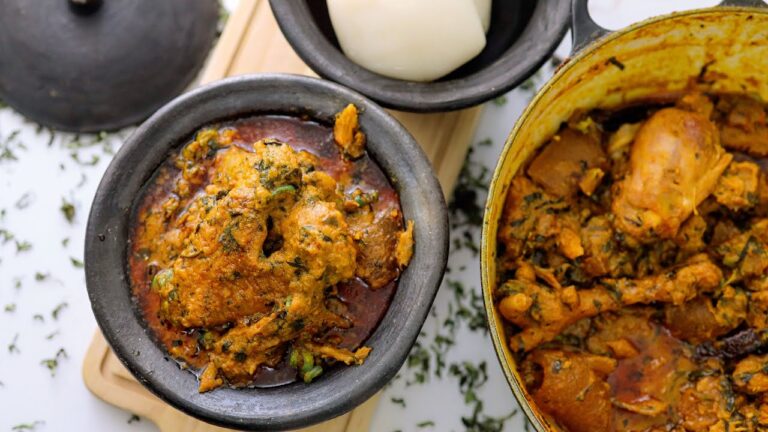
Kedjenou a spicy stew that is slow-cooked in a terracotta pot over fire or coals. This tasty chicken is a very popular dish in Ivory Coast.
The resulting dish has a delicious concentration of chicken essence and tender meat. Try this, it’s worth your time. The taste is great.

What Is Kedjenou Made Of?

Kedjenou (also called kedjenou poulet and kedjenou de poulet) is typically a deliciously spicy meat and vegetable stew that is quite simple to prepare. It is often made with guinea fowl or chicken. Slow-cooked in a canari, a traditional earthenware pot that takes the shape of a jar with a narrow opening in a sealed clay pot with little or no liquid, the resulting dish is juicy, flavorful and tender.
The chicken is basted in its own juice in a “canary,” or earthenware jar, on a wood fire.  In Ivory Coast, this delectable chicken is a favorite meal.

Origin Of Kedjenou

This  tasty chicken is a very popular dish in Côte d’Ivoire, aka the Ivory Coast in English. The Ivory Coast is considered the cultural hub of West Africa. This place is home to around 60 ethnic groups, each with their own dialects and customs, as well as their own food legacies based on whatever they had available on land or by coast.
The dish is believed to have originated from Baoulé; an ethnic group in Ivory Coast. According to several sources, the word kedjenou comes from the Baoulé language which means to move or shake. While braising the chicken the pot is frequently shaken, vigorously, so that the chicken or sauce does not stick to the bottom of the pot.
Côte d’Ivoire is actually known for its pottery made of high quality clay coming from the Savanes district in Boundiali and Korhogo. The slow cooking of this porous clay allows the end result to maintain its porous qualities as well as offer high heat resistant material, and therefore make a number of cooking equipment’s like the canari, but also vases and jars.

The canari, which is sealed with banana leaves and a string, is placed over fire or coals to allow the kedjenou to cook.

Although preparation methods for kedjenou often vary, most of them do not call for any liquid to be added, to allow the chicken to cook in its own juices, which helps tenderize the meat and concentrates the flavors. This technique is very similar to the smothering (etouffée) technique used in the tagines from North Africa, where the moisture mostly comes from the onions and the meat.

How To Make Kedjenou

Kedjenou can be made with variety of meats like chicken, pork, beef and even seafood. But Kedjenou chicken, or Kedjenou de Poulet, is more popular and you will certainly find it on the menus of their maquis, small open air restaurants unique to Côte d’Ivoire.

Every family has their special take on this favorite stew. What remains constant is the hotness that they get from those cute little hot peppers.

I know the name is a little peculiar, but not its ingredients. They are the very same we use in our every day life, and this can be very easily made in a western kitchen.

This is what you need;

  • Chicken – They use whole chicken cut into pieces with skin on. You can make it with any cut. We like our bone-in thighs or drumsticks, or even wings for this stew. We like it skinless, as we are not fans of stewed skin.
  • Vegetables – Onion, green onions, tomatoes, bell peppers (we are using green, yellow and red) and eggplant. These create the base for the stew.
  • Aromatics – Ginger and garlic.
  • Hot peppers – We are using habanero, but any other hot peppers would do, like scotch bonnet. Don’t get carried away by how cute they look, they are HOT BOMBS!
  • Thyme – Fresh is great, but you can use dried.
  • Smoked paprika – This really gives a distinctive flavor.
  • Bay leaves
  • Salt and fresh cracked pepper
  • Chicken bouillon cube

Although you may not be able to find a canari, you can absolutely make kedjenou in a Dutch oven or a tagine. You may or may not include oil, as the smothering cooking technique allows cooking without any fat. . This can be made on stove top, in your oven, or even your slow cooker.

How To Bake Kedjenou In Your Oven

After layering your chicken and vegetables, just put the dutch oven in a preheated oven at 350°F for an hour, or until chicken is fall off the bone. Shake the pot once or twice without opening the lid.

How To Use Crock Pot For Kedjenou

Dump everything in your slow cooker and cook 3 hours on high or 5-6 hours on low and forget it till it’s done.

What Do I Serve Kedjenou With?

Ivoirians love their stew with a side of attiéké, which is a cous cous like dish made from fermented and grated cassava or yucca root. It is one staple that goes with anything in Côte d’Ivoire. If you want a super authentic experience, you can find it some African specialty grocery stores. Otherwise, it goes great with rice. That worked for us. 🙂

What Variations of Kedjenou Can I Try?

You can try the same recipe for other meats, though the cooking time will vary. Sometimes fish or shell fish is added along with the meats.

Some people first fry the chicken in a little oil to get the brown color to add extra flavor. Other vegetables that commonly find their way into this pot are carrots, potatoes and okra.

Facts About Kedjenou

  1. Attiéké is a couscous-like side dish made from grated and fermented cassava. Instant boxed versions can be found in many Middle Eastern or African ethnic markets.
  2. Kedjenou can also be cooked on the stovetop. Bring the ingredients to a simmer over medium heat. Then reduce heat to low and simmer for 1 1/2 to 2 hours. You will need to shake it a little more often than the oven-baked version to keep it from sticking.
  3. Lower-fat Version: Remove the skin from the chicken and add 2 or 3 tablespoons of peanut oil.
  4. Some (mostly French) recipes call for first browning the chicken in peanut oil and saute the onions. While this adds flavor to the dish, it is not strictly authentic.
  5. You can add 1/2 cup water or chicken stock to the pot at the beginning if it looks way too dry. The tomatoes should give off enough liquid though that this shouldn’t be necessary.

Enjoy your stew!

Kedjenou

Kedjenou is a traditional spicy stew from Côte d'Ivoire that is typically prepared with chicken or guinea hen, and served with attieke or white rice.
Prep Time 20 minutes
Cook Time 40 minutes
Course Soup
Cuisine African, Côte d'Ivoire, Ivoirian
Servings 4

Ingredients
  

  • Chicken cut into serving pieces
  • Eggplant seeded and chopped
  • 1 large Tomatoes seeded and chopped
  • 2 or 3 Onions thinly sliced
  • 2 Hot chile peppers chopped
  • 2 or 3Garlic, minced
  • 2 or 3 cloves
  • Ginger minced
  • tbsp Thyme
  • Bay leaf
  • Salt and pepper to season

Instructions
 

  • Preheat oven to 325°F. Add all the ingredients to a large oven-proof pot with a tight-fitting lid. Cover the pot with one or two layers of aluminum foil and place the lid on top of the foil.
  • Place the pot in the oven and bake for 2 to 3 hours.
  • Remove the pot from the oven occasionally and shake it to keep the chicken from sticking.
  • Remove the pot from the oven. Let it rest for about 10 minutes.
  • Serve hot with couscous, attiéké (see note), rice, or boiled yams.
Tried this recipe?Let us know how it was!

Apple Cider Sauce & Pork Loin Chops

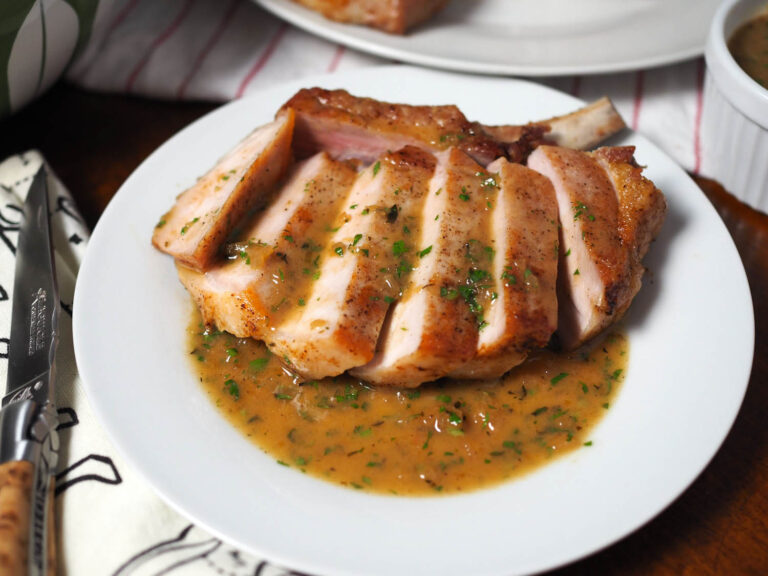
Apple Cider Sauce & Pork Loin Chops- Tender and juicy boneless pork chops braised in apple cider with onions, garlic, thyme, and a splash of cream and topped with apple slices. Comfort food for your autumnal table.
Serve these chops in a creamy sauce over my Sweet Potato and Swede Mash. Delicious!

What Pork Chops Should I Buy?

Everyone has their preferences and I have mine. There are many pork chop cuts and some of them are fattier than others. I have to admit that I tend to buy leaner cuts.

Boneless pork loin chops or as they are also known pork loin steaks are the cut I buy most often. It’s lean, delicious and relatively inexpensive.

Shoulder chops are my second choice. They are very affordable and are quite flavorful, however they can have a fair bit of gristle. Braising shoulder chops in order to tinderies them is the way to go!

Rib chop is also an excellent option when it comes to grilling but not so much for braising.

How To Cook Pork Loin Chops Without Drying Them Out

As great as pork chops are they can be disappointing when they come out as dry as a bone.

Here are the reasons why that happens and solutions to prevent it

Pork chop meat is quite lean and often thinly cut, so it only requires a short cooking time. The reason for your dry pork chop is mostly likely overcooking.

So what can I do to avoid a dry pork chop?

  • Quickly sear them for flavor but don’t keep them in a pan too long. Prolonged direct heat makes them tougher.
  • Oven bake them in liquid until tender.

Braising pork loin chops in a sauce doesn’t not only tenderize them but also imparts much flavor. Sauces are my favorite trick when it comes to creating flavorful food!

What Sauce Goes With Pork Chops?

The sauce itself is very simple but incredibly savory and satisfying. The secret ingredient that makes it absolutely irresistible is dry apple cider, something Normandy is known and famous for.

Here is How To Make It:

  • Saute chopped onion and celery in a bit of oil, add some minced garlic and fresh or dried thyme. Deglaze the pan with a splash of brandy and let it reduce until you see nearly no liquid. Brandy adds such a fragrant and sweet touch to this delicious sauce. Don’t skip it if you can help it!
  • Thicken it with flour and then pour in your dry apple cider and yes, it is an alcoholic cider we are after. If you prefer to go alcohol free, replace with non alcoholic cider plus 2 tablespoons of apple cider vinegar.
  • Let it bubble away with pork chops in the pan, then add cream and simmer a bit longer.

What Side Dish Goes Well With Pork Loin Chops ?

I serve these boneless pork loin chops in creamy sauce over plain rice. The apple cider sauce is so delicious, it does a great job at flavoring the rice. I can’t think of a side dish this recipe wouldn’t work with, to be honest.

This is such a quick and easy recipe to make, I hope you enjoy this unique Apple Cider Sauce & Pork Loin Chops!

Apple Cider Sauce & Pork Loin Chops

This delicious seasoned pork loin chops baked with apple cider and Worcestershire sauce and finished with sherry make even the pickiest husband or wife say, 'Wow!' Serve with mashed potatoes." Recently I made these chops one night. Whew, they were so yummy. I tweaked the recipe a little bit. I cored and peeled 2 Red Delicious apples and sliced them up very thinly. The flavor was excellent on these, but my chops, too, came out very dry as another said.
Prep Time 20 minutes
Cook Time 30 minutes
Servings 4

Ingredients
  

  • 3 tablespoons olive oil
  • 4 pork loin chopsseasoning salt to tasteblack pepper to tastegarlic powder to taste
  • 1/2 teaspoon poultry seasoning
  • 3 tablespoons Worcestershire sauce
  • 1 (8 ounce) container frozen apple cider concentrate, undiluted
  • 1/4 cup dry sherry 

Instructions
 

  • Preheat oven to 375 degrees F (190 degrees C).
  • Heat olive oil in a large oven-safe frying pan over medium-high heat.
  • Sprinkle chops with salt, pepper, garlic powder, and poultry seasoning.
  • Place in hot oil, and brown on both sides. Drizzle Worcestershire sauce over chops, and pour in apple cider.
  • Bake in preheated oven for 25 minutes. Remove chops to a plate, and return frying pan to stove over medium-high heat. Stir sherry into pan, and boil until sauce thickens, stirring frequently.
  • Serve sauce over chops.
Tried this recipe?Let us know how it was!

Baked Teriyaki Chicken

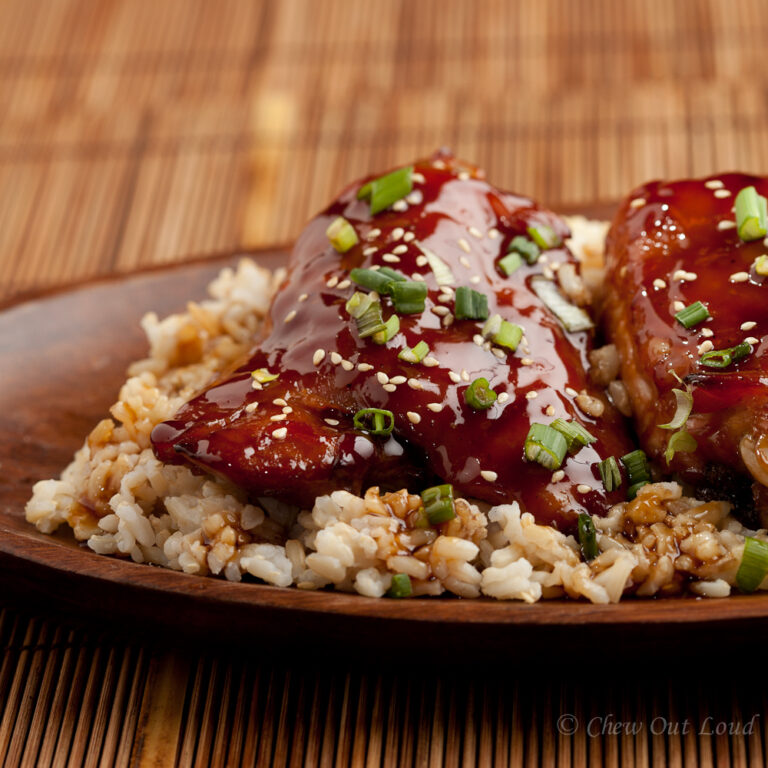
Baked Teriyaki is simply Chicken cooked in the Oven with teriyaki sauce! The best chicken for this dish is chicken breasts that are juicy and tender, cooked in the most fantastic, incredibly easy homemade teriyaki sauce created with only a few simple ingredients.
Baked Teriyaki chicken has highs and lows in terms of nutrition. It’s a rich source of protein and other nutrients, but depending on how it’s prepared, it can be high in fat and calories. The key is to consume teriyaki chicken in moderation, prepare it with healthy cooking techniques, and serve it alongside other nutrient-dense foods.

How To Make Baked Teriyaki Chicken

This baked teriyaki chicken is a much-requested chicken recipe! everywhere in town and it’s very easy to double for a large group. Not leaving out the fact that it is indeed very Delicious! I introduced it to some new friends in town recently and they said that they loved it and wanted to have some more later on.
Indeed this is a really good one. Double the sauce. Something different I did was to use lite soy sauce to cut the salt, and then I  increased the garlic, used 1 teaspoonful. minced fresh ginger. Follow my directions below to get something great tonight

Baked Teriyaki Chicken

Prep Time 30 minutes
Cook Time 1 hour
Servings 0

Ingredients
  

  • 1 tbsp 1 tablespoon cornstarch, minced
  • 1 tbsp 1 tablespoon cold water
  • 1/2 cup white sugar
  • 1/2 cup soy sauce
  • 1/4 cup cider vinegar
  • 1 clove garlic minced
  • 1/2 tsp ground ginger
  • 1/4 tsp ground black pepper
  • 12 skinless chicken thighs

Instructions
 

  • In a small saucepan over low heat, combine the cornstarch, cold water, sugar, soy sauce, vinegar, garlic, ginger, and ground black pepper.
  • Let simmer, stirring frequently, until sauce thickens and bubbles.preheat oven to 425 degrees F (220 degrees C).
  • Place chicken pieces in a lightly greased 9x13 inch baking dish.Brush chicken with the sauce.
  • Turn pieces over, and brush again.
  • Bake in the preheated oven for 30 minutes.
  • Turn pieces over, and bake for another 30 minutes, until no longer pink and juices run clear.
  • Brush with sauce every 10 minutes during cooking.
Tried this recipe?Let us know how it was!

Gnocchi With Sage (Butter Sauce)

Gnocchi with sage is butter sauce is a delicious mix of sage, butter, garlic, and cheese sauce that makes a delicious side dish and a complete meal. It is easy to become a great fan of this dish if you’re not careful.

What Is Gnocchi?

Gnocchi (pronounced NYOW-kee) is an Italian pasta, with basic potato gnocchi being the most popular (Gnocchi di patate). Cooked mashed potatoes, flour, and eggs are used to make them. Ricotta is used in some gnocchi recipes. “Gnocchi” is the plural form of “gnocchi,” which you rarely hear because, after all, who can eat just one?
It could serve as a core element for your sauce prepared primarily of butter, water or broth, and seasonings, thickened with flour and used as a base for other sauces. There are several recipes with Gnocchi.
There’s nothing quite like gnocchi cooked from home, they taste like potatoes and have a bouncy texture.

Can Gnocchi Butter Sauce Be Frozen?

Gnocchi should be frozen uncooked as soon as they are formed. Place the gnocchi in a single layer on a baking pan and place it in the freezer in a level position. Freeze for 3 hours or until solid. Fill resealable freezer bags halfway with frozen gnocchi.

The texture of the gnocchi will be ruined if you thaw them before freezing them. Instead, take a frozen chunk and place it in a pan of salted boiling water. The gnocchi is done when they float to the top.

How To Make Gnocchi With Sage Butter Sauce

Today, the most preferred method in making gnocchi is to mix mashed potatoes with flour and form dough balls. The gnocchi dough is normally smoothed out, then cut into little bite-sized pieces and ridged on one side with a fork or a cheese grater. These grooves are designed to help each dumpling keep the sauce and taste more delicious. However, the dumplings must first be swiftly cooked in salted water for a few minutes.

The most popular sauce is light butter sauce with fresh sage. Other ways and sauces, such as extra virgin olive oil with small savory additions like toasted pine nuts, mushrooms, or a touch of cream, make for wonderful gnocchi. There’s also gnocchi with sausage ragú, a traditional Sardinian meal.

There’s baked gnocchi of cheeses and veggies with sausage, prosciutto or pancetta. Tomato-based sauces, light cream sauces, and pesto are all available.

With the following recipe, you can put in some work in making this dish.


Gnocchi With Sage (Butter Sauce)

Prep Time 10 minutes
Cook Time 15 minutes
Servings 0

Ingredients
  

  • 2 12 Ounces potato gnocchi minced
  • 1/4 cup butter
  • 1 clove garlic,
  • 1 tsp dried sage
  • 1/4 tsp salt
  • 1/4 cup grated Parmesan cheese
  • 1/4 tsp ground black pepper
  • 2 tbsp grated Parmesan cheese

Instructions
 

  • Bring a large pot of lightly salted water to a boil over high heat.
  • Add the gnocchi pasta, and cook until they float to the surface, 2 to 3 minutes; drain.
  • Melt the butter in a skillet over medium heat.
  • Stir in the garlic, and cook until the garlic has softened and is beginning to turn golden brown, about 4 minutes.
  • Stir in the sage and salt for a few seconds, then add the cooked gnocchi.
  • Toss gently with 1/4 cup of Parmesan cheese and pepper.
  • Sprinkle with the remaining 2 tablespoons of Parmesan cheese to serve.
Tried this recipe?Let us know how it was!

Orange & Milk Braised Pork Carnitas

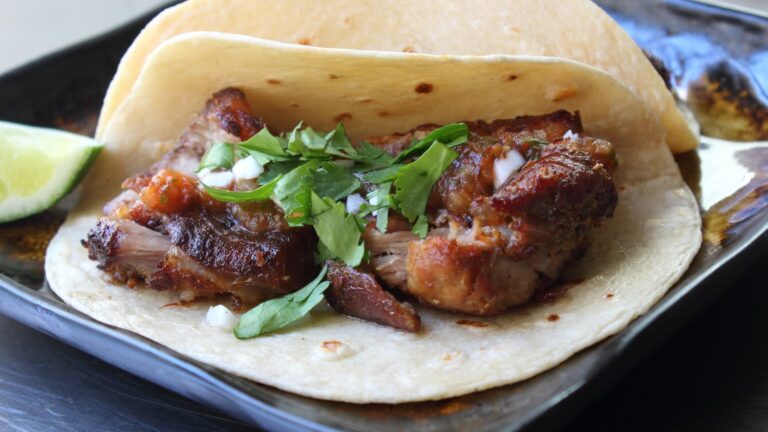
The Braised pork carnitas is made from pork whereas barbacoa is from beef, usually from the beef cheeks, and it originated in the Caribbean. Carnitas are fragrantly seasoned pork cubes that are patiently cooked in lard until they’re crispy on the exterior yet soft and luscious on the inside.
Milk braising always seems to give the meat which I add a little extra succulence. The subtle sweetness from the orange is also very nice. When making your own you can strain and reduce the cooking liquid if you want, and do “wet” tacos by adding some of the juice to chopped meat.
What’s Pork Carnitas?

Carnitas is a Mexican pork dish that means “small meats” in Spanish. A cheap, richly marbled cut of pork, such as boneless Boston butt, pork shoulder, or picnic ham, is braised or cooked with seasonings and lard for several hours until it is soft enough to shred.

The meat is roasted at the conclusion of the cooking process to make it crisp. Pork Carnitas is a dish that can be served on its own with salsa and sides, or as a filler for tacos, burritos, or enchiladas. “Perfect, tender, well seasoned and succulent”, that is how carnitas should be”.

Orange & Milk Braised Pork Carnitas

Prep Time 20 minutes
Cook Time 2 hours
Servings 0

Ingredients
  

  • 3 1/2 pounds 3 1/2 pounds boneless pork shoulder cut into large pieces
  • 1 tbsp freshly ground black pepper
  • 1 tbsp kosher salt, or more to taste
  • 2 tbsp vegetable oil
  • 2 tsp ground cumin
  • 2 bay leaves
  • 1 tsp dried oregano
  • 1/4 tsp cayenne pepper
  • 1 orange, juiced, and zested
  • 2 cups whole milk

Instructions
 

  • Season pork with pepper and salt.
  • Heat oil in a large pot over high heat.
  • Working in batches, cook pork in the hot oil until browned on all sides, about 5 minutes.
  • Return all cooked pork and accumulated juice to the pot.
  • Season pork with bay leaves, cumin, dried oregano, and cayenne pepper.
  • Stir in fresh orange juice, orange zest, and milk.
  • Bring mixture to a boil over high heat; reduce heat to low.
  • Cover and simmer, stirring occasionally, until meat is fork-tender but not falling apart, about 2 hours.
  • Preheat oven to 450 degrees F (230 degrees C).
  • Remove pork from the liquid.
  • Skim some fat from the pot to grease a baking dish. Stir pork.
  • Transfer the pieces of pork to the baking dish.
  • Drizzle about 2 more tablespoons of the floating fat over the meat.
  • Season with more salt, if needed.
  • Bake in preheated oven until pork is browned, about 15 minutes.
  • Turn on the oven's broiler.Cook pork under the broiler until crisp, 2 to 3 minutes.
Tried this recipe?Let us know how it was!

Spinach Enchiladas

Spinach Enchiladas is a popular Mexican dish with a distinct flavor and a long history. They’ve become a popular menu item in many Mexican restaurants due to their wonderful taste.
Enchiladas have become a symbol of a traditional Mexican supper because of their perfect combination of tortilla, meat, cheese, and sauce.
A corn tortilla is twisted around a filling and topped with a delicious sauce to make an enchilada. Enchiladas are a Mexican dish that can be filled with a variety of items such as meats, cheeses, beans, potatoes, vegetables, or a combination of them.

This dish is globally loved. If you fancy spinach and Mexican food, you will love these easy vegetarian spinach enchiladas made with fresh ricotta cheese and spinach.

Burritos are comparable to enchiladas. They are made up of a maize or flour tortilla that has been packed with ingredients and tightly wrapped. They’re topped with sauce and cheese and served with a choice of sides – it’s one of the few Mexican dishes that can be eaten with a knife and fork.

Enchiladas are thought to have started as a street snack and changed over time, with the earliest recorded form being a rolled tortilla coated in chili sauce. The word is made up of two Nahuatl words: “chili” and “flute.”

Spinach Benefits

Spinach is a superfood that has been connected to a slew of health advantages. It has been demonstrated to lower blood pressure, reduce oxidative stress, and improve eye health.

Preparing Spinach Enchiladas

Ingredients

  • 1 tablespoon butter
  • 1/2 cup sliced green onions
  • 2 cloves garlic, minced
  • 1 (10 ounces) package frozen chopped spinach, thawed, drained, and squeezed dry
  • 1 cup ricotta cheese
  • 1/2 cup sour cream
  • 2 cups shredded Monterey Jack cheese
  • 10 (6 inches) corn tortillas
  • 1 (19 ounces) can enchilada sauce

Directions

  1. Preheat the oven to 375 degrees F (190 degrees C).
  2. Melt butter in a saucepan over medium heat.
  3. Add garlic and onion; cook for a few minutes until fragrant, but not brown.
  4. Stir in spinach, and cook for about 5 more minutes. Remove from the heat, and mix in ricotta cheese, sour cream, and 1 cup of Monterey Jack cheese.
  5. In a skillet over medium heat, warm tortillas one at a time until flexible, about 15 seconds. Spoon about 1/4 cup of the spinach mixture onto the center of each tortilla.
  6. Roll up, and place seam side down in a 9×13 inch baking dish.
  7. Pour enchilada sauce over the top, and sprinkle with the remaining cup of Monterey Jack.
  8. Bake for 15 to 20 minutes in the preheated oven, until sauce is bubbling and cheese is lightly browned at the edges.
Prepare time: 20 min
Cook: 30 min
Ready in: 50 min

Pan Seared Salmon

Pan-Seared Salmon is frequently seasoned with salt and pepper, especially when there are multiple people involved and you want to get the most out of it.
These pan-seared salmon fillets are topped with lemon slices and capers. Fillets are the most popular cut of the fish, and with good reason: removing the pin bones is easy, and the cut lends itself to a variety of culinary methods. Making this dish or even tasting it is worth the shot.
What Is Salmon?
Salmon is the common name for various ray-finned fish species belonging to the Salmonidae family. Trout, char, grayling, and whitefish are all members of the same family. They are native to the North Atlantic and Pacific Ocean tributaries.

It is a very simple dish to prepare. It’s high in vitamins like omega-3, and an average fillet has roughly 250 calories depending on how it’s prepared. This makes it perfect for calorie-restricted regimens like the 5:2 diet.

It goes well with a wide range of diverse flavors; soy sauce, fillets with creamy mashed potatoes and greens, or with tomato pasta are all delicious options. It can also be cooked on a grill. There are also a variety of mouth-watering recipes to explore with this Fish.

How To Sear Salmon In A Pan

The following is recognized as one of the known recipes for this dish;

Pan-seared Salmon

Prep Time 10 minutes
Cook Time 10 minutes
Servings 0

Ingredients
  

  • 4 6 ounce fillets of salmon
  • 2 tbsp olive oil
  • 2 tbsp capers
  • 1/8 tsp salt
  • 1/8 tsp ground black pepper
  • 4 slices lemon

Instructions
 

  • Preheat a large heavy skillet over medium heat for 3 minutes.
  • Coat with olive oil. Place in skillet, and increase heat to high.
  • Cook for 3 minutes.
  • Sprinkle with capers, and salt and pepper.
  • Turn over, and cook for 5 minutes, or until browned.
  • It is done when it flakes easily with a fork.
  • Transfer to individual plates, and garnish with lemon slices.
Tried this recipe?Let us know how it was!

QUICK RECIPES