
Abak Atama Soup
Overview
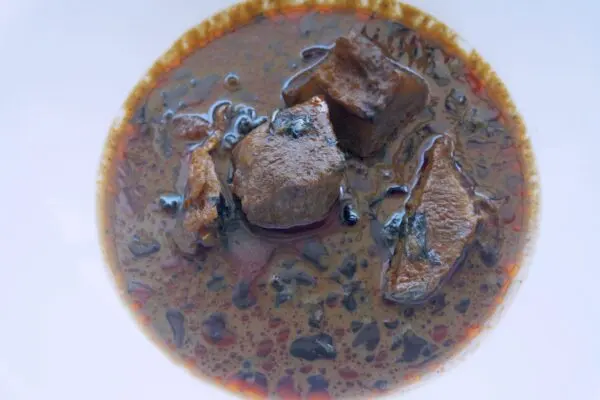
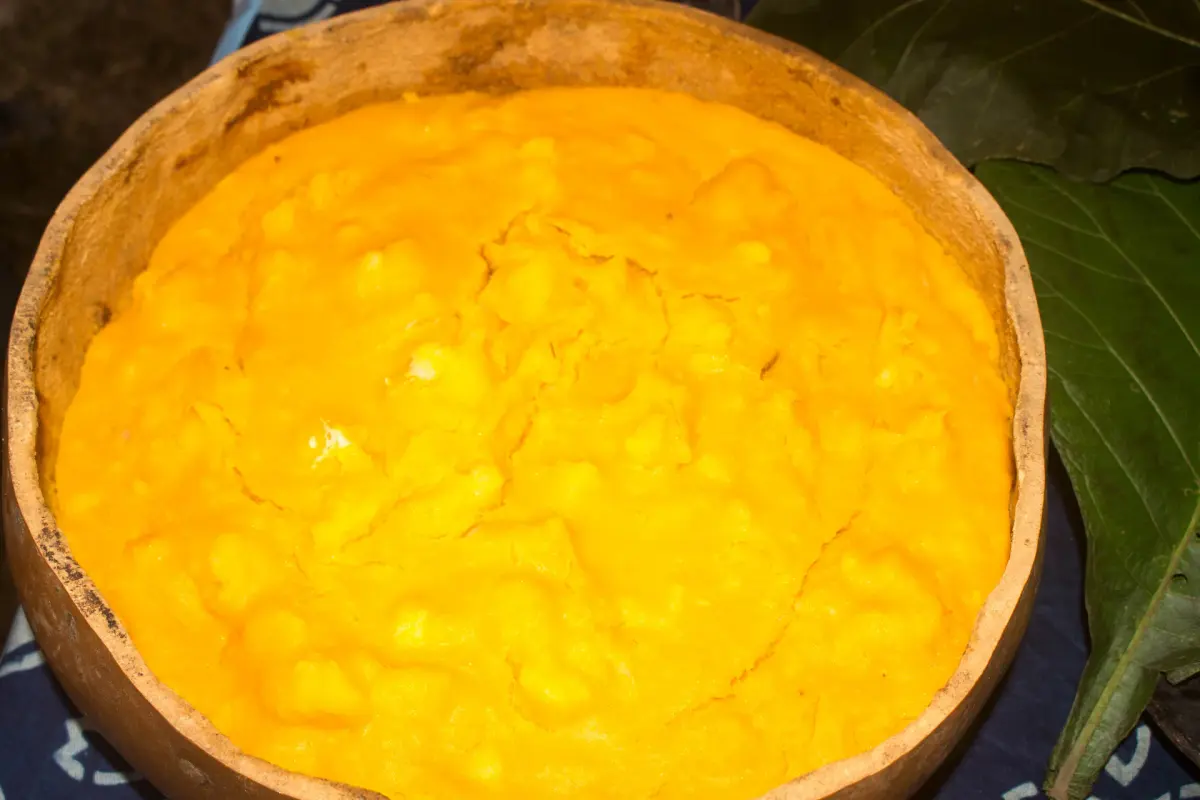
Abak Atama is a palm fruit soup of the Ibibio people of Akwa Ibom State in southern Nigeria, and it is defined by a leaf that gives it its name and almost nothing else does. The palm fruit base is shared. It is the same concentrate that underpins banga soup in the Niger Delta and ofe akwu among the Igbo, palm nuts boiled and pounded, with the pulp extracted and used as the body of the soup. What separates these dishes from one another is entirely the spicing and the greens. Atama is the distinguishing element here. Botanically Heinsia crinita, locally called bush apple, it is a leaf grown in yards across the region and used almost exclusively for this soup. It is strongly aromatic and is used sparingly, shredded very finely and added in small quantity, because too much overwhelms everything else in the pot. Around it sit the usual components: assorted meat, dried fish, periwinkle, crayfish and pepper. It is a regional soup rather than a national one, and many Nigerians outside Akwa Ibom and Cross River have never eaten it.
AFN Heritage Note
Abak Atama is documented among the Ibibio of Akwa Ibom State, Nigeria. Its palm fruit base is shared with Niger Delta banga soup and Igbo ofe akwu, with the atama leaf, Heinsia crinita, known locally as bush apple, distinguishing it.
Ingredients
Dietary tags are provided by contributors as a guide, not verified by AFN, and they depend on the products you buy. If you have a serious allergy, check every ingredient yourself. Cooking, allergies and your own judgement
Directions
- 1
Extract the palm fruit concentrate from the palm fruits. If using the tinned palm fruit concentrate, open the tin and set it aside.
- 2
Dice the onion, blend the fresh Pepper and wash and cut the ponmo into small pieces and set aside.
- 3
Soak, debone and clean the dry fish. Debone and clean the smoked fish. Rinse in cold water making sure they are free from sand. Then break them up into desired pieces and set them aside.
- 4
Cut the pointed ends of the shells of the periwinkles with the blunt side of a machete. This is known as trimming the periwinkles. This can be done for you in Nigerian markets. Wash them thoroughly to remove all sand. Wash several times till the water runs clear.
- 5
Place the periwinkles in a pot, cover with water and boil with a pinch of salt for about 10 minutes, drain off the water, and set the periwinkles aside. While boiling the periwinkles, do not cover the pot else it boils over.
- 6
Wash the atama leaves thoroughly and cut them into thin slices. Atama can be sliced for you by sellers in Nigerian markets.
- 7
If you wish to reduce the bitterness, squeeze and rub the leaves between your palms and fingers while washing the sliced leaves just like washing bitter leaves. Change the water a couple of times. The dry leaves are not as bitter as the fresh atama leaves, some of the bitterness is lost during the drying process.
- 8
Clean all meats thoroughly.
- 9
Place the pieces of beef or goat meat, pieces of ponmo, and stockfish in a pot.
- 10
Add as little water as possible, add the onion (diced) and the stock cubes then cover and cook till tender.
- 11
Add the deboned dry fish and/or smoked fish when almost done.
- 12
Pour the extracted palm fruit concentrate into another pot, set the pot on the stove, and start cooking on high heat.
- 13
Leave to boil till you notice come red oil at the top of the palm fruit extract.
- 14
If you think that it is watery, cook till the extract has thickened to a medium consistency.
- 15
Add the cooked meat and fish with the meat stock, crayfish, and pepper, the precooked periwinkles, the atama leaves, and salt to taste.
- 16
Stir gently and leave to simmer for 5 minutes.
- 17
When the beef and fish are well done, add the palm fruit concentrate, stir and add water if necessary to get the consistency you like for your soups.
- 18
Leave to boil.
- 19
Add the rest of the ingredients (continue from step 3 above).NB: Do not worry if the soup appears light. Abak Atama Soup tends to thicken by the next day. It can also easily become saltier overnight so please add salt sparingly.
Africook’s Notes
- Use atama sparingly and shred it very fine. It is strongly aromatic and a heavy hand ruins the pot.
- Use palm fruit concentrate, not palm oil. They are not interchangeable and the difference is the whole soup.
- Let the base reduce properly before the leaf goes in, so the aroma sits on a finished soup.
- Add the atama near the end. Long cooking dulls it.
Questions cooks ask
What is atama leaf?
Atama is Heinsia crinita, known locally as bush apple, a leaf grown widely in yards across Akwa Ibom and Cross River. It is strongly aromatic and is used almost exclusively for this soup. Dried atama is sold in African grocers and works, though fresh is preferred where it is available.
How is this different from banga soup?
The base is the same, palm fruit concentrate, but the seasoning and greens differ entirely. Banga, from the Niger Delta, uses beletientien and the oburunbebe stick. Abak Atama uses atama leaf. Igbo ofe akwu uses the same base again with a different treatment and is usually served with rice. Same foundation, three distinct soups.
Can I use palm oil instead of palm fruit?
No. Palm oil is the pressed oil; the palm fruit concentrate contains the pulp, fibre and water as well, and it is what gives the soup its body. Substituting oil gives a red, greasy soup with none of the character. Tinned palm fruit concentrate is a good substitute for fresh.
Reviews
Be the first to rate this recipe
Cooked it? Your rating helps the next person decide whether to try it.
No reviews on this one yet. If you have cooked it, yours would be the first.
You Might Also Like
Browse all Nigerian recipes →
Edo Black Soup
Nigerian Fisherman Soup
Igbo Yam Porridge