
Bhajias
London, United Kingdom · View all recipes
Overview
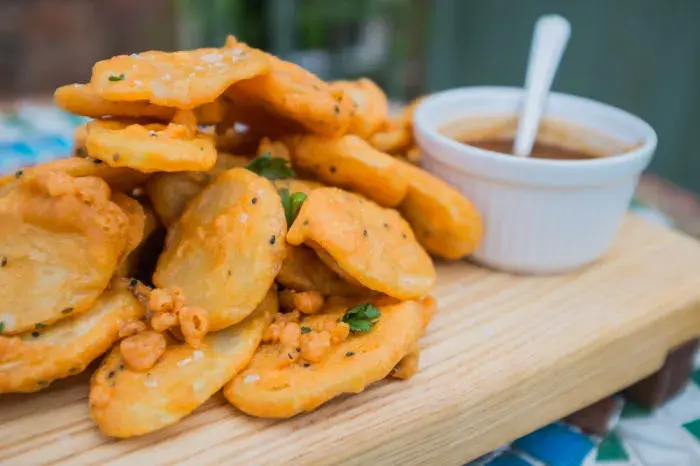
Bhajias are thinly sliced potatoes coated in a spiced gram flour batter and fried until crisp, and they are an East African street snack, popular in Kenya and Tanzania. They arrived from India and have been made locally long enough to be entirely at home. Gram flour is what makes them work and what makes them naturally gluten free. Milled from chana dal, it fries into a crisp shell in a way wheat flour does not, and it carries an earthy, slightly nutty flavour of its own. Rice or corn flour goes in alongside for extra crispness. They belong to the same Indian inheritance in East Africa as chapati, samosas and pilau masala, brought by Indian merchants and labourers over the nineteenth and twentieth centuries and absorbed completely into Kenyan and Tanzanian eating. What has changed locally is what goes with them: kachumbari, the tomato and onion salad, is the standard Kenyan accompaniment rather than the chutneys of India, though tamarind chutney and ketchup are both used. The batter should coat the back of a spoon, and it will thin as the potatoes go through it, so more flour is added as you go.
AFN Heritage Note
Bhajias are an East African snack popular in Kenya and Tanzania, brought from India and made with a spiced gram flour batter. They belong to the same Indian culinary inheritance as chapati, samosas and pilau masala.
Ingredients
Dietary tags are provided by contributors as a guide, not verified by AFN, and they depend on the products you buy. If you have a serious allergy, check every ingredient yourself. Cooking, allergies and your own judgement
Directions
- 1
In a large bowl, combine the gram flour, rice flour, ginger, spice, hot pepper, salt and herbs.
- 2
Add water a little at a time, enough to form a thick paste that coats the back of a spoon.
- 3
Put the potato slices into the bowl in small batches, making sure each slice is coated.
- 4
Let them rest for 5 to 10 minutes to absorb the flavour.
- 5
Heat oil about 1cm deep in a large skillet or cast iron pan over medium-high heat.
- 6
Fry the bhajias in batches, turning once, until golden brown, about 3 to 4 minutes. Do not overcrowd the pan, which makes them soggy and oily.
- 7
Repeat until all the potato is fried, adding more flour to the batter as it thins out and adjusting the spices.
- 8
Transfer with a slotted spoon to a paper-lined tray and serve warm with kachumbari, ketchup or chutney.
Africook’s Notes
 Personal notes from Nympha Nzeribe
- Slice the potatoes genuinely thin. Thick slices stay raw inside while the batter browns.
- The batter should coat the back of a spoon. It thins as the wet potato goes through it, so add more gram flour as you work.
- Do not crowd the pan. Crowded bhajias steam, go soggy and absorb oil, which the source warns about directly.
- Rest the coated slices 5 to 10 minutes before frying so the batter grips and the spices penetrate.
- Gram flour is not the same as ordinary flour. It is milled from chana dal, fries crisper and is naturally gluten free.
- Kachumbari is the standard Kenyan accompaniment, though tamarind chutney and ketchup are both used.
Questions cooks ask
What is gram flour?
Gram flour, also called besan or chickpea flour, is milled from chana dal. It fries into a much crisper shell than wheat flour and has an earthy, slightly nutty flavour of its own. It is naturally gluten free, which makes bhajias suitable for anyone avoiding wheat, and it is sold at Indian and African grocers.
How are these different from Indian bhaji?
The form, mainly. Indian onion bhaji is a clump of sliced onion in batter fried into an irregular ball. East African bhajias are usually thin potato slices individually coated and fried flat, closer to a crisp fritter. The batter and spicing are related; the shape and the main vegetable differ.
Why are mine soggy?
The pan was crowded or the oil was too cool. Crowding drops the oil temperature so the bhajias absorb it rather than crisping. Fry in small batches, let the oil recover between them, and drain on paper. Slicing the potatoes too thick has the same effect for a different reason.
What are they served with?
Kachumbari, the Kenyan tomato and onion salad, is the standard partner and its sharpness cuts the fried batter. Tamarind chutney and ketchup are both common. They are eaten hot as a street snack and lose their crispness quickly, so they are made to order.
Reviews
Be the first to rate this recipe
Cooked it? Your rating helps the next person decide whether to try it.
No reviews on this one yet. If you have cooked it, yours would be the first.