

Gbegiri Soup (Beans Soup)
Overview
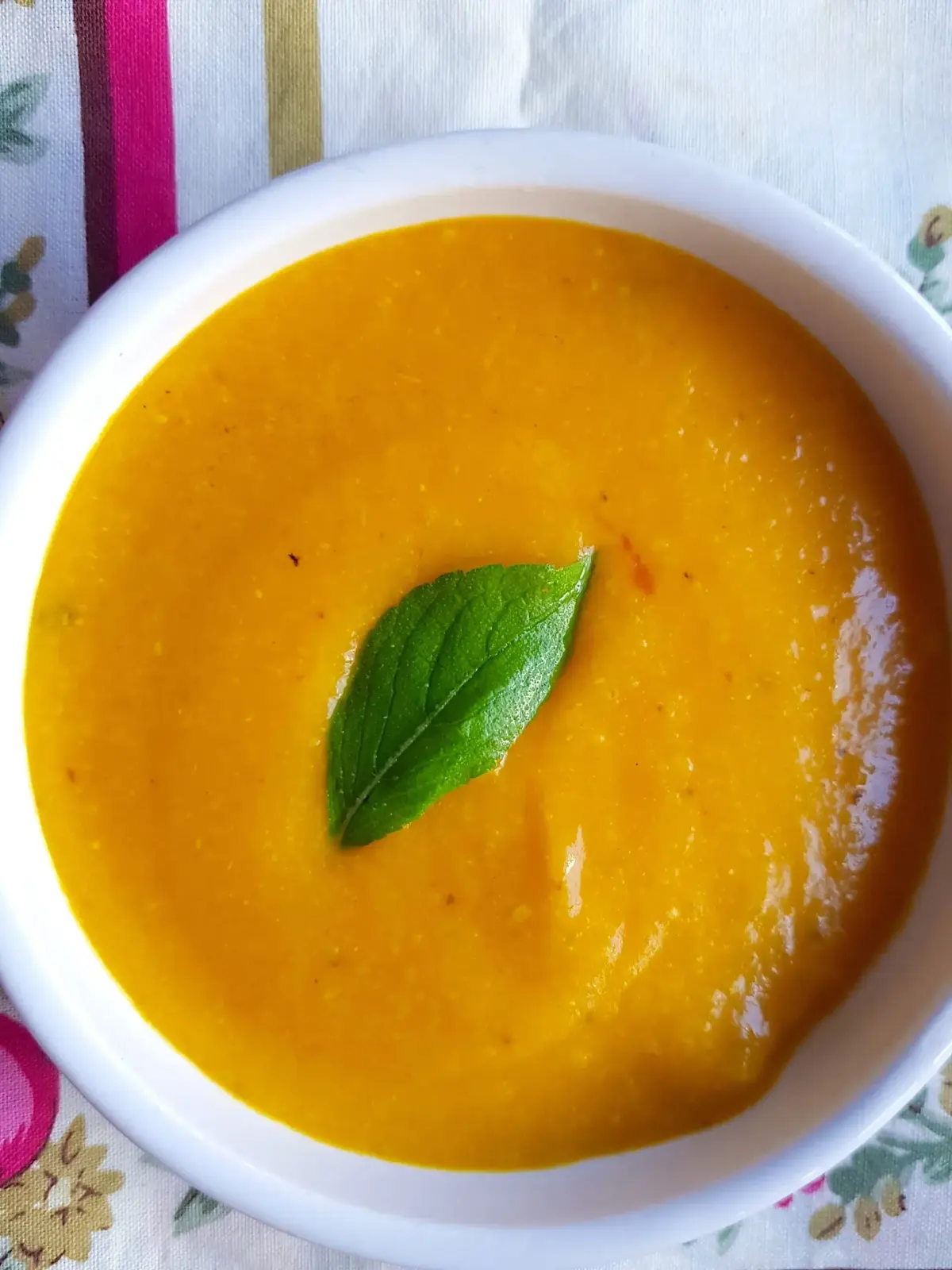
Gbegiri is Yoruba bean soup, smooth to the point of being velvety, pale orange from a small quantity of palm oil, and mild in a food culture that generally is not. It comes from southwestern Nigeria and it is rarely eaten alone. Its natural home is abula, the combination that puts gbegiri and ewedu together on a plate with amala and a pepper stew. The three components do different things: gbegiri brings body and mildness, ewedu brings the drawing green texture, and the stew brings heat. Ordering abula in an Ibadan or Lagos buka gets you all of it, and many people go to a buka specifically for the gbegiri. Making it well is a matter of texture rather than seasoning. Brown beans or black eyed beans are soaked so the skins can be slipped off, cooked until they collapse, and then either blended or worked through a sieve with an ijabe, the small cooking broom. Oyo State cooks will tell you the sieve is the authentic method and the blender is the concession, and both routes are used. The palm oil goes in for colour rather than flavour, and the quantity is deliberately small.
AFN Heritage Note
Gbegiri is documented as a soup of the Yoruba of southwestern Nigeria, made from skinned brown or black eyed beans, and forms one part of abula, the combination of gbegiri, ewedu and pepper stew served with amala. Its earliest documented date is uncertain.
Ingredients
Dietary tags are provided by contributors as a guide, not verified by AFN, and they depend on the products you buy. If you have a serious allergy, check every ingredient yourself. Cooking, allergies and your own judgement
Directions
- 1
Boil the peeled beans in enough water over medium heat until soft, or use a pressure cooker.
- 2
Boil the assorted meat until tender with the stock cubes, onions and salt. Separate the stock from the meat and set both aside.
- 3
Blend the cooked beans to a smooth puree, then pass the blended beans through a fine sieve and discard the chaff.
- 4
Place a pan over medium heat and add the palm oil. Heat for about 3 minutes without bleaching it.
- 5
Stir the bean puree into the palm oil. The puree should be neither loose nor thick but somewhere between. Add water if needed.
- 6
Add the assorted beef if using, and the cayenne pepper. Stir until well combined, reduce the heat and cook for about 10 minutes, checking so it does not catch.
- 7
Add the ground crayfish, a stock cube and salt. Add water if it has become too thick.
- 8
Cook for a further 3 minutes and take off the heat. Serve with ewedu, amala and buka stew.
Africook’s Notes
- Do not bleach the palm oil for gbegiri. Buka stew wants bleached oil; this soup does not, and heating it that far changes both the colour and the flavour in the wrong direction.
- Peel the beans properly. Soak them until the skins loosen and rub them off, because any skin left behind will show up as grit in a soup whose whole appeal is smoothness.
- Sieving after blending is worth the extra step. It is what takes gbegiri from smooth to velvety, and the Oyo State method uses the sieve alone with no blender at all.
- Keep it loose. Gbegiri thickens considerably as it stands and again in the fridge, so err towards thinner than you want when you take it off the heat.
- Bean flour works and is much faster: mix to a thin paste with cold water, pour into boiling water and stir continuously. The texture is more gelatinous, closer to custard.
Reviews
4 reviews
You Might Also Like
Browse all Nigerian recipes →
Edo Black Soup
Nigerian Fisherman Soup
Igbo Yam Porridge
The 15 minute cook time is definitely assuming you use a pressure cooker. On my stove top the peeled beans took a full 45 minutes before they were soft enough to blend properly. Tasted lekker in the end with the cayenne pepper, but adjust your prep time.
Chale peeling brown beans by hand in London is not easy paa, so I got the pre-peeled ones from the African shop near Seven Sisters. Didn't have fermented locust beans so I used extra crayfish instead. Came out so silky after straining!
Made this for Iftar using halal beef and turkey neck. The ground crayfish adds such a rich savoury smell while it simmers, completely different to our Cape bean soups. Just had to watch the palm oil carefully so it did not bleach.
Sieving the cooked brown beans to get the chaff out is the hardest part abeg, my hand almost fell off! But once you mix that smooth puree into the palm oil with proper iru, e sweet o. Tastes just like the buka near my old office.