

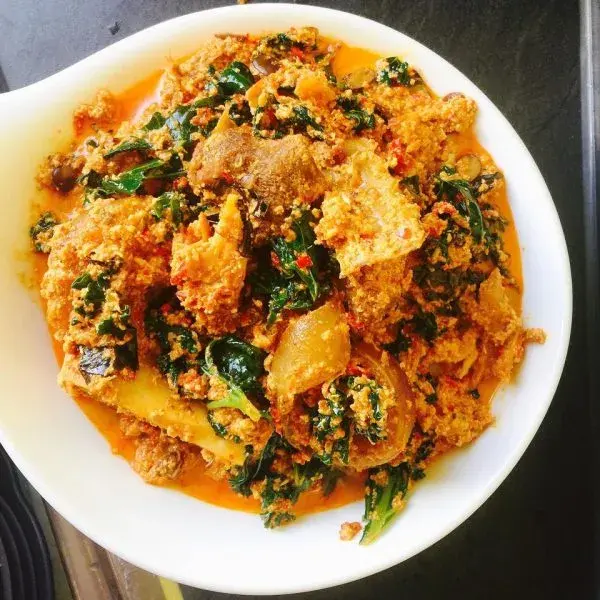
Uziza Egusi Soup
Overview
Uziza egusi is egusi soup made with uziza leaves, and the leaf is what distinguishes it. Egusi soup itself is one of Nigeria's most widely eaten dishes, thickened with ground melon seed and made differently by almost every group that makes it: miyan gushi in Hausa, ofe egusi in Igbo, efo elegusi in Yoruba. Uziza is Piper guineense, a climbing pepper vine native to West and Central Africa. Its leaves carry a sharp peppery flavour quite distinct from chilli heat, bright green when fresh and dark when dried, and it is the leaf that carries the version made in eastern Nigeria. It also goes by West African pepper, Ashanti pepper, Benin pepper, iyere and sorowisa, and its dried fruits and seeds are used as a separate aromatic spice. Quantity is the thing cooks warn each other about. Uziza is assertive and a heavy hand turns the soup harsh rather than fragrant, so it is added shredded in the last fifteen minutes rather than cooked through. The melon seed is scooped into the pot in small portions and left undisturbed to set into lumps, which is the technique that gives egusi its texture and the reason experienced cooks resist stirring.
AFN Heritage Note
Uziza is Piper guineense, a pepper vine indigenous to West and Central Africa, whose leaves are used in the eastern Nigerian repertoire of soups. Egusi soup is thickened with ground melon seed and is prepared across Nigeria under Hausa, Igbo and Yoruba names.
Ingredients
Dietary tags are provided by contributors as a guide, not verified by AFN, and they depend on the products you buy. If you have a serious allergy, check every ingredient yourself. Cooking, allergies and your own judgement
Directions
- 1
Put the melon seeds, onion and one habanero pepper in a blender. Add half a cup of water and blend to a thick paste.
- 2
Slice the uziza leaves and set them aside.
- 3
Wash the meat thoroughly at least twice.
- 4
Put the meat in a clean pot with the stockfish, smoked fish, crayfish, the second habanero, the dried scotch bonnet and the palm oil, and boil for 15 minutes.
- 5
Scoop the melon paste into the pot in small portions. Do not stir it in.
- 6
Cover and cook for 10 minutes, letting the melon set into lumps.
- 7
Add the sliced uziza leaves, mix through and cook for 5 minutes.
- 8
Adjust the salt and bouillon and serve with pounded yam, fufu, rice or any staple.
Africook’s Notes
 Personal notes from Jennifer Ezeokoli
- Do not stir the melon paste in. Scoop it in in small portions and leave it alone, which is what lets it set into the lumps egusi is known for.
- Add the uziza at the very end. Fifteen minutes at most, and less if the leaves are young. Cooked long it turns bitter.
- Go light on the uziza the first time. It is assertively peppery and a heavy hand makes the soup harsh rather than fragrant.
- Dried and ground uziza can replace fresh, but use roughly a third of the volume since drying concentrates it.
- Grind the melon seeds fresh if you can. Pre-ground egusi goes rancid quickly because of its oil content, so check it before using.
Questions cooks ask
What are uziza leaves and what do they taste like?
Uziza is Piper guineense, a West African pepper vine, and its leaves have a sharp peppery flavour that is aromatic rather than hot in the way chilli is. Fresh leaves are bright green and mild; dried leaves are dark and considerably more concentrated. They are sold fresh, frozen or dried at Nigerian grocers under several names including Ashanti pepper and iyere.
Can I substitute another leaf?
Not really, if you want uziza egusi specifically. Scent leaf or basil is sometimes suggested but gives a quite different aroma. If uziza is genuinely unavailable, make the soup with bitterleaf or pumpkin leaf and call it what it is, rather than substituting and expecting the same result.
Why is my egusi not lumpy?
It was stirred. The melon paste needs to be scooped into the pot in small portions and then left undisturbed for around ten minutes so it sets. Stirring disperses it into the liquid and gives a smooth, uniform soup, which is a legitimate style in some households but is not what this method is aiming for.
What is uziza egusi eaten with?
Pounded yam, fufu, eba, semolina or amala are the standard partners, and it is eaten with the fingers by pinching off the swallow and dipping. It is also eaten with rice, though that is a more modern serving. The soup is thick enough to hold its shape on the plate.
Reviews
2 reviews
You Might Also Like
Browse all Nigerian recipes →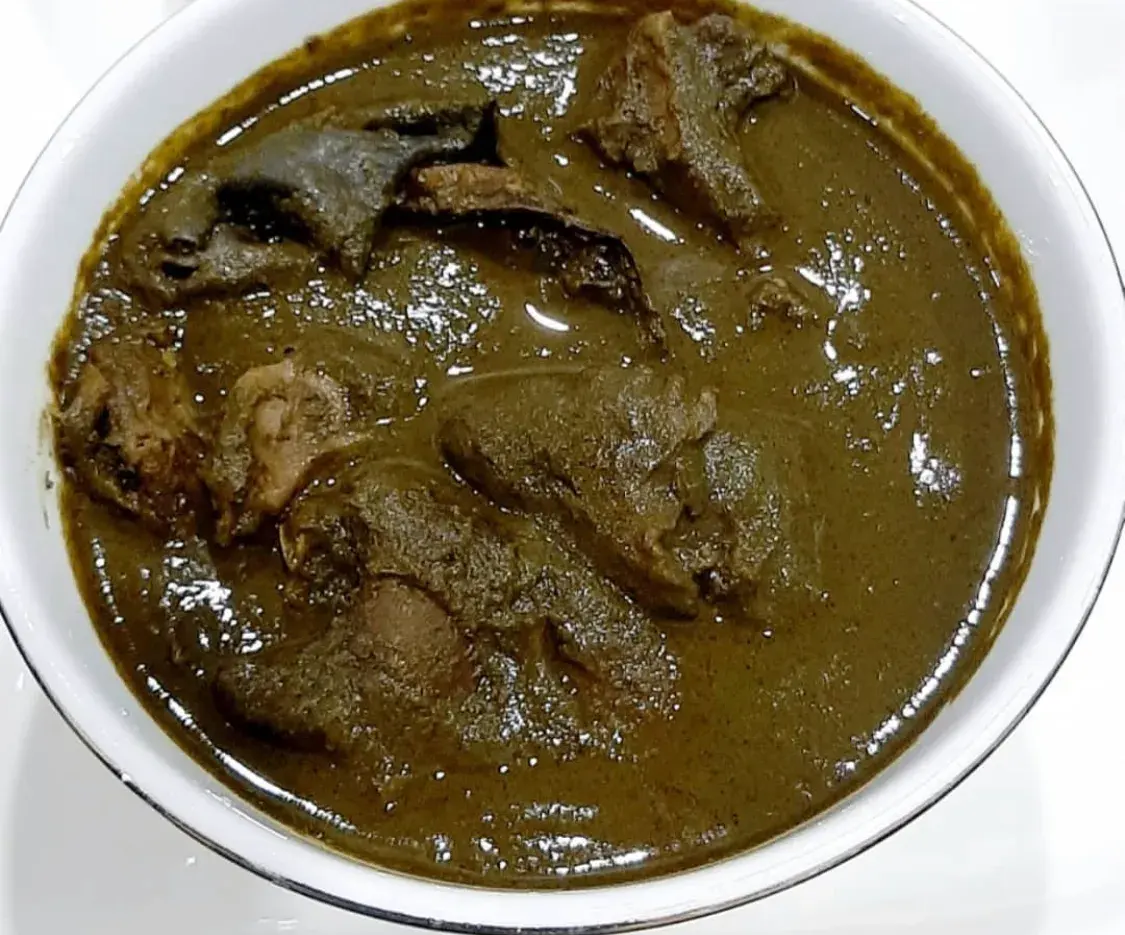
Edo Black Soup
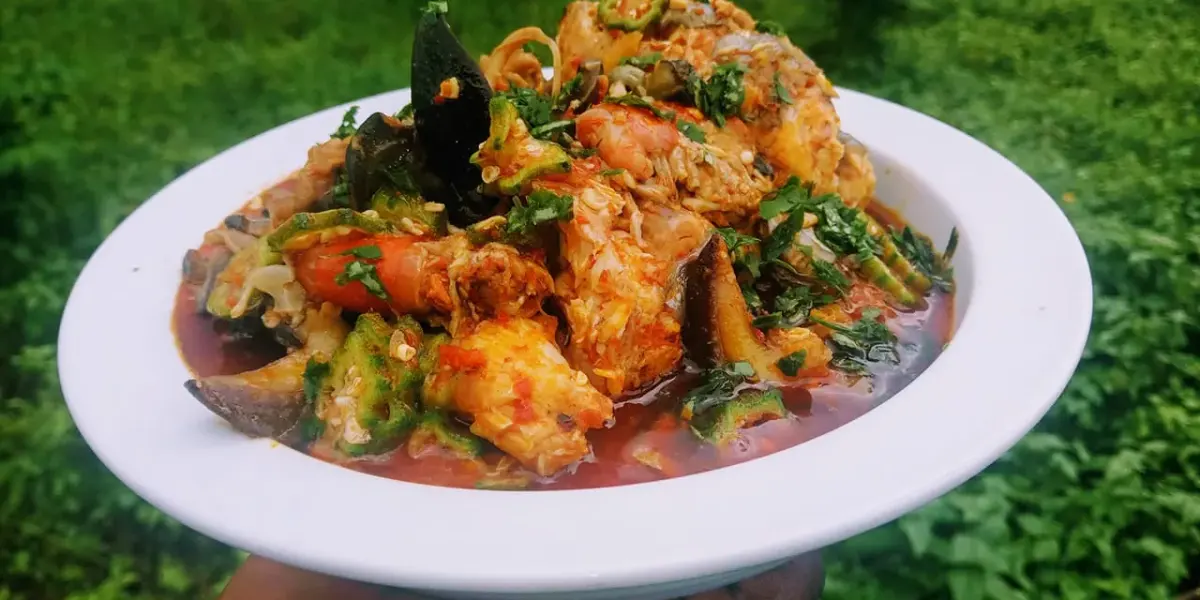
Nigerian Fisherman Soup
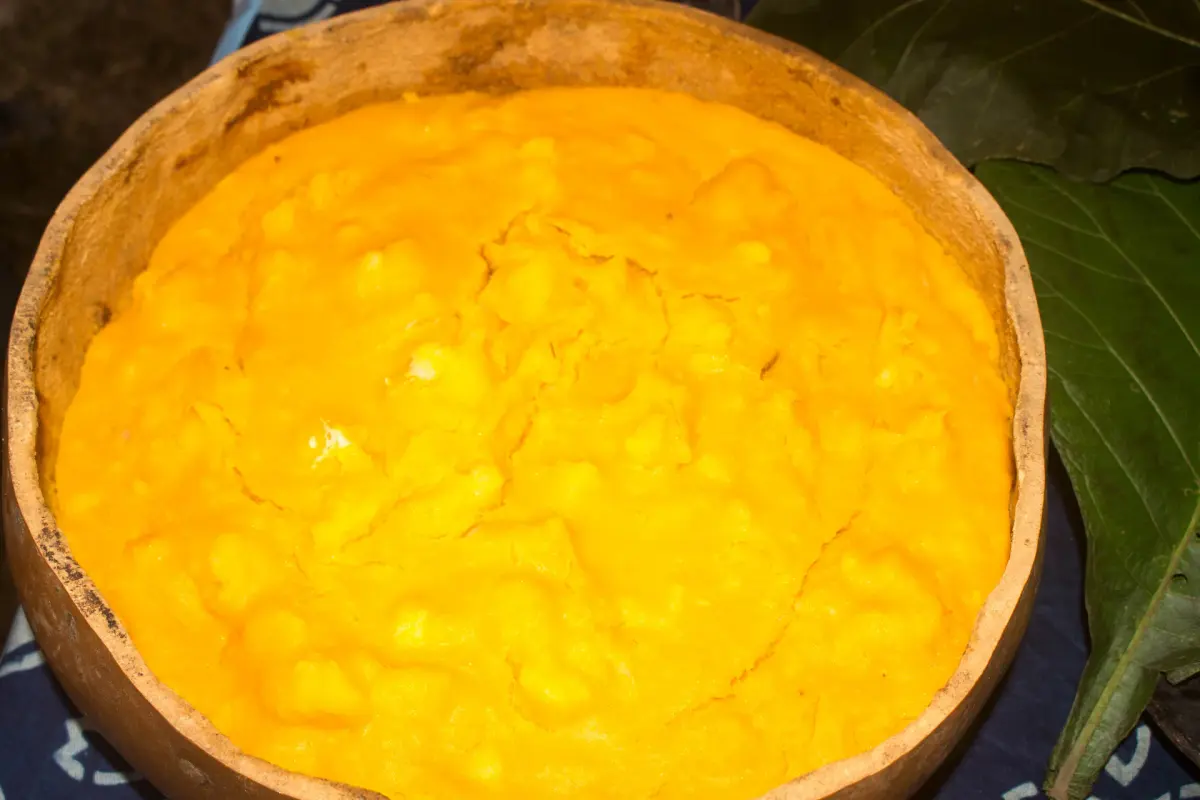
Igbo Yam Porridge
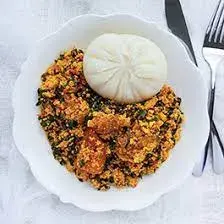
I couldnt find fresh uziza leaves anywhere around Thamesmead so I had to use dried ones from the African shop in Woolwich. The method of scooping the melon paste in small portions and not stirring it straight away is what made the dish for me sha, it finally gave me those nice solid egusi lumps instead of dissolving into water. Used cow tripe and plenty stockfish as well... e sweet no be small thing o!
chale the spice from two habaneros plus the dried scotch bonnet is no joke oo! herh my eyes watered small while eating it with eba, but blending the onion and pepper right into the melon paste made it so aromatic paa. we make agushi soup back home in Ghana but that sharp uziza leaf taste gives this Nigerian version a whole different kick. very nice dish.