
Feteer Meshaltet (Egyptian Layered Pastry)
Abuja, Nigeria · View all recipes
Overview
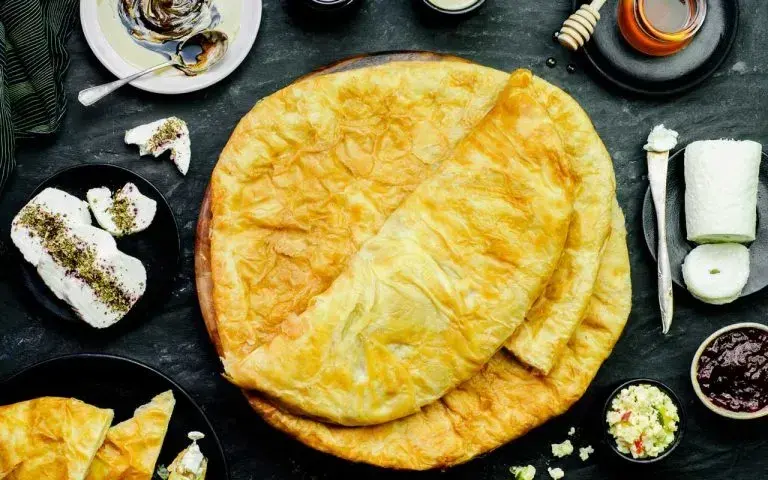
Feteer meshaltet is an Egyptian pastry made by stretching dough until it is almost transparent, brushing it with butter, folding it, and repeating until it consists of a great many paper-thin layers. It is baked in a very hot oven and eaten either plain with honey, molasses and tahini, or filled with anything from cheese to minced meat to custard. The name means something like flattened or stretched pie, and that describes the method exactly. The dough is not rolled, it is stretched by hand until the surface below is visible through it, then folded with butter between every layer. What produces the texture is the butter turning to steam between the layers in a very hot oven and forcing them apart, which is the same physics as puff pastry arrived at by a completely different route. The oven temperature the source calls for looks like an error and is not, it is far above ordinary baking heat. Feteer needs that to puff before the layers set, and Egyptian bakeries use wood-fired ovens hotter still. A domestic oven at its maximum with the broiler finishing the top is the practical approximation. It has a long and reasonably well-attested history, the source traces it to ancient Egypt, where a version was offered in temples. Its claim that feteer became the croissant in Europe is repeated widely but not established, and it has been recorded here as a claim rather than a fact.
AFN Heritage Note
Feteer meshaltet is an Egyptian pastry of many thin layers separated by butter, baked in a very hot oven and eaten plain or filled. Versions are documented from ancient Egypt, where it was made as a temple offering, and it is traditionally offered to guests as a gesture of hospitality.
Ingredients
Dietary tags are provided by contributors as a guide, not verified by AFN, and they depend on the products you buy. If you have a serious allergy, check every ingredient yourself. Cooking, allergies and your own judgement
Directions
- 1
Combine the flour and salt. Pour in the water gradually, kneading as you go, until the dough comes together. It should be stretchy rather than sticky.
- 2
Let the dough rest for 10 minutes, then divide it into small or medium balls depending on the size of feteer you want.
- 3
Drop the dough balls into a bowl of melted butter so they are completely submerged, and leave them for 15 to 20 minutes. This is what makes the dough stretchable.
- 4
Take the first ball and stretch it out with your hands into a very thin sheet, thin enough that you can see the work surface through it.
- 5
Fold the sheet over itself into a square, brushing melted butter between each fold. Set it aside and start the next ball.
- 6
Stretch the second ball to the same thinness. Lay the first folded square in the middle of it and fold the outer sheet around it, again brushing butter between the layers.
- 7
Repeat with the third and fourth balls, so you end up with one heavily layered parcel. Set it seam side down on a baking dish, brush the top with butter and press it gently so it spreads evenly.
- 8
Heat the oven to 550°F / 290°C, or as hot as it will go, and bake for about 10 minutes. As soon as the feteer puffs, turn on the broiler to brown the top.
- 9
Brush the finished feteer with more butter and cover it so it does not dry out.
- 10
Repeat with the remaining four balls to make a second feteer. Dust with icing sugar and serve with honey, molasses, tahini or a filling of your choice.
Africook’s Notes
- The oven really does need to be that hot. Feteer relies on the butter flashing to steam and forcing the layers apart before they set, and a moderate oven gives you a dense pastry instead.
- Submerge the dough balls in butter and let them sit. That soak is what makes the dough stretch to transparency without tearing.
- Stretch, do not roll. A rolling pin compresses the layers you are trying to keep separate.
- Butter between every single fold. Any two layers that touch dry will fuse into one.
- Brush the baked feteer with butter and cover it immediately. Left uncovered it dries out and goes brittle within minutes.
- Balance the layers top and bottom so the pastry cooks evenly rather than burning on one side.
Questions cooks ask
Is 550°F really the right temperature?
Yes, and it is not a typographical error. Feteer depends on the butter between its layers turning instantly to steam and forcing them apart before the dough sets, and that needs extreme heat. Egyptian bakeries use wood-fired ovens hotter than any domestic one. At home, run the oven at its maximum and finish with the broiler for the top. A moderate oven produces a dense, greasy pastry rather than a layered one.
How is this different from puff pastry?
The route to the same result. Puff pastry laminates a block of butter into dough through repeated rolling and folding, in a cool kitchen, with rests in between. Feteer stretches the dough by hand until it is almost transparent and brushes butter over each layer as it is folded. The physics of the bake is the same, steam separating layers, but the technique is entirely different, and feteer is by far the older method.
What is it eaten with?
Plain feteer is served with honey, molasses and tahini, which the source rightly calls a heavenly combination, or dusted with icing sugar. Filled versions run from savoury, cheese, sausage, minced meat, chicken, vegetables, to sweet, with custard and Nutella both popular now. Traditionally it is given to visitors and taken to friends as a gift, and it carries a strong association with hospitality in Egypt.
Did feteer become the croissant?
That claim circulates widely, including in this source, which places the transmission in the Mamluk era. It is not established, and the croissant's own documented history traces through the Austrian kipferl rather than through Egypt. Both are laminated pastries and both are old, but a shared technique is not evidence of descent. It has been recorded here as a claim rather than presented as fact.
Reviews
Be the first to rate this recipe
Cooked it? Your rating helps the next person decide whether to try it.
No reviews on this one yet. If you have cooked it, yours would be the first.
You Might Also Like
Browse all Egyptian recipes →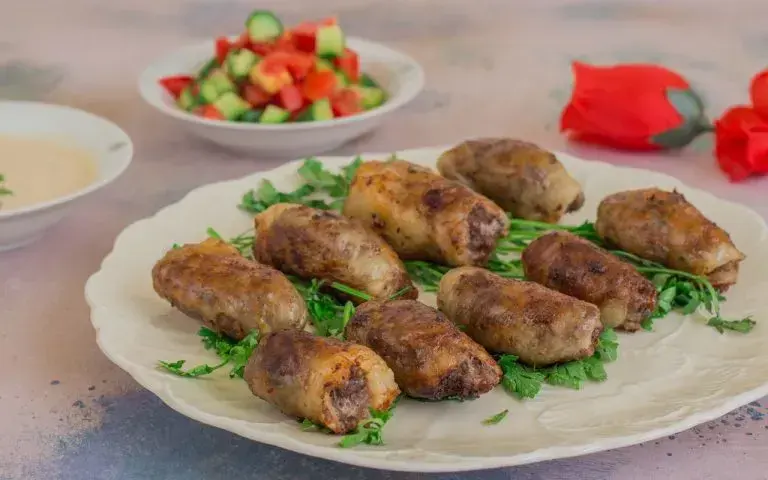
Tarb (Grilled Kofta Wrapped in Lamb Fat)
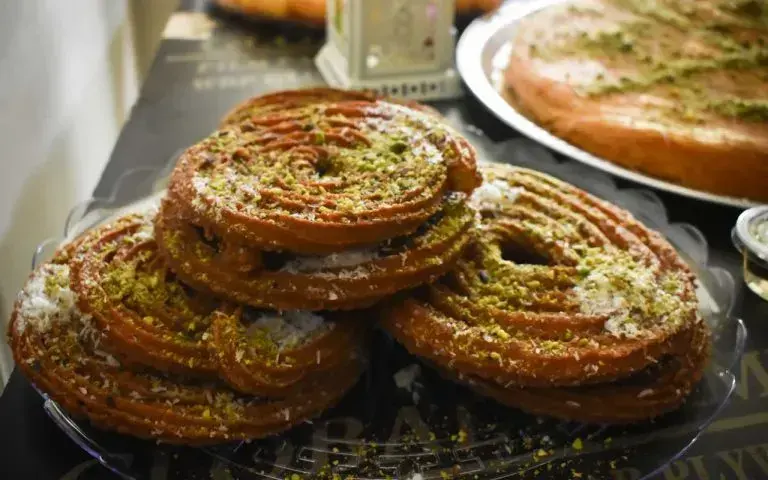
Egyptian Meshabek