Irio
Overview
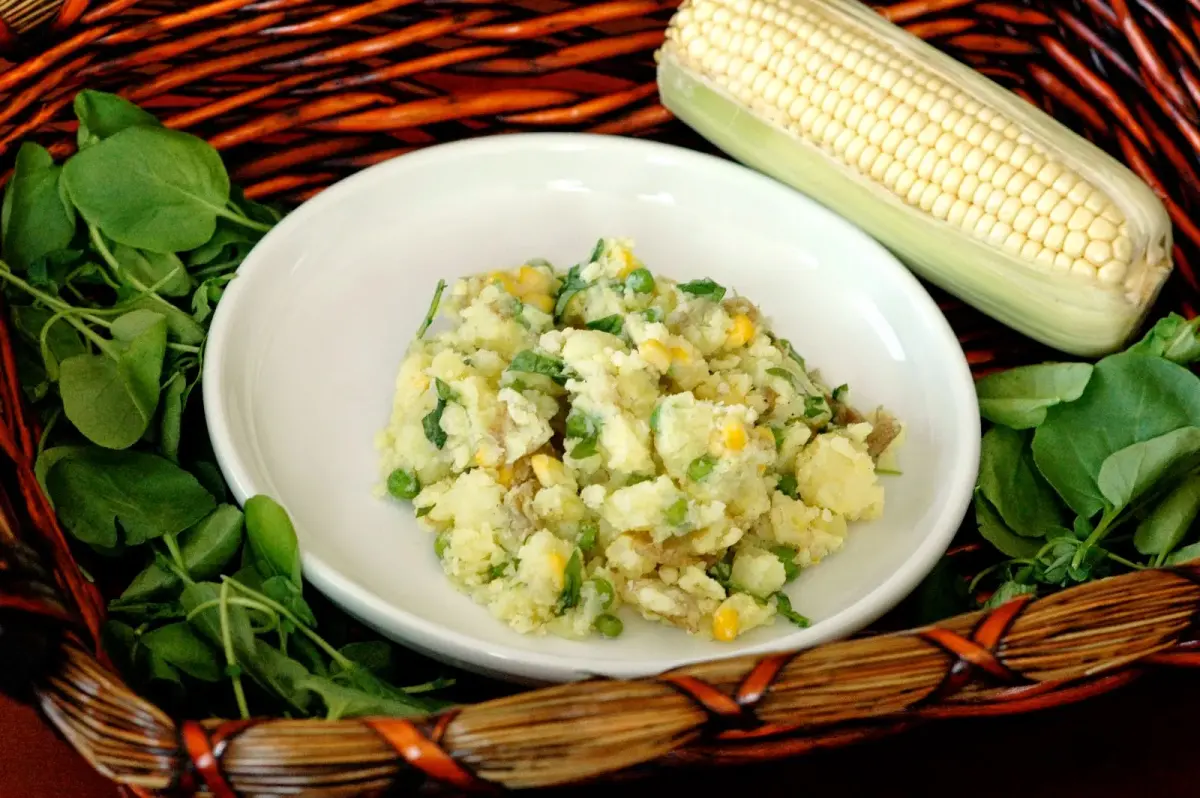
Irio is potatoes, peas and corn mashed together into a thick, pale green purée, and it originated with the Kikuyu of central Kenya before spreading across the country and into East Africa more widely. The name means, plainly, food, in Kikuyu. It is chunkier than mashed potato and deliberately so. The peas are cooked with the potatoes and mashed in, which gives the colour, and the corn is stirred through whole at the end so it keeps its texture. The result is a thick mass rather than a smooth purée, and that texture is what distinguishes it. Its most common serving is nyama na irio, with grilled steak, and it belongs to the same domestic register as sukuma wiki: cheap, filling, made from a short list of ingredients in one pot. Dried green peas are often used in Kenya and need soaking and separate cooking. A knob of butter in the purée, lima beans, or sautéed greens are all common additions. **Note that the source titles this dish mashed sweet potatoes, and there are no sweet potatoes in it**, the recipe uses ordinary potatoes throughout.
AFN Heritage Note
Irio originated with the Kikuyu of central Kenya and has spread across Kenya and East Africa. The name means food in the Kikuyu language, and it is conventionally served with grilled steak as nyama na irio.
Ingredients
Dietary tags are provided by contributors as a guide, not verified by AFN, and they depend on the products you buy. If you have a serious allergy, check every ingredient yourself. Cooking, allergies and your own judgement
Directions
- 1
Place the peas and potatoes in a large saucepan and add water to cover.
- 2
Stir in the salt and place over a medium flame.
- 3
Bring to the boil, then reduce the heat and simmer until the potatoes are cooked through.
- 4
Drain, reserving the cooking liquid.
- 5
While the potatoes and peas cook, simmer the corn in a little salted water in a separate saucepan for a few minutes.
- 6
Mash the potatoes and peas together with a masher, or pass them through a ricer, to form a pale green purée.
- 7
Stir in the corn with a little of the reserved liquid and season with salt and pepper.
- 8
Serve hot.
Africook’s Notes
- Keep the cooking liquid. It is what you loosen the mash with, and it carries more flavour than plain water.
- Cook the corn separately and stir it in whole. It is there for texture and mashing it defeats the point.
- Aim for chunky rather than smooth. Irio is a thick mass, not a silky purée, and over-mashing potato turns it gluey anyway.
- Dried green peas are common in Kenya and need soaking and cooking separately before they join the potatoes.
- A knob of butter in the purée is a common addition, though it takes the dish out of vegan territory.
- Lima beans or sautéed greens stirred through add colour and texture, and pumpkin leaves give a more vivid green.
Questions cooks ask
What does irio mean?
Food, in the Kikuyu language. It is about as plain a name as a dish can have. Irio originated with the Kikuyu of central Kenya and has since spread across the country and into East Africa more broadly, and it is now eaten well beyond its origins.
Does irio contain sweet potatoes?
No, despite the source's title describing it as mashed sweet potatoes. The recipe uses ordinary potatoes with peas and corn, and no sweet potato appears anywhere in it. Sweet potato versions of related dishes exist, but this is not one of them.
What is it served with?
Grilled steak, most classically, in a dish called nyama na irio. It also accompanies stews and grilled meats generally, and it is substantial enough to be a meal with a vegetable side. It occupies much the same everyday place in Kenyan cooking as sukuma wiki.
Can I use frozen peas and corn?
Yes, and the source says so directly. Frozen works perfectly well for both and is what most people use outside the growing season. Dried green peas are the traditional Kenyan choice and need soaking and separate cooking, which is worth knowing if a recipe elsewhere calls for them.
Reviews
Be the first to rate this recipe
Cooked it? Your rating helps the next person decide whether to try it.
No reviews on this one yet. If you have cooked it, yours would be the first.