African Pepper Sauce

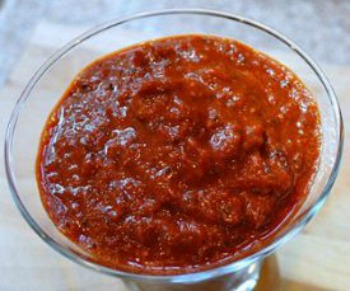
African pepper sauce is a spicy sauce that will transform any dish from just okay to amazingly delicious!

It is primarily made with habanero, garlic, onion, basil, and other spices. A versatile sauce that can be used as a condiment, dip, or appetizer component.

In West Africa, pepper sauce is an essential partner for puff-puff, grilled meat, fish, and eggs, or splendid with any food.

There is just something about pepper sauce that takes a dish from bland, boring to flavorful and enjoyable.

As you might have guessed pepper sauce is sparklingly hot because of the refreshing taste of the hot pepper used in the blend.

It is so easy to make and also very spicy!

Pepper Sauce Recipe

Although the ingredients vary with the cook one thing is constant, – Hot pepper.

You can use so many kinds of pepper in this sauce; habanero, scotch bonnet, chili—one huge difference between hot sauce and pepper sauce ( African style).

The basic ingredients usually consist of pepper, salt, vegetable oil, and or Maggi, ranging from mild to ferocious with a thick structure.

Notes and Variations

  • Adjusting spice levels. Most West African pepper sauces are FIERY! This is due to habanero peppers. You can easily adjust this down by taking seeds out of the habanero, reducing the number of habanero peppers, or leaving them out entirely!
  • Additional seasoning. This sauce is super versatile because it doesn’t have any additional seasoning (so for instance, I can add bouillon or stock cubes to make this work for Jollof rice or add basil to make a pasta sauce). You can add another seasoning for extra flavor if you wish.

Storage Suggestions

You can store the sauce in the fridge for up to a week regardless of whether you use water or oil in the base.

If you want to store it for longer, I suggest using oil and topping off the container with a thin layer of oil to make sure it avoids all contact with air. This way, it’ll last 2-3 weeks.

You can also freeze this sauce for up to 4 to 6 months! Just make sure to portion and place it in a freezer-safe container.

Don’t forget to leave a comment and a star rating if you made this recipe. Enjoy!

African Pepper Sauce

Shruthi Baskaran
Super versatile African pepper sauce with bell peppers, habanero peppers, tomatoes and onions - parboiled to perfection. Use as pasta sauce, or salsa-style dip!
Prep Time 5 minutes
Cook Time 25 minutes
Course stew
Cuisine African
Servings 8
Calories 27 kcal

Equipment

  • 1 Blender

Ingredients
  

  • 4 red bell peppers
  • 3 habanero peppers
  • 3 Roma tomatoes
  • ½ onion
  • ½ cup water

Instructions
 

  • Remove the stems and remove the seeds of the bell peppers. Chop into quarters. Remove the stem of the habanero peppers. Add to a blender or food processor with 3 tomatoes, half a yellow onion, and either ½ cup of water or oil (depending on the type of sauce you want).
  • Blend or pulse to your desired consistency. Traditionally, the sauce is a bit coarse, so I pulse for a minute. If you want it smoother, you can also just blend it.
  • Transfer to a medium pot, and simmer on a low-medium flame for about 20-30 minutes. If you used oil, it will float to the top when its done cooking. If you just used water, the sauce will reduce by half to the desired consistency.
  • Turn off the stove when all the water has evaporated - store in an air tight container in a fridge and use for up to a week! If you want to store for longer, make sure to top off the sauce with oil so it avoids all contact with air.

Notes

If you're just using water, the sauce is done when the top starts forming large bubbles that pop - this means that most of the water has evaporated.
I keep my sauce seasoning free so it can take on flavors best suited to the dish I make with the sauce (e.g. more bold curry-type flavors for jollof rice, or more Italian flavors for pasta) - you're welcome to add seasoning to the sauce after it parboils!
You can store the sauce in the fridge for up to a week regardless of whether you use water or oil in the base. If you want to store it for longer, I suggest using oil, and topping off the container with a thin layer of oil to make sure it avoids all contact with air. This way, it'll last 2-3 weeks. You can also freeze this sauce for up to 4 to 6 months!

Nutrition

Calories: 27kcal
Tried this recipe?Let us know how it was!

Kondres (Spicy Stewed Plantains)

Kondré is a common meal of the Western region of Cameroon. It is simple, economical, nutritious, and easy to cook plantain meal.

It is usually consumed during traditional occasions like weddings, family dinners, funerals and what have you.

Having this on your table during weekends will give a broader smile to your house hold.

Origin of Kondre

This is a very well-liked, unusual, and strongly spiced one-pot dish from Cameroon.

It originated in the western region of Cameroon, notably among the bamelieke tribe, and is commonly referred to as Kondres.

Kondre Recipe

The key to a great Kondre is tender meattender-enough plantain and allowing the bananas to absorb the flavors of the spices.

Indeed, there are 3 main components to the dish: Meat, Plantains and the Spices.

Meat: While the “traditional” recipe calls for Goat meat, using Beefs also very common. Some people go as far as using smoked Pork.

Allow the meat to cook for at least an hour and a half. You want the meat to melt in your mouth, almost falling off the bone.

Plantain: Green, unripe plantain only! It’s a must that they are unripe, otherwise, not only won’t sustain the long cooking time, but the taste will also be completely different: if they ain’t green it ain’t a Kondre.

Spices: This is what separates Kondre from other Plantain and Meat stews: the unique blend of spices.

The African spices which should never miss from your Kondre are Pebe, Djansang (Akpi), Rondelle, and Quatre-Cotés, especially the first three.

Ground or whole, the form doesn’t matter; nevertheless, I advise toasting, if possible, the seeds and grains before blending/crushing them to release a maximum of flavors.

This dish is so rich that you won’t need a side: it is essentially a whole dish on its own. Still, feel free to have a small portion of white rice if you wish.

The actual preparation is simple and straight -forward. Boil meat, blend all the spices, and cook in a large pot with tons of water or broth.

This concoction yields a rich savory sauce with tender meat and plantains. Since it is cooked for about 2 hours. The flavor concentrates very nicely.

Be Sure to Try These Other Plantain Dishes!

Be sure to recreate this incredible dish. Enjoy!

Kondre (Cameroonian Plantain and Beef Stew)

laviebami
Today we are travelling to Cameroon, more precisely the Western Region, also called Grassfields, the land of the Bamileke people hint to the name of the blog). The dish of the day is: Kondre (Plantain and Beef/Goat Stew).
Prep Time 20 minutes
Cook Time 3 hours
Course Main Course, stew
Cuisine Cameroonian
Servings 6

Ingredients
  

  • 1 kg Beef or Goat/Pork
  • 1 tablespoon Vegetable oil
  • 1 tablespoon Messep
  • 3 Pebe seeds
  • 10 Djansag Seeds
  • 4 cloves
  • 2 rondelles
  • 5 White Pepper seeds Penja
  • 10 Basil leaves
  • 1 to mato chopped
  • 1 Leek sliced
  • 1 large Onion chopped
  • 1 Celery stalk
  • 5 Garlic cloves
  • 80 g ginger peeled
  • Salt to taste
  • 1 bouquet garni
  • 4 tablespoons Palm Oil

Instructions
 

  • Peel and rinse the plantain. Cut in half and let sit in cold water.
  • Wash and pat the meat dry.
  • Salt the meat and let sit 10 minutes.
  • Heat up vegetable oil in a large pot. Add in the meat. Cook until the meat brown.
  • (optional) Bring a small pan to a very high temperature. Add in the pebe, rondelles, quatre cotés, djansang and white pepper. Toast them.
  • Remove the meat and set aside.
  • In a mixer, add in the basil, leek, celery, garlic, ginger, tomato, 4 cotés (or cloves) and toasted seeds. Blend until smooth.
  • In the same large pot, add in the plantain, half of the blended mix, salt and cover in water. Cover and cook for 45 minutes.
  • Add in the meat, the remaining blended mix, palm oil and bouquet garni. Cover and cook another 60 minutes, until both the meat and plantain are tender.
  • Stir occasionally to avoid burning and salt to taste.
Tried this recipe?Let us know how it was!

Sanga

Sanga is a Cameroonian specialty, a simple dish that is made with cassava leaves, palm oil, and maize.

Cassava leaves are pounded and mashed so the final dish looks like a cross between a stew and porridge. The dish can be served with rice or boiled plantains on the side.

Origin of Sanga

Sanga is a simple dish, of Cameroonian origin, a dish from the southern and central regions of Cameroon.

Cameroon cuisine is unique thanks to the use of spice blends that create the most epic meals.

One more thing you should know that influences their meals is that Cameroon has a mix of diverse ethnic and cultural groups and this gives birth to a variety of dishes. Cameroon cuisine is influenced by French, Portuguese, German, and other neighboring countries.

However, the people of Cameroon have remained true to tradition by continuing to provide rich cultural-centered traditional food.

Sanga Recipe

The main ingredients are black nightshade leaves, commonly called zoom, palm nut juice, fresh corn grains, and sugar (optional).

Many people prefer adding sugar to this meal, but the fresh vegetables and corn give it a sweet aspect by themselves.

When making the Sanga meal, the Cassava leaves are pounded and mashed so the final dish looks like a cross between a stew and porridge. The dish can be served with rice or boiled plantains on the side.

So, that’s Sanga for you. Go ahead and make a dish for yourself. Remember to tell us about your experience in the comment section.

Some suggestions for Amazon links to ” Cooking Utensils”. 

Locking Tongs with Nylon HeadsProject Overview Docs Banner in Light Green Blue Vibrant Professional Style 1

Sanga: A traditional vegetable dish

Africa Media Malta
Sanga is a dish from the Southern region of Cameroon. It takes around 30 minutes and all ingredients can be found in the African shops here in Malta.
Total Time 30 minutes
Course Main Course
Cuisine Cameroonian
Servings 6

Ingredients
  

  • Pounded cassava leaves
  • 1 kilo of palm nuts cream
  • Sweet corn
  • 3 liter of water
  • Homi: a spice from the garlic family

Instructions
 

  • Mix the palm tree cream and the water on a pot.
  • Let it boil for a few minutes
  • Add half a kilo of pounded cassava
  • Mix all together
  • Put the lid on the pot and l
  • Let it boil for about 20 minutes, it is sufficient for the vegetable to be cooked.
  • Add sweet corn as much as you wish as this dish is actually about sweet corn
  • Serve it hot with boiled cassava and enjoy.
Tried this recipe?Let us know how it was!

Catatos

0

Catatos is a distinctive Angolan dish. The meal is produced by frying caterpillars with garlic at its most basic, although it can be enhanced with the addition of onions, peppers, and tomatoes. The caterpillars should be delicate but crunchy, and some people believe they taste like prawns.

The meal is high in nutritional value since caterpillars have more protein and iron than fish or beef. Catatos are best served with rice, funge, and hot sauce.

Catatos

Servings 4

Ingredients
  

  • 4 cups of dried caterpillars
  • 1 large onion finely chopped
  • 1 small red pepper finely chopped
  • 1 small green pepper finely chopped
  • 1 large garlic clove crushed
  • 2 fresh tomatoes finely chopped
  • ¼ cup of oil
  • 1 Maggi Seasoning Cube
  • ½ tsp. salt
  • ½ tsp. black pepper
  • 4 cups of water
  • 1 knob of butter

Instructions
 

  • To begin, soak the caterpillars in cold water and set aside.
  • Peel and chop the onions, peppers, garlic and tomatoes.
  • In a wok or frying pan, heat the oil and fry the onions over a low heat. Add the peppers, garlic and seasoning and stir.
  • Drain the caterpillars and discard any unwanted pieces and pat dry. Then add the caterpillars to the pan and mix well.
  • Fry over a medium heat for 10 minutes. When slightly crisp, add the tomatoes and cook for a further 10 minutes.
  • The caterpillars should be soft but with a crunchy texture. Add a knob of butter just before serving.
Tried this recipe?Let us know how it was!

Piri Piri Sauce (Red Chilli Pepper Sauce)

0

Piri Piri, also known as peri peri, is a variety of pepper that originated in the Caribbean and was popularized by the Portuguese.

Piri Piri is synonymous with spicy pepper, and it is referred to variously depending on the country. The Portuguese name it Peri Peri, but the English call it Piri Piri since it is found in African chilli.

Piri piri sauce is a versatile tangy (marinade) hot sauce created from piri piri pepper that originated in Portugal. The hot pepper is the main ingredient in the sauce, along with other popular ingredients such as red pepper, lemon, and so on. Paprika, oregano, onions, garlic, bay leaves, salt, and lemon juice are all ingredients in true piri piri sauce. These days, the components utilized for this sauce allow for greater versatility.

Piri Piri Sauce

My Active Kitchen
Servings 0

Ingredients
  

  • 4-5 birds eye chilli
  • 3 mixes chillies about 60g
  • ½ tsp ground bay leaf
  • 1 tsp salt
  • 4 cloves garlic
  • black pepper
  • 1 tbsp chilli flakes
  • 1 tbsp Oregano
  • Juice of 1 lemon
  • cup malt vinegar
  • 1 large red bell pepper
  • ½ cup vegetable oil substitute with any unflavoured oil

Instructions
 

  • roughly chop the onion, red bell pepper, put all ingredients in a blender or food processor and puree. Check for salt and seasoning and adjust accordingly. This hot sauce would make about 2 cups
  • Use the sauce as desired or store in an airtight container and refrigerate until you are ready to use.
Tried this recipe?Let us know how it was!

Fumbua (Wild Spinach Stew)

0

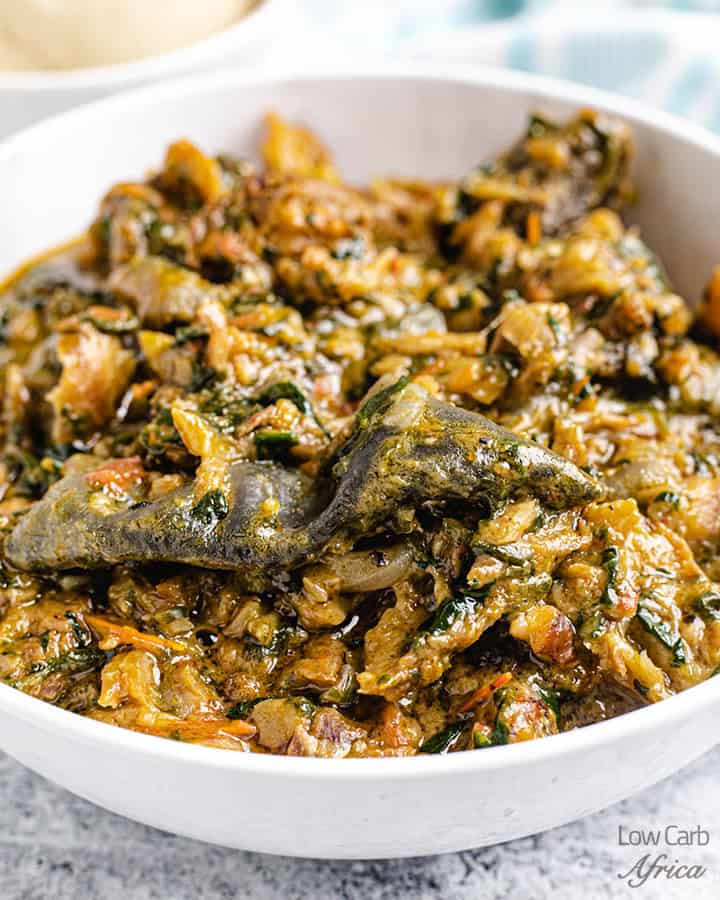
Fumbua is a delicious cuisine from the Democratic Republic of the Congo that is also famous in Angola. It’s both filling and healthful.

This wild spinach stew mixes delicious tastes with healthy fats and proteins to create a delicious low-carb dinner.

Fumbua (Wild Spinach Stew)

Low Carb Africa
Servings 8

Ingredients
  

  • 1/2 onion
  • 2 garlic cloves
  • 3 pieces smoked catfish approx 8oz
  • 2 tbsp palm oil
  • 4 tbsp peanut butter
  • 2 to matoes
  • 4 cups spinach
  • 1 tsp bouillon powder
  • 1/2 tsp salt
  • 1 tsp black pepper
  • 1 cup stock
  • 1 habanero optional
  • 1 cup water

Instructions
 

  • Soak the smoked fish in hot water for a few minutes.
  • Chop the spinach and rinse, then place in a colander to drain the excess water.
  • De-bone the smoked fish and break them into medium pieces. Rinse them out thoroughly.
  • Chop the onions, tomato & habanero pepper, and mince the garlic.
  • Pour in one cup of water and one cup of stock to a pot and bring to a boil.
  • Add the chopped spinach to it and simmer for 10 minutes.
  • Add the smoked fish, diced tomatoes, pepper, onion, garlic, bouillon powder, salt, and black pepper.
  • Bring to a boil and simmer for about 10 minutes.
  • Add the peanut butter and palm oil and simmer for another 10 minutes.

Notes

This recipe serves 8 and contains 3 net carbs per serving
Don't worry if you live in a county where it's hard to get traditional fumbwa leaves. You can safely substitute with spinach or kale and collards greens.
Depending on your preference, you may leave out the habanero pepper to reduce heat or add cayenne pepper for a little more heat.
Always taste for salt before you add any since the stock already has some salt in it.
You can use a cup of ground roasted peanuts instead of peanut butter.
Tried this recipe?Let us know how it was!


Chikuanga (Angolan Cassava Bread)

0

Chikuanga, also known as kwanga, is a traditional bread from the Democratic Republic of Angola made of cassava flour cakes wrapped in dried banana leaves and steamed. Its savory flavor complements the majority of the country’s main dishes.

Chikuanga is a traditional northeastern Angolan bread made from manioc (cassava flour). Chikuanga is served wrapped in banana leaves, which give it a particular flavor. Chikuanga is also known as cassava bread since it resembles bread and is produced from cassava.


Chikuanga (Angolan Cassava Bread)

Shoprite
Servings 0

Ingredients
  

  • 4 medium-sized manioc
  • 2 L water

Instructions
 

  • Peel the manioc and soak in cold water, cover so that it is airtight and leave for a minimum of 48 hours (the longer you leave the manioc to soak, the softer and more fermented it becomes).
  • After the manioc is soft, use a knife or your fingers to remove the veins and then pound in a large mortar & pestle or food processor.
  • When the manioc is smooth in consistency, place in a large bucket or basin and add 2 litres of water.
  • Spoon the mixture through a sieve repeatedly to separate the root vegetable from the water and discard the manioc tubers that remain in the sieve so that you are left with a cloudy water substance (the manioc flour would have sunk to the bottom of the basin).
  • Drain the top water and transfer the remaining manioc to a small pot and boil until the mixture has dried slightly and is malleable.
  • Begin the kneading process by using a rolling pin to iron out the manioc until it has a smooth texture.
  • Then use your hands to shape the manioc into a long tubular shape and wrap in cling film. Tie string around the manioc to ensure it’s waterproof.
  • Place the manioc parcels in a pot of water and boil for two hours until it is firm and golden/light brown in colour.
  • When cool, unwarp the string and plastic and slice into strips to serve with your favourite stew.
Tried this recipe?Let us know how it was!

Kizaca

0

Kizaca, a traditional Angolan meal that is also occasionally spelled quizaca or kisaca, is one of the nation’s most well-liked vegetarian foods. It is made with crushed peanuts and boiling cassava leaves. The meal is cooked with peanuts and cassava until it becomes thick and the peanuts turn into a smooth, nutty sauce.

Although kizaka is currently considered as the nation’s national dish, it has a fascinating historical background. Kizaka, like most Angolan cuisines, combines European influences with real African ingredients because Angola was a Portuguese colony for many years.

What’s more intriguing is that the principal component, cassava, was imported into Angola from Brazil, another former Portuguese colony, where it is regarded as an indigenous component. Kizaka com peixe, a dish cooked with fish, onions, and tomatoes, is the most popular type in Angola. Rice is typically included as a side dish.

The dish is widely consumed throughout Angola and is typically served as a side dish with dishes of meat or fish. Green cassava leaves can frequently be replaced with spinach.

Cassava leaves taste best after a few hours, so prepare ahead of time to give the flavors time to develop. White rice or chikuanga should be served with your quizaca.

Some Suggestions for amazon links to “Hamilton Beach Food Processor & Vegetable Chopper for Slicing, Shredding, Mincing, and Puree, 10 Cups “.

Hamilton Beach Food Processor Vegetable Chopper for Slicing Shredding Mincing and Puree 10 CupsProject Overview Docs Banner in Light Green Blue Vibrant Professional Style 1

Kizaca

Shoprite
Servings 4

Ingredients
  

  • 4 cups of pounded cassava leaves
  • 1 dried fish soaked and shredded (optional)
  • 2 medium onions roughly chopped
  • 1 medium green pepper roughly chopped
  • 1 medium aubergine roughly chopped
  • ¾ cup of ground peanuts optional
  • ½ cup of palm oil or regular oil
  • 5 cups of water
  • ½ sachet Benny Stock
  • 2 garlic cloves crushed
  • 1 thumbnail of ginger crushed
  • ½ tsp. bicarbonate of soda

Instructions
 

  • To begin, soak the dried fish in warm water, cover and set aside.
  • Bring 4 cups of water to boil in a medium pot, add the pounded cassava leaves, soda and a pinch of salt. Cover and boil for 30 minutes.
  • Peel and roughly chop the onions, pepper, aubergine, garlic and ginger. Place in a food processor and blitz until smooth.
  • Stir the mixture into the cassava leaves along with the seasoning and let simmer for a further 15 minutes.
  • Mix the groundnuts with a little bit of water to form a paste.
  • Once the leaves have softened and thickened, add Benny Stock, dried fish and peanut paste to the pot.
  • Reduce the heat and let simmer for 15 minutes.
Tried this recipe?Let us know how it was!

Farofa

0

Traditional Brazilian side dish farofa, or farinha de mandioca in Portuguese, is cooked with roasted cassava or yuca flour. This meal is typically served in Brazilian restaurants around the world and is primarily consumed in Brazil or by members of the Brazilian diaspora.

Farofa

Brazilian Kitchen Abroad
Prep Time 5 minutes
Cook Time 5 minutes
Servings 4

Ingredients
  

  • 2 thick strips of bacon diced
  • 2 tbsp of butter cold
  • 1/2 onion diced
  • 2 cloves of garlic minced
  • 1 c of white yuca/cassava flour
  • s+p to taste

Instructions
 

  • add the bacon to a cold skillet, and heat up over medium heat
  • when the fat from the bacon begins to melt, add 1 tbsp of butter
  • when the bacon begins to fry, add the second tbsp of butter
  • add the onions and sautee until transparent, about 2 mins
  • add the garlic and fry until golden
  • add the yuca flour and season with salt and pepper to taste
  • let it toast, stirring gently and constantly to avoid burning, about 2 mins
Tried this recipe?Let us know how it was!

Cabrito (Goat Meat Stew)

0

Angolan cuisine is known for its love of goat meat. The eastern region of the nation is where goat can be found; it is also sold to adjacent nations. It is frequently consumed during celebrations, graduation parties, and even on notable holidays. People tend to overlook the other meats when there is a goat dish on the table.

Excellent ingredients, starting with red wine and ending with brandy and sherry, are used to make this traditional cabrito, which is cooked slowly.

Because it uses bread crumbs, a method from the Middle Ages, the thickening agent is also historically accurate. Instead of beef, pork, or chicken, goat meat requires an extra step in preparation because the meal will taste gamy if it isn’t.

Common preparation methods include boiling it with water, vinegar, and black peppercorns or marinating it in vinegar. But the gamy flavor is subdued in this goat stew by marinating it in red wine for several hours.

Cabrito (Goat Meat Stew)

panlasa ngpinoy meat recipes
Prep Time 12 hours 10 minutes
Cook Time 1 hour 30 minutes
Servings 0

Ingredients
  

  • 1 kilo goat meat
  • 1 bottle red wine
  • 2 tablespoons olive oil
  • 1/2 teaspoon chopped garlic
  • 1 big onion sliced
  • 1/3 cup tomato paste
  • 3/4 cup brine of green olives
  • 1/2 cup tomato boiled peeled , seeded and chopped finely
  • dash of parika picante
  • 1 tablespoon grated Edam cheese
  • 1 tablespoon breadcrumbs
  • 10 green olives
  • 2 lightly roasted green and red bell peppers sliced
  • salt and pepper to taste
  • 2 tablespoons brandy
  • 1 tablespoon sherry

Instructions
 

  • Marinate the goat meat in red wine for half a day.
  • Boil the meat in water until almost tender. Reserve the stock.
  • In olive oil, saute in garlic and onion. Brown the meat.
  • Add the tomato paste, olive brine and tomato. Simmer until meat is tender.
  • Season with paprika. If the sauce reduces, add goat stock and wine.
  • Thicken sauce with cheese and bread crumbs. Add olives and peppers.
  • Season with salt and pepper. Add brandy and sherry and continue to simmer until cooked.
Tried this recipe?Let us know how it was!

QUICK RECIPES