
Chikuanga (Cassava Bread)
London, United Kingdom · View all recipes
Overview
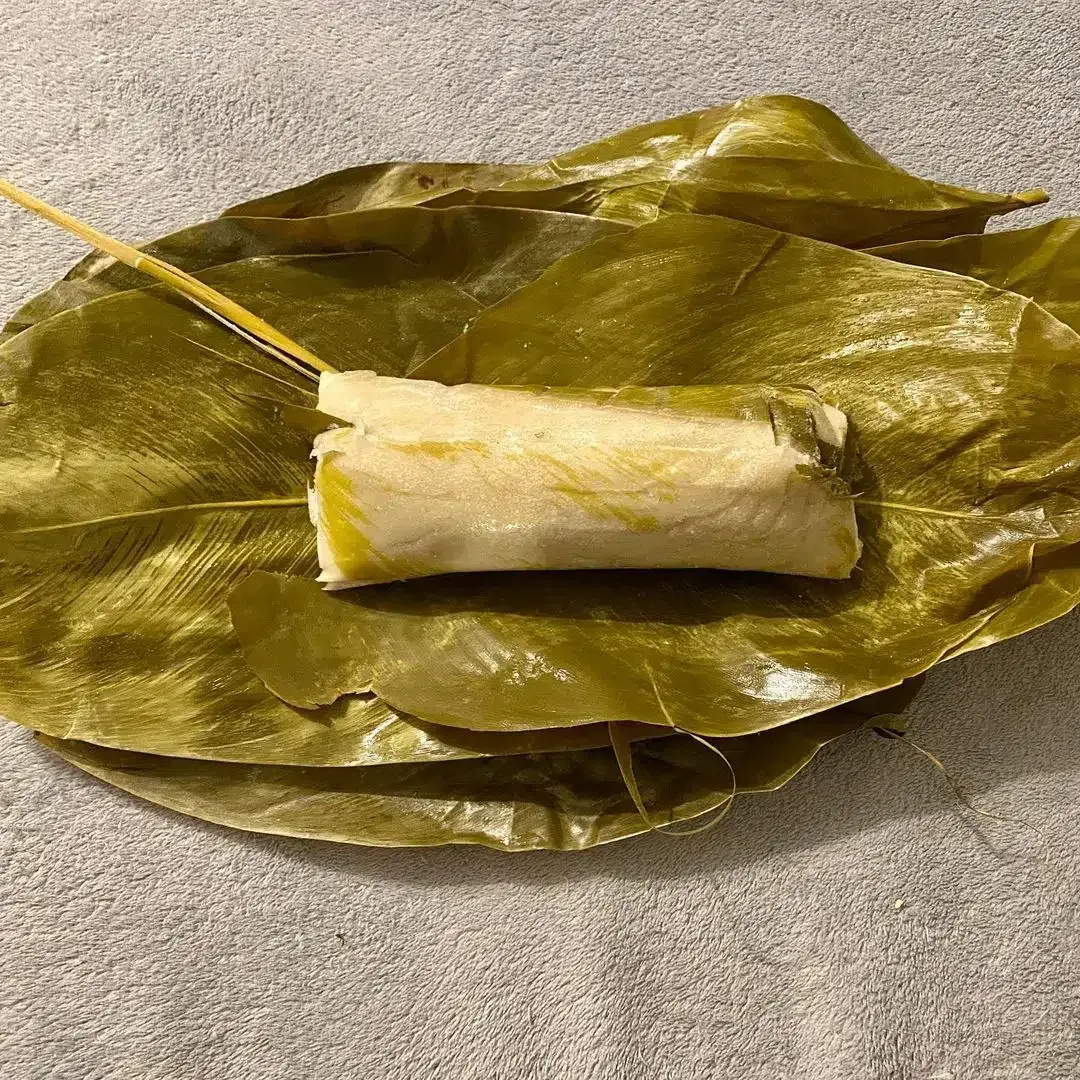
Chikuanga, also called kwanga, is fermented cassava pounded to a dense paste, wrapped and cooked into a firm loaf that is sliced and eaten with stews. It is made across Angola and the Congo basin, and the source associates it particularly with northeastern Angola. The long soak at the start is the whole process, and it is not a convenience step. Cassava is soaked for two full days at minimum, during which it ferments, and that fermentation is what makes it safe. Raw cassava contains cyanogenic glycosides which release cyanide, and soaking, fermenting and cooking are the traditional sequence developed over centuries to remove them. This is one of the clearest examples anywhere of a food processing technique that exists for a reason people worked out long before anyone could explain the chemistry. Longer soaking gives a softer, more sourly fermented result. Traditionally the finished paste is wrapped in banana or marantaceae leaves before its final cooking, and the leaves flavour it as it steams. The source's method substitutes cling film and string, which works but loses that. Where leaves are available they are worth using. The source calls Angola the Democratic Republic of Angola, which is not its name, the country is the Republic of Angola. Kwanga is also strongly associated with the Democratic Republic of the Congo, which may be where the confusion arose.
AFN Heritage Note
Chikuanga, also known as kwanga, is a dense bread made from fermented cassava, wrapped in leaves and cooked, eaten across Angola and the Congo basin. The extended soaking that begins the process ferments the cassava and removes the cyanogenic compounds present in the raw root.
Ingredients
Dietary tags are provided by contributors as a guide, not verified by AFN, and they depend on the products you buy. If you have a serious allergy, check every ingredient yourself. Cooking, allergies and your own judgement
Directions
- 1
Peel the cassava and submerge it in cold water. Cover it so it is airtight and leave it for a minimum of 48 hours. The longer it soaks, the softer and more fermented it becomes, and this fermentation is what makes the cassava safe to eat.
- 2
Once the cassava is soft, pull out the fibrous veins with a knife or your fingers, then pound it in a large mortar and pestle or work it in a food processor.
- 3
When the paste is smooth, transfer it to a large basin and pour in 2 litres of water.
- 4
Spoon the mixture repeatedly through a sieve to separate the pulp from the liquid, discarding the fibrous pieces that stay in the sieve. The cassava flour settles at the bottom of the basin.
- 5
Pour off the water from the top and transfer what remains to a small pot. Cook it until it has dried slightly and become malleable.
- 6
Knead the mass with a rolling pin until smooth.
- 7
Shape it by hand into a long cylinder and wrap it in banana leaves, tying it with string. If leaves are unavailable, cling film will hold the shape, though it contributes none of the flavour that leaves do.
- 8
Lower the wrapped parcels into a pot of water and cook for two hours, until firm and pale golden brown.
- 9
When cool, unwrap and slice into strips to serve with stew.
Africook’s Notes
 Personal notes from Nympha Nzeribe
- Do not shorten the soak. Forty-eight hours is the minimum, and the fermentation it produces is a safety step rather than a matter of taste.
- Longer soaking gives a softer, more sour loaf. Three to four days is common and many cooks prefer it.
- Use banana or marantaceae leaves if you can find them. They flavour the loaf as it cooks in a way that cling film cannot.
- Pull out all the fibrous veins. They do not soften and they ruin the texture of the finished loaf.
- Sieve thoroughly. Any coarse fibre left in the paste stays coarse through pounding and cooking.
- It keeps for several days wrapped, and is usually made in quantity for that reason.
Questions cooks ask
Why does the cassava need to soak for so long?
Because the soak ferments it, and the fermentation is what makes it safe. Raw cassava contains cyanogenic glycosides which release cyanide when the root is damaged or eaten. Extended soaking, fermentation and thorough cooking break these compounds down, and this sequence is the traditional processing method developed across Africa over centuries. It is not a texture step that can be shortened, and it should not be treated as one.
What is the difference between chikuanga and kwanga?
They are two names for the same thing, and both are in use. Chikuanga is the more common spelling in Angolan contexts and kwanga in Congolese ones, and the food is made across both countries and the wider Congo basin. Preparation varies in the length of fermentation and in whether the loaf is wrapped in banana leaves or marantaceae leaves, which produce slightly different flavours.
Can I use cassava flour instead?
Not for this. Commercial cassava flour has already been processed and dried, so the fermentation stage, which gives chikuanga both its characteristic sourness and its dense, cohesive texture, has either not happened or happened differently. You would end up with a cassava dough of some kind but not chikuanga. Garri and fufu flour are similarly not substitutes; they are different products of the same root.
What is it eaten with?
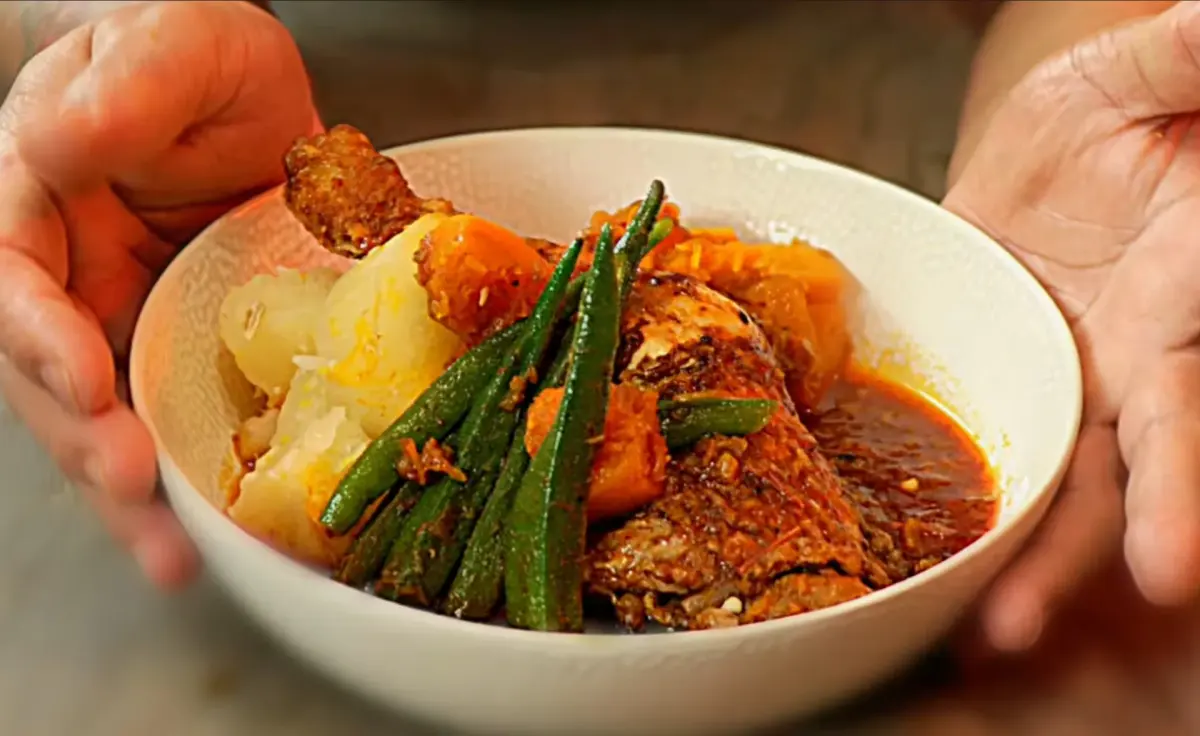
Stews, particularly the rich, oily ones of Angolan and Congolese cooking, moambe, saka saka, fish stews, and dishes like catatos. It is sliced into strips and used much as fufu or funge would be, to carry sauce. It is dense and filling, mildly sour from the fermentation, and it is made in quantity because it keeps well for several days once cooked.
Reviews
Be the first to rate this recipe
Cooked it? Your rating helps the next person decide whether to try it.
No reviews on this one yet. If you have cooked it, yours would be the first.
You Might Also Like
Browse all Angolan recipes →
Mufete
Funge
Kizaca