
Feseekh (Egyptian Salted Fermented Fish)
Abuja, Nigeria · View all recipes
Overview
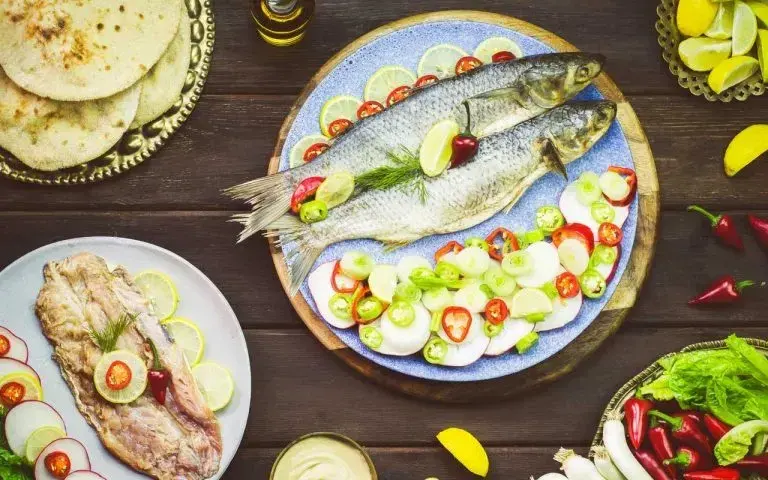
Feseekh is mullet salted heavily and left to ferment for two to three weeks until it turns silvery and develops its notoriously powerful smell. It is eaten at Sham El-Nessim, the Egyptian spring festival whose origins reach back to pharaonic times, and it is one of the oldest continuously eaten preparations anywhere. **This preparation carries a serious and well-documented food safety risk, and it must be stated plainly.** Improperly prepared feseekh causes botulism poisoning in Egypt every year, sometimes fatally, and the Egyptian health ministry issues public warnings before Sham El-Nessim annually. The conditions the method describes, fish sealed in airtight containers, without refrigeration, for weeks, are precisely those in which *Clostridium botulinum* produces its toxin. In Egypt feseekh is traditionally bought from licensed fassakhani, specialist salters who do this professionally, and the strong advice is to buy it from a reputable source rather than attempting it at home. The recipe is recorded here because it is a genuine and historically significant part of Egyptian foodways, and because AFN's job is to document rather than to omit. It is not recommended as a home project. One error worth noting: feseekh is made from mullet, and the source's ingredient list specifies herring, a different fish, and the basis of a different preparation, renga, which is eaten alongside it.
AFN Heritage Note
Feseekh is salted, fermented mullet eaten in Egypt at Sham El-Nessim, a spring festival dating to the pharaonic period. It is traditionally prepared by specialist salters known as fassakhani and is served with green onions, pita bread and tahini.
Ingredients
Dietary tags come from contributors and AFN does not verify them. They also depend on the products you buy. Recipes here are published for learning, not as medical or dietary advice. If you have an allergy or a medical condition, check every ingredient yourself and talk to a doctor or dietitian. Cooking, allergies and your own judgement
Directions
- 1
Read the safety note first. This preparation is the leading cause of botulism poisoning in Egypt and the Egyptian health ministry warns against home preparation every year. Buying from a licensed fassakhani is the strongly recommended course.
- 2
Wash the fish thoroughly, drain it very well and leave it at room temperature to dry.
- 3
Combine the salt with the chilli and the nigella seeds.
- 4
Pack the salt mixture into the head of each fish and rub the rest over the outside, using a generous quantity, salt is what preserves it and under-salting is the main failure.
- 5
Place each fish individually into a bag, then into a jar or non-reactive container.
- 6
Seal the container tightly and wrap it again so that air cannot penetrate.
- 7
Leave it for 15 to 20 days at room temperature to ferment and cure.
- 8
Serve with tahini, green onions, lemon and pita bread. Discard immediately and do not taste any fish that appears bloated, discoloured, soft or smells of anything beyond the expected strong ferment.
Africook’s Notes
- Buy it, do not make it. This is the honest advice: feseekh causes botulism deaths in Egypt every year and licensed fassakhani exist precisely because it is not a domestic preparation.
- Botulinum toxin is odourless and tasteless. Feseekh that has gone dangerously wrong does not necessarily smell or look different from feseekh that has not.
- If you buy it, buy from a specialist with a reputation to protect, and eat it within the festival season it was made for.
- Salt heavily if you proceed. Under-salting is the single most common cause of unsafe feseekh.
- Serve it with lemon, green onions and plenty of bread, which is how it is eaten.
- Renga, salted herring, is the milder relative served alongside feseekh at the same meal, and is far less risky.
Questions cooks ask
Is feseekh safe to eat?
Commercially prepared feseekh from a licensed Egyptian fassakhani is eaten by millions every spring. Home preparation is a different matter: feseekh is the leading cause of botulism poisoning in Egypt, cases occur every year around Sham El-Nessim, and some are fatal. The Egyptian health ministry issues warnings annually. The conditions involved, fish sealed airtight at room temperature for weeks, are exactly those in which the bacterium responsible produces its toxin.
What is Sham El-Nessim?
An Egyptian spring festival dating back to the pharaonic period, now observed on the Monday after Coptic Easter but celebrated across religious lines by Egyptians generally. Families spend the day outdoors, and feseekh is central to the meal along with green onions, lettuce, lupini beans and coloured eggs. It is one of the oldest continuously observed festivals in the world, and the food eaten at it has changed remarkably little.
What fish is feseekh made from?
Grey mullet, salted and fermented. The source's ingredient list says herring, which is an error, salted herring is renga, a different and milder preparation that is commonly served alongside feseekh at the same meal, which may be where the confusion arose. Mullet is fattier and its flesh behaves differently in the cure, which is why the two are not interchangeable.
How is it eaten?
As part of a spread rather than on its own. It is served with green onions, lettuce, lemon, tahini and plenty of pita bread, all of which cut through its intensity, and often alongside renga and coloured eggs at Sham El-Nessim. Opinion on it is famously divided even among Egyptians, the smell is powerful and people generally either love it or refuse it outright.
Reviews
Be the first to rate this recipe
Cooked it? Your rating helps the next person decide whether to try it.
No reviews on this one yet. If you have cooked it, yours would be the first.
You Might Also Like
Browse all Egyptian recipes →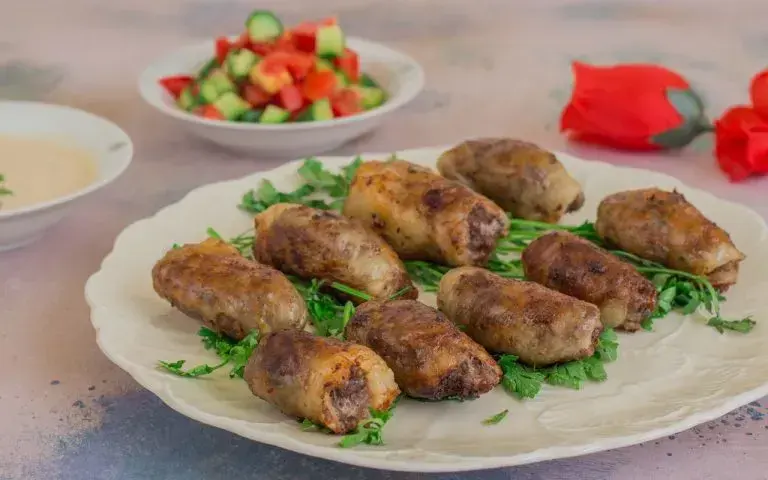
Tarb (Grilled Kofta Wrapped in Lamb Fat)
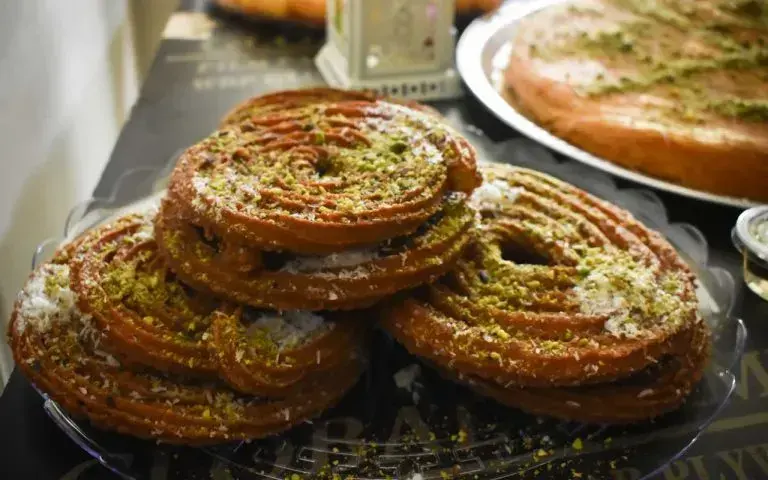
Egyptian Meshabek