

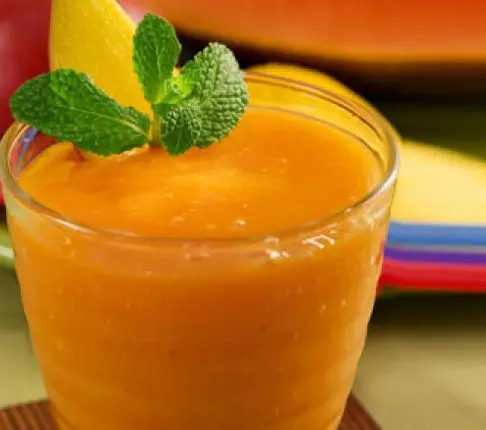
Papaya Juice
Overview
Papaya juice is ripe pawpaw blended with water and served cold, one of the simplest tropical fruit drinks, and one made wherever the fruit grows, which across Africa is very widely. Pawpaw is the name used across much of anglophone West Africa for what is sold elsewhere as papaya. The tree grows quickly and fruits generously in warm climates, and in many households it is not bought at all but picked, which shapes how the juice is used, it is a way of dealing with fruit that has ripened all at once rather than a recipe planned in advance. The flesh is orange, soft and sweet with a faint musky edge that some people love and others temper with lime. Lime is the standard correction, and it does two things: it lifts the sweetness and it cuts the muskiness that can otherwise dominate. The fruit carries papain, an enzyme that breaks down protein. It is the reason unripe pawpaw is used as a meat tenderiser across West Africa, and it is also why papaya is commonly associated with digestion. It does not keep. Blended pawpaw separates and dulls within hours, so it is made and drunk rather than stored, and it is best served very cold.
AFN Heritage Note
Papaya, known as pawpaw across much of anglophone West Africa, contains the enzyme papain, which is used in the region as a meat tenderiser in its unripe form. The fruit is widely cultivated in household compounds rather than commercially in many parts of the continent.
Ingredients
Dietary tags are provided by contributors as a guide, not verified by AFN, and they depend on the products you buy. If you have a serious allergy, check every ingredient yourself. Cooking, allergies and your own judgement
Directions
- 1
Wash, peel, and deseed the ripe papaya. Cut it into small cubes.
- 2
Place the papaya cubes in a blender.
- 3
Add the cold water to the blender to help with blending.
- 4
Add honey or sugar to sweeten the juice. Start with 2-3 tablespoons, and adjust according to your sweetness preference.
- 5
Squeeze the juice of one lime into the blender for a tangy kick. This step is optional but adds a refreshing twist.
- 6
Blend the mixture until it becomes smooth and well combined. You can add more water if you prefer a thinner consistency.
- 7
If you'd like a chilled papaya juice, you can add ice cubes to the blender and blend until they are crushed.
- 8
Once the papaya juice is to your liking, pour it through a fine-mesh strainer into a pitcher to remove any remaining pulp or seeds. You can skip this step if you prefer a thicker, pulpier juice.
- 9
Serve the papaya juice immediately in glasses with ice cubes, garnish with mint leaves or lime wedges if desired, and enjoy your homemade papaya juice!
Africook’s Notes
 Personal notes from Deborah Olayiwola
- Use fruit that is properly ripe, yielding to gentle pressure, with skin turning yellow-orange. Underripe pawpaw is bland and faintly bitter.
- Add lime. It is close to essential, it lifts the sweetness and cuts the musky note that puts some people off.
- Chill the fruit before blending rather than adding ice, which waters it down.
- Scrape the seeds out thoroughly. They are edible and peppery but bitter in quantity.
- Drink it the same day. It separates and loses its flavour within hours.
Questions cooks ask
Is pawpaw the same as papaya?
Yes. Pawpaw is the name used across much of anglophone West Africa for the fruit sold as papaya elsewhere. Confusingly, there is an unrelated North American fruit also called pawpaw, but in an African context the two words mean the same thing.
Why does my papaya juice taste musky?
That musky note is characteristic of the fruit and becomes stronger as it over-ripens. Lime juice is the standard fix and is used almost universally, it cuts the muskiness and brightens the sweetness. Using fruit that is properly ripe rather than very ripe also helps, as does serving it very cold.
What is papain?
Papain is an enzyme present in papaya, most concentrated in the unripe fruit and the skin. It breaks down protein, which is why unripe pawpaw is used across West Africa as a meat tenderiser, wrapping tough meat in the leaves or rubbing it with the green fruit softens it. It is also the basis for the fruit's long association with aiding digestion.
How long does it keep?
Only hours. Blended papaya separates quickly and the flavour dulls noticeably by the next day. It is a drink to make and finish rather than store. If you must keep it, refrigerate it covered and shake before pouring, but expect it to be less good.
Reviews
2 reviews
Had to go down to the local shop on City Road to get a properly ripe papaya as the supermarket only had rock hard green ones. Added a bit extra lime juice than stated because the fruit was super sweet, served it over loads of crushed ice. Tasted lush.
The addition of lime juice is what makes it. Pawpaw on its own can be a bit too heavy sometimes, but that squeeze of lime gives it a nice tangy kick sha. Used cold water and wild honey from the market instead of white sugar, e sweet well well.