

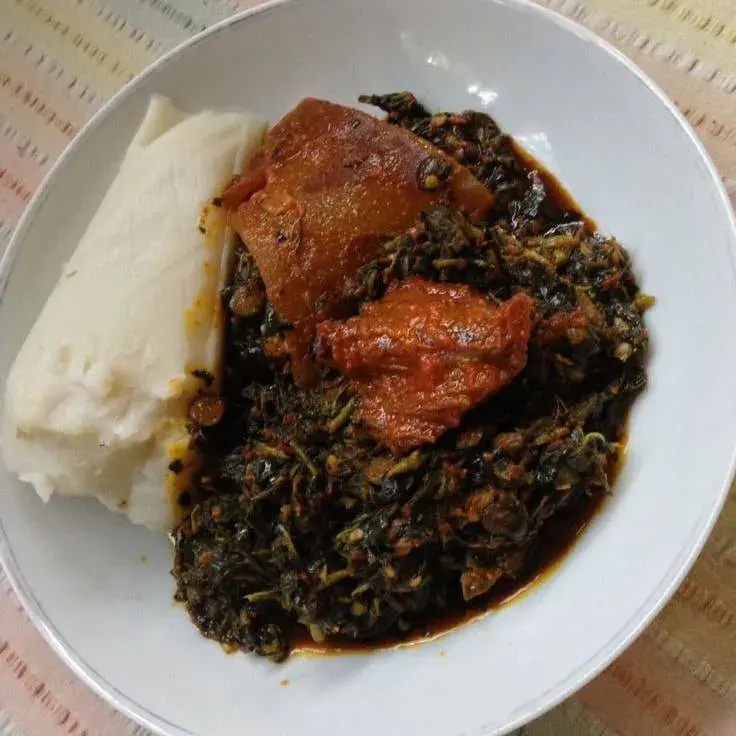
Eko (Agidi) and Efo Riro
Overview
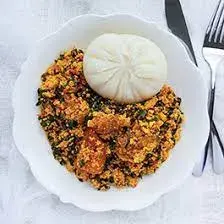
Eko and efo riro is a Yoruba pairing, and each half is a substantial dish in its own right. Eko, also called agidi, is a firm pudding set from fermented corn starch, sliced and eaten cold or at room temperature. Efo riro is the Yoruba vegetable stew, built on palm oil, blended pepper, locust beans and leafy greens with assorted meat and smoked fish through it. The contrast is the point. Eko is cool, firm and slightly sour from the fermentation, with a clean corn flavour and almost nothing else going on. Efo riro is hot, oily, salty and densely flavoured. Putting them together works in the way that plain rice and a heavy curry work, and neither is quite right without the other. Eko is traditionally set in wrapped leaves, which give it its characteristic shape and a faint aroma the greased mould does not reproduce. It is sold that way across southwestern Nigeria, most often alongside akara or moin moin at breakfast, though the pairing with efo riro makes it an evening meal. Riro means stirred, and the name describes the technique: the vegetables are stirred into the finished stew base rather than cooked in it, so they hold their texture.
AFN Heritage Note
Eko, also called agidi, is a set pudding of fermented corn starch belonging to the Yoruba people of southwestern Nigeria, traditionally moulded in wrapped leaves. Efo riro is the Yoruba leafy vegetable stew, its name meaning stirred vegetable.
Ingredients
Dietary tags are provided by contributors as a guide, not verified by AFN, and they depend on the products you buy. If you have a serious allergy, check every ingredient yourself. Cooking, allergies and your own judgement
Directions
- 1
Put the maize or cornstarch in a mixing bowl.
- 2
Bring two cups of water to the boil in a pot over medium heat.
- 3
Add water gradually to the starch while stirring to form a smooth paste, making sure there are no lumps.
- 4
Pour the paste slowly into the boiling water, stirring constantly.
- 5
Reduce the heat to low and keep stirring. The mixture thickens as it cooks.
- 6
Continue stirring for 10 to 12 minutes until it is thick and translucent.
- 7
Take the pot off the heat and let it cool slightly.
- 8
Pour into a greased container or mould, or wrap in banana leaf for the traditional shape.
- 9
Let it cool completely and set for a few hours, or overnight in the fridge.
- 10
For the efo riro, wash and season the assorted meat with salt and seasoning cubes and cook until tender.
- 11
In another pot, heat the palm oil and fry the chopped onions until soft.
- 12
Add the blended tomatoes and peppers and fry until the sauce reduces and the oil separates.
- 13
Add the cooked meat with its stock, the smoked fish and the locust beans, and simmer to combine.
- 14
Stir in the washed and shredded spinach and cook for a few minutes only, so it keeps its texture.
- 15
Adjust the seasoning and serve the efo riro with slices of the set eko.
Africook’s Notes
 Personal notes from Taiwo Oladapo
- Eko has to set completely before it can be sliced. A few hours at minimum, and overnight in the fridge is better.
- Stir the paste into boiling water, not the other way round, and keep stirring throughout. Lumps in eko cannot be fixed once they form.
- Wrap the eko in banana or uma leaves if you can get them. They give it the traditional shape and a faint aroma a greased mould does not.
- Add the spinach at the very end and stir it through off the heat if necessary. Riro means stirred, and overcooked greens defeat the dish.
- Let the palm oil and pepper base fry until the oil separates out. That separation is the sign the base is properly cooked.
- Eko is eaten cold or at room temperature against the hot stew, and that temperature contrast is deliberate.
Reviews
2 reviews
You Might Also Like
Browse all Nigerian recipes →
Edo Black Soup
Nigerian Fisherman Soup
Igbo Yam Porridge
finding proper efo tete here in the states is near impossible so i just used regular baby spinach instead. for the agidi, cornstarch worked surprisingly well but you really have to stir fast fast when pouring into the boiling water or else those annoying lumps will form o. tasted just like back home with the smoked catfish and shaki.
The secret is definitely in stirring the cornstarch paste continuously before it sets. My first try years ago was full of small lumps sha, but lowering the heat like you said made it come out smooth this time. The smell of the iru frying in palm oil brought my whole kitchen to life.