

Sanga
Overview
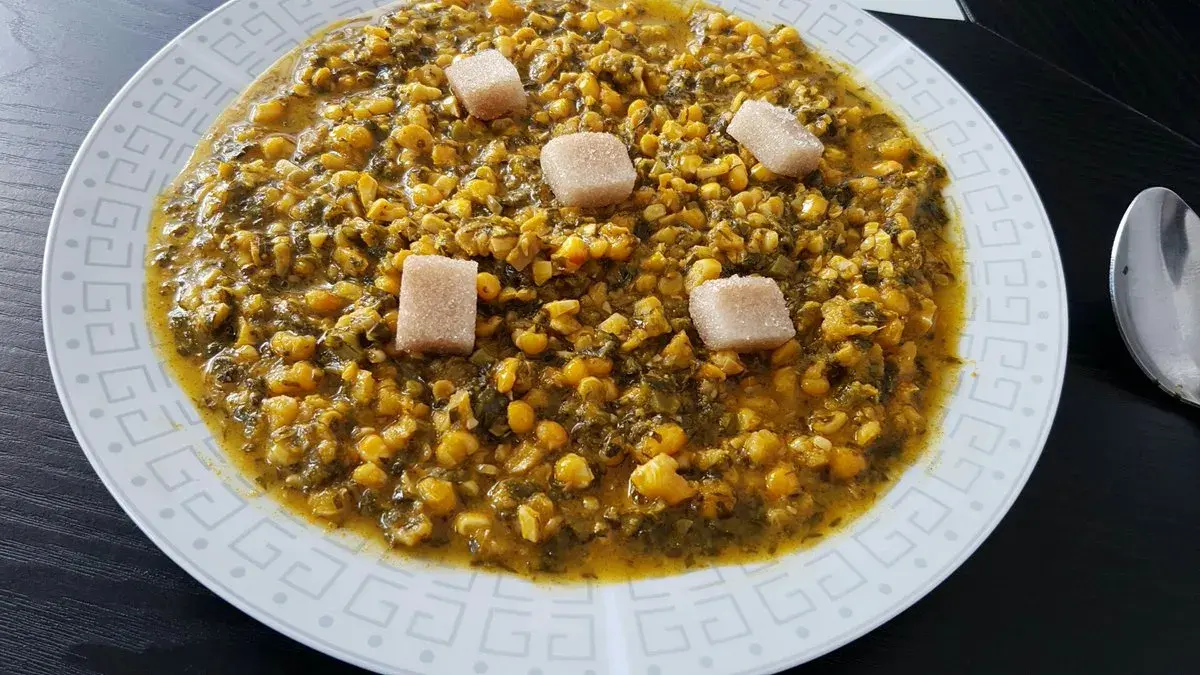
Sanga is a Cameroonian dish of pounded greens cooked with palm nut cream and fresh maize, and it sits between a stew and a porridge in a way that neither word quite covers. It comes from the southern and central regions of the country. The maize is the point. Fresh corn kernels go in at the end in quantity, and their sweetness against the palm cream and the slightly bitter greens is the whole balance of the dish. Some households include sugar; most consider it unnecessary because the corn and the vegetables supply enough on their own. The source for this recipe is inconsistent about which green is used, naming both pounded cassava leaves and black nightshade leaves, called zom in Cameroon, and both are genuinely used in Cameroonian cooking. The ingredient list here follows cassava leaves. Cameroon's food carries an unusual number of influences for one country, with French, Portuguese, German and neighbouring traditions all present alongside a very large number of internal ethnic cuisines. Sanga belongs firmly to the indigenous side of that. Palm nut cream, pounded leaves and maize are the raw materials of the forest zone, and the dish has stayed close to them.
AFN Heritage Note
Sanga is documented as a dish of the southern and central regions of Cameroon, built on pounded leaves, palm nut cream and fresh maize. The oil palm from which its cream is pressed is indigenous to West and Central Africa.
Ingredients
Dietary tags are provided by contributors as a guide, not verified by AFN, and they depend on the products you buy. If you have a serious allergy, check every ingredient yourself. Cooking, allergies and your own judgement
Directions
- 1
Mix the palm nut cream and the water in a pot.
- 2
Bring to a boil for a few minutes.
- 3
Add the pounded cassava leaves.
- 4
Mix everything together.
- 5
Put the lid on the pot.
- 6
Boil for about 20 minutes, which is enough for the leaves to cook through.
- 7
Add as much sweet corn as you want, since the dish is built around it.
- 8
Season with salt and the homi.
- 9
Serve hot with boiled cassava.
Africook’s Notes
- Add the corn late. It needs only a few minutes and its sweetness is the counterweight to the palm cream, so overcooking it into mush loses the contrast the dish depends on.
- Raw and undercooked cassava leaves contain naturally occurring cyanogenic compounds. Twenty minutes of boiling is the minimum, and frozen pounded leaves sold commercially have generally been blanched already.
- Palm nut cream is not palm oil. It is the pressed pulp of the whole fruit, sold tinned as palm nut cream or sauce graine, and palm oil will not substitute for it.
- Sugar is optional and most cooks leave it out. Taste the pot with the corn in before deciding.
- Rice, boiled plantain or boiled cassava are the standard accompaniments.
Questions cooks ask
What greens are used in sanga?
Sources differ, and both are genuinely used in Cameroon. Pounded cassava leaves are the more widely cited, and black nightshade leaves, known locally as zom, are also standard. Cassava leaves give a firmer, more fibrous result; zom is softer and more bitter. The recipe here follows cassava leaves.
What is palm nut cream and can I substitute palm oil?
No. Palm nut cream is the thick pulp pressed from boiled palm fruit, sold tinned as palm nut cream, sauce graine or palm soup base. Palm oil is the extracted fat from the same fruit and behaves completely differently, giving an oily thin liquid rather than the body sanga needs. There is no workable substitute for the cream.
Is sanga sweet or savoury?
Both, and that is the point of it. The fresh maize brings a genuine sweetness that sits against the richness of the palm cream and the bitterness of the greens. Some households add sugar to push it further; most do not, on the grounds that the corn and vegetables already do the work.
What is sanga served with?
Boiled cassava, rice or boiled plantain, all of which are plain starches that carry the dish. It is substantial enough to be eaten on its own, and the accompaniment is there to take up the palm cream rather than to add anything of its own.
Reviews
2 reviews
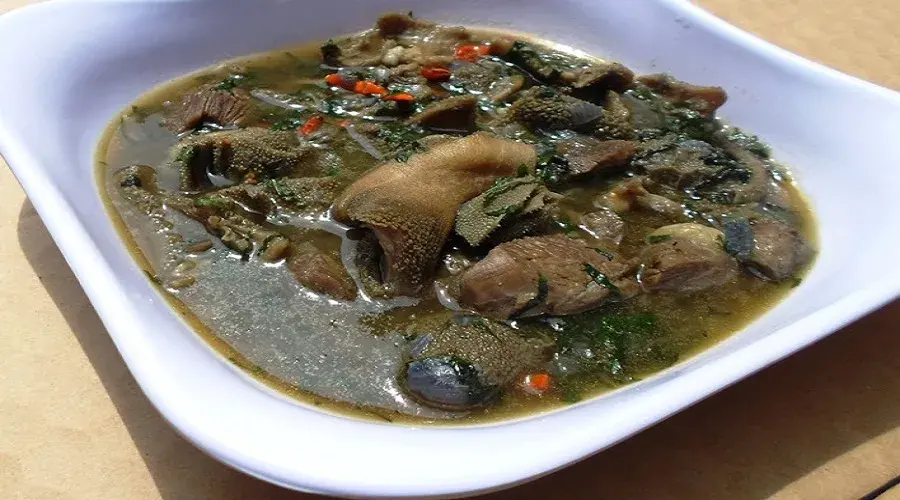
Used a 410g tin of Koo sweet corn kernels instead of fresh. My pot was boiling lekker after mixing the palm nut cream with the 3 litres of water, but you definitely need to let it simmer for more than just a few minutes before putting the cassava leaves in so the bitterness Cooks out. Took me about 45 mins on the stove altogether.
could not find homi at the spice shop here in bo-kaap so i used crushed garlic and a touch of wild garlic. palm nut cream with the sweet corn gives such a rich, creamy texture, made it for an iftar meal last night and everyone enjoyed it. just make sure your cassava leaves are pounded very fine before adding to the pot.