What is iru? Iru is fermented African locust bean, a strong-smelling, deeply savoury seasoning used across West Africa and especially in Yoruba soups and stews. In English, iru is simply called fermented locust beans. It's the same product Hausa cooks call dawadawa and that's sold as soumbala further west.
A little iru changes a whole pot, which is why so many Nigerian recipes call for just a tablespoon or a single wrap. Buy the right kind, woro or pete, and you'll know exactly what it'll do in the pot.
What is iru in English?
Iru in English is fermented locust beans, and the tree is the African locust bean, Parkia biglobosa. It has a long list of other names, because people across a huge stretch of Africa make and sell it.
| Language or area | Name |
|---|---|
| Yoruba | iru (the condiment); igba (the tree) |
| Hausa | dawadawa, also spelt daddawa |
| Bambara and Malinké | soumbala |
| Other markets in West Africa | nététou |
| French (the tree) | néré, arbre à farine |
What is iru made from?
Iru is made from the seeds of the African locust bean tree. PROTA, the reference work on the useful plants of tropical Africa, says the tree grows in a belt from Senegal's Atlantic coast to southern Sudan and northern Uganda. A 2024 study by Masters and Kelly in the International Journal of Food Science describes the work. Rural women collect the pods and ferment the seed into a dense and aromatic paste.
A 2016 study in the African Journal of Food, Agriculture, Nutrition and Development (AJFAND) notes that the same condiment can also be made from soybean or Bambara groundnut. When a recipe says iru, though, it means the locust bean version.
Iru woro and iru pete: what's the difference?
Yoruba markets sell iru at two stages of fermentation, and the AJFAND study defines both. Iru woro is the partly fermented kind: the beans are soft but still whole and separate, not mushy. Iru pete is fully fermented, much softer and paste-like.
Which one to use comes down to texture. Iru woro gives you whole beans you can see and bite in a stew, while iru pete melts into a sauce.
How iru is made
Making iru takes days. In the version Masters and Kelly describe, the hard seeds are boiled for 24 hours or more, dehulled and boiled again for one to two hours, then left to ferment for one to three days before being dried and shaped into balls. That ferment runs at 25°C to 35°C. PROTA describes a ferment of two to four days in a container covered with leaves or plastic, driven mainly by Bacillus bacteria, followed by a day of sun drying. Lost Crops of Africa, from the US National Research Council, says the paste is pressed into cakes or balls.
Why iru goes into the pot early
Iru goes in early because cooking takes the edge off its smell. Lost Crops of Africa explains that it's added during cooking because the powerful smell then disappears. The smell itself comes from fermentation: a review in Critical Reviews in Microbiology explains that Bacillus bacteria break proteins down into amino acids and ammonia. Lost Crops doesn't say why the smell fades, but ammonia is the likely culprit, and it's the sharp note that goes as the pot simmers.
You'll see this in AFN's recipes. The iru is fried with onions, sautéed with the pepper base, or boiled in the water before anything else goes in.
AFN recipes that use iru
These recipes call for iru, or for dawadawa or nététou, its names elsewhere.
Ofada stew
Ofada stew uses more iru than most. Our ofada stew recipe sautés onions in bleached palm oil, then adds a quarter of a cup of iru before the puréed peppers go in.
Okro soup
Our okro soup recipe lists two tablespoons of iru alongside the chopped okra, crayfish and palm oil.
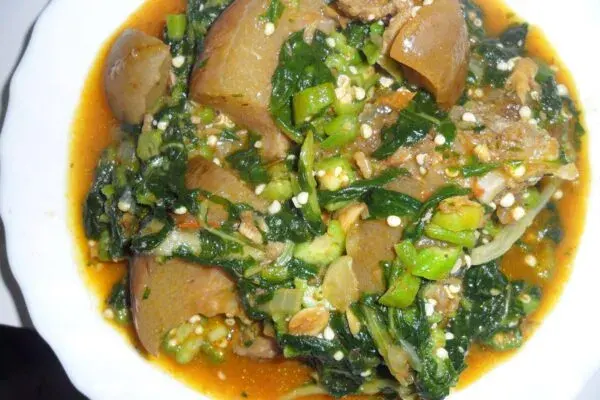
Ila alasepo
This is a Yoruba okra soup where the iru goes into the okra pot first. Our ila alasepo recipe boils one wrap of locust beans in a cup and a half of water for about three minutes before the chopped okra is added.

Amala lafun and ewedu soup
In our amala lafun and ewedu soup recipe, the locust beans go into the boiling water with the potash and seasoning, before the jute leaves.
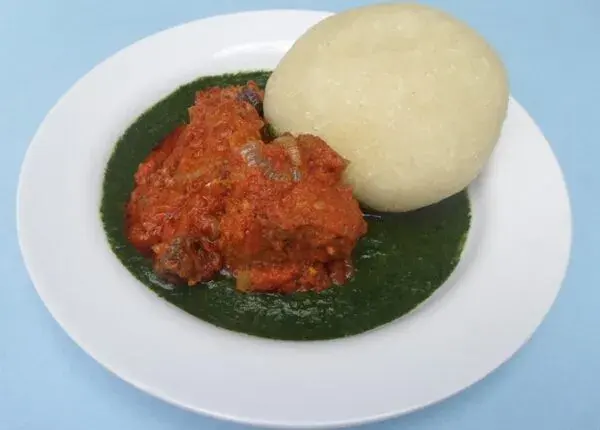
Uziza egusi soup
Our uziza egusi soup recipe lists a tablespoon of locust beans along with the crayfish and smoked fish.
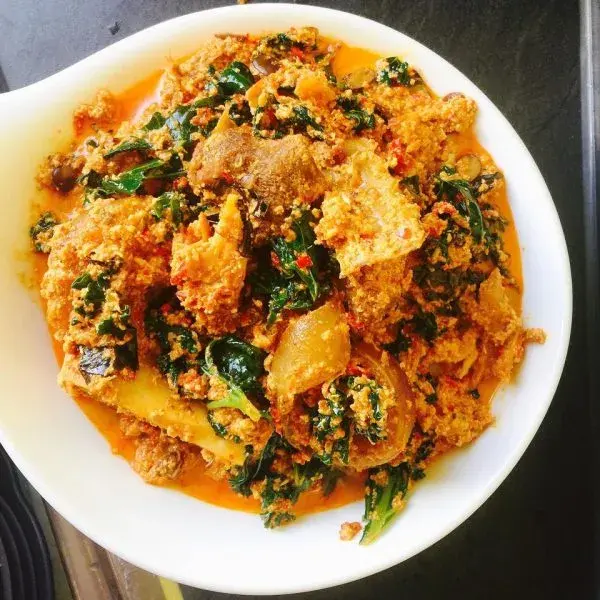
Nigerian native jollof rice
Native jollof gets its flavour from palm oil and iru. Our Nigerian native jollof rice recipe sautés a tablespoon of locust beans in the palm oil and pepper mix for three minutes.

Ikokore (Nigerian water yam pottage)
Our ikokore recipe seasons the water yam pottage with a teaspoon of iru.
Miyan kuka (baobab leaves soup)
The Hausa name turns up here. Our miyan kuka recipe lists dawadawa among the ingredients for this baobab leaf soup.
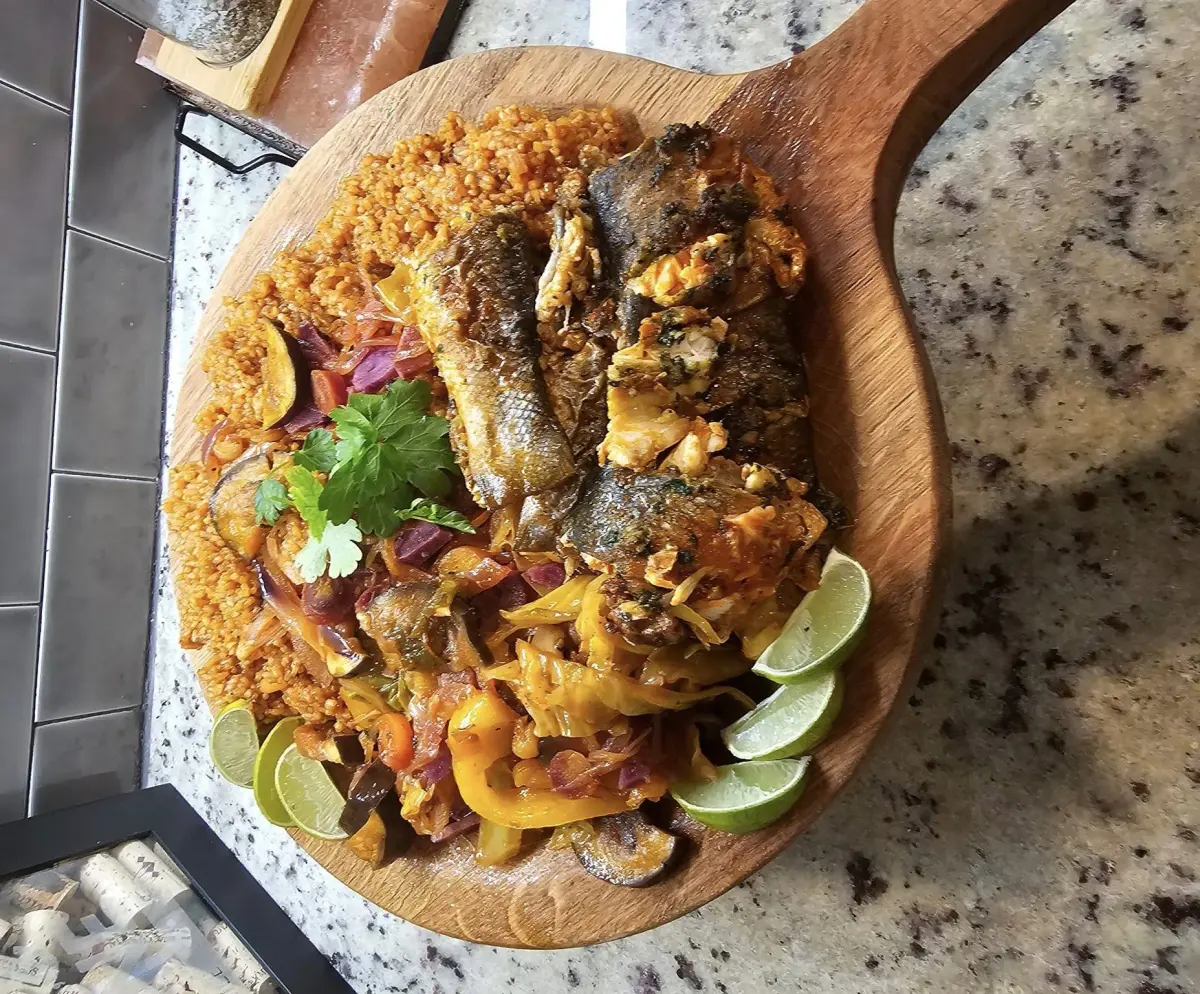
Thieboudienne
Iru travels as far as Senegal's national dish. Our thieboudienne recipe uses a tablespoon of nététou, the fermented locust bean, if you can get it.
Iru is also an option in our gbegiri recipe and in the dressing for our African salad, where it can stand in for ogiri.
Iru nutrition
Iru is high in protein, but the numbers depend on how far it fermented and how wet it is. The AJFAND study tested iru bought in an Ilorin market. Iru woro measured 44.74% moisture, 22.08% protein and 13.48% fat, and iru pete 51.54% moisture, 19.27% protein and 13.37% fat. Once the water is taken out of the figures, both came to about 40% protein.
Masters and Kelly found about 39g of protein per 100g of soumbala from southern Mali. They also measured protein quality using a score called PDCAAS, and found fermentation raised it from 37% in the raw seed to 54% in the fermented product. The USDA's FoodData Central database has no entry for iru.
How to store iru
Dried iru keeps far longer than fresh. Lost Crops of Africa says dried cakes can keep for over a year in traditional earthenware pots without refrigeration. Fresh, moist iru from the market is a different story: wrap it tightly, double-wrap it to stop the smell spreading, and keep it in the fridge or freezer.
Where to buy iru
In Nigerian markets, iru is sold wrapped in leaves or plastic. Abroad, look in the freezer or for dried iru in jars. Ask for iru woro if you want whole beans and iru pete for a smooth paste. For the other seasonings that sit next to it, see our list of Nigerian spices.
A very old seasoning
PROTA says fermented locust beans have been used for centuries and were already described in the 14th century. The genus Parkia is named after Mungo Park, the Scottish surgeon and naturalist who was among the first Europeans to record the plant, according to Lost Crops of Africa. And in 1853 the explorer Heinrich Barth met a caravan of donkeys loaded with cakes of soumbala at Zurmi, in northern Nigeria near today's border with Niger.
Iru questions people ask
What is iru in English?
Iru is fermented locust beans in English. The tree is the African locust bean, Parkia biglobosa.
Is iru the same as dawadawa?
Yes. Iru is the Yoruba name and dawadawa is the Hausa name for the same fermented locust bean condiment.
Is iru the same as ogiri?
No. Ogiri is made from fermented melon or castor seeds, while iru is made from locust beans. Our guide to what ogiri is explains the difference.
What's the difference between iru woro and iru pete?
Iru woro is partly fermented, so the beans stay whole. Iru pete is fully fermented and soft like a paste.
Does iru spoil?
Fresh, moist iru should live in the fridge or freezer. Properly dried iru cakes keep for a very long time without refrigeration.