


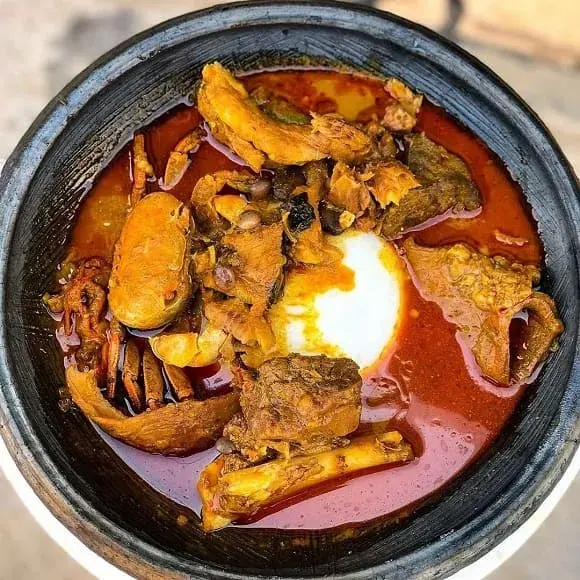
Ten of the best-known peoples in Ghana are the Asante, Fante, Ga, Ewe, Dagomba, Mamprusi, Dagaaba, Gonja, Guan and Grusi, and each has a dish it's proud of, from Asante fufu to Ewe akple. Officially, Ghana's 2021 census groups them into eight larger families: Akan, Mole-Dagbani, Ewe, Ga-Dangme, Gurma, Guan, Grusi and Mande.
The food notes below come from what Ghana's own National Commission on Culture records region by region. Where AFN has a recipe, we've linked it so you can cook the dish at home.
How many ethnic groups are in Ghana?
The Ghana Statistical Service groups Ghanaians into eight major ethnic groups, plus a ninth category for everyone else. Each group is a family of related peoples rather than a single tribe, so the Akan, for example, takes in the Asante, Fante, Akuapem, Akyem and many more. Here's how the 2021 Population and Housing Census general report splits it.
| Ethnic group | Share of Ghanaians (2021) |
|---|---|
| Akan | 45.7% |
| Mole-Dagbani | 18.5% |
| Ewe | 12.8% |
| Ga-Dangme | 7.1% |
| Gurma | 6.4% |
| Guan | 3.2% |
| Grusi | 2.7% |
| Mande | 2% |
| All other groups | 1.6% |
These shares cover Ghanaians only, so people of other nationalities living in Ghana aren't part of the count.
Ethnic groups in Ghana and their food: 10 peoples
Some entries here are single peoples and two, Guan and Grusi, are wider families, because that's how their food is recorded. Food in Ghana follows geography too. The southern regions list seafood, fufu, banku and kenkey among their staples, while every northern region names tuo zaafi, the stiff grain swallow everyone calls TZ.
1. Asante (Akan): fufu
The Ashanti Region is home mainly to the Asante, who speak Asante Twi, and Ghana's culture commission names fufu and soups, especially groundnut soup, as the region's staple foods. Even the word is theirs: fufu comes from Twi, where it means to mash or combine. The steady beat of a mortar and pestle is the sound of it being made. Pound your own with our fufu recipe, and pair it with abenkwan, the Akan palm nut soup.
2. Fante (Akan): seafood, banku and dokono
Fante is the main language of the Central Region, and the culture commission lists seafood, fufu and banku as the staples there. Kenkey is part of Fante eating too: the Fante call it dokono, the Ga call it komi, and it comes to the table with hot pepper sauce and fried fish. Make the full plate with our kenkey with sauce and fried fish.
3. Ga (Ga-Dangme): Ga kenkey and light soup
The Ga are the people of the Accra coast, and their language and history are separate from the Akan. Ghana's culture commission names kenkey, Ga kenkey (komi) and seafood as the foods of the Greater Accra Region. Light soup has Ga roots too. It's documented as a Ga-Dangme fishermen's soup, first made with sea fish and tomato and later with goat, lamb or chicken. Cook it with our light soup recipe and eat it with fufu or omo tuo, the soft rice balls. Banku also carries a Ga-Dangme name, and you'll find it in our banku recipe.
4. Ewe: akple with fetri detsi (okro soup)
The Ewe live mostly in the Volta Region, and if one meal sums them up it's akple with fetri detsi, the Ewe name for okro soup. The culture commission records it as the favourite in Anlo, Battor and Klefe. Akple is a close relative of banku made from fermented maize and cassava, with more corn in the mix, so it's firmer and drier.
Other Ewe areas lean differently. Asogli around Ho names yam, banku and fufu, while Sokpoe lists akple, kokontekple and roasted cassava with groundnut among its foods. In Klefe, banku goes with fetri detsi just as happily as akple does, so our banku recipe is a good place to start.
5. Dagomba (Mole-Dagbani): tuo zaafi and millet dishes
The Dagomba are the main people of the Northern Region, and Dagbani is the main language of the region. TZ and millet dishes are the staples. Across the region you'll also find wasawasa, made from yam peelings that are dried, milled and steamed into a coarse grain that eats a bit like couscous. Our recipe traces it to Dagbon and the wider north of Ghana, and in Tamale it's sold with hot pepper sauce and fried fish. Try it with our wasawasa recipe.
6 to 9. Northern peoples: Mamprusi, Dagaaba, Gonja and Grusi
Four more peoples carry the grain kitchen of the north, and the culture commission names TZ as a staple in every one of their regions. The Mamprusi shape the culture of the North East Region, where Mampruli is the main language and traditional chieftaincy still plays a big part in social and political life. The commission lists tuo zaafi and other cereal-based dishes as the food there.
In the Upper West Region, the Dagaaba farm the savannah, and their kitchens run on TZ and dawadawa, the fermented locust bean seasoning. If you've ever cooked with iru in Nigeria, you already know it, because both are made from locust beans.
The Gonja are the leading people of the Savannah Region, one of Ghana's newest regions. Their language is a North Guang language, which links them to the Guan family, and the local food is TZ and dishes made with shea butter.
The Grusi, also written Gurusi, are a wider family who have shaped the Upper East Region with their own traditions and building styles. They've long farmed the dry savannah, and the culture commission says TZ and millet porridge are very popular there.
10. Guan of the Oti Region: yam fufu, konkonte and millet
Several Guan peoples live side by side in the Oti Region. The Akyode, who are Guan, list konkonte, yam fufu, amorogbi and kpakro as their foods. The Adele, also Guan, mark their new yam festival with yam fufu. Among the Challa, who speak their own language but are Guan too, millet ground on a stone is the food eaten most.
The food that crosses every ethnic line
Some Ghanaian food belongs to everyone. Waakye, the rice and beans coloured with dried millet or sorghum leaves, takes its name from a Hausa word and spread south from northern Ghana with migrant communities. Today it's the street breakfast of Accra and Kumasi. Jollof, red red and kelewele aren't tied to any one group either. Our guide to Ghanaian dishes covers them, and you can cook waakye, Ghana jollof rice and red red from our recipes.
Questions people ask about Ghana's ethnic groups and food
What is the largest ethnic group in Ghana?
The Akan. They made up 45.7% of Ghanaians in the 2021 census, followed by the Mole-Dagbani at 18.5% and the Ewe at 12.8%.
What food is the Ga tribe known for?
Kenkey above all, especially Ga kenkey, which the Ga call komi. Light soup also traces back to Ga-Dangme fishermen on the Accra coast, and the name banku comes from the Ga-Dangme language.
What do the Mole-Dagbani eat?
Mostly grain. Tuo zaafi is the everyday meal across the Northern, North East and Upper regions, with millet dishes and dawadawa in the kitchen. Wasawasa, made from dried yam peel, is sold across the Northern Region.
What is Guan food in Ghana?
It depends on the community. In the Oti Region, Guan peoples such as the Akyode and Adele eat yam fufu, konkonte and kpakro, and the Challa eat millet ground on a stone.
Is fufu an Akan or an Ewe food?
Both, and plenty of others besides. The word is Twi, so the dish is most closely tied to the Akan, but Ewe communities in the Volta Region also name fufu among their favourite meals.
Chale you tried with the list but how can you talk about the Fante people without mentioning Etew and fresh fish pepper sauce? Fufu is Akan yes, but the way Ashanti people pound their cassava and plantain to get that smooth elastic texture is completely different from how it's done in the Eastern region oo.
Yoh, the way you guys handle fermented corn dough for banku sounds like serious hard work in the kitchen. Reminds me sommer of my auntie slaving over a giant pot of mealie pap, but that spicy pepper and grilled tilapia on the side makes my mouth water completely.
You people didn't emphasize how heavy Ga kenkey is compared to Fante kenkey o. If you eat that one with black pepper and fried sprat by 1pm, sleep will just catch you till evening. But true talk about Tuo Zaafi, that ayoyo soup with dawadawa is top tier abeg.
Never knew Tuo Zaafi was specifically from the northern groups. Is ayoyo leaf the same thing as jute mallow? There's a small West African market in north Portland that sells dried jute leaves, wondering if I can substitute those or if it has to be fresh.
I've been looking for an African grocery store here in Nashville to find fermented corn dough for kenkey after reading about it. Is the sourness comparable to sourdough bread, or is it much sharper because of the fermentation process?