

Walk into an African restaurant in London on a Saturday evening and look at who is in the room. There will be Nigerians at one table and a Ghanaian family near the door, with Senegalese friends by the window and Ethiopians behind them, everybody carrying a firm opinion about which of those countries cooks best. They are eating within a few feet of each other, from kitchens whose recipes have far more in common than any of them has been told.
That room is why we made United by Food.
The documentary premiered in London on 22 October at the African Food Summit and Expo UK, during Black History Month, in front of policymakers, investors and people who run food businesses on both continents. The next day we put it on YouTube for nothing. It runs nine minutes and twenty-eight seconds, and we co-produced it with Duchess Nena of Uziiza as an equal partner.
Nine minutes is not long enough to prove a thesis. It is long enough to show you something you can go and check for yourself, which is the more useful thing.
The argument is not mine
I did not want a film of me explaining Africa to anybody, so we asked other people instead. Chefs, broadcasters, a tourism official, a public health specialist, and people who simply cook at home.
Ameyaw Debrah, the Ghanaian blogger, put the whole thesis into three sentences without being asked to. “I go to South Africa, I eat something that’s similar to something that I know in Ghana,” he says. “I go to Nigeria, and I see those traces. So it makes me realise that we are really, really united naturally.”
Hon. Cuthbert S. Ncube, Executive Chairman of the African Tourism Board, says the same thing with more impatience in it. “Food always is a unifier. If only Africa could realise and start appreciate what they have.”
That is the argument. Africans are already connected through food, far more closely than borders, languages and religions have let us see. The connection was built long before any of us arrived, by cooks who never met each other. All the film asks is that we stop living as though it were not there.
Start with the soup
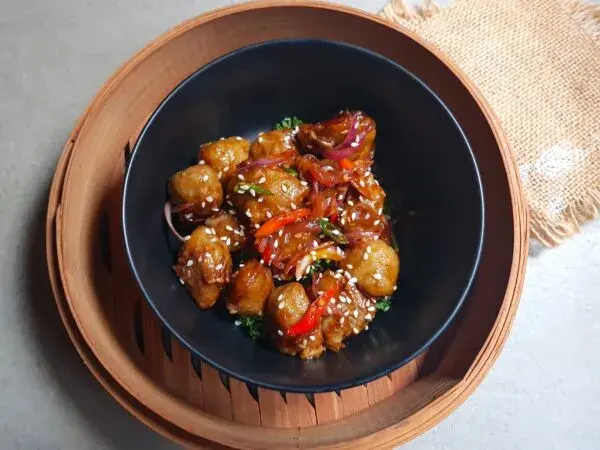
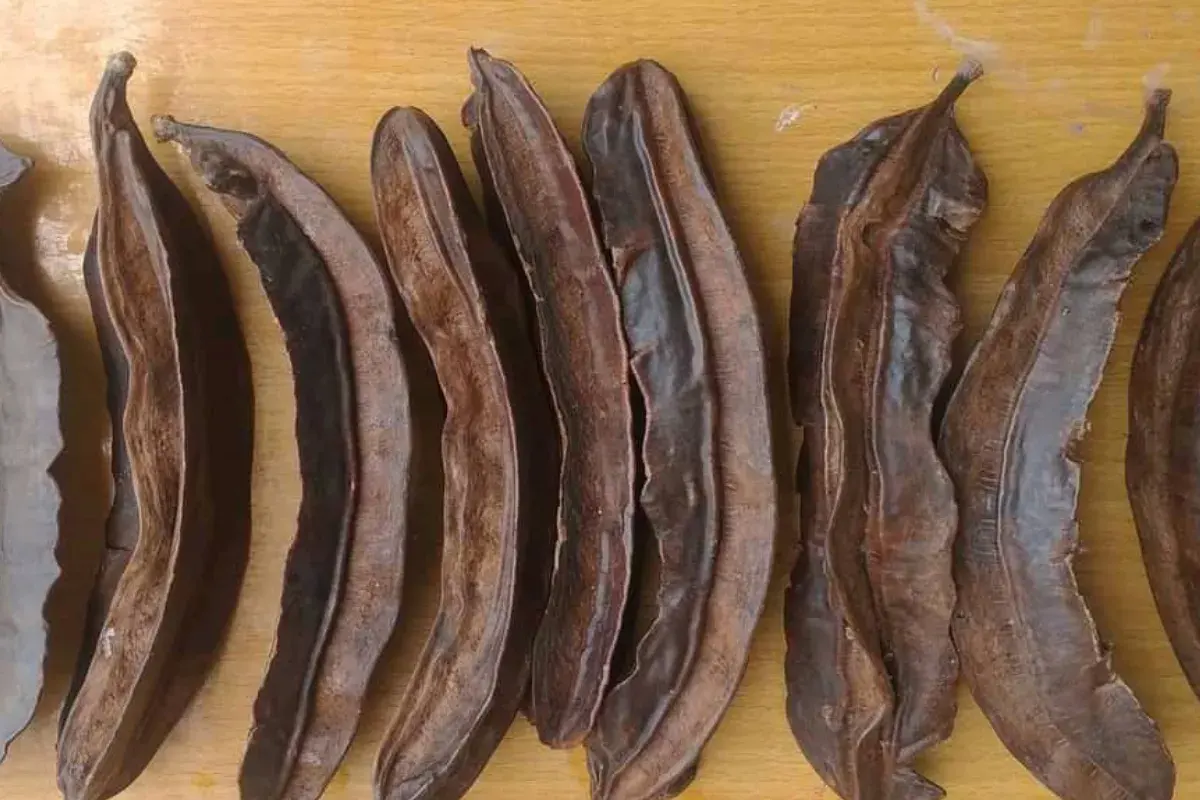
From Guinea-Bissau to Angola, in more than a dozen African countries, families cook a soup from the fruit of the same palm tree. In Nigeria it goes into banga and ofe akwu. In Ghana it becomes abenkwan. Along the coast between them it carries other names and arrives at the table looking much the same, thick and deep orange and heavy with the oil of the fruit.
Nobody coordinated that. The borders those countries sit inside were drawn in Europe by people who had never seen the soup, and the cooking carried on across the lines as though the lines had not been drawn.
The staple works the same way. It is fufu in Nigeria, ugali in Kenya and pap in South Africa, and after those it is nshima, sadza, banku, eba and more besides, in something like thirty African countries. In each of them it is a starch pounded or cooked stiff and eaten with a soup or a stew, usually with the hand. The names change at the border and the food does not.
Then jollof, which is the argument the whole continent enjoys most. The name comes from the old Jolof kingdom that covered parts of what is now Senegal and The Gambia, and the dish grew out of ceebu jen, the Senegalese rice and fish that UNESCO added to its heritage list in 2021. Nigeria and Ghana will debate who cooks it better for as long as both countries exist, and the debate is good for everybody. It is also a distraction from the plainer fact underneath it, which is that they are arguing about one tradition.
Chef Amaka, president of CAPA, makes the point inside a single country, which is the version that is hardest to argue with. “Travel across Nigeria and you will find, for example, pepper soup in almost every community from Calabar to Kano,” she says. “Each of them have their own spice and their own story to tell, and even their name. You all make it differently and we all recognise it.”
If that holds across one country, it is worth asking why we assume it stops at the border.
What it costs us not to know this
I can give you the cost in a number. Only about 15 per cent of Africa’s trade is with other African countries, where Europe’s figure is nearer 70 per cent and Asia’s is close to 60. Those are Afreximbank’s numbers, and they describe a continent that mostly sells outward and buys inward rather than one that feeds itself.
The numbers beside it are worse. In 2024, 307 million Africans, more than one in five of us, faced hunger, according to the UN’s food security report. Almost a quarter of the food grown in sub-Saharan Africa is lost before it reaches a market. In the same year, sub-Saharan Africa spent about 63 billion dollars importing food.
Dr. Maryam Habib, a public health nutrition and food systems specialist, says the part policymakers tend to miss. “In Africa, food is about dignity, pride, and national strength, not just diets and calories.”
Food culture is not the reason for any of those numbers on its own. Tariffs, roads, ports, payment systems and politics do most of the work. But a continent that does not recognise its own table is slower to build one, because you do not trade easily with people you have been taught to see as strangers, and you are not taught to see them as strangers by accident.
The one plate
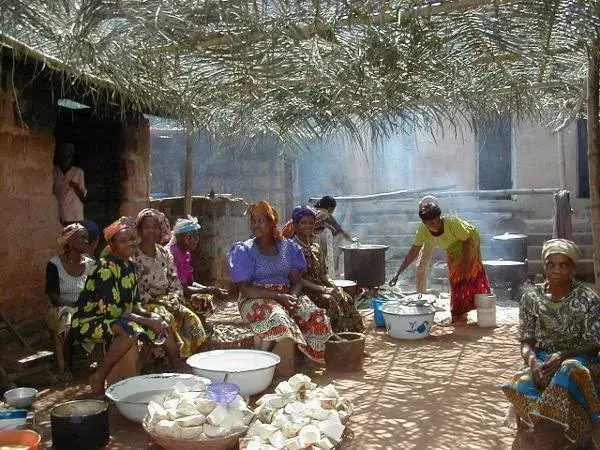
My own contribution to the film is the thing I have been saying for years and had never said on camera. Unity was a daily habit long before anybody turned it into a speech or a documentary like the one you are watching. The family is the soul of our society, and for generations families, extended families and sometimes whole villages have come together and eaten from one big bowl.
That is not a sentimental detail. Senegal’s ceebu jen is served from a single wide bowl that everyone reaches into. In Ethiopia and Eritrea there is gursha, where you feed a piece of food to someone else with your own hand, and refusing it is a small insult. UNESCO lists couscous, as made across North Africa, specifically for what it does to the people who share it.
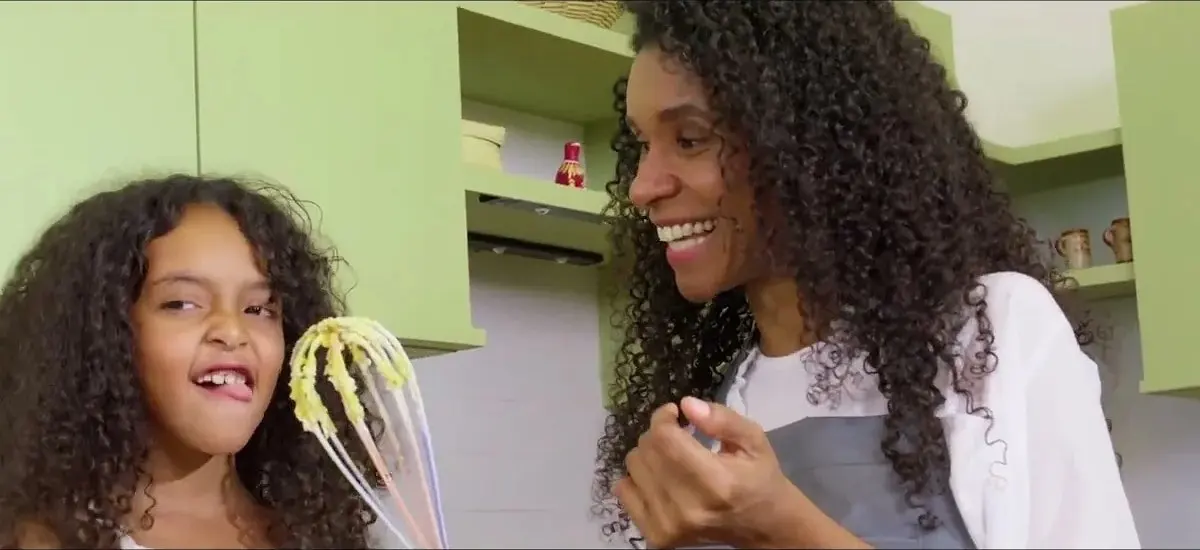
What surprised me was how quickly the people we interviewed went to their own kitchens rather than to the continent. Toluwalope Olanrewaju, our administrative secretary, named fried plantain, because her mother made it and it was the thing worth coming home from primary school for. Chef T Stone talked about the dish her grandmother taught her before she died, and about teaching herself to cook so her mother would come home to a meal already made. Houcceem Bellakoud said he started a food festival in the Netherlands because he was missing his mother’s food.
Not one of them answered with a country. They answered with a person.
What we are asking for
The film does not ask Africans to connect with each other, because that would be asking for something that already happened. It asks two groups for two different things.
Governments and institutions should back the work that treats other Africans as family rather than as a foreign market. Trade policy is the serious version of that, cultural exchange is the cheap version, and we have not even done the cheap version properly.
Everybody else should cook one dish from another African country this month. Not your own country’s version of it. Theirs. Find the recipe, find the ingredients, get it wrong the first time, then ask somebody from that country what you missed. You will learn more about the continent in one evening at your own cooker than in a week of reading about it, and you will almost certainly find the dish is a cousin of something you already make.
Jennifer Ibrahim of Cool FM Abuja said the thing I would want a young African to take from this. “Gone are the days where when you hear Africa, the first thing you think of poverty. Don’t worry, we still have our own issues.” Then she said our food is something we should not sleep on, and she is right, and almost nobody is treating it that way yet.
United by Food is nine minutes and it is free, so there is no good reason not to watch it. The part that matters is what you cook afterwards.
United by Food was produced by the African Food Network and co-produced with Uziiza. It premiered at the African Food Summit and Expo UK in London on 22 October 2026 and is on YouTube. Press and screening enquiries: summit@afrifoodnetwork.com