

Funge
Overview
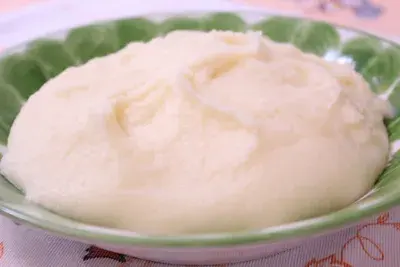
Funge is the Angolan staple, a smooth, elastic cassava porridge that arrives alongside almost everything and asserts nothing on its own. Its neutrality is functional rather than a failure of ambition. A dish with a strong flavour of its own could not do funge's job, which is to carry the flavour of what it is eaten with. It is made from cassava flour and water, and nothing else is required. Cassava is a tropical root crop grown across Angola, and the flour keeps for months, which is part of why the dish has held its place. In Angola it is funge or funji; the same preparation carries different names and different base starches across the continent, and Angolan households recognise the family resemblance without confusing the members. Funge is eaten with the fingers. Small pieces are pulled off, rolled between the fingers, and used to lift stew, fish or greens from a shared bowl. That method makes it a communal dish by construction rather than by sentiment, and eating from the same bowl of funge carries the meaning that shared eating carries everywhere: this is a household, and you are in it.
AFN Heritage Note
Cassava reached Central Africa through Portuguese trade routes from South America in the 16th century, and the flour milled from its dried root became the base of funge in Angola. The pounding and stirring of starch to a smooth elastic mass is documented across Central and West Africa as a pre colonial preparation, older than the cassava that now most commonly provides its base.
Ingredients
Dietary tags are provided by contributors as a guide, not verified by AFN, and they depend on the products you buy. If you have a serious allergy, check every ingredient yourself. Cooking, allergies and your own judgement
Directions
- 1
Bring 4 cups of water to the boil in a pot.
- 2
While the water heats, put the cassava flour in a bowl. Add 1/2 cup of cold water slowly and whisk until smooth. Set aside.
- 3
Pour the cassava flour mixture into the boiling water slowly, stirring continuously. Reduce the heat to medium.
- 4
Stir and work the mixture vigorously with a wooden spoon for 10 to 15 minutes, until it turns stretchy and smooth. Add hot water a few tablespoons at a time if it is too dry.
- 5
Cover the pot and leave to rest for 8 to 10 minutes.
- 6
Uncover and knead briefly until smooth. Work in a little oil at this stage for a softer funge.
- 7
Shape into balls or a loaf and serve warm.
Africook’s Notes
 Personal notes from Deborah Olayiwola
- Some cooks work a little butter into the funge at the kneading stage for richness, which makes it no longer vegan.
- Slaking the flour in cold water before it meets the boiling water is what prevents lumps. Flour tipped dry into boiling water will seize into knots that no amount of stirring will fix.
- The vigorous stage is genuinely physical work and it is not optional. It is what releases the starch and turns a gritty mixture elastic. Ten minutes is a minimum, not a target.
- The rest under the lid lets the starch finish absorbing. Skipping it gives a funge that is smooth on the outside and grainy underneath.
- Funge firms as it cools. For a firmer texture, let it stand slightly before serving. It keeps refrigerated for four to five days and reheats in a pan with a little water.
Reviews
4 reviews
You Might Also Like
Browse all Angolan recipes →
Mufete
Kizaca
Muamba De Galinha (Angolan Chicken Stew)

Funge keeps going lumpy on me. Is there a trick?
Yes, and it is the order. Mix the flour with cold water into a smooth slurry before it goes anywhere near heat, then pour that into the hot water while stirring, not the other way round. Dropping dry flour into boiling water sets the outside of each clump before the middle wets through. Keep the spoon moving in one direction and do not stop until it pulls away from the sides.
got the cassava flour from the shop near West Croydon station. whisking it with the 1/2 cup of cold water before pouring into the boiling pot is key oo, stopped all the lumps. Chale my arm almost gave up stirring for 15 mins with the wooden spoon but that smooth stretchy final texture was so good paa.
Abeg that 10 minutes resting time covered at the end makes all the difference. I was worried it was getting too thick while working it on medium heat, but resting made it settle so well. Stirring for 15 mins no be small work o but e sweet.