
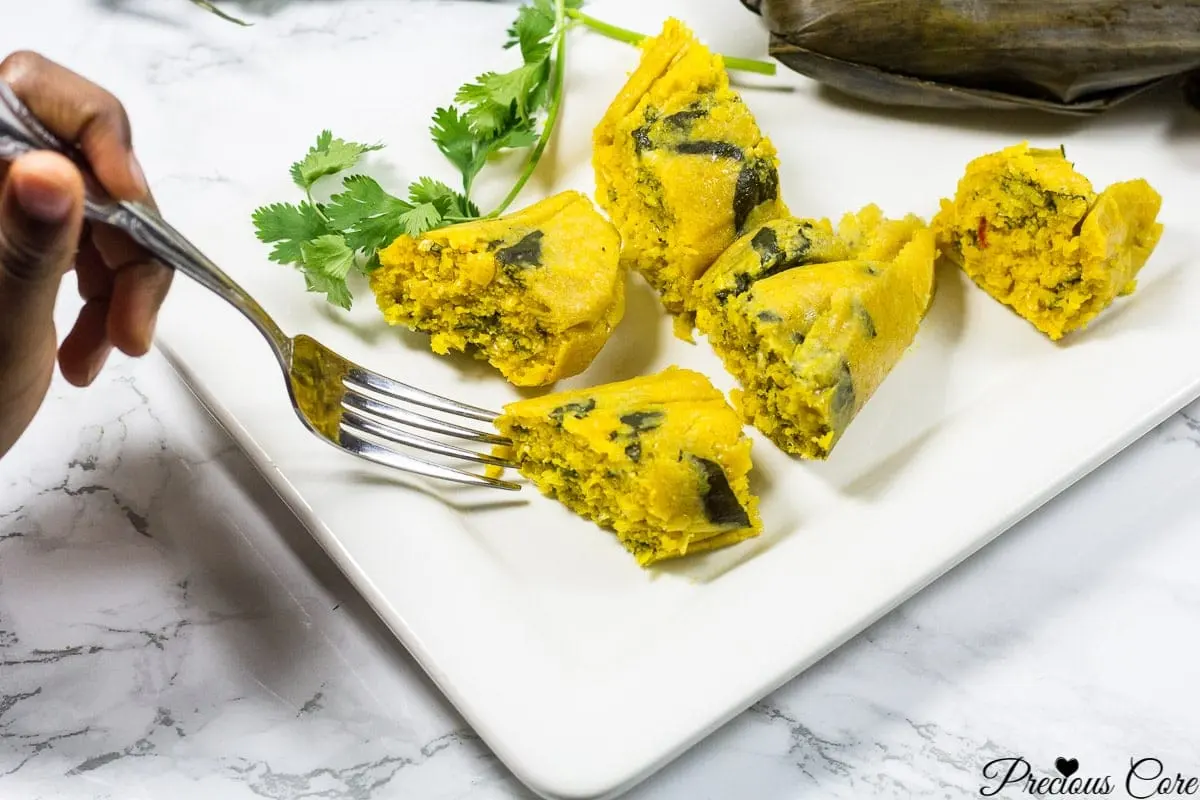
Cameroon Koki Corn
Abuja, Nigeria · View all recipes
Overview
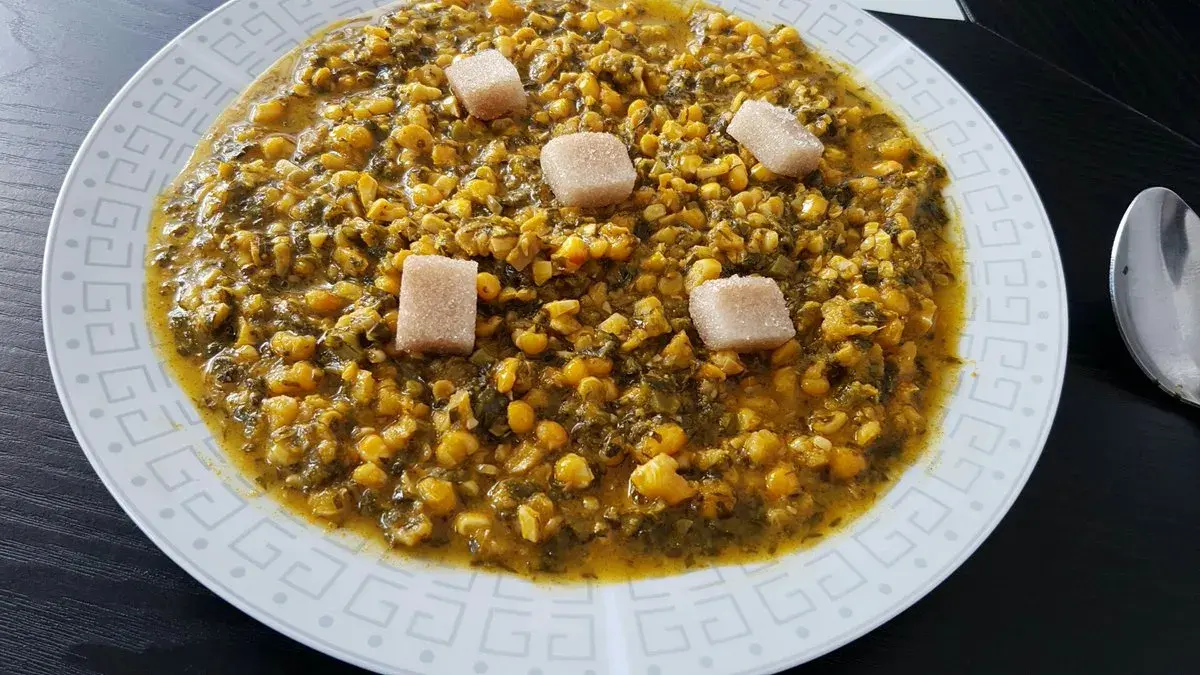
Koki corn is a Cameroonian steamed pudding made from ground fresh corn mixed with palm oil and greens, wrapped in banana leaves and steamed until it sets firm. It is the corn version of a dish more commonly made with black-eyed peas. Koki beans, ground soaked beans treated the same way, is the better-known form, and the two are close relatives using the same technique on different staples. Both belong to a wider West and Central African family of leaf-wrapped steamed puddings that includes moi moi and abala. The wrapping is not decorative. Banana leaves are warmed over a flame first, which makes them pliable enough to fold without splitting, and they hold the loose mixture in shape while it steams. They also contribute a faint grassy aroma that the pudding takes on. Palm oil is heated before it goes in, which changes how it behaves in the mixture and gives the finished koki its deep orange colour. Njama njama, huckleberry leaves, a Cameroonian staple green, or spinach is folded through. It sets firm enough to slice and is eaten hot, on its own or with plantain.
AFN Heritage Note
Koki corn is a Cameroonian steamed pudding of ground corn wrapped in banana leaves, the corn counterpart of the better-known koki beans made with black-eyed peas. It belongs to a wider West and Central African tradition of leaf-wrapped steamed puddings that includes moi moi.
Ingredients
Dietary tags are provided by contributors as a guide, not verified by AFN, and they depend on the products you buy. If you have a serious allergy, check every ingredient yourself. Cooking, allergies and your own judgement
Directions
- 1
Pour palm oil into a skillet to warm for a few minutes (about 2-3 minutes). Do NOT bleach it.
- 2
Pour the corn, onion and hot pepper into a blender or food processor. Add 1/4 cup of water and blend or process into a coarsely ground paste. Note that you do not want to blend this into a fine paste. You should still be able to see bits and pieces of corn when done.
- 3
Pour the ground corn into a bowl, add cornmeal, the heated oil and mix well. Add salt, Maggi then mix.
- 4
Add in the chopped leaves and mix until well incorporated.
- 5
To prepare pot. Line the bottom of a pot with empty cobs of corn. This creates a base that helps prevent water from getting into the Koki Corn. Now pour about half a cup of water into the pot and bring to a gentle boil while you proceed to wrap the Koki Corn.
- 6
When done with wrapping and all the bundles are in the pot, cover them with some more banana leaves (mostly the ones that got torn and were unusable) or aluminum foil. This helps to prevent the steam from escaping during cooking. Place the lidon the pot and cook for about 30 minutes. Every 5-10 minutes, open the pot and add in about half cup of water so it doesn't dry out.
- 7
Let it rest for about 10 minutes when cooked. Then unravel and serve warm.
- 8
Enjoy your yummy koki corn!
Africook’s Notes
- Warm the banana leaves over a flame until they turn glossy and pliable. Cold leaves split when folded.
- Heat the palm oil before mixing it in, it incorporates far more evenly warm than cold.
- Wrap tightly. Loose parcels let water in and the pudding comes out soggy rather than set.
- Steam rather than boil, and keep the water below the parcels.
Questions cooks ask
What is the difference between koki corn and koki beans?
The staple. Koki beans, the better-known version, uses ground soaked black-eyed peas; koki corn uses ground fresh corn with cornmeal. The technique is identical, mix with palm oil and greens, wrap in banana leaves, steam. The corn version is softer and sweeter, the bean version denser.
Can I use foil instead of banana leaves?
It will work as a container, but you lose something. Banana leaves impart a faint grassy aroma that the pudding absorbs during steaming, and that is part of the dish. If leaves are unavailable, foil or parchment will hold the shape but the result is plainer.
What is njama njama?
Njama njama is huckleberry leaf, a staple green in Cameroonian cooking, slightly bitter and firm-textured. It is the traditional green for this dish. Spinach is the usual substitute outside Cameroon and works perfectly well, though it is milder and softer.
Reviews
Be the first to rate this recipe
Cooked it? Your rating helps the next person decide whether to try it.
No reviews on this one yet. If you have cooked it, yours would be the first.