


Agidi or Eko
Overview
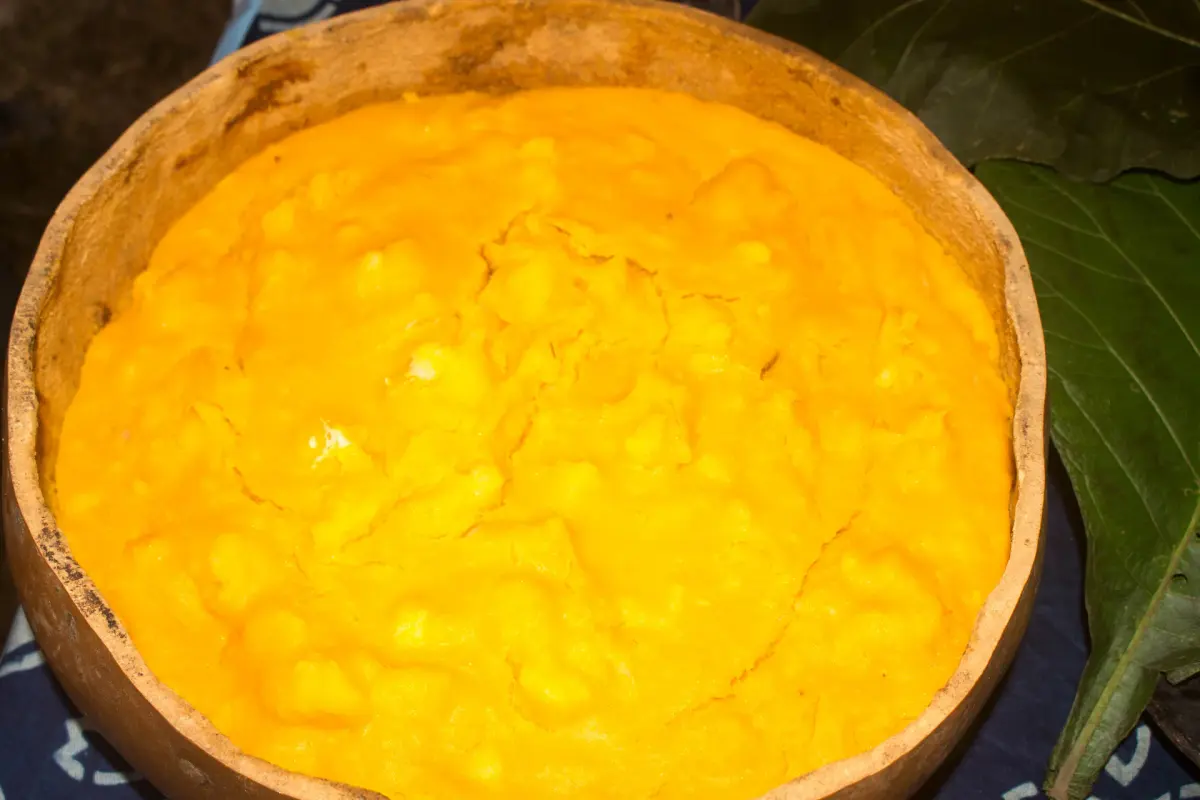
Agidi, called eko in Yoruba, is corn starch cooked to a firm set and left to cool into a smooth, sliceable block. It is faintly sour, cool to eat, and holds its shape on a plate, which makes it unusual among Nigerian starches, most of which are served hot and soft. It is one of the few Nigerian dishes that genuinely crosses every line in the country. North to south, across tribes, classes and religions, agidi turns up on the same table, which is a rarer thing in Nigerian food than the country's shared reputation for hospitality might suggest. It is eaten at breakfast with akara, the fried bean cake, and it is served alongside pepper soup, stew, banga, ogbono and egusi at other hours. It comes from the same process that produces ogi, the fermented corn pap, taken further. Where ogi is drunk, agidi is set. It is traditionally poured into uma or banana leaves, which give it its characteristic tapered shape and a faint green scent, and the leaves are the reason it appears in markets as a wrapped parcel rather than a slab. It is also commonly the first solid food given to Nigerian babies.
AFN Heritage Note
Agidi belongs to the West African tradition of fermented maize preparations, sharing its base process with ogi, the fermented corn pap. Maize reached West Africa through Atlantic trade from the 16th century, and the leaf wrapping in uma or banana leaves that gives agidi its shape is documented as the standard market presentation.
Ingredients
Dietary tags are provided by contributors as a guide, not verified by AFN, and they depend on the products you buy. If you have a serious allergy, check every ingredient yourself. Cooking, allergies and your own judgement
Directions
- 1
Mix the corn starch or flour with cold water in a pot, adding the water a little at a time to keep lumps from forming.
- 2
Place the pot on the stove and stir continuously without pause. The mixture will begin to thicken. Keep stirring over medium heat.
- 3
Once completely thickened, pour a little water down the sides of the pot, cover, and leave over medium heat for about 10 minutes. Stir well to combine.
- 4
Transfer to containers or wrap in uma leaves, and leave to cool and set.
Africook’s Notes
- Start in cold water, never hot. The starch must be dispersed before any heat reaches it, and starch tipped into hot water seizes immediately into lumps that no stirring will remove.
- The stirring is continuous from start to finish. This is a short dish but not an unattended one.
- It sets as it cools and cannot be judged hot. If it is too soft when cold, the next batch needs longer over the heat rather than more starch.
- Uma or banana leaves give the traditional tapered shape and a faint green aroma. Any clean container works if you cannot get them.
- Fermented wet corn starch gives a distinctly sour agidi; plain corn flour gives a milder one. Both are standard.
Questions cooks ask
What is the difference between agidi and ogi?
They start from the same fermented maize and diverge at the end. Ogi, also called akamu or pap, is thinned and drunk as a porridge. Agidi is cooked much thicker, then poured out and left to cool until it sets into a firm sliceable block. Agidi is essentially ogi taken to a solid, and the two are eaten in completely different ways.
What is agidi eaten with?
Akara, the fried bean cake, is the classic breakfast pairing. Beyond that it is served with pepper soup, stew, banga soup, ogbono and egusi, where it plays the role a swallow would. It is also used as a substitute for fufu or eba by people reducing their starch intake, and it is a common first solid food for babies.
Why is my agidi not setting firm?
Not enough starch for the water, or not cooked long enough. Agidi has to be taken well past the point where it looks thick in the pot, to where it is genuinely stiff and pulls from the sides. Since it only firms further as it cools, judging it while hot is the usual mistake. Give the next batch more time over the heat.
Can I make agidi with ordinary cornflour from a supermarket?
Yes, and the method here is written for it. What you will not get is the sourness, which comes from fermentation. For the traditional taste you want fermented wet corn starch, sold by Nigerian grocers as ogi or akamu, often in wet blocks in the refrigerated section. Plain cornflour gives a perfectly good but milder agidi.
Reviews
3 reviews
You Might Also Like
Browse all Nigerian recipes →
Edo Black Soup

Nigerian Fisherman Soup
Igbo Yam Porridge

Continuous stirring is the real work here o, if you stop for one second lumps will just take over. That step of adding a bit of water around the edges to let it steam for 10 minutes made it cook through properly sha. Tasted just like my grandmother's Eko with hot pepper soup.
That steaming trick is pure magic, sawa. The stirring part needs serious stamina or those lumps will take over completely! Sourcing proper fermented corn flour here in Dubai was a real hustle, but pairing it with hot goat nyama pepper soup made all that manual labor feel poa.
i couldnt find uma leaves here in tennessee so i just poured the starch mixture into small pyrex ramekins to cool and set. it firmed up nicely! served it alongside a spicy bean stew. is the texture supposed to be like a firm gelatinous pudding? mine held its shape completely when inverted on the plate.