What is egusi? Egusi is the oily seed of certain West African melons and gourds, shelled and ground to thicken soups such as Nigerian egusi soup. The English name for egusi is usually just melon seed, and botanists call one of the main plants the egusi melon or West African watermelon. It's grown for the seed, not the fruit.
The word covers more than one plant, so two bags of egusi can come from different crops. If you've ever watched clear oil rise to the top of a pot of egusi soup, this is the seed doing that.
What is the English name for egusi?
In everyday Nigerian English, egusi is simply melon seed, and that's the name you'll see on many AFN recipes. PROTA, the reference work on the useful plants of tropical Africa, calls one of the plants it comes from egusi melon, egusi watermelon or West African watermelon. In French it's pastèque égousi or melon à pistache. PROTA also says the word egusi itself comes from Yoruba.
Hausa and Igbo cooks use close forms of the same word. In Ghana you'll hear other names too: our Kontomire Stew recipe lists the seeds as akatoa, egusi or agushie.
What is egusi made of?
Egusi is just the shelled seed, with nothing added. The US National Research Council's Lost Crops of Africa explains that the name is applied to several similar looking seeds. More than one plant in the melon and gourd family is sold as egusi.
The botanists don't fully agree on which plant is which. A 2025 review in Frontiers in Plant Science says scientists disagree over the correct botanical name for egusi melon. The names in use include Citrullus lanatus, Citrullus mucosospermus and Cucumeropsis mannii. PROTA calls Cucumeropsis mannii "the real egusi". For a cook, the botany matters less than what's in the bag.
How egusi seeds are produced
Egusi seeds come out of fruit that's been left to rot on purpose. PROTA describes farmers heaping the fruits and covering them so they ferment, which takes about 14 days. The seeds are then washed out and dried in the sun, which takes five to seven days.
Then comes the slow part. Lost Crops of Africa says the seeds must be shelled before they can be eaten, and that this is still mostly done by hand. Buying it shelled saves you that job.
Egusi as a soup thickener
Ground egusi is mostly oil and protein. Lost Crops of Africa puts a shelled kernel at about 50% oil and 30% protein, and says the ground flour both enriches and thickens soups. You can watch it happen in our egusi soup recipe: the ground egusi cakes as it cooks, and after about 25 minutes clear egusi oil rises to the surface.
The recipe also tells you to grind the seeds dry and close to cooking time. Water at the mill gives a paste that won't cake, and our other egusi recipes add that pre-ground egusi goes rancid quickly because of its oil.
How egusi is used in cooking
Soup is only one use. The 2025 review lists dried, ground seed as a soup thickener, roasted seed as a snack, and fermented seed as a local seasoning called ogiri egusi. Our guide to what ogiri is covers that fermented form. Lost Crops of Africa adds that in Nigeria, pounded roasted seed is made into a paste it compares to peanut butter.
In the pot, cooks handle ground egusi in two main ways. Some stir it straight into the stock and let it cook until it cakes. Others blend it with a little water into a paste and drop it in by the spoonful, so it sets into soft lumps. AFN's recipes do both, and you'll see each method below.
AFN recipes that use egusi
These recipes use egusi as the thickener, the base, or the main event.
Egusi soup
This is the classic. Our egusi soup recipe uses 600g of egusi seeds, ground and stirred into the meat stock. It cooks with small splashes of water until the oil rises, then the palm oil goes in and blends to a light yellow.
Uziza egusi soup
This one uses the paste method. In our uziza egusi soup recipe, a cup of melon seeds is blended with onion and habanero. The paste goes into the pot in small scoops, without stirring, and sets into lumps for 10 minutes before the uziza leaves go in.
Vegan egusi soup
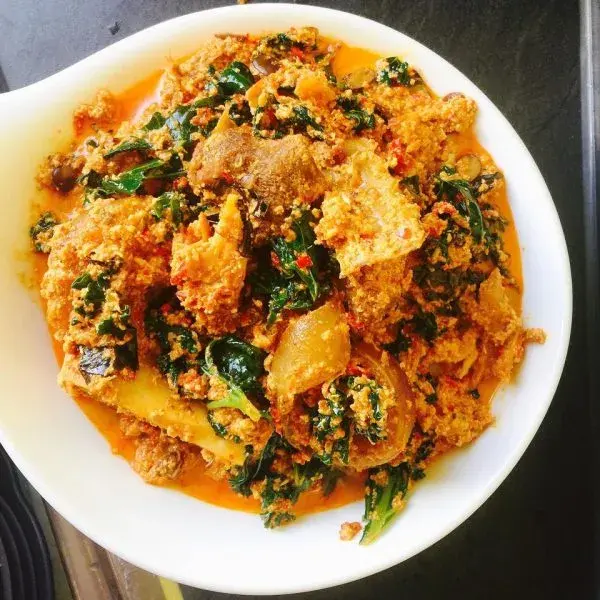
Egusi carries a meat-free soup well because it brings its own body. Our vegan egusi soup recipe uses a cup of ground egusi with palm oil, spinach and mushrooms.
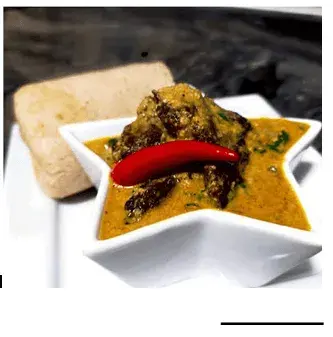
Egusi pudding
Egusi doesn't have to be soup. Our egusi pudding recipe works two cups of ground egusi into a mix of meat, fish, crayfish and stock. It then bakes in ramekins or leaf-lined moulds, in a water bath, for about an hour.
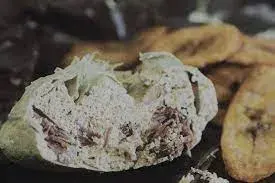
Kontomire stew
Ghana's cocoyam leaf stew uses the paste method too. Our kontomire stew recipe soaks a cup of melon seeds, blends them with a little salt and water, and adds the paste without stirring so it sets for 8 to 10 minutes.
Efo riro
Our efo riro recipe uses three quarters of a cup of egusi or raw shelled pumpkin seeds. They're pulsed to a fine powder, loosened into a paste and spread over the tomato sauce before the spinach goes in.
Egusi also turns up in our recipe for white amala and ilasa soup, where ground egusi boils in water for about 15 minutes before the chopped okra leaves go in.
Egusi nutrition
Egusi is high in fat and protein. The USDA's FoodData Central database has no entry called egusi. The nearest entry is dried watermelon seed kernels (FDC 169407). Watermelon is one of the plants sold as egusi, so treat these figures as a rough guide. Per 100g of dried kernels, USDA lists 557 calories, 28.3g of protein, 47.4g of fat, 7.28mg of iron and 515mg of magnesium.
Figures for egusi itself vary by plant and sample. The 2025 review cites a study that found 35.46g to 37.45g of protein and 48.34g to 49.83g of fat per 100g of full-fat egusi seed flour. Lost Crops of Africa reports one analysis that found the oil to be about 63% linoleic acid.
How to store egusi and how to know if it's bad
You'll know egusi has gone bad if it smells sour or musty, or if you see insects in it. Whole dried seed keeps longest, sealed. Lost Crops of Africa says the dried seeds are best stored in sealed containers, because certain beetles can ruin a whole harvest. Ground egusi doesn't keep as well: our uziza egusi and vegan egusi recipes warn that pre-ground egusi goes rancid quickly because of its oil, so check it before you use it. Grind only what you need, and keep any extra in an airtight jar in the fridge or freezer.
Where to buy egusi
You'll see it whole, shelled or ready-ground. Ground egusi saves time, but whole shelled seed lets you check for insects and grind it fresh, as our recipes suggest.
Where egusi comes from
In 2022, researchers sequenced the genome of 6,000-year-old seeds from Uan Muhuggiag, a rock shelter in the Libyan Sahara. The seeds were genetically close to today's bitter-fleshed egusi-type watermelon, grown for its seeds. They concluded the plant was first collected or cultivated for its seeds rather than its flesh. PROTA says the egusi melon was probably domesticated in the southern Sahel zone or around the Kalahari. Lost Crops of Africa notes that as far back as the 1960s Nigeria was "annually producing 73,000 tons". For the soups that grew out of it, see our round-up of Nigerian soups.
Egusi questions people ask
What is the English name for egusi?
Egusi is called melon seed in Nigerian English. One of the plants it comes from is the egusi melon, also called the West African watermelon.
What is egusi made of?
Egusi is the shelled seed of a melon or gourd grown for its seeds. Ground egusi is just that seed, ground, with nothing added.
How do you know if egusi is bad?
Throw it out if it smells sour or musty or you see insects. Ground egusi goes rancid faster than whole seed because of its oil, so check it before you cook.
Is egusi the same as pumpkin seed?
No. They're related plants, and our efo riro recipe lets you use either, but our kontomire stew and vegan egusi recipes warn against swapping because pumpkin seeds behave differently in the pot.
Is egusi vegan?
Yes, the seed itself is plant food. Egusi soup usually includes meat, fish and crayfish, so try our vegan egusi soup if you want one without.