

Efo Riro
Overview
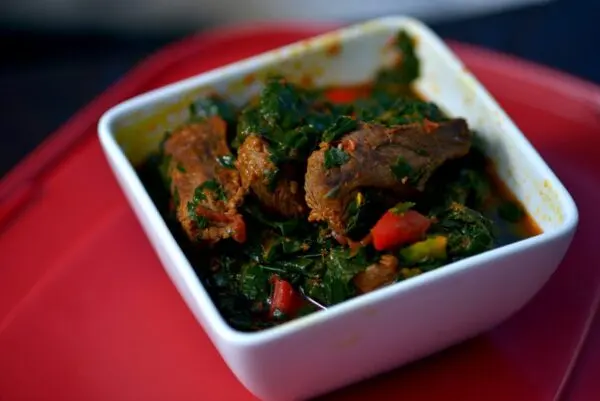
Efo riro is a Yoruba vegetable stew, and the name says exactly what it is: efo means vegetable or leafy green, riro means to stir or mix. Stirred greens. The vegetables it is properly made with are specific. Efo shoko, known as Lagos spinach, and efo tete, African spinach, are the two local greens used in Nigeria, and they behave differently from the spinach sold in European supermarkets, firmer, with more structure, and they hold up to the cooking without collapsing. Outside Nigeria most people use whatever spinach they can get, which works, though the texture is softer. What distinguishes efo riro from a simple pot of greens is the base it is stirred into. Blended red pepper and tomato are fried down in palm oil, with iru, locust bean, providing the deep savoury note, plus crayfish, assorted meat and often smoked or dried fish. The greens go in near the end and are stirred through rather than cooked down. It is quick, which is unusual for a Nigerian soup, and it is low enough in carbohydrate that it is regularly eaten on its own rather than with swallow, one of the few in the repertoire where that is normal. Versions are cooked in Ghana and Cameroon too, with small differences.
AFN Heritage Note
Efo riro is a Yoruba dish from southwestern Nigeria; the name translates as stirred or mixed vegetable. It is traditionally made with efo shoko, Lagos spinach, or efo tete, African spinach, rather than the softer varieties sold elsewhere.
Ingredients
Dietary tags are provided by contributors as a guide, not verified by AFN, and they depend on the products you buy. If you have a serious allergy, check every ingredient yourself. Cooking, allergies and your own judgement
Directions
- 1
In a Dutch oven, warm the palm oil over medium heat, and add the onions, garlic, ginger, chile and a couple pinches of salt.
- 2
Cook, stirring frequently, until the onions are golden brown and sweet, about 15 minutes.
- 3
Stir in the tomato paste, and cook for 3 minutes.
- 4
Add the tomatoes and a few generous pinches of salt. Bring to a boil, lower heat to a simmer and partly cover the pan.
- 5
Simmer, stirring occasionally, until the sauce has cooked to a rich tomato-soup consistency, about 25 minutes.
- 6
Meanwhile, pulse the egusi or pumpkin seeds in a food processor or blender to a fine powder, until it just starts to get clumpy. (Do not overprocess into a butter.) Remove to a bowl.
- 7
When the tomatoes have reduced, add the shrimp powder (or smoked paprika and fish sauce to taste), and simmer 2 minutes.
- 8
Stir in water, a tablespoon at a time, to the bowl of egusi powder until it is a loose paste. Add the egusi paste on top of the tomato sauce, and spread it out.Cover the pan, and cook 5 minutes.
- 9
Stir the sauce all together; it will look like a thick porridge.Add a few splashes of water, and increase heat to a boil.
- 10
Stir in the spinach, until wilted and tender.
- 11
Taste, season with salt (or more fish sauce, if using) and serve with boiled sweet plantains.
Africook’s Notes
- Add the greens at the very end and stir them through briefly. Long cooking turns them dull and loses the point of the dish.
- Drain the blended pepper properly before frying. Water in the base makes the stew loose and stops the oil separating.
- Do not skip the iru. It is what gives efo riro its depth, and the dish tastes noticeably flatter without it.
- If using European spinach, cook it even more briefly, it collapses much faster than efo shoko or efo tete.
- Squeeze excess water from thawed frozen spinach or it will thin the whole pot.
Reviews
Be the first to rate this recipe
Cooked it? Your rating helps the next person decide whether to try it.
No reviews on this one yet. If you have cooked it, yours would be the first.
You Might Also Like
Browse all Nigerian recipes →
Edo Black Soup
Nigerian Fisherman Soup
Igbo Yam Porridge