4.54.5 out of 5, 2 ratings50 min


Cookies on African Food Network
We use essential cookies to make the site work. We would also like to set analytics cookies and advertising cookies, but only if you agree. You can choose each one separately. Read our cookie policy
Here's a list of Nigerian soups and what makes each one different. Nigerian soups are well seasoned pots of leaves, ground seeds or palm fruit cooked with meat and fish. Most of them are thick enough to eat with a swallow such as pounded yam, eba or amala. The best known are egusi, ogbono, okro, oha, banga, afang, edikang ikong, bitter leaf, efo riro, groundnut and pepper soup.
Most of them belong to one people before they belong to the whole country. Oha and bitter leaf soup are Igbo, afang and edikang ikong come from the Efik and Ibibio, banga is from the Niger Delta and efo riro is Yoruba. Here's what each soup is built on, how they differ from one another, and AFN's recipe for every one of them.
Most of these soups use the same supporting cast of assorted meat, dried fish, crayfish and palm oil. What sets each one apart is the thing it's built on.
Across Nigeria
Egusi soupBuilt on: Ground melon seed
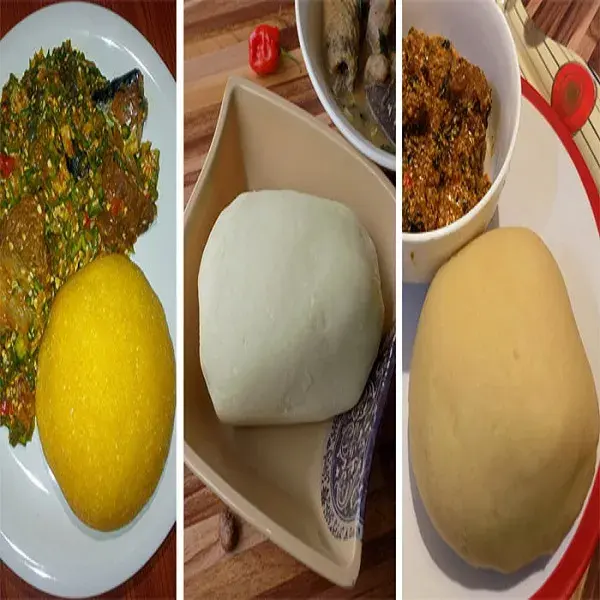
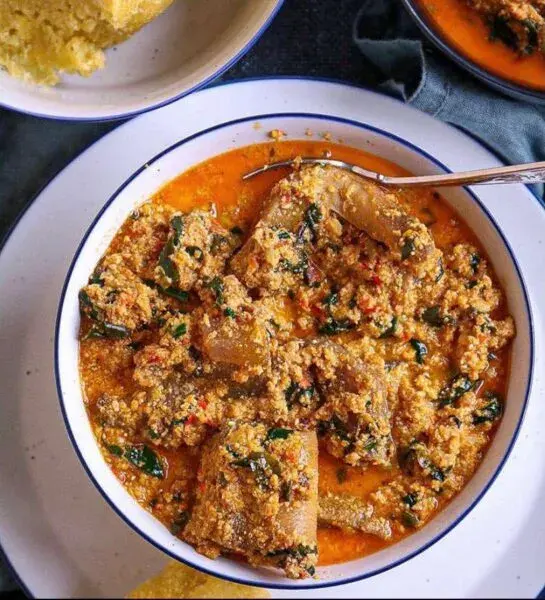
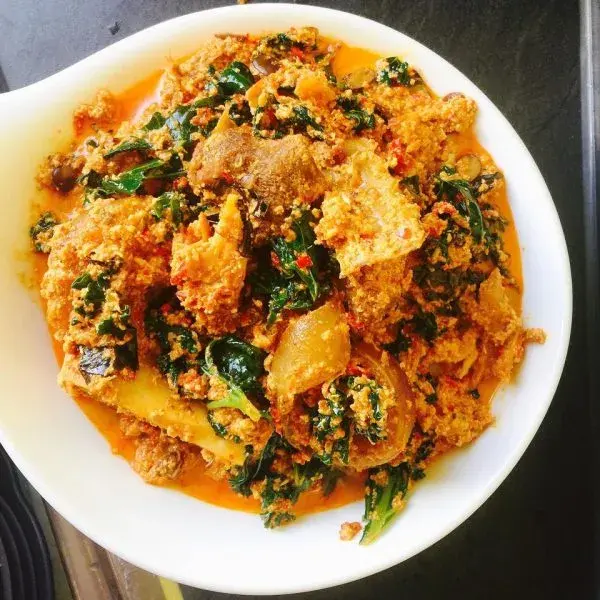
Ground egusi stirred into the stock and left to set into soft curds, with ugwu or bitter leaf added at the end. Eaten in every part of the country, as ofe egusi in Igbo and miyan gushi in Hausa.
Southeast Nigeria
Ogbono soupBuilt on: Ground ogbono (wild mango seed)
The seed draws into long, slippery strands. It needs proper time on low heat; cut that short and the soup tastes bland and bitter.
Across Nigeria
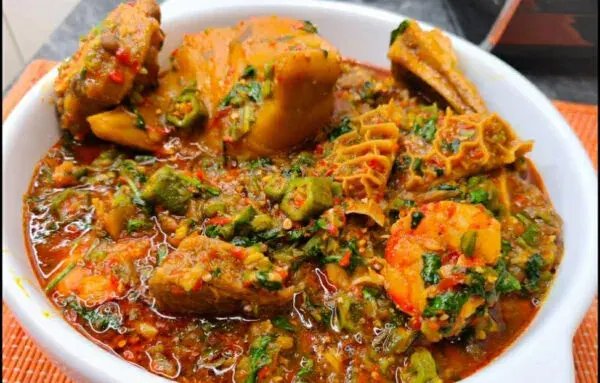
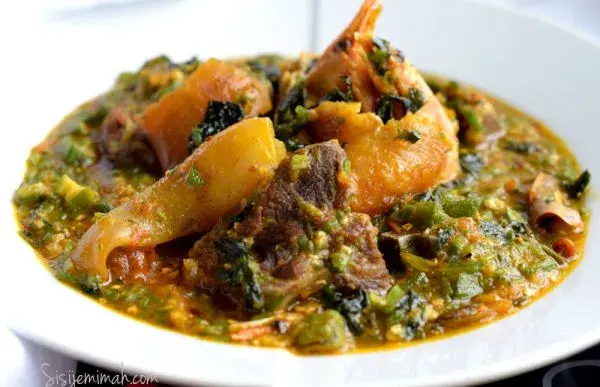
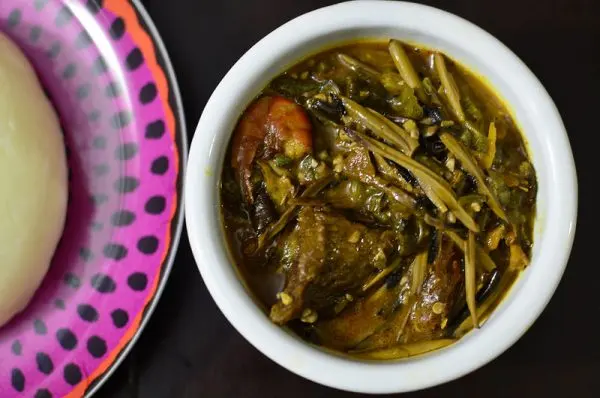
Okro soup (okra soup)Built on: Chopped fresh okra
One of the quickest Nigerian soups: the okra cooks for only a few minutes and comes off the heat while it's still green. Its draw is what lets a swallow slide.
Southeast Nigeria (Igbo)
Oha soupBuilt on: Oha leaves, cocoyam
Made with the seasonal leaves of the oha tree, torn by hand and never cut with a knife, and thickened with pounded cocoyam. Ogiri igbo gives it its deep savoury note.
Niger Delta
Banga soupBuilt on: Palm fruit pulp
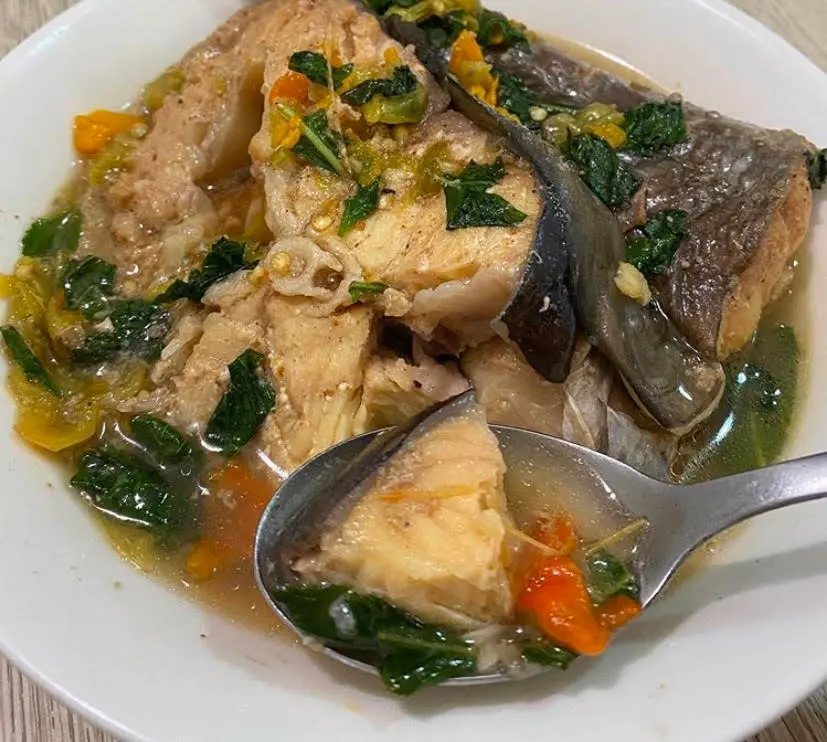
Made from the pulp of boiled palm nuts, not palm oil, and scented with beletientien and an oburunbebe stick left in the pot. Catfish is the classic fish.
Southeast Nigeria (Efik, Ibibio)
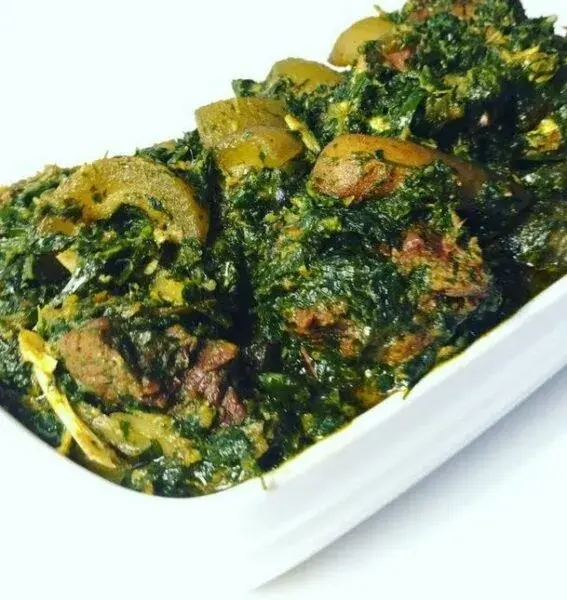
Afang soupBuilt on: Afang (okazi) and waterleaf
Tough, faintly bitter afang leaf sliced very finely, softened by waterleaf, which gives up the liquid the soup cooks in. Periwinkle is common.
Southeast Nigeria (Efik, Ibibio)
Edikang ikongBuilt on: Ugu (pumpkin leaf) and waterleaf
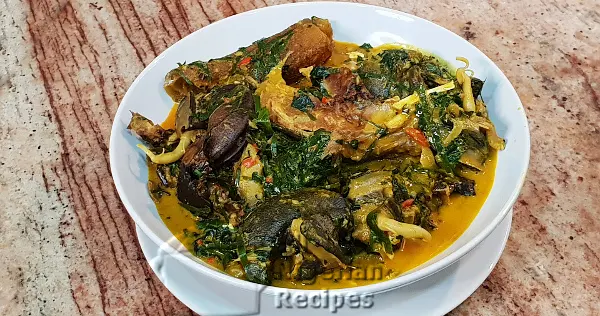
Afang's sweeter, greener cousin: the same structure with ugu in place of afang, and so much leaf that the vegetables are the soup, not a garnish.
Southeast Nigeria (Igbo)
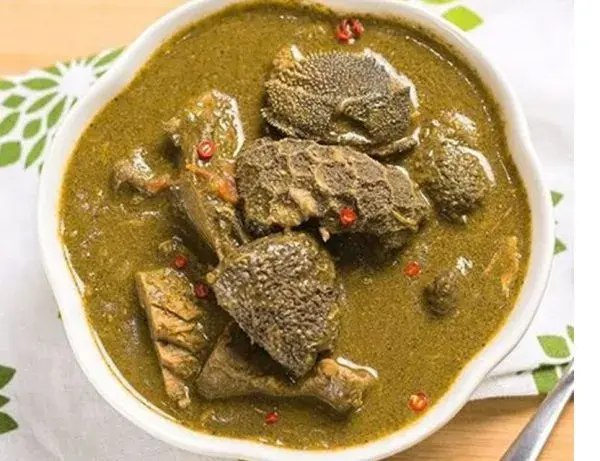
Bitter leaf soup (ofe onugbu)Built on: Washed bitter leaf, cocoyam
The leaves are washed and squeezed until most of the bitterness has gone, but not all of it. Pounded cocoyam gives the soup its heavy, slightly sticky body.
Southwest Nigeria (Yoruba)
Efo riroBuilt on: Spinach in a fried pepper base
The name means stirred greens. Blended tomato and pepper are fried down in palm oil, then the greens go in near the end. AFN's version adds egusi and is served with boiled sweet plantain.
Across Nigeria
Groundnut soupBuilt on: Roasted groundnut paste
Built like an egusi soup but thickened with roasted peanuts blended with uziza and crayfish, so it's rounder and sweeter. Edo's Etsako people call it omisagwe.
Across Nigeria
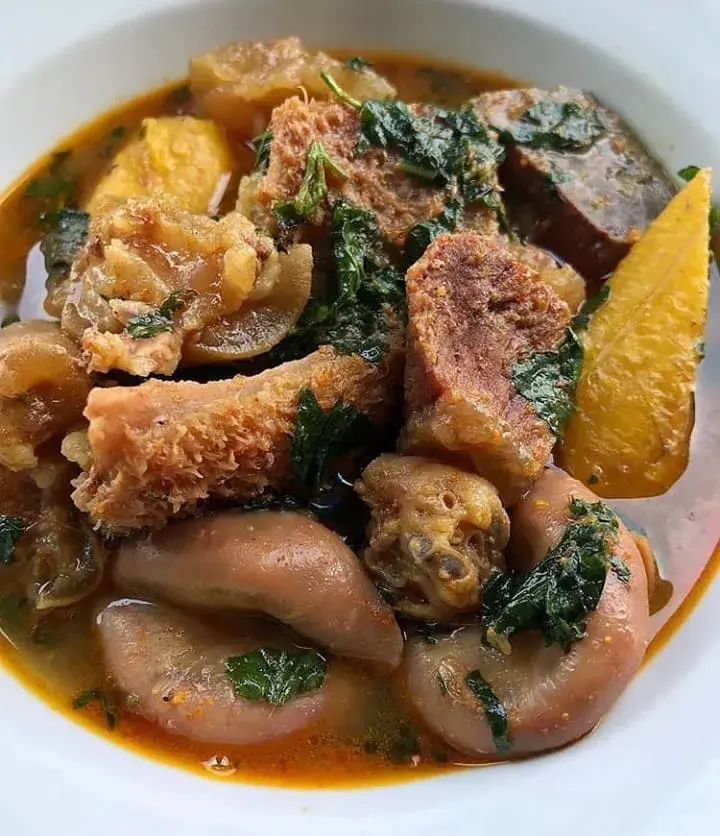
Pepper soup (goat meat)Built on: Pepper soup spice, no thickener
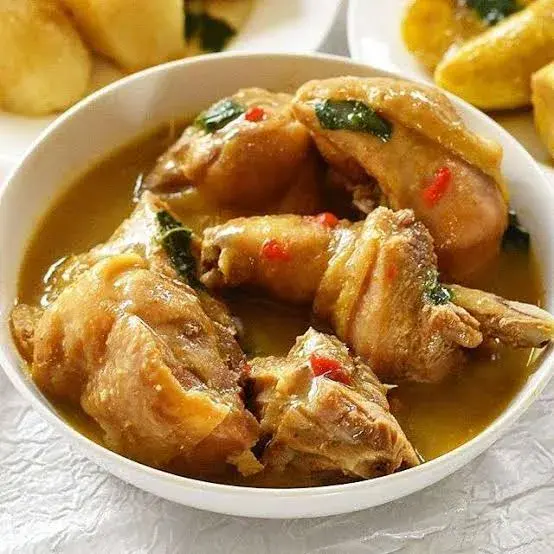
A thin, clear, very hot broth built on a spice blend around ehuru, the calabash nutmeg. Goat, catfish and chicken are the usual choices, and it can be eaten on its own.
| Country | Version | Built on | What makes it different |
|---|---|---|---|
| Across Nigeria | Egusi soup | Ground melon seed | Ground egusi stirred into the stock and left to set into soft curds, with ugwu or bitter leaf added at the end. Eaten in every part of the country, as ofe egusi in Igbo and miyan gushi in Hausa. |
| Southeast Nigeria | Ogbono soup | Ground ogbono (wild mango seed) | The seed draws into long, slippery strands. It needs proper time on low heat; cut that short and the soup tastes bland and bitter. |
| Across Nigeria | Okro soup (okra soup) | Chopped fresh okra | One of the quickest Nigerian soups: the okra cooks for only a few minutes and comes off the heat while it's still green. Its draw is what lets a swallow slide. |
| Southeast Nigeria (Igbo) | Oha soup | Oha leaves, cocoyam | Made with the seasonal leaves of the oha tree, torn by hand and never cut with a knife, and thickened with pounded cocoyam. Ogiri igbo gives it its deep savoury note. |
| Niger Delta | Banga soup | Palm fruit pulp | Made from the pulp of boiled palm nuts, not palm oil, and scented with beletientien and an oburunbebe stick left in the pot. Catfish is the classic fish. |
| Southeast Nigeria (Efik, Ibibio) | Afang soup | Afang (okazi) and waterleaf | Tough, faintly bitter afang leaf sliced very finely, softened by waterleaf, which gives up the liquid the soup cooks in. Periwinkle is common. |
| Southeast Nigeria (Efik, Ibibio) | Edikang ikong | Ugu (pumpkin leaf) and waterleaf | Afang's sweeter, greener cousin: the same structure with ugu in place of afang, and so much leaf that the vegetables are the soup, not a garnish. |
| Southeast Nigeria (Igbo) | Bitter leaf soup (ofe onugbu) | Washed bitter leaf, cocoyam | The leaves are washed and squeezed until most of the bitterness has gone, but not all of it. Pounded cocoyam gives the soup its heavy, slightly sticky body. |
| Southwest Nigeria (Yoruba) | Efo riro | Spinach in a fried pepper base | The name means stirred greens. Blended tomato and pepper are fried down in palm oil, then the greens go in near the end. AFN's version adds egusi and is served with boiled sweet plantain. |
| Across Nigeria | Groundnut soup | Roasted groundnut paste | Built like an egusi soup but thickened with roasted peanuts blended with uziza and crayfish, so it's rounder and sweeter. Edo's Etsako people call it omisagwe. |
| Across Nigeria | Pepper soup (goat meat) | Pepper soup spice, no thickener | A thin, clear, very hot broth built on a spice blend around ehuru, the calabash nutmeg. Goat, catfish and chicken are the usual choices, and it can be eaten on its own. |
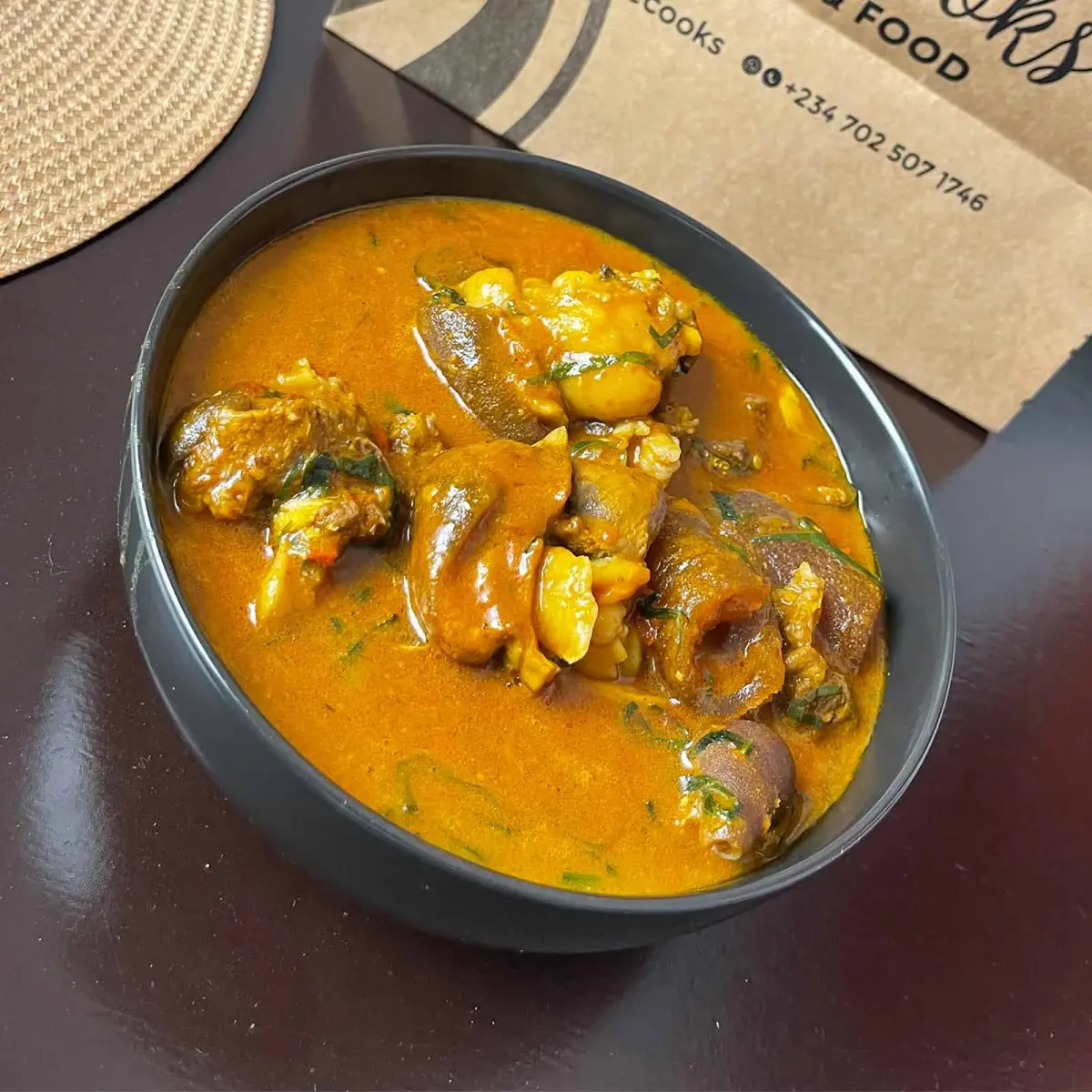
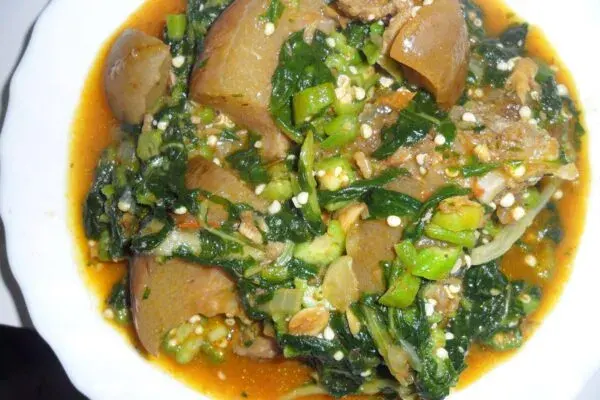
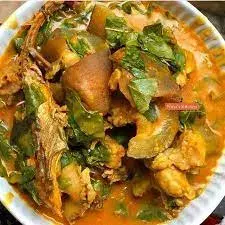
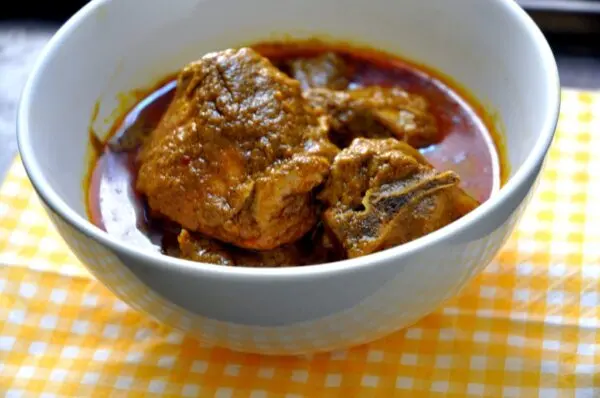
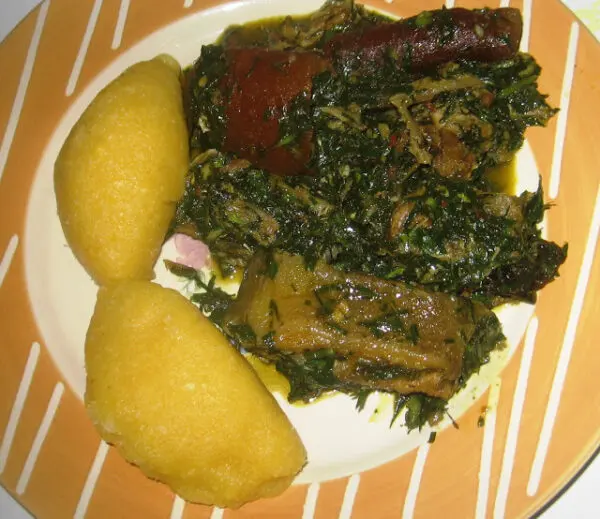
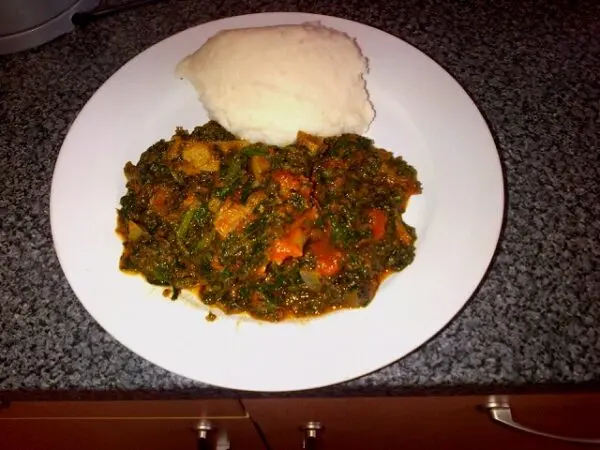
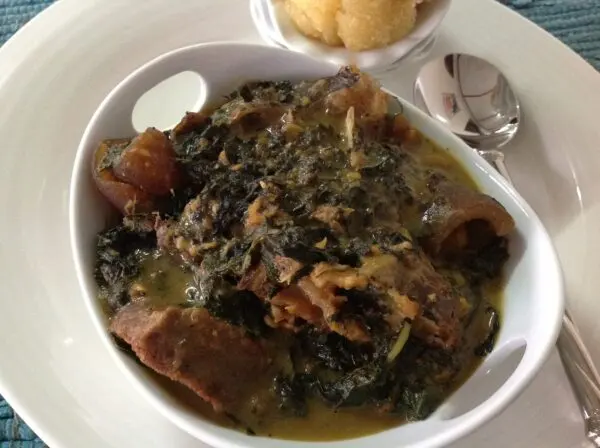
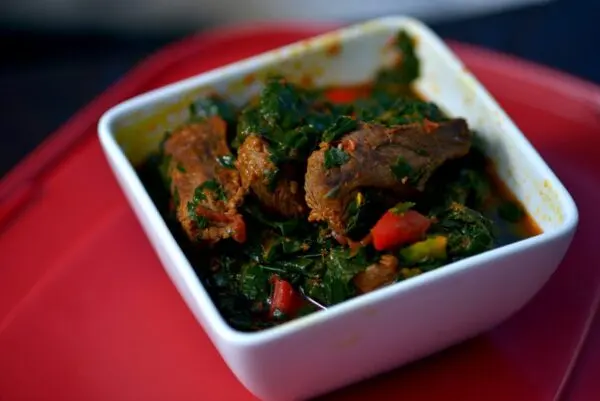
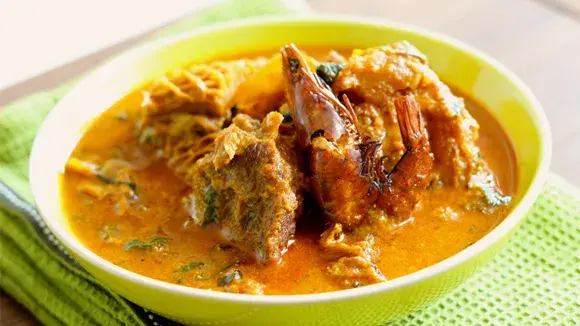
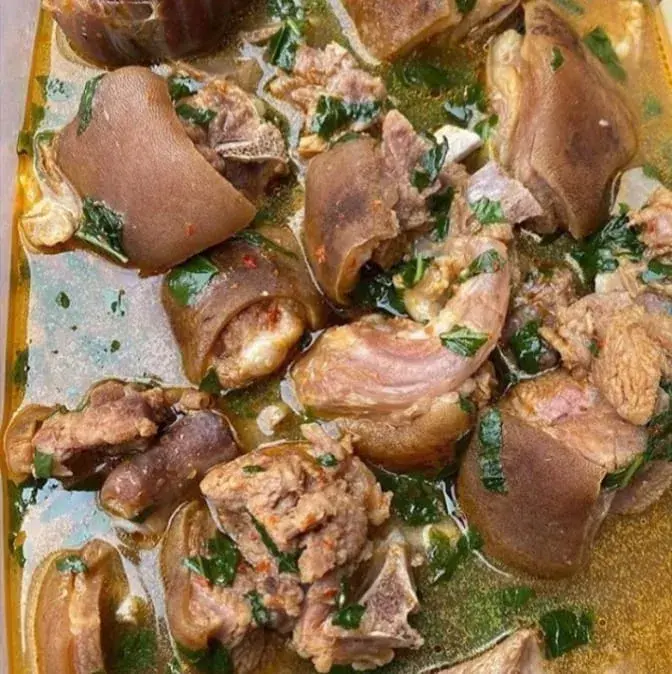
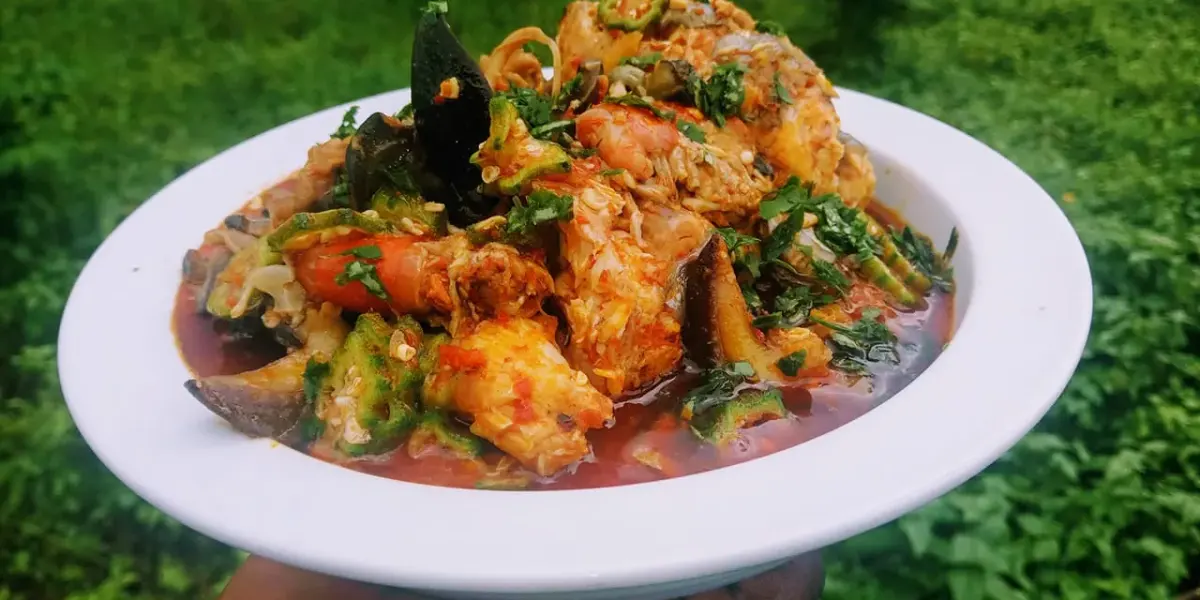
Nigerian soups follow the map of the country's peoples. In the southeast, Igbo cooks make oha soup and ofe onugbu, the bitter leaf soup, and thicken both with boiled cocoyam pounded smooth. In Cross River and Akwa Ibom, the Efik, Ibibio and Annang make afang and edikang ikong, two leaf soups that share almost everything except the leaf. The Efik also make fisherman soup, efere ndek iyak, from whatever the catch brings in: fresh fish, prawns, periwinkle and snail.
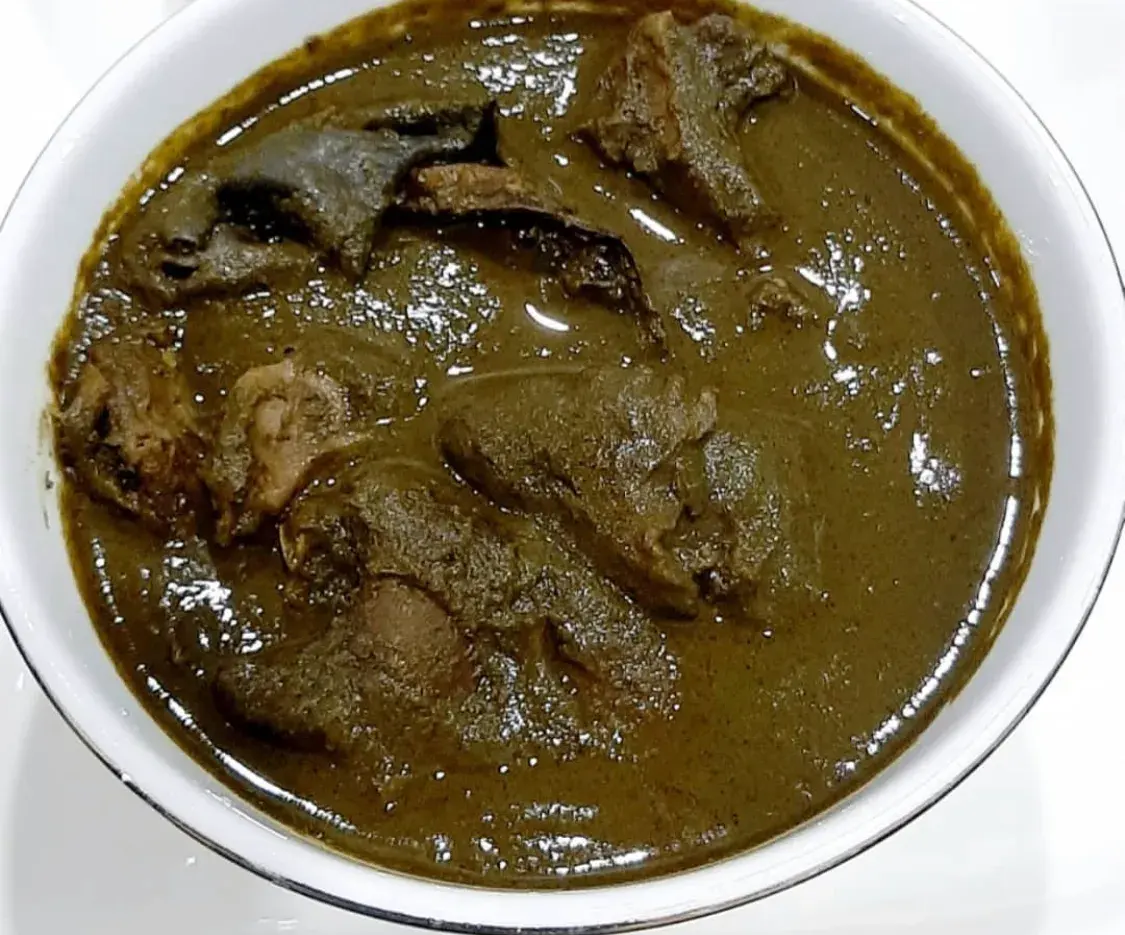
Banga, made from the pulp of boiled palm fruit, comes from the Niger Delta. The Urhobo, Isoko and Itsekiri each have their own name for it, and the Ijaw cook it too. Edo cooks make black soup, which gets its dark colour from bitter leaf, scent leaf and uziza ground together. The Yoruba southwest gives the country efo riro, ewedu and gbegiri. In the Hausa north, miyan kuka is made from powdered baobab leaves and dried okra. Okro soup is the one nobody owns: Igbo, Yoruba, Efik and Hausa cooks all make it, as obe ila in Yoruba and miyan kubewa in Hausa.
What ties them together is how they're eaten. Almost every Nigerian soup is cooked to go with a swallow, a soft dough of yam, cassava or grain that you pinch off, roll and dip. Pepper soup is the exception: a thin, hot broth that's one of the few Nigerian soups people eat on its own.

Culture & Lifestyle
Five Nigerian pepper soups to try, from goat meat to catfish and cow leg, plus the spices that flavour them, like gbafilo and ehuru, and how to grind them.
7 min read
Ingredients & Produce
What is afang soup? A leafy vegetable soup of the Efik and Ibibio people of Nigeria, often called Edikaikong's sister. Here's where it comes from.
1 min read
Travel & Country Guides
African soup names to know before you travel: egusi, ewedu, miyan kuka, okra and vegetable soup, what each one is made of, and how egusi is cooked.
16 min read
Ingredients & Produce
Five African okra recipes from across the continent: super kanja, ila alasepo, miris, otong soup and muamba de galinha, with where each dish comes from.
7 min read
Travel & Country Guides
Swallow food, explained: what Nigerians mean by swallow, the popular ones from eba, pounded yam and amala to fufu, tuwo shinkafa, semovita and starch.
4 min read
Egusi, ogbono, okro, oha, banga, afang, edikang ikong, bitter leaf (ofe onugbu), efo riro, groundnut soup and pepper soup. Egusi and okro are cooked all over the country; most of the others belong to one region first, such as oha to the Igbo and afang to the Efik and Ibibio.
The leaf. Both come from the Efik and Ibibio and both use waterleaf with assorted meat and fish. Afang adds afang leaf, called okazi in Igbo, which is tough and slightly bitter. Edikang ikong adds ugu, the pumpkin leaf, which is softer and sweeter.
They share a palm fruit base but they're different dishes. Banga is the Niger Delta soup, cooked with its own spices and eaten with a swallow. Ofe akwu is the Igbo version and is usually served with white rice.
Ogbono, okro and ewedu. Draw is the slippery, stretchy texture that helps a swallow slide down. Ogbono gets it from the ground wild mango seed, okro from fresh okra, and ewedu from jute mallow leaves beaten smooth.
Usually too much pepper soup spice. The blend is strong and turns the broth bitter past a certain amount. If it happens, add more water or stock and bring the heat down rather than trying to season around it.
Almost any of them. Egusi with pounded yam is the classic pairing, but ogbono, okro, afang, edikang ikong, oha and bitter leaf soup all work, and every one of them goes just as well with eba, amala or fufu. Pepper soup is the one you'd eat on its own.