The difference between egusi and ogbono soup is the seed that thickens the pot. Egusi soup is thickened with ground melon seeds, which give it a thick, grainy body and, in many pots, soft curds. Ogbono soup is thickened with ground bush mango kernels, which turn the soup slippery and stretchy, the texture Nigerians call draw.
Choose egusi if you want a thick soup with bits of seed you can bite into, one that goes with almost any swallow and even rice. Choose ogbono if you love a smooth soup that draws off your eba or pounded yam in long strands. You don't always have to pick: some cooks put the two seeds in one pot.
| Egusi soup | Ogbono soup | |
|---|---|---|
| Thickener | Ground seeds of egusi melon (Citrullus lanatus) or related gourds | Ground kernels of the bush mango tree (Irvingia), also called dika |
| Texture | Thick and grainy, often in soft curds | Slippery and stretchy ("draw") |
| The seed | More than half oil, about 30 percent protein | About 60 percent oil, about 8 percent protein (dry weight) |
| Name comes from | Yoruba (ẹ̀gúṣí) | Igbo (ọgbọnọ) |
| Eaten with | Pounded yam, fufu, eba, semolina; sometimes rice | Fufu, semo, pounded yam or eba |
What is egusi?
Egusi is the protein-rich seed of certain melons and gourds, dried and ground for West African cooking. The US National Research Council's study of egusi, in its Lost Crops of Africa series, names Citrullus lanatus (an egusi type of watermelon) and Cucumeropsis mannii as the main sources. Coarsely ground, it says, the seeds thicken stews. People argue about whether "egusi" should mean one plant or any seed in the melon family. You'll hear it called melon seed, though Wikipedia warns it shouldn't be confused with pumpkin seed.
In the pot, egusi soup usually carries leafy greens such as ugu, bitter leaf, scent leaf or spinach, with beef, goat, fish, stockfish or crayfish. Wikipedia traces the cooking method to Yoruba cooking, though egusi is now eaten all over Nigeria and well beyond it, including in Ghana's palaver sauce.
What is ogbono soup made of?
Ogbono soup is a Nigerian soup thickened with ground, dried ogbono seeds, which turn it dark and give it a mucilaginous draw, much like okro soup. The seed comes from the bush mango tree. The NRC's chapter on dika explains that there are two closely related trees. The cooking type whose seeds are processed right across West Africa is Irvingia wombolu, while the sweeter-fruited one keeps the name Irvingia gabonensis.
The name ogbono comes from Igbo. Wikipedia's ogbono soup entry lists it as apon or oro in Yoruba, ogwi in Bini, uyo in Efik and goro in Hausa, and notes that the ground seed gives the soup its black or brown colour. The usual pot holds palm oil, assorted meat or fish, crayfish, pepper and leaves such as bitter leaf, with iru or ogiri for depth.
Why ogbono draws and egusi doesn't
The two seeds thicken in completely different ways. Egusi is mostly oil and protein: the NRC puts the oil at more than half the seed's weight and the protein at about 30 percent. Cooks get different textures from it depending on method. Our uziza egusi tells you to add the paste in small portions and not stir, so it sets into soft lumps, while other cooks fry the egusi in palm oil first, as our egusi soup recipe explains.
Ogbono works through something else. The NRC says the kernel's thickening power is thought to come from mucilaginous polysaccharides that become more viscous as they cook. A 2014 lab study by Nwokocha and Williams found that the polysaccharide in the seed of Irvingia gabonensis, the close cousin of the cooking type, is an arabinogalactan with non-Newtonian flow and potential as a thickener. That fits what any cook sees when ogbono starts to draw.
One more thing explains a lot of disappointing pots. According to PROTA's profile of the tree, the drawability and thickness that kernels give a soup varies from tree to tree. So if one bag of ogbono draws beautifully and the next one barely does, the seed itself may be to blame, not your cooking.
What does ogbono soup taste like compared with egusi?
With ogbono, the texture is the point; our ogbono recipe says the draw is what the soup exists for. Its flavour depends on cooking it properly. Under-cooked ogbono tastes bland and bitter, our recipe warns, and a soapy taste means the oily seeds have gone rancid, which no amount of cooking will fix. Egusi tastes different from the first spoonful: our egusi recipe describes a nutty, faintly bitter depth that comes from the seed itself, which is why the soup is named after it.
Which should you cook, egusi or ogbono?
Cook egusi for a filling, textured soup, the classic pot for pounded yam, especially for guests who are new to Nigerian food, since there's nothing slippery to get used to. Cook ogbono if you already love okro and want a deeper, darker soup with the same pull.
Can you cook egusi and ogbono together?
Yes. Wikipedia notes that some cooks make ogbono together with egusi, and others cook it with okra, to make the soup thicker. What you can't do is swap one seed for the other and expect the same result. Use egusi in place of ogbono and you lose the draw, and use ogbono in place of egusi and you lose the curds. If you want draw without ogbono, okro is the closer swap.
Where egusi and ogbono come from
Egusi has long fed people in West Africa's dry regions. The NRC records that Nigeria was already producing 73,000 tons a year as far back as the 1960s. Ogbono's fruit has traditionally been collected from wild trees in the forests of southeastern Nigeria, Cameroon, Gabon and both Congos. The NRC names the Igbo of southeastern Nigeria, along with the Baka of Cameroon's Dja Forest, as having a wealth of insight into their local dika trees. Ogbono is the Igbo name for the seed, and Wikipedia's ogbono soup entry puts the spread of that name across Nigeria down to Igbo traders and cooks.
Ogbono soup with uziza and ugwu
Our ogbono soup recipe mixes the ground seed into a smooth paste with a little water before it goes into the boiling broth. Then it finishes the pot with uziza and ugwu leaves. Serve it hot with fufu, pounded yam or eba.
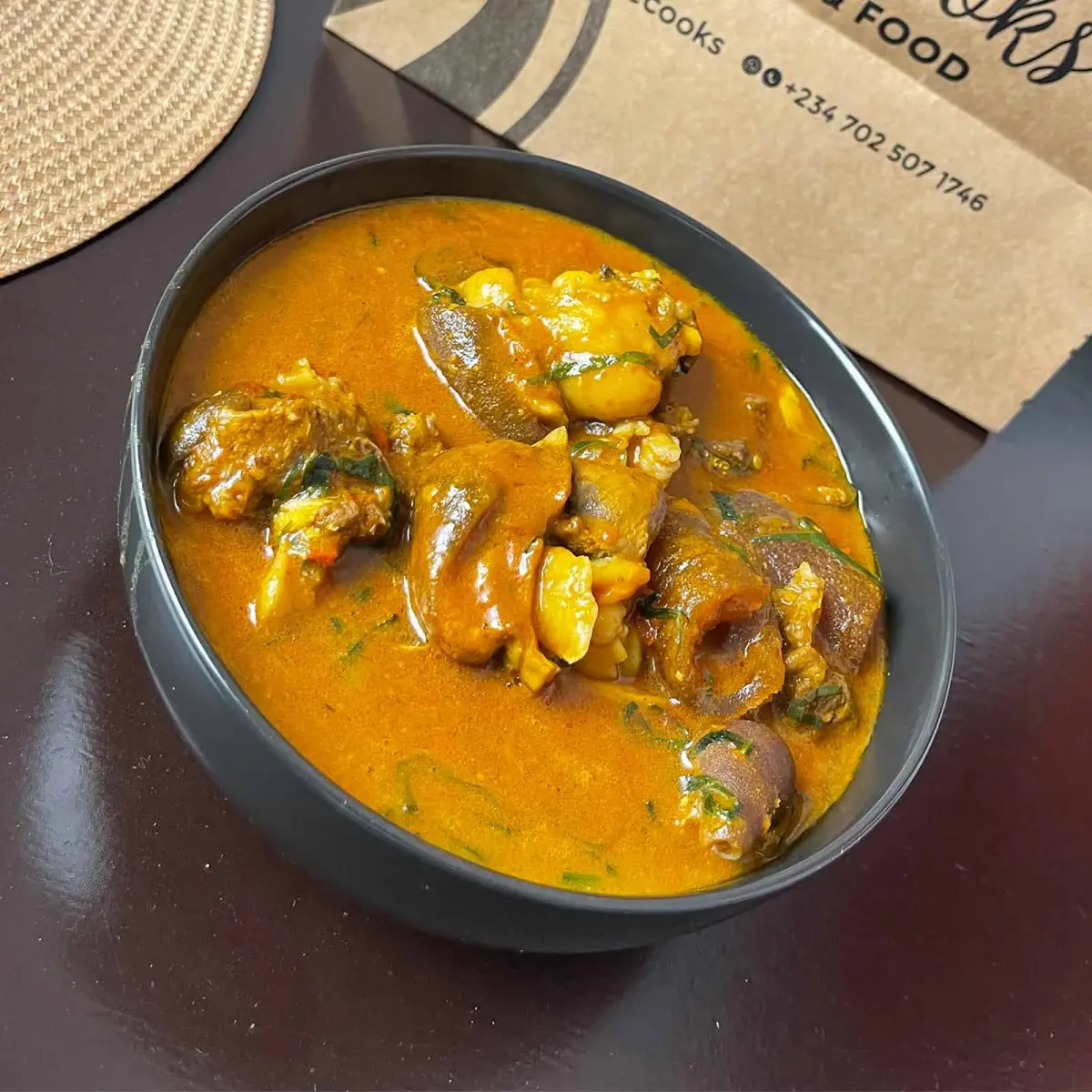
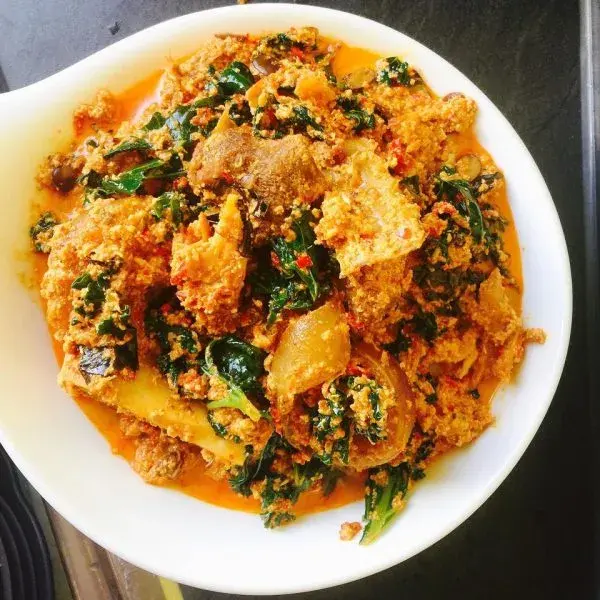
Uziza egusi soup, the peppery version
Uziza egusi soup is egusi made with the leaves of the uziza pepper vine, which add a sharp, peppery flavour that's quite different from chilli heat. This is the recipe that lets the melon paste set into lumps before the leaves go in. If you don't eat meat or fish, our vegan egusi soup keeps the ground melon seed, palm oil, greens and fermented seasoning and swaps the assorted meat for mushrooms.
Okro soup, if you love the draw
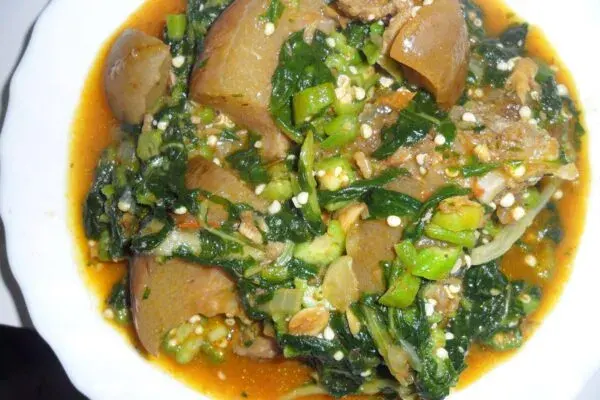
Okra gives a draw too, by a different route from ogbono, so our okro soup is the one to try if you want the pull without ogbono's dark colour. For the classic version of the grainy one, see our egusi soup recipe linked above.
Egusi and ogbono questions
Which has more protein, egusi or ogbono?
Egusi, by a long way. The NRC gives about 30 percent protein for egusi seed and about 8 percent for dika kernels. Both seeds are very high in oil.
Why is my ogbono soup not drawing?
It may be the seed. PROTA notes that kernels from different trees draw differently, so one bag can simply draw less than the last.
Is egusi the same as pumpkin seed?
Not quite, though the names get used loosely. Egusi mainly means the seeds of Citrullus lanatus and related gourds, not the pumpkin seeds sold as snacks.
What do you eat with egusi and ogbono soup?
Both go with fufu, pounded yam, eba and semolina. Egusi also works with rice.