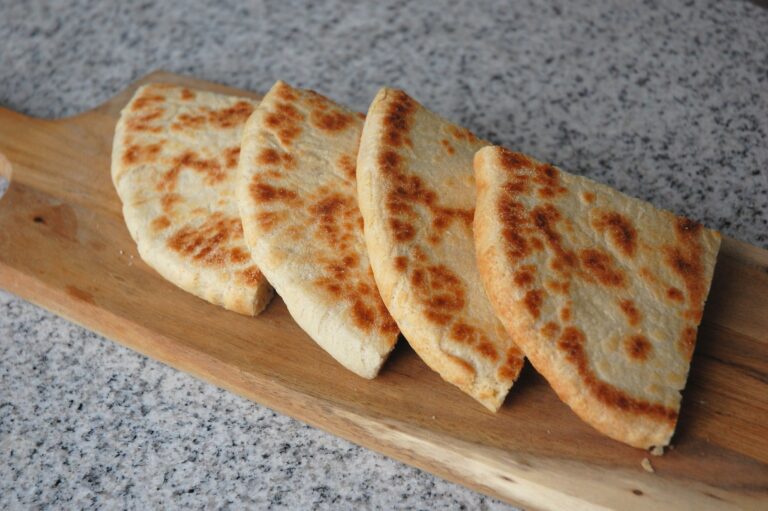
Kesra

Kesra is a traditional Algerian flatbread that is prepared from semolina and that is served both for savory and sweet meals.

As a holdover from French colonization, many Tunisians and Algerians today accompany their meals with baguettes (which can be found at any corner bakery).

Most households, however, also make their own traditional North African style bread, and if you ask us, they are much tastier. Today we’re featuring kesra, a round, soft, and chewy bread with cook marks.

Origin Of Kesra Bread

Kesra is an Algerian bread native to the Eastern part of the country that is semolina-based and has the shape of a round flatbread.

It is called khobz ftir in Algiers, kesra to the east and aghroum n’tajin in Kabylia. This recipe is very simple. Traditionally, it only consists of semolina, oil, salt, and water.

The history of bread starts with the Upper Paleolithic, in the middle of Prehistoric Times. Unleavened bread traces were found at several sites dating from 30,000 BC. Men ate grains in their raw form, without any preparation and prehistoric bread was a porridge made of raw wild grains crushed and wet with water.

One day, men decided to grill this porridge into patties. This was really by chance, around 3000 BC, when a bread dough was forgotten, that the Egyptians invented leavened bread where wheat grain is crushed in a mortar.

It is in large earthen vessels that the dough was kneaded with water from the Nile, rich in silt and natural ferments close to baker’s yeast. This dough was forgotten and as it rested a few hours, it fermented naturally.

It is the Greeks who perfected the technique of baking bread in the oven. Their daily bread called maza was a simple unfermented barley flatbread, and their festive bread called artos was wheat bread. Both were cooked on hot stones.

After a few years, the Greeks abandoned this cooking technique for one that used an oven with a frontal opening. In the second century AD, there were 72 varieties of bread in Athens!

Kesra Recipe

To make kesra, the Algerians use a cast iron pan or Dutch oven with embossed circle lines at the bottom. Without this special pan, it is possible to create lines with cookie cutters.

Kesra is an essential accompaniment to soups such as chorba or harira, bell pepper salads, but also butter, milk, and buttermilk.

For this recipe, only use fine and/or medium durum wheat flour.

Whether it is Moroccan, Tunisian, or Algerian, the cuisine of North Africa is very rich. Every country in the Maghreb has its specificity, the ingredients are often the same, but the skill is different from one country to another.

In Morocco, people call it harcha. It is the same recipe except for one detail: the Moroccans add a few pinches of baking powder to their bread but the taste and the texture are fairly similar.

Be sure to recreate this incredible traditional Algerian flatbread. Bon appétit!

Kesra

Our Tunisian table
Kesra bread is a traditional Algerian flatbread, popular throughout North Africa, that is made from semolina served both in savory and sweet meals.
Prep Time 30 minutes
Cook Time 20 minutes
Course bread
Cuisine Algerian, north african, Tunisian
Servings 8

Ingredients
  

  • 5 cups flour all purpose, unbleached
  • 1 tbs salt
  • ½ cup vegetable oil can use olive oil as well
  • 1 ⅓ cup water amount may vary
  • Sesame seeds or black seeds optional

Instructions
 

  • In a mixing bowl, add the flour, salt, and oil. Add in any seeds at this point if using them.
  • Note: There are several ways to mix bread dough. In a bowl/counter top by hand, in a standing mixer with a dough hook, or in a bread machine. If using a bread machine, just make sure to stop it and remove the dough before it begins the rising process.
  • Add the water and begin mixing until all the ingredients come together.
  • Note: Amount of water used may vary depending on humidity, elevation, etc. You want enough water so that the dough comes together and is soft and smooth but also firm enough to be easily formed into rounds and hold together nicely when it needs to be lifted/moved.
  • Knead the dough until it comes together in a smooth, homogeneous ball. Divide the ball into smaller, evenly-sized balls about the size of a fist. (This recipe should yield you about 5-6).
  • If the dough starts to feel dry at any point, smooth a little oil around the outside.
  • Lightly cover the balls of dough with a little oil to keep the outside from drying and allow to rest for at least 20 minutes.
  • In the meantime, preheat a flat, shallow pan over medium high heat and grease lightly with oil. A heavy pan such as one made of cast iron works really well. Try to find one with embossed rings to get the circle pattern on the bread.
  • Begin rolling out the first ball of dough. Use your hands or a rolling pin. Roll into an even circle about ¼ inch thick.
  • *Note: You’ll know the dough has adequately rested when it doesn’t spring back as you are flattening it. If it does spring back, set aside and let rest longer. Also, while working with one piece of the dough, make sure to flip and add oil as needed to the other balls of dough so they don’t dry out as you are working.
  • Carefully lift your bread and place on the pan. To do this gently flip half of the circle over and place your hand underneath, and use your other hand to help flip it back over and lift the other half--the goal is to have two hands flat underneath the bread. You can also use a wide, oiled spatula to help you.
  • Let cook for several minutes on each side. Use a toothpick to poke small holes in the bread to keep air bubbles from forming.
  • Remove from the pan and set on a cooling rack while to finish cooking the rest of the bread.
  • Serve while warm with your favorite food. It’s great with olive oil and harissa, or as a side to a delicious stew. (It can be served in whole discs or cut into triangles.)
Tried this recipe?Let us know how it was!

Tunisian Masfouf

If you’ve been in Tunisian households or restaurants, you might have come across the word “Masfouf”.

It is considered a Tunisian sweet dish that is usually served in traditional gatherings such as Ramadan. It is a sweet version of Tunisian Couscous.

It is soaked in sweet milk and mixed with nuts, raisins, dates, and bananas.

Masfouf Recipe

This important dish served during Ramadan masfouf is a sweet dish made from couscous, butter, and sugar and then adorned with pomegranates, dates, or even dried grapes.

For persons, who don’t like using sugar so much, you can the sugar to honey. If you don’t have honey, you can easily use sugar and it would taste as good, if not better.

To make you simply place the cooked couscous in a large bowl & mix in the salt.

De-stone the dates & roughly chop them. Chop the walnuts into relatively small pieces

Starting with 80g of each of the butter & the ghee, mix them into the couscous – the best way to do this is with your hands.

Rub the couscous between your fingertips & palms until the grains are evenly coated.

Set aside 2 tbsp of the dates & of the walnuts, mix the remainder into the couscous & mix well until evenly distributed.

Taste & add more butter or ghee if desired. Transfer the couscous to a large serving bowl & decorate with the reserved dates & walnuts.

Sprinkle a little sugar over the top of the couscous & serve. Allow people to add their sugar to taste.

Be Sure to Try These Other Authentic Tunisian Dishes!

Be sure to recreate this incredible delicacy. Bon appétit!

Tunisian Masfouf Recipe

t is considered a Tunisian sweet dish that is usually served in traditional gatherings such a Ramadan. It is basically a sweet version of Tunisian Couscous. It is soaked in sweet milk and mixed with nuts, raisins, dates, and bananas.
Course Main Course
Cuisine Tunisian
Servings 4

Ingredients
  

  • 3/4 cup Couscous
  • 1 tbsp olive oil
  • 2 tbsp water
  • 1 cup milk
  • 1 tbsp honey or sugar
  • 1/2 cup chopped dates
  • 2 tbsp yellow raisins
  • 1 tsp geranium water
  • 1/3 cup mixed nuts I used almonds and walnuts, but you can use whatever you have
  • 1 banana
  • 1 cup milk
  • 1/2 packet prepared custard powder
  • 1 tbsp honey or sugar
  • 1 tsp geranium water

Instructions
 

  • Start by prepping the Couscous with olive oil and water. Place in a steamer pot and let it steam for 30 min.
  • In the meantime, wash and chop the dates, the nuts, and let the raisins soak in geranium water mixed with water.
  • Heat the milk and add the honey until milk is hot and honey is melted.
  • Remove the Couscous from the stove and pour the milk on top, mix gently with a spoon or fork, and cover for 5 minute until the Couscous absorbs the liquid.
  • Add the dates, nuts, and raisins with the geranium water. Then add a chopped banana. Mix gently and set aside.
  • For the cream, mix the powdered custard packet with cold milk and sugar or honey. Put on the stove and mix until it thickens and you get a nice vanilla custard. Turn off the heat and add a splash of geranium water.
  • To assemble, scoop the Mesfouf into individuals bowls leaving space for the cream layer and another layer of masfouf. Decorate with sliced bananas and more nuts.
  • Enjoy it for breakfast or as a dessert. Saha!
Tried this recipe?Let us know how it was!

Lablabi (Tunisian Chickpea Soup)

Lablabi: the quintessential Tunisian fast food. Now don’t let the “fast food” label turn you off. It’s prepared quickly in casual cafeteria-style joints but the food is anything but unhealthy.

Lablabi is traditionally served quite simply, as it’s a dish meant to provide sustenance for cold days, using frugal ingredients.

What Is Lablabi?

Lablabi (or lablebi) is a Tunisian soup, traditionally eaten for breakfast. It is a hearty meal, containing chickpeas that are in a flavored thin soup, and it is served over pieces of stale bread and topped with a poached egg and a seasoned dressing.

Typically, it is garnished with tuna and olives and it is commonly found in restaurants throughout Tunisia.

Lablabi Recipe

Lablabi is a very simple soup to make. In its simplest form, lablabi is chickpea broth seasoned with spices. The garnishes are simple, yet complement the broth and add additional textures and flavors. Although traditionally eaten for breakfast, lablabi is now enjoyed throughout the day.

The key ingredients that give this soup its flavorful and spicy profile are dried chickpeas, cumin, caraway, and harissa. It is important when making this dish to use dried chickpeas rather than canned, although it would be faster and more convenient.

The simple broth that is created when cooking the chickpeas gives the dish its unique flavor. When making the soup with canned chickpeas, it is best to replace the water with stock to get a well-seasoned dish.

Chickpeas and their spiced broth provide a hearty dose of protein and stale bread is brought back to life in the liquid. Over the years, the dish has evolved into an “Instagram-worthy” bowl of various colorful toppings, all of which add to the deliciousness of lablebi.

Variant Of Lablabi

As with many traditional recipes, lots of variations of lablabi can be found across Tunisia and further afield. In Assyrian cuisine, there is also a chickpea-based dish called lablabi and in Iraq, lemon juice is mixed with chickpeas to create a similar dish.

The Turkish version, nohut corbasi, is very similar, but with the addition of lamb shank.

In Tunisia, variations to the dish include the additions of cilantro, parsley, capers, or scallions, and a traditional, but the rare version is made with cow trotters and is called hergma.

Best Serve For Lablebi

This Tunisian chickpea soup is flavored with garlic and cumin and served with perfectly stale bread to make this dish both scrumptious and filling.

You’ll find it garnished with eggs, parsley, and even scallions.

This is a great dish for enjoying the Tunisian winters, which, while still warm compared to much of the northern hemisphere, can get chilly (especially out in the desert).

Be Sure to Try These Other Authentic Tunisian Dishes!

Be sure to recreate this incredible delicacy. Bon appétit!

Recipe for Tunisian Lablebi

zwita
One of the most iconic street food dishes you can find in Tunisia, Lablabi is a cheap and nutritious quick fix that is sure to fill you up. It’s great for breakfast, lunch, dinner, or even after a long night out with friends. The dish likely came about some time during or after the 16th century when the Ottoman empire took control of the modern day Tunisian region. In fact, the term ‘lablabi’ is a Turkish word that means ‘a snack made with chickpeas’ which is quite accurate when you think about the nutritious purpose the dish served. Each bowl of this brothy chickpea soup is customized based on the added toppings (there are many!), therefore it’s going to look different depending on who it’s for. That’s why we haven’t listed ingredient quantities, you get to decide how much of what you want in your lablabi! As our mother always says…. ‘ainek mizenik’ (‘your eyes are your scale’).
Prep Time 10 minutes
Cook Time 26 minutes
Servings 2

Ingredients
  

  • 1 lbs dried chickpeas purchase and soak the day before
  • Olive Oil Canned Tuna
  • Harissa Paste
  • Add To Cart
  • Lemon Juice
  • Extra virgin olive oil
  • Salt
  • Black Pepper
  • Cumin
  • Stale bread purchase fresh bread the day before or rip a piece of bread to shreds into your bowl a few hours before serving so that they stale up by the time it’s time to eat

Instructions
 

  • Transfer dried chickpeas to a large bowl and fill with water and 1 tbsp salt. Cover with a towel and set aside.
  • After about 24 hours, check on the chickpeas. They should be fully soaked and there should be a thin layer of foam at the top. Rinse and transfer the chickpeas to another container. Keep the chickpeas that you want to use for the lablabi and freeze the rest in a ziplock bag.
  • Transfer the soaked chickpeas into a pot, fill with water and bring to a boil. Once it starts boiling, cover the pot with a lid and bring the heat down to low. Slow cook the chickpeas for 1 hour or until very soft (it may take longer)
  • Take a piece of stale bread and rip it into small pieces. These should go in a bowl that you will use for serving one portion of the lablabi..Note: If you prefer to skip the chickpea soaking and cooking process, you can use canned pre-cooked chickpeas instead and skip steps 1 through 4 and jump to step 5.
  • In a separate pot, boil an egg (or however many eggs you and your friends want - 1 to 2 eggs per portion is ideal in our opinion) for about 3 minutes until it is partially cooked and the yolk is slightly runny. You can also poach the eggs directly into the simmering pot then scoop the egg, broth, and chickpeas into your bowl.
  • Pour a desired amount of chickpeas and broth into the bowl with the stale bread pieces.
  • To the same bowl, add 1 to 2 egg(s), olive oil-preserved tuna, and a desired amount of true-to-origins harissa paste (mild, spicy, or smoky).
  • Add a desired amount of cumin, lemon juice, black pepper, salt, and extra virgin olive oil.
  • Mix altogether with two spoons.
  • Dig in while still hot and fresh!
Tried this recipe?Let us know how it was!

Tagine

0

Tajine, also known as a tagine, is a North African dish named after the earthenware pot in which it is prepared. It is also known as maraq or marqa.

Origin of Tajine

Tagine dates back to the reign of Harun al-Rashid, the fifth Abbasid Caliph. The concept of cooking in a tajine first appears in the famous One Thousand and One Nights, an Arabic-language story collection from the 9th century.

Variations of Tajine

Recipes vary from cuisine to cuisine and from lamb to beef to chicken to fish, and while some tagines include dried fruit and nuts, others include fresh herbs, olives, preserved lemons, and even eggs and sausage.

There is also a Berber tagine, which is distinguished by the artistic arrangement of the vegetables around the lamb.

Tajine dishes from Algeria and Morocco are slow-cooked savory stews made with sliced meat, poultry, or fish, as well as vegetables or fruit. There are also spices, nuts, and dried fruits. Ginger, cumin, turmeric, cinnamon, and saffron are common spices. Vegetable tajines contain paprika and chili.

What Tunisians call a “tajine” is not the same as other types of the dish. Tunisian tajine is similar to an Italian frittata or eggah.

How To Prepare Tagine

The cooking-pot and its traditional broth are mostly prepared in the Middle East and North Africa nowadays.

Tajine can be prepared in a variety of ways. Saman (clarified butter) is used to lubricate the surface in the original qidra style, and a puree of chopped onion is added for flavor and aroma. To enhance the flavors of muqawlli-style cooking, the ingredients are marinated in olive oil.

Tajine

Servings 0
Tried this recipe?Let us know how it was!


Ful Medames

0

Ful medames, also known as ful, is a fava bean stew flavored with olive oil, cumin, and optionally chopped parsley, garlic, onion, lemon juice, chili pepper, and other vegetable, herb, and spice ingredients.

Traditionally, ful medames is made and served in a large metal jug. It is a popular staple food in Egypt and is regarded as a national dish, particularly in the northern cities of Cairo and Gizah.

Ful Medames is basically a popular ingredient in many Arab, Middle Eastern, and North African dishes. It can be enjoyed at any time of day or night. It’s a creamy, fresh, and vibrant meal loaded with seasonings that pack a bold, tangy flavor into each bite, made with fava beans, ground cumin, garlic, and fresh lemon.

Variations of Ful Medames

  • Fuul is a breakfast staple in Somalia. It is frequently served with eggs, khubz/ceesh bread, or laxoox/canjeero, a traditional Somali flatbread. It is very similar to Egyptian, Sudanese, and Saudi versions of the dish, but it is usually spicier due to the use of the xawaash spice mixture by Somalis (cumin, coriander, sage, peppercorn, fenugreek, turmeric, ginger, cardamom, cloves, nutmeg, and saffron).
  • Ful is known as bissara in Morocco and is made of fava beans and split green peas (known locally as jabbana) boiled with garlic and served with cumin and seasoning. It is especially popular in the country’s north and is eaten during the cold winter months.
  • Ful is one of the few dishes in Ethiopia (and Eritrea) that is served with wheat flour bread rather than a pancake-like bread called injera. The beans are topped or mixed with an oil-berbere mixture.
  • In Malta, the beans are soaked in water overnight, cooked in oil with garlic and fresh or dried mint before being dressed with olive oil or vinegar before serving.
  • The dish has also made its way to Malaysia, specifically the state of Johore, and Singapore, where it has been adapted into the local recipe kacang pool, which uses ghee instead of oil and minced meat.

    Ful Medames

    Serious Eats
    Prep Time 10 minutes
    Cook Time 10 minutes
    Servings 2

    Equipment

    • Mortar and Pestle

    Ingredients
      

    • 3 cloves garlic
    • 1 teaspoon cumin seeds freshly toasted
    • Kosher salt
    • 2 15-ounce cans fava beans
    • 3 tablespoons tahini
    • 2 to 3 tablespoons lemon juice from 2 lemons or more to taste

    Instructions
     

    • Put garlic cloves, cumin seeds, and a pinch of salt in a mortar and pestle and crush until seeds are cracked and garlic is in small, flimsy chunks. If you don't have a mortar and pestle, mince garlic very fine.
    • Empty fava beans (with liquid) into a medium saucepan and combine with tahini and garlic paste. Cook over medium-high heat, stirring frequently, until liquid retains some brothiness but turns thick and sauce-like, about 5 minutes.
    • Add lemon juice and salt to taste. Mash one third of the beans with a potato masher to thicken if desired, then serve with toasted pita.
    Tried this recipe?Let us know how it was!


Mrouzia

0

Mrouzia, also known as M’rouzia, is a sweet and spicy Moroccan tagine that is traditionally made in the days following the Islamic holiday of Eid Al Adha or Eid Al Kabir.

During this season, lamb is most popular, but beef or goat meat can also be used. It can also be served for a family dinner or a special occasion meal, and it can be made a day or two ahead of time because the flavors improve with time.

Mrouzia Recipe

Mrouzia is one of the most important Moroccan dishes. It’s a sweet and salty meat tajine made with a ras el hanout spice blend, honey, cinnamon, and almonds. Tunisia also prepares it, but in a different way.

This tajine is a traditional dish of the Eid al-Adha Muslim festival in Morocco (Festival of Sacrifice). It is frequently made of lamb from animals sacrificed ritually during the festival.

Ingredients Used In Making Mrouzia

Ras El Hanout, a Moroccan spice blend, is a key ingredient in mrouzia. Saffron also contributes to the distinct flavor of mrouzia. In the days before refrigeration, the generous seasoning and honey served as preservatives. Fatty cuts of meat have traditionally been used for the same purpose.

How To Prepare Mrouzia

Wash, drain, and pat dry the meat ideally the night before, but at least several hours ahead of time. Combine the spices and rub evenly over the meat. Cover and chill until ready to cook.

You can also fry the almonds ahead of time rather than adding them directly to the sauce. Cover the fried almonds until they are completely cool and ready to use as a garnish.

This dish is best prepared a day ahead of time because it tastes twice as good the next day. You can serve it with rice, couscous, or bread.


The Spruce Eats
Prep Time 15 minutes
Cook Time 1 hour 30 minutes
Servings 0

Ingredients
  

  • 3 pounds lamb shoulder neck, or shanks, cut into 3-inch pieces
  • 2 teaspoons Ras el Hanout
  • 2 teaspoons ground ginger
  • 1 1/2 teaspoons salt
  • 1 teaspoon freshly ground black pepper
  • 1/2 teaspoon ground turmeric
  • 1/2 teaspoon saffron threads crumbled
  • 2 medium onions grated
  • 3 cloves garlic finely chopped
  • 1/2 cup unsalted butter
  • 2 small cinnamon sticks
  • 3 cups water
  • 1 1/2 cups sultana raisins
  • 1/2 cup honey or to taste
  • 1 teaspoon ground cinnamon
  • 1/2 cup blanched almonds

Instructions
 

  • Mix the seasoned meat in a heavy-bottomed pot with the onions, garlic, butter, and cinnamon sticks. Cover and cook over medium heat for 10 to 15 minutes, stirring occasionally to turn the meat as it browns. Add the 3 cups of water, cover, and bring to a simmer.
  • Cook for about 2 hours, or until the meat is tender. Add the raisins (drained), honey, and cinnamon. (If you're planning to cook the almonds in the sauce, add them now as well.) If necessary, add additional water to just cover the raisins.
  • Cover the pot and simmer for 20 to 30 minutes, until the raisins are plump and the sauce is reduced to a thick, syrup-like consistency.
Tried this recipe?Let us know how it was!

Tunisian Loubia (White Bean Stew)

Looking for a Super Bowl Sunday chili recipe? Why not try our recipe for Loubia (white bean stew).

It’s almost kind of the Tunisian/spicy version of chili and perfect for winter days.

What is Loubia?

Loubia or bean stew is a very popular dish in Tunisia and also in other North Africa Countries (Morocco, Algeria, and Libya ) made with white beans, tomato sauce, and different spices.

This classic, flavorful dish is much loved in Moroccan homes, where the beans and zesty tomato-based sauce are traditionally scooped up with bread.

It’s a comfort food that stands alone as an entrée, but it also works well as a side, particularly to fried fish dinners.

Loubia Recipe

The same dish can be prepared in many ways. Some cook it with olives and some just add parsley or coriander on top. Everyone can add his personal touch to it.

Make the stewed white beans as spicy as you like, but don’t be shy on the seasoning, as you’ll want enough of those spices to yield a characteristically robust sauce.

Olive oil provides another key flavor, along with fresh tomatoes, onions, garlic, and herbs. Take the heat up a notch by adding a chili pepper or cayenne, and consider adding beef or lamb.

Please note that this recipe calls for dried beans, which do require overnight soaking in ample water. Plan ahead so that you remember to soak the beans the night before cooking.

The cooking time is for preparation in a pressure cooker, which is regarded as essential cookware in Moroccan kitchens. Allow double this time if you’ll be stewing the beans in a conventional pot.

Be Sure to Try These Other Authentic Tunisian Dishes!

Be sure to recreate this incredible delicacy. Bon appétit!

Tunisian Loubia recipe

Carita
Loubia or bean stew is a very popular dish in North Africa (Tunisia, Morocco, Algeria and Libya ) made with white beans, tomato sauce and different spices.
Prep Time 15 minutes
Cook Time 1 hour 30 minutes
Course Soup
Cuisine north african, Tunisian
Servings 4
Calories 174 kcal

Ingredients
  

  • About 250 grams of dried white beans already put in water a night before
  • Some oil
  • 1 Tomato chopped into pieces
  • 1 Red chili
  • 2 Onions
  • 1 Bouillon cube with chicken flavor
  • 2 and 1/2 small spoon of Ras El Hanout
  • 1 Small pinch of salt
  • 1 Small spoon chopped garlic
  • 2 Small spoons of paprika
  • 2 and 1/2 Small spoon of turmeric
  • 1 Bay leaf
  • 6 pieces of chicken (type of cut based on your preference)
  • 1 small box of tomato puree
  • 1 liter of water

Instructions
 

  • First I chop the garlic, onions and tomatoes. Then I put oil in the saucepan and fry the chicken a little.
  • Afterwards I add the tomatoes and onion and let it fry with the chicken.
  • Then I add all the spices and the tomato puree and stir everything well together while it cooks. After that I put the beans and add water.
  • Add the bay leaf and the chili (that I have taken the seeds from) as well as the bouillon cubes.Let this cook on low heat until the chicken is tender.
  • Then I take the chicken out, set it aside and let the sauce continue to boil until the beans are all done.Then I put the chicken in the pot again to heat it.
  • Serve with bread.

Nutrition

Calories: 174kcal
Tried this recipe?Let us know how it was!

Tunisian Mloukhia

This Mloukhia dish has traveled from India to the Middle East and North Africa where it became national dishes.

In Egypt, it is prepared with its leaves, while in Tunisia it is cooked in a very special way as the leaves are not used as such but rather transformed into a powder used in this generous stew.

If you want to taste it and would like to cook it then read further for a delicious Tunisian Molokhia easy recipe!

What is Mloukhia?

Mloukhia (Arabic: الملوخية), which is also spelled mlokhia, melukhia, molokhia, molokheya, or mlukhiya is a traditional dish of Tunisia and more widely of the Maghreb and the Middle East.

It is a beef or lamb stew that is cooked in a very rich sauce made from dried Jew’s mallow powder with olive oil or sunflower oil.

In Tunisia, traditionally, mloukhia is prepared with beef, sometimes accompanied by pieces of tripe, and cooked on the low heat of a kanoun (charcoal), for at least eight hours. It is also often served with merguez.

The name mloukhia comes from the Arabic word Malek or malik, which means “king”. It is for this reason that in Tunisia, this dish is called “the delicacy of the king”.

Benefits of Mloukhia

The mloukhia powder is the spice richest in magnesium with 6.9 mg of magnesium per 100 grams. It is rich in vitamins A and B, mineral salts (sodium, potassium, and iron), fiber, and carbohydrates.

Below are some of the health benefits;

  • It stimulates the stomach, strengthens immunity, and protects the mucous membranes, the digestive system, and the spleen.
  • It has calming benefits and acts as an analgesic. I
  • t protects even the heart and the eyes. It treats toothache very effectively.
  • It also fights anemia, preserves brain cells, delays osteoporosis, and it can also treat infertility problems.
  • It is recommended for people suffering from anemia to consume mloukhia because it effectively fights against blood deficiency.

Mloukhia Recipe

This Tunisian dish is a slow-cooking stew that can take up to 6 or 7 hours. It is not uncommon that the paste is made the evening before and the stew is finished over the next day but you don’t have to do this if you want to cook it during the day.

Jew’s mallow leaves are dried and reduced to a green powder, that is easy to keep. This powder, whose delicate cooking gives this dish all its flavor, requires several hours of cooking over low heat.

First fried in olive oil or sunflower oil, it is then diluted with hot water and then requires a certain strength for these two components, oil, and water, to mingle into a greenish liquid that will become dark brown, even black, after a long-simmering. Its taste is halfway between sorrel and spinach.

Cooked especially during the holidays in Tunisia, Muslims consume it on the day of Ras-el-am, the new year of the Hegira so that the year is placed under the sign of its green color, promising hope.

Indeed, thanks to the green color of the powder which is the color of Islam, hope, and therefore good fortune, the mloukhia is prepared so that the new year is “green”, or prosperous. In many parts of Tunisia, it is also prepared at the end of mourning and the first day of Eid-el-Fitr.

The Jews of Nabeul, Tunisia, have kept the same traditions and now cook the mloukhia for Rosh Hashanah, the Jewish New Year.

Be Sure to Try These Other Authentic Tunisian Dishes!

I will warn you, there is no middle way with this dish, you either love it or not. Which side are you on? Let us know! Enjoy!

Mloukhia

Munya
Mloukhia is a traditional Tunisian stew prepared with dried Jew's mallow and beef, which is usually eaten with Tunisian Italian bread.
Prep Time 6 hours
Cook Time 30 minutes
Course Main Course
Cuisine Tunisian
Servings 6

Ingredients
  

  • 1 packet of mloukhia (100g)neutral cooking oil
  • 3-4 bay leaves
  • 1.25 lamb shoulder chop (bone-in)
  • 2 tablespoons tabil
  • 1 tsp caraway
  • 1-2 tbsp homemade harissa (harissa arabi) and/or 1 tbsp tomato paste
  • 3 garlic cloves

Instructions
 

  • Take the packet of mloukhia and place the contents in a large cooking pot on the stove. Add about 2 cups of neutral cooking oil. Mix and stir to get the lumps out. Then add about 2 liters of hot/boiling water but leave room at the top of the pot. Bring to a boil on med/high heat. Add bay leaves, then turn down pot to a low simmer and cover for about 2 hours.

Meanwhile

  • Prepare the meat. (You can also do this the night before.) In a small bowl, mix tabil, caraway, harissa/tomato paste, ground pepper, and a pinch of salt. Then mash the garlic cloves to a paste in a mortar and pestle (or finely chop with a knife) and add to the other spices. Place lamb in a larger bowl and rub the spice mixture into the meat with a spoon. Cover and refrigerate (you can prepare this the day ahead and refrigerate overnight).
  • After two hours, turn mloukhia pot back up and let it boil, then add the lamb in. Let it boil for a bit then turn down heat and let it simmer on low (for ~1.5-2 hours).
  • At this point, the meat should be tender and starting to fall off the bone. The minute the water hits the mloukhia, it has a slimy consistency. The only way to get rid of this is to let it cook for a long time. (Total cooking time: ~3.5-5 hours) Serve with baguette and enjoy!
Tried this recipe?Let us know how it was!

Tunisian Fricassé (Sandwich)

One of the ways to truly understand what Tunisian flavors are all about is to give a HUGE bite into a great Tunisian Fricassee roll.

Tunisian Fricassé is a sort of bread that is oval-shaped and fried. It is usually filled with Tuna, boiled eggs, potatoes, olives, Harissa, cappers, etc.

You can eat it for lunch, serve for a brunch and take it out for a picnic. For the recipe, read on!

What is Tunisian Fricassé?

“Fricassee” means something different in many culinary languages; in Tunisia and its diaspora communities, the term refers to these satisfying sandwiches composed of tuna, boiled egg, potato, harissa, and olives, served in a warmed bun.

This little savory fried brioche sandwich is from the pure Tunisian culinary tradition.

Balls of dough, traditionally of oval shape, are first fried then split in two and stuffed with potato, harissa, tuna, black olives, hard-boiled egg, and slate méchouia. Sometimes capers and/or preserved lemon (citron beldi) are added.

Slata méchouia (سلاطة مشوية), is the quintessential Tunisian salad that is also popular in Algeria (hmiss or felfla), literally “grilled salad and”, is a real ode to Tunisian flavors.

It is an integral part of all the Tunisian meals, whether appetizers or sandwiches, much like mayonnaise for France, pol sambol in Sri Lanka, or simply soy sauce in Asia.

Origin Of Tunisian Fricassé

There is a popular belief that it is a Tunisian grandmother of Jewish origin, who would have invented the fricassé in the 19th century. She was to receive many guests at her table who dropped out at the last moment.

As she had fried a lot of donuts for dessert, not knowing what to do, she stuffed them with what she had on hand. These little bites were all the rage with her family and neighbors: the fricassé was born.

Note that a Tunisian fricassé has absolutely nothing to do with a French fricassée.

The French version is a preparation of pieces of chicken in a white sauce. Beef, veal, and lamb can also be prepared as a Fricassee. Some regional varieties are based on fish, shellfish, as well as pork or wild boar.

The French version is generally thickened with cream and topped with small glazed onions and lightly cooked mushrooms.

Tunisian Fricassé Recipe

There are two ways to shape the Tunisian Fricassee. You can form small balls of dough, then flatten each ball into a thin disc. Gently stretch the disc of dough to give it an oval shape.

Another way to shape the Fricassee is to flatten the dough with a rolling pin, then use a round cookie cutter to cut out small discs of dough. Gently stretch each disc to give it an oval shape.

Composed of tomatoes and peppers that are coarsely chopped after being grilled, the salad is seasoned with salt, black pepper, chopped garlic, and olive oil.

Some will add ground coriander or caraway and others will add grilled and chopped aubergine. Those who love spicy food will include hot peppers and/or season the slata méchouïa with harissa.

The vegetables in slata mechouia are traditionally grilled on the embers of a kanoun, a kind of brazier on which people make a lot of things, in Tunisia as well as the rest of North Africa.

Be sure to recreate this incredible traditional dish from Tunisia. Bon appétit!

Fricassé

Steven's meanderings
Fricassé is a delicious small savory fried brioche of Tunisian origin, that is filled with potato, harissa, tuna, black olives, hard-boiled egg and slata mechouia.
Prep Time 1 hour
Cook Time 20 minutes
Course Appetizer, bread, Snacks
Cuisine Tunisian
Servings 6

Ingredients
  

  • 10 grams active dried yeast
  • 1/2 cup tepid water
  • 400 grams flour
  • 1 egg
  • 3 tablespoons of oil
  • a bit of salt
  • Oil for frying

Instructions
 

  • Stir together yeast, water and 1 tablespoon of flour in a bowl.
  • Leave until bubbly (about 10 minutes)
  • Add in all other ingredients
  • Mix together for five minutes
  • Shape into small buns
  • Leave to rise until doubled in size
  • Deep fry in hot oil until golden
Tried this recipe?Let us know how it was!

Chorba (Shorba)

Chorba is a staple of Tunisian Ramadan meals, though you can find this delicious soup available year-round. You will typically find it made with lamb or beef, but there are also popular fish varieties (especially on the coast).

Spiced with Harissa and made from Bulgar wheat, the base of the soup is stewed tomatoes. In a word, yum!

While the dish is important to Tunisian culture, it’s popular all over the area formerly controlled by the Ottoman Empire, from Morocco to Bulgaria and Croatia!

Chorba (Shorba) Recipe

This soup called Chorba or Shorba has a wonderful flavor and could be served as a light lunch by itself or as a starter.

It showcases the many flavors of the area using the spice ras el hanout ( a typical north African spice mix) along with preserved lemons, and cilantro. Make plenty as it freezes beautifully!

This delicious, satisfying soup is an absolute staple on every Tunisian dinner table for all 30 nights of Ramadan.

It is well Lovewell-lovedfavoriteed any time of year but especially during this month of fasting as it is not only a delicious meal with hearty ingredients such as frik and meat, but it is also water-based so the idea is you are quenching both your hunger and thirst with one dish.

There are of course usually other dishes to go along with shorba, and we look forward to sharing some of those with you soon! Happy fasting!

RECIPE FOR TUNISIAN SHORBA

Prepared using beef, onions and tomatoes, potatoes, carrots, parsley, tomato paste, chickpeas, and an array of spices, this dish is sure to become a household favourite. It’s a simple dish that will sway everyone’s heart as soon as they take a bite. Serve this during Ramadan and get ready to be showered with loads of compliments on your culinary skills. 
Prep Time 20 minutes
Cook Time 45 minutes
Course Soup
Cuisine Algerian, Tunisian
Servings 4

Ingredients
  

  • 1lb meat or chicken cut up into small pieces
  • 3-4 tbsp vegetable oil
  • 5-6 gloves garlic
  • 2 tbs ras el hanout spice
  • 1/2 of a large or one small onion chopped 
  • 1 tsp salt 
  • 1/2 tsp black pepper
  • 1 tbsp paprika
  • 1/8-1/4 tsp cayenne
  • 1 cup frik (or 'freekeh', green wheat)
  • 1/2 cup celery chopped
  • 1/2 cup cilantro chopped
  • One 6 oz can tomato paste
  • 1 tsp dry mint
  • 1/2 cup chickpeas  (optional)
  • Water (amount will vary, have a pot or kettle of hot water ready during cooking)

Instructions
 

  • With a mortar and pestle, mash together the garlic and ras el hanout spices.
  • In a large soup pot, add enough oil to fully cover the bottom and turn the heat on between medium and medium high.
  • Add in the garlic and spice mixture, onion, salt, black pepper, paprika, cayenne pepper, tomato paste and saute for a few minutes until it all comes together and is fragrant.
  • Add your meat or chicken and continue to saute a few more minutes. You may need to add a little water at this point to keep the meat or chicken from sticking or burning.
  • Add enough water to fill your pot about 3/4 of the way, or about the amount of finished soup you want to have.
  • *Note: If you're not sure, add a little less than you might think because you can add as it cooks if it starts to look to thick or reduce too much.
  • Add the frik and celery, reduce the heat to low and cook for approximately one hour or until meat is tender and the soup has thickened  slightly.
  • Optional: if desired, add chickpeas to the soup. If using canned/cooked chickpeas, add towards the end of cooking just to heat through. If using dried chickpeas, add them at the same time as the meat.
  • To finish, add the cilantro and  mint and serve with bread. Enjoy
Tried this recipe?Let us know how it was!

QUICK RECIPES