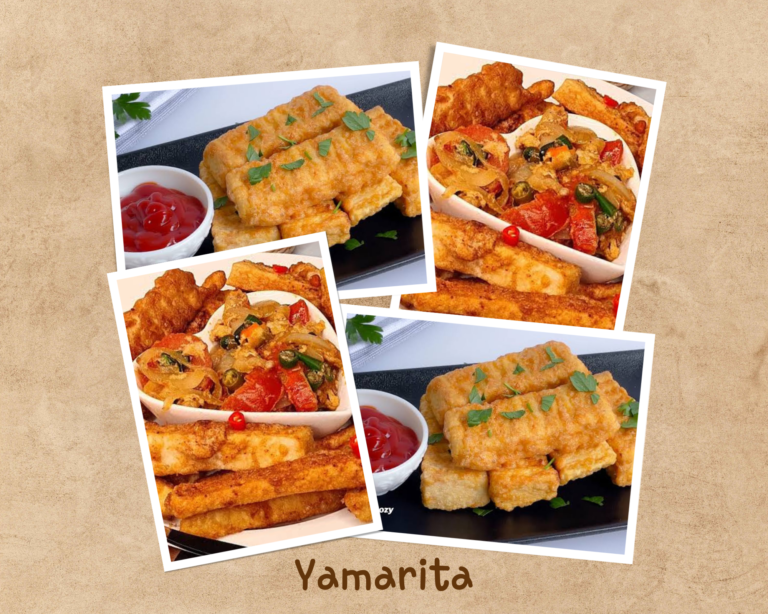
2 large yamspeeled and cut into thick rectangular strips
2 cups all-purpose flour
1 teaspoon paprika
1 teaspoon onion powder
1 teaspoon thyme
Salt and pepper to taste
2 eggs, beaten
Vegetable oil, for frying
Instructions
In a bowl, mix together the flour, paprika, garlic powder, onion powder, thyme, salt, and pepper. This is your batter mix.
1 teaspoon garlic powder , 2 cups all-purpose flour, 1 teaspoon paprika, 1 teaspoon onion powder, 1 teaspoon thyme, Salt and pepper to taste
Heat vegetable oil in a deep fryer or a deep pot to about 350°F (175°C).
Vegetable oil, for frying
Dip each yam strip into the beaten eggs, making sure it's well coated.
Coat the egg-dipped yam strip with the batter mix, ensuring it's evenly covered
2 large yams, 2 eggs, beaten
Carefully place the coated yam strip into the hot oil. You can fry a few at a time, depending on the size of your fryer or pot. Fry until golden brown and crispy, about 4-5 minutes per side
Use a slotted spoon to remove the fried yamarita from the oil and place them on a plate lined with paper towels to drain excess oil.
Repeat the process with the remaining yam strips.
Serve the yamarita hot, with your choice of dipping sauce or accompaniment. Tomato sauce, ketchup, or a spicy pepper sauce are popular options
Enjoy your crispy and flavorful yamarita!
Notes
Note: Yamarita is often served as a snack or appetizer, and you can adjust the spices and seasonings to your taste. Make sure the yam strips are thick enough to hold their shape during frying.Remember to exercise caution while working with hot oil, and be sure to follow proper safety guidelines.
Step into a world of delectable delights and outdoor adventures with our quick and easy picnic food ideas! Welcome to a realm where flavors mingle, and laughter fills the air. Uncover our picnic food ideas that will transform your outdoor feasts into unforgettable experiences. From savory bites to refreshing sips, let your taste buds embark on a journey that combines nature’s beauty with culinary excellence. Join us as we unveil a symphony of tastes that will make your next picnic a truly extraordinary affair.
Picnic food ideas
Picnic ideas featuring some African snacks:
Safari Spread Picnic Food Ideas
North African Delights: Enjoy hummus with pita bread, Moroccan olives, and peri-peri spiced nuts for a taste of North African cuisine.
South African Braai: Include boerewors (sausage), chakalaka (spicy vegetable relish), and mealie (corn) bread for an authentic South African barbecue experience.
East African Fusion: Combine injera (spongy bread) with Ethiopian lentil sambusas and Ugandan groundnut sauce for a unique blend of East African flavors.
West African treats: Try chin chin (sweet fried dough), kelewele (spicy fried plantains), and groundnut soup for a satisfying West African snacking adventure.
Classic Sandwiches: Prepare a variety of sandwiches like turkey and avocado, ham and cheese, or veggie wraps for easy and filling options
Fruit Kabobs: Skewer fresh fruits like strawberries, melon, and grapes for a colorful and refreshing treat.
Cheese Platter: Create a cheese and charcuterie platter with an assortment of cheeses, crackers , and cured meats.
Hummus and Veggies: Pair hummus with carrot sticks, cucumber slices, and bell pepper strips for a healthy and tasty snack.
Chicken Salad: Bring along pre-made chicken salad along with some whole wheat crackers or mini croissants.
Pasta Salad: Prepare a pasta salad with veggies, olives, and a flavorful dressing for a satisfying side dish.
Trail Mix: Make your own trail mix with nuts, dried fruits, chocolate chips, and pretzels.
Caprese Skewers: Thread cherry tomatoes, fresh mozzarella, and basil leaves onto skewers, drizzle with balsamic glaze.
Quiche Slices: Enjoy portable quiche slices, both savory and vegetarian options, for a delightful picnic meal.
Samosas: Savory pastries filled with spiced meats or vegetables, common in various African cuisines.
Chin Chin: Sweet and crunchy fried dough cubes, popular in West Africa.
Plantain Chips: Thin slices of fried or baked plantains, offering a delightful mix of sweet and savory flavors.
Peanut Puffs: Light and airy snacks made from peanuts, often seasoned with spices.
Mandazi: Fried doughnuts or fritters, enjoyed in East African countries.
Maize/Corn Nuts: Roasted or fried kernels of maize or corn, providing a satisfying crunch.
Roosterkoek: South African bread rolls, often filled with cheese, meats, or spreads.
Kachumbari Salad: A refreshing mix of diced tomatoes, onions, cilantro, and sometimes avocado, served as a light snack.
Akara: Deep-fried bean cakes made from black-eyed peas, commonly found in West African cuisine.
Chilled Drinks
Pack refreshing drinks to keep you feeling fresh throughout your picnic, here are some ideas:
Hibiscus Cooler (Bissap): A refreshing and tangy drink made from hibiscus flowers, sweetened with sugar or honey, and often spiced with ginger or cloves.
Rooibos Iced Tea: Brewed from the leaves of the South African rooibos plant, this caffeine-free tea is delicious when chilled and can be sweetened with a touch of honey.
Palm Wine: A traditional alcoholic beverage made from the sap of palm trees, offering a unique and culturally rich drink option.
Tamarind Juice: A sweet and slightly tart drink made from tamarind pods, often served cold and garnished with mint leaves.
Ginger Beer: A spicy and fizzy non-alcoholic beverage made from fresh ginger, sugar, and sometimes lemon or lime juice.
These snacks offer a variety of flavors and textures, perfect for a memorable African-inspired picnic and the drinks will add a flavorful and cultural touch to your picnic experience. Enjoy!
Grilled shrimp is a delicious seafood dish made by cooking seasoned shrimp on a grill or barbecue. It’s often marinated in flavorful ingredients before grilling to enhance its taste.
Grilled Shrimp
How To Prepare Grilled Shrimp
Here is a basic recipe for preparing grilled shrimp:
– Optional: herbs and spices like parsley, paprika, or red pepper flakes for extra flavor
Method Of Preparing Grilled Shrimp
In a bowl, mix olive oil, lemon juice, minced garlic, salt, pepper, and any optional herbs or spices you like. Add the peeled and deveined shrimp to the bowl and toss to coat them evenly in the marinade. Let them marinate for about 15-30 minutes in the refrigerator.
Preheat the grill to medium-high heat. Make sure the grates are clean and lightly oiled to prevent sticking. Thread the marinated shrimp onto skewers, or use a grill basket to keep them from falling through the grates.
Place the shrimp on the grill and cook for about 2-3 minutes per side, or until they turn pink and opaque. Be careful not to overcook them, as they can become tough and rubbery. Once cooked, remove the shrimp from the grill and serve immediately with your favorite side dishes.
Grilled Shrimp
Remember, grilling times may vary depending on the size of the shrimp and the heat of the grill, so keep an eye on them to ensure they cook just right. Feel free to customize the marinade and seasoning according to your taste preferences.
How To Marinate Your Shrimp Before Grilling
Marinating shrimp before grilling can infuse them with delicious flavors. Here’s how to marinate grilled shrimp:
Ingredients for Marinade:
– Olive oil
– Lemon juice
– Minced garlic
– Salt and pepper
– Optional: herbs (like parsley, Thyme (Thymus vulgaris), or oregano) and spices (such as Paprika, cayenne, or red pepper flakes) for added flavor
Steps To Marinate Shrimp
In a bowl, whisk together olive oil, lemon juice, minced garlic, salt, pepper, and any optional herbs and spices you desire.
This will create your marinade. Prepare the shrimp by peeling and deveining them, if necessary. You can leave the tails on or off, depending on your preference.
Place the shrimp in a resealable plastic bag or a shallow dish. Pour the marinade over the shrimp, making sure they are well-coated on all sides.
Seal the bag or cover the dish with plastic wrap. Place it in the refrigerator to marinate for about 15-30 minutes. Avoid marinating for too long, as the acid in the marinade can start to “cook” the shrimp and change their texture.
If using wooden skewers, soak them in water for about 30 minutes to prevent them from burning on the grill. Once the shrimp have marinated, preheat your grill to medium-high heat.
Thread the marinated shrimp onto skewers or use a grill basket to prevent them from falling through the grates. Grill the shrimp for about 2-3 minutes per side, or until they turn pink and opaque. Baste the shrimp with some of the leftover marinade while grilling for extra flavor.
Remove the shrimp from the grill and serve them immediately with your favorite sides.
Enjoy your marinated and grilled shrimp! Feel free to adjust the ingredients in the marinade to suit your taste preferences.
How To Skewer You Shrimp
Skewering shrimp is a simple process that helps keep them secure on the grill and ensures even cooking. Here’s how to skewer shrimp:
Choose Skewers: Use metal skewers or wooden skewers that have been soaked in water for about 30 minutes. Soaking wooden skewers helps prevent them from burning on the grill.
Prep the Shrimp: Peel and devein the shrimp if needed, leaving the tails on or off according to your preference. Rinse the shrimp and pat them dry with paper towels.
Thread the Shrimp: Hold a shrimp with one hand and insert the skewer through the tail end, pushing it all the way through the body of the shrimp. Repeat with additional shrimp, leaving a small gap between each shrimp to ensure even cooking.
Space Them Out: Leave a bit of space at the end of the skewer for easy handling and turning on the grill.
Optional: Add Veggies: You can also add pieces of vegetables, such as bell peppers, onions, or cherry tomatoes, between the shrimp for added flavor and variety.
Marinate: If you’re marinating the shrimp, do so before skewering. Make sure the shrimp are well-coated with the marinade before threading them onto the skewers.
Grilling: Preheat your grill to medium-high heat. Place the skewered shrimp on the grill grates, and cook for about 2-3 minutes per side, or until the shrimp are pink and opaque.
Remember to baste the shrimp with any leftover marinade while grilling if desired.
Serve: Once the shrimp are cooked, carefully remove them from the grill. You can slide the cooked shrimp off the skewers onto a serving platter, or serve them directly on the skewers for a rustic presentation.
Enjoy: Serve the grilled shrimp immediately with your favorite side dishes and enjoy!
Grilled Shrimp skewers
Note: Skewering shrimp not only makes them easier to handle on the grill but also adds a fun and appetizing touch to your meal.
Frequently asked questions about grilled shrimp
How long should I grill shrimp?
Shrimp typically cook quickly and only need about 2-3 minutes per side on a preheated grill. They should turn opaque and slightly charred when done.
Should I peel the shrimp before grilling?
It’s generally recommended to peel and devein the shrimp before grilling for better flavor absorption and easier eating. Leave the tails on for a convenient handle.
What marinades work well for grilled shrimp?
Marinades like garlic, lemon, olive oil, and herbs work great for grilled shrimp. Asian-inspired options with soy sauce, ginger, and sesame oil are also popular.
Do I need to skewer the shrimp?
Skewering shrimp can make them easier to handle on the grill and prevent them from falling through the grates. If using wooden skewers, soak them in water for 30 minutes before grilling to prevent burning.
How can I prevent the shrimp from sticking to the grill?
Make sure the grill grates are clean and well-oiled before cooking. Brushing the shrimp with a light layer of oil or using a non-stick spray can also help prevent sticking.
Can I grill frozen shrimp?
Yes, you can grill frozen shrimp. However, it’s recommended to thaw them first for even cooking. If grilling frozen shrimp, adjust the cooking time accordingly.
What’s the best temperature for grilling shrimp?
Preheat your grill to medium-high heat, around 350-400°F (175-200°C), for optimal results.
How do I know when the shrimp are cooked?
Shrimp are cooked when they turn pink and opaque. Overcooked shrimp can become rubbery, so be attentive to avoid overcooking.
What sides go well with grilled shrimp?
Grilled vegetables, rice, pasta, or a fresh salad are excellent side options to complement the flavors of grilled shrimp.
Can I use a grill pan or indoor grill for shrimp?
Yes, you can use a grill pan or an indoor grill to cook shrimp if you don’t have access to an outdoor grill. The cooking times and techniques are similar.
Remember, these answers are general guidelines, and individual preferences may vary. Enjoy your grilled shrimp cooking adventure!
Ghana Jollof Rice is a perfectly cooked dish with specifically Ghanaian spices and flavors. It is known for its rich taste and distinct red-orange color, Ghana Jollof rice is very popular at social gatherings and celebrations.
What is Jollof Rice?
Jollof rice is a beloved and spicy dish that holds a special place in West African cuisine, especially during parties and festive seasons. It’s popular across the region, with Ghana, Nigeria, and Senegal all claiming to make the best version. The ongoing debate about which country’s Jollof is the spiciest and tastiest has become a cultural contest.
As for where I stand in this “Jollof war”? I’ll share my thoughts shortly.
Image Credit: Facebook
What is the Difference Between Nigerian and Ghanaian Jollof Rice? (Ghana Jollof vs. Nigeria Jollof)
The origins of Jollof rice are deeply rooted in both Ghana and Nigeria, but the dish’s true birthplace is still a matter of passionate debate. While many believe that the Senegambia region is where this flavorful dish first emerged, others argue for its origins in the ancient states of Nigeria.
Despite their shared roots, Ghanaian and Nigerian Jollof each bring their own unique twist to the table. Ghanaian Jollof is often cooked with a rich tomato base, infused with aromatic spices that result in a subtly tangy and well-balanced flavor. Nigerians, however, take a bolder approach—much like their vibrant culture—creating a version with a fiery mix of peppers and a distinct smokiness, especially in their famous party Jollof. This smokiness has become a signature of Nigerian Jollof.
When it comes to the choice of rice, Ghanaians typically opt for basmati, while Nigerians swear by long-grain parboiled rice.
As for where I stand in this debate? I don’t take sides—each region’s Jollof has its own unique taste and spice that I love.
Tips and Variations for Ghana Jollof Rice
To achieve the perfect Jollof rice, the key is knowing the balance of flavors and getting the rice texture just right. Cook the rice over medium heat, and resist the urge to stir too often; this will help prevent it from becoming mushy or soggy.
How to Make Ghana Jollof Rice
See recipe below.
Ghana Jollof Rice
Ghanaian Jollof Rice is a perfectly cooked dish with tantalizing Ghanaian spices and flavors.
Rinse the basmati rice thoroughly in cold water until the water runs clear.
4 cups basmati rice
In a large pot, heat the vegetable oil over medium heat. Add the chopped onions and sauté until they become translucent and slightly golden.
3 tablespoon Vegetable oil
Add the chopped tomatoes and habanero pepper blend smoothly
5 medium tomatoes (chopped)
Stir in the tomato paste, curry powder, garlic powder, ground ginger, crushed chicken bouillon cubes, and salt. Allow the mixture to cook for about 5 minutes, ensuring the spices are well mixed.
1 medium can tomato paste, 2 chicken bouillon cubes (crushed)
Add the rice pot, stirring gently to coat the rice with the flavorful tomato mixture.
Pour in enough water to cover the rice (about 5 cups).
Bring the pot to a boil, then reduce the heat to low, cover with a tight-fitting lid, and let it simmer for about 20-25 minutes or until the rice is tender and the liquid is absorbed.
Add the bay leaves and mixed vegetables. Give it a gentle stir to distribute the vegetables evenly.
1 cup mixed vegetables (carrot, bell peppers), 3 bay leaves
Once the rice is cooked, fluff it up gently with a fork, allowing the steam to escape.
Your scrumptious Ghanaian Jollof rice is now ready to be served! Enjoy it as a delightful main course or pair it with your favorite grilled or fried chicken, fish, or boiled eggs.
Notes
Note: Avoid stirring the rice while cooking to prevent it from becoming sticky.Don’t add too much water, you can add more water little by little as it cooks.
Indulge in the rich and diverse culinary Heritage of South African desserts, with these 4 delectable treats. These irresistible desserts offer a delightful fusion of flavors that will leave you craving for more. Join us on a delectable journey through South Africa’s dessert culture as we explore these irresistible sweet creations.
Koeksisters
Koeksisters are a beloved South African pastry that originated from Dutch and Malay culinary influences. The name “koeksister” is derived from the Dutch word “koekje,” meaning “cookie” or “small cake.” These pastries are famous for their twisted and braided shape, soaked in sweet syrup, and coated with desiccated coconut.
There are two main types of koeksisters in South Africa:
1. Afrikaner Koeksisters: These koeksisters are more common in the Afrikaner community and are characterized by their crisp texture. After frying the dough, they are immediately dipped into cold syrup, which causes the outside to become crunchy while retaining a soft center.
2. Cape Malay Koeksisters: These koeksisters are popular in the Cape Malay community and are softer and stickier compared to the Afrikaner version. After frying, they are left to cool slightly before being immersed in hot syrup, giving them a more syrupy and moist consistency.
Making koeksisters can be a laborious process, but the end result is definitely worth it. The dough is typically made with flour, baking powder, milk or water, and sometimes a bit of butter. The dough is then rolled out and cut into strips, which are twisted and braided before being deep-fried until golden brown.
The syrup used to coat the koeksisters is a crucial part of the recipe. It’s usually made with water, sugar, and sometimes flavored with lemon or cinnamon. The hot or cold syrup is poured over the freshly fried koeksisters, allowing them to absorb the sweet goodness.
KoeksistersKoeksisters
Koeksisters are often served as a delicious treat during special occasions, holidays, and family gatherings. They are best enjoyed fresh and can be paired with a cup of tea or coffee. The combination of the crunchy texture, sweet syrup, and coconut coating makes them a delightful and indulgent South African dessert.
Mini Tarts
Milk Tart, also known as Melktert in Afrikaans, is a classic and beloved South African dessert. It has a rich history and is deeply rooted in the country’s culinary heritage, influenced by Dutch, Malay, and indigenous cooking traditions.
The tart consists of a sweet pastry crust filled with a creamy and velvety custard made primarily from milk, eggs, sugar, and flour. The custard is often flavored with a hint of vanilla, and some recipes may include a sprinkle of ground cinnamon on top for added flavor.
There are two main types of Milk Tart in South Africa:
1. Baked Milk Tart: This version involves baking the tart crust and the custard filling together until the custard sets and the crust turns golden brown. Baked Milk Tart has a firmer texture and is similar to a traditional custard pie.
2. No-Bake Milk Tart: As the name suggests, this version doesn’t require baking. The tart crust is usually pre-baked separately, and then the chilled custard filling is poured into the crust. It’s a lighter and cooler version of the dessert, perfect for warm days.
Milk Tart is a favorite treat enjoyed at various gatherings, celebrations, and family gatherings throughout the year. It is a symbol of comfort and nostalgia for many South Africans, evoking memories of home-cooked goodness and traditional flavors.
Mini tarts
The popularity of Milk Tart has spread beyond South Africa’s borders, and you can find variations of this dessert in other countries with historical ties to the region. Its creamy, smooth, and sweet taste makes it a delightful treat for anyone with a sweet tooth. Whether you enjoy it warm or chilled, on its own or with a cup of coffee or tea, Milk Tart is sure to leave a lasting impression and become one of your favorite desserts too.
Vetkoek
Vetkoek, also known as “fat cake” or “amagwinya” in some regions, is a popular South African treat. It is a type of fried dough that is fluffy on the inside and crispy on the outside. Vetkoek is enjoyed as both a sweet and savory snack and holds cultural significance in South Africa.
The preparation of vetkoek is relatively simple, and the ingredients typically include flour, yeast, salt, sugar, and water. The dough is mixed and allowed to rise before being shaped into small balls and deep-fried until golden brown. As it fries, the dough puffs up, creating a hollow center.
Vetkoek
Sweet Vetkoek: One common way to enjoy vetkoek is by serving it with a sweet filling, such as syrup, honey, or jam. This version is a popular treat, especially at fairs, markets, and special events.
Savory Vetkoek: Alternatively, vetkoek can be filled with savory ingredients. Some popular fillings include curried mince, spicy chutney, cheese and tomato, or even a combination of savory and sweet fillings.
Vetkoek is a dish with historical significance, dating back to the early South African Cape Colony, where it was a traditional food enjoyed by settlers and later embraced by various communities across the country. It is still a cherished snack and street food in modern-day South Africa, loved by people of all ages and backgrounds.
Due to its versatility, vetkoek continues to be a staple in South African cuisine, whether as a delightful sweet treat or a satisfying savory meal. If you visit South Africa, trying vetkoek is a must to experience a taste of the country’s culinary heritage and the warm, comforting flavors of this fried dough delight.
Amarula
Amarula is a popular a cream liqueur that originates from South Africa. It is made from the fruit of the marula tree (Sclerocarya birrea), also known as the “elephant tree” or “African wild plum,” which is native to sub-Saharan Africa.
Amarula
The marula fruit is about the size of a small plum and has a yellowish skin and white flesh with a distinct, sweet and tart flavor. The fruit is harvested once it has ripened and fallen from the African marula tree, usually between January and March.
The process of making Amarula liqueur involves several steps:
1. Harvesting and Fermentation: After harvesting the marula fruit, the fleshy pulp is collected and crushed to extract the juice. The juice is then fermented, converting the natural sugars into alcohol.
2. Distillation: The fermented marula juice is distilled to create a high-proof alcohol.
3. Maturation: The distilled alcohol is aged in oak barrels for up to two years. During this period, it gains complexity and develops a smoother character.
4. Blending and Addition of Cream: After maturation, the aged marula spirit is blended with fresh cream to create the creamy and velvety texture that Amarula is known for.
5. Bottling: The final liqueur is then bottled and ready for distribution.
Amarula has a rich, creamy taste with notes of caramel, vanilla, and the unique flavor of marula fruit. It has an alcohol content of around 17% to 20% by volume, making it relatively milder compared to other liqueurs.
The liqueur gained international popularity and is now enjoyed in various parts of the world as a standalone drink, as well as in cocktails and desserts. One of the most famous Amarula cocktails is the “Amarula Don Pedro,” which is made by combining Amarula liqueur with ice cream, creating a delightful dessert drink.
Amarula’s popularity has also led to conservation efforts, as marula trees play a crucial role in supporting wildlife, particularly elephants, who are known to enjoy the fruit. The company that produces Amarula is actively involved in sustainability and community development projects in Africa.
Overall, Amarula liqueur offers a delicious taste of Africa’s unique marula fruit and has become a well-loved indulgence worldwide.
There’s always room for desserts. Next time you think of spoiling yourself with one, consider trying one of these. They’ll definitely leave you wanting more, but it will be absolutely worth it.
Moroccan Pastilla, also known as Bastila, has been influenced by various cultures over the centuries. A traditional Arab dish likely inspired its earliest versions. Over time, the influence blended with local Moroccan ingredients and style, making the delightful Pastilla we know today.
Originally, Pastilla was often made with pigeon or chicken, fragrantly spiced, and wrapped in layers of flaky pastry. However, creative cooks have introduced sweet variations, incorporating ingredients like almonds, cinnamon, and powdered sugar.
Today, Pastilla is not only a delightful culinary delight but also a symbol of Moroccan hospitality and generosity. It’s commonly served during special occasions, weddings, and important family gatherings.
What Does Pastilla Consist Of?
Moroccan Pastilla is a captivating mix of savoury and sweet flavours. The traditional version consists of tender shredded chicken or pigeon infused with aromatic spices like cinnamon, ginger, and saffron. Fragrant onions, garlic, parsley, and cilantro enhance the filling’s richness. Encased in buttery, flaky pastry layers, this exquisite dish takes on a delightful contrast of textures.
Is it Bastila or Pastilla?
Bastila is an alternative name for Pastilla, and the two terms are often used interchangeably. The difference lies mainly in spelling and pronunciation. “Bastila” is a variation of “Pastilla” commonly used in some regions of Morocco.
Morocco’s Pastilla showcases diverse regional variations. Marrakech’s traditional version features chicken or pigeon with warm Moroccan spices, while coastal Essaouira delights with seafood like prawns and fish. Inland Fes offers a sumptuous lamb-filled treat, while the Atlas Mountains add dried fruits for natural sweetness.
In recent times, chefs have introduced new ingredients such as duck, beef, and vegetables, expanding the flavour palette. The fusion with international cuisines, like Indian curry or Mexican salsa, adds a delightful twist. Additionally, Pastilla has embraced health-conscious trends with gluten-free pastry and vegan fillings.
It is important to know you can make your dough from scratch or use the already-made phyllo dough. I will use the Phyllo dough for this recipe, which is easy and saves time.
Moroccan Pastilla
Pastilla was often made with pigeon or chicken, fragrantly spiced, and wrapped in layers of flaky pastry. over the years, creative cooks have introduced sweet variations, incorporating ingredients like almonds, cinnamon and powdered sugar.
Add the boneless chicken thighs/breasts and cook until they are fully cooked and tender.
500 grams boneless chicken thighs/breast
Once the chicken is cooked, shred it using two forks or your hands.
Stir in the chopped parsley and adjust the seasoning with salt according to your taste. Set aside.
¼ cup fresh parsley (chopped)
Prepare the Almond Filling:
In a food processor, pulse the blanched almonds until they are coarsely ground.
2 cups almonds (blanched)
Melt 1 tablespoon of butter and add the ground almonds.
2 tablespoon butter (softened)
Toast the almonds over medium heat until they turn lightly golden and release a nutty aroma.
Stir in 1 tablespoon of powdered sugar and the orange blossom water. Mix well and set aside.
½ cup powdered sugar
Assemble the Pastilla:
Preheat your oven to the temperature recommended on the phyllo dough package.
phyllo dough
Take the phyllo dough and cut it into large squares or rectangles that will fit the size of your baking dish.
Brush each sheet of phyllo dough with the softened butter, making sure to coat both sides.
Layer the buttered phyllo sheets in the bottom of the baking dish, allowing the edges to hang over the sides.
Spread half of the shredded chicken mixture evenly over the phyllo dough.
Add a layer of buttered phyllo sheets on top of the chicken.
Spread the almond mixture over the second layer of phyllo dough.
Add another layer of buttered phyllo sheets on top of the almond mixture.
Finish the Pastilla:
In a small bowl, beat the eggs and add the remaining ½ cup of powdered sugar. Mix well.
Pour the egg mixture over the top layer of phyllo dough, making sure it seeps through the layers.
Seal and Bake:
Fold the overhanging phyllo dough edges over the top to seal the pastilla.
Brush the top of the pastilla with a little more softened butter.
Bake the Pastilla:
Place the pastilla in the preheated oven and bake until the top becomes golden and crispy, and the filling is set. This will take around 25-30 minutes.
Serving:
Once baked, remove the pastilla from the oven and let it cool slightly.
Dust the top with a little powdered sugar and cinnamon for added flavor and presentation.
Cut the pastilla into slices or squares and serve warm. Traditionally, it is served sprinkled with more cinnamon.
Notes
Note: Keep a damp cloth over the remaining phyllo dough to prevent it from drying out.Create a balance between the number of layers for the top and bottom to ensure an even distribution of flavours.Save the remaining sheets of phyllo for other use and refrigerate.You can substitute sugar for other traditional variants like dates.You can get the phyllo dough in the frozen section of grocery stores.Ras el hanout is a warm, smoky, distinctly Moroccan spice blend.
Africa is a rich continent with both raw materials and manufactured products. Today’s quiz features some popular brands and your test is to identify these African food brands correctly.
Tanjia Marrakchia can be traced back to the heart of Marrakech, a town in Morocco. History has it that Tanjia Marrakchia was first prepared by labourers and workers who needed a hearty meal to sustain them throughout the day, and over time, it has evolved into a symbol of Marrakech’s rich culinary heritage.
The magic of Tanjia Marrakchia lies not only in its flavorful ingredients but also in the unique pot used to cook it. Yes, the traditional tanjia pot is as important as the dish itself. This special pot is made of clay and shaped like a tall, narrow urn with a narrow neck. It’s indigenously designed to be cooked in an authentic Moroccan hammam; the tanjia pot transforms the ingredients into a tender and aromatic dish.
Image Credit: Facebook
Tanjia is a one-pot soup mostly loved by men; it’s called the bachelor’s meal because they find it pretty easy to cook. Aside from this, the dish is often associated with important cultural events, religious celebrations, and family gatherings.
When it comes to the ingredients, Tanjia Marrakchia showcases the finest of all Moroccan flavours. Tender cuts of beef, lamb, or chicken are often the star of the dish, combined with a carefully selected array of spices. Classic Moroccan spices like cumin, ginger, saffron, and smoky paprika create a medley of flavours that dance on your taste buds with every bite. Some people even include preserved lemons and olives, adding a tangy twist to the dish.
Another notable thing about Tanjia Marrakchia is its slow-cooking process. After all the ingredients have been mixed in the taenia pot, it’s sealed tightly with parchment paper and then with a cone of clay and locked to cook slowly for hours.
Image Credit: Facebook
What is the Difference between Tagine and Tanjia Marrakchia?
Tanjia Marrakchia often gets mistaken for another well-known Moroccan dish – Tagine. Tagine and Tanjia Marrakchia are both Moroccan cuisines.
The major difference between the two lies in their cooking techniques. While the tagine is cooked on stovetops in its conical pot, Tanjia Marrakchia is prepared in an underground clay oven, infusing it with a unique smoky taste.
Tagine refers to both a dish and the clay pot used to cook it. The pot’s design allows for slow cooking on stovetops, preserving moisture and infusing the flavours.
On the other hand, Tanjia Marrakchia hails from Marrakech, where the name originates from. And it’s prepared in another type of clay pot with a more urn-like shape. What sets Tanjia Marrakchia apart is its unique cooking method. After combining tender beef with select spices, the pot is sealed with parchment paper and clay and then slowly cooked in an underground clay oven called a hammam.
Tagine showcases regional variations with diverse ingredients like seafood on the coast and hearty lamb or vegetables in inland regions. On the other hand, Tanjia Marrakchia is closely tied to Marrakech, representing the city’s cultural significance and traditions.
Tanjia Marrakchia
Tanjia is a one-pot soup mostly loved by men; it's called the bachelor's meal because they find it pretty easy to cook. Aside from this, the dish is often associated with important cultural events, religious celebrations, and family gatherings.
Cut the beef or lamb and remove any excess fat or gristle and set the meat aside.
In a large bowl, combine the minced garlic, ginger powder, olive oil, turmeric, ground saffron, paprika, cumin, coriander, and a pinch of salt. Mix the marinade well, then add the meat cubes to the bowl.
Toss the meat in the marinade until all pieces are evenly coated. Cover the bowl with plastic wrap and let it marinate.
While the meat marinates, take your special Tanjia pot.
Peel and slice one medium onion into thin rings. Place a layer of onion rings at the bottom of the Tanjia pot. This will add flavour and prevent the meat from sticking to the pot.
Add the Marinated Meat in the Tanjia pot. Make sure the meat is evenly spread, creating a single layer.
Sprinkle a little more salt over the meat to taste. Additionally, you can add more spices, such as a pinch of cumin or paprika, if desired.
Pour approximately 2 cups of water into the Tanjia pot, ensuring that it covers the meat.
Add a handful of fresh chopped parsley or cilantro to enhance the flavours.
Place a piece of parchment paper or aluminium foil over the top of the pot before securing the lid tightly. Alternatively, you can use a cone of clay to seal the lid, just like the traditional method.
If you have access to a hammam, bury the sealed Tanjia pot in the hot ashes and embers of the hammam and cook until the meat becomes incredibly tender and infused with smoky flavours. If you don't have access to a hammam, you can try slow-cooking the Tanjia Marrakchia in an oven at a low temperature (around 250°F/120°C) for several hours until the meat is tender and infused with the spices.
Once the Tanjia Marrakchia is cooked to perfection, carefully remove it from the hammam or oven.
Serve the succulent meat with traditional Moroccan flatbread or couscous.
Notes
Note: However, keep in mind that the traditional method in the hammam imparts a unique smoky flavour that adds to the dish's authenticity.These clay pots are usually tall and narrow, allowing for slow cooking in the hammam (underground clay oven). If you don't have a Tanjia pot, you can use a heavy-duty Dutch oven with a tight-fitting lid as an alternative.The water will provide moisture for the slow-cooking process.
If you’ve ever tasted Nigerian cuisine, chances are you’ve come across one of its most beloved and tantalizing dishes: Nigerian fried rice. This vibrant and flavorful rice dish holds a special place in the hearts of Nigerians and food enthusiasts alike.
Easy Way to Cook Nigerian Fried Rice
Nigerian fried rice is made of cooked rice, an array of colourful vegetables like carrots, green beans, sweet corn, green peas and proteins that are mixed together for a delicious taste.
Before you start preparing this dish, let’s take a moment to understand why knowing its ingredients and preparation techniques is key to creating an authentic and lip-smacking Nigerian fried rice experience.
Knowing the ingredients and preparation techniques for Nigerian fried rice is important because it’s not just about putting together rice, vegetables, and proteins. Each ingredient as an important role in creating the perfect balance of taste and aroma that makes it so special.
Firstly, the choice of rice is crucial. Long-grain varieties like Basmati or Jasmine are preferred for their individual and non-sticky grains, the flavours blend easily without becoming mushy or sticky.
Secondly, the vegetables are what give it that vibrant and colourful look. To achieve that cut them into uniform sizes, so they cook evenly and retain a slight crunchy taste.
Proteins are another important component. While most people use liver or beef there are some other variations you could try like shrimp or gizzards if you are a vegan you can take out the proteins completely and make do with just the vegetables.
The secret to making Nigerian fried rice lies in the aromatic blend of spices and seasonings. The combination of curry powder, thyme, ginger, and garlic is what gives this dish its distinct Nigerian taste. These spices not only add to the taste but also contribute to the inviting aroma of the dish cooks. Please note that Nigerian fried rice is different from the well-known Asian Chicken Fried Rice.
The preparation techniques play a crucial role in achieving that authentic taste. Parboiling the rice before cooking ensures that it’s partially cooked, reducing the overall cooking time and preventing overcooking. Sautéing the vegetables and proteins separately allows each ingredient to develop its flavours fully before coming together in the final assembly.
In Nigerian gatherings, we often serve both fried rice and jollof rice together – it’s an unbeatable combination! These two dishes are incredibly delicious and mouthwatering, making them irresistible to everyone at the table.
To add even more enjoyment to the meal, people love pairing them with some refreshing coleslaw and their favourite chilled drinks.
Why Does Nigerian Fried Rice Spoil Quickly?
Here are some reasons why Nigerian fried rice may spoil quickly and tips to prevent it:
High Moisture Content
Nigerian fried rice contains vegetables and proteins that have high moisture content. While these ingredients add colour and flavour, they can also lead to quick spoilage. To avoid this, ensure that you fry the vegetables until they are slightly dried before mixing them with the rice.
Perishable Ingredients
Some recipes call for adding perishable ingredients like eggs or mayonnaise to fried rice. However, these can cause the dish to spoil faster. It’s best to avoid mixing the fried rice with eggs or storing it with mayonnaise and salad.
Moisture Control
Ensure that your rice is not soggy or mushy as it indicates the rice might not be suitable for frying and can easily spoil. Use good quality rice with low water absorption, such as long-grain rice. You can also parboil the rice to remove excess moisture before frying.
Reduce Onions
Onions can contribute to spoilage if used excessively. If you intend to store the rice for an extended period, consider reducing the amount of onions used in the broth or omitting them altogether.
Proper Storage
After cooking, avoid covering the pot or transferring the rice to a flask or container immediately. Allowing the steam to escape prevents excess moisture from settling on the rice. If you need to cover the rice, do so only for a short duration.
Separate Cooking
I’ve seen some people prefer cooking the rice and vegetables separately. They only combine them when they are ready to eat. This approach can help maintain the freshness of the dish and prevent premature spoilage.
By following these tips, you can ensure that your Nigerian fried rice stays fresh and delicious for a more extended period.
Nigerian Fried Rice
Nigerian fried rice is made of cooked rice, an array of colourful vegetables like carrots, green beans, sweet corn, green peas and proteins that are mixed together for a delicious taste.
1cupspring onions, bell peppers, sweetcorn, peas, chopped (soft mixed veggies)
1cupcarrots, green beans
1teaspoonthyme ( or to taste)
1teaspooncurry powder (or to taste)
½cupshrimp or prawn (optional)
1cupbeef liver
salt and pepper to taste
Instructions
Wash the rice under cold water until the water runs clear. In a pot, add the rice and enough water to cover it.
Bring it to a boil, then reduce the heat and parboil for about 5 minutes. Drain the water and set the partially cooked rice aside.
Heat the vegetable oil over medium heat. Add the chopped onions and sauté until they become translucent.
Then, add the mixed vegetables (spring onions, bell peppers, sweetcorn, peas) and diced carrots and green beans. Stir-fry the vegetables for about 2-3 minutes until they are slightly tender.
Sprinkle the thyme and curry powder over the sautéed vegetables. Add salt and pepper to taste. Stir well to evenly distribute the spices throughout the vegetables.
If you're using shrimp and beef liver, add them to the pan with the vegetables. Stir-fry until the shrimp turns pink and the liver is cooked through.
Add the partially cooked rice to the pan with the sautéed vegetables, liver, and shrimp.
Mix everything together thoroughly, ensuring that the vegetables and meat are evenly distributed throughout the rice.
Pour the chicken broth over the rice and stir gently. Cover the pan with a tight-fitting lid and let the rice cook over low to medium heat.
Allow it to simmer until the rice is fully cooked and has absorbed the flavors from the vegetables and spices. This usually takes about 15-20 minutes.
Once the rice is fully cooked, remove the pan from the heat. Using a fork, gently fluff the fried rice to separate the grains.
Your Nigerian Fried rice is ready to serve with coleslaw and protein of choice.
Notes
Note: Make sure not to overcook the shrimp to keep them tender.