The difference between fufu and eba is what you start with. Fufu is boiled cassava, yam, plantain or cocoyam pounded until smooth, while eba is made by stirring garri, which is grated, fermented, pressed and fried cassava, into hot water. So is eba fufu? No, though you eat both the same way, pinched off and dipped in soup.
If you want a firm swallow in a few minutes from a bag in the cupboard, make eba. If you'd like something softer and stretchier and you've got time to boil and pound, make fufu. Just check which country's fufu a recipe means, because the word changes its meaning at almost every border.
| Fufu | Eba | |
|---|---|---|
| Made from | Boiled cassava, yam, plantain or cocoyam, alone or mixed; in Nigeria, usually fermented cassava (akpu) | Garri: cassava that's peeled, grated, fermented, pressed and fried into dry granules |
| How it's made | Boiled, then pounded in a mortar or mashed; or fufu flour stirred with water on the stove | Garri stirred into hot water and worked until smooth; no second cooking |
| Texture | Soft, smooth and sticky | Stiffer, with a little grain you can feel |
| Time | Longer: the roots are boiled, then pounded; akpu also soaks for three to four days first | A few minutes |
| Where it's from | The word is Twi, from the Akan of Ghana; the dish is eaten across West and Central Africa | Nigeria, Ghana, Benin, Togo and their neighbours, where garri is an everyday food |
| Eaten with | Light soup, palm nut soup and groundnut soup in Ghana; egusi and ogbono in Nigeria | Okro, egusi, afang, banga, bitter leaf and most Nigerian soups |
What is fufu?
Fufu is a pounded swallow found right across West and Central Africa. According to Wikipedia's fufu entry, the word is Twi and comes from the Akan peoples of Ghana. It has since stretched to cover pounded starches from Sierra Leone to Angola.
In Ghana, fufu usually means boiled cassava pounded with green plantain or cocoyam in a wooden mortar. Water is worked in a little at a time until the dough turns soft and sticky. It goes into light soup, palm nut soup or groundnut soup. In Nigeria the same word usually means akpu. The cassava is soaked in water for three to four days to ferment, then drained, pressed, pounded and boiled until smooth. In Côte d'Ivoire you'll hear foutou, a heavier paste of yam, cassava, plantain or taro. Our fufu guide walks through the versions country by country.
What is eba made of?
Eba is made of garri and hot water, nothing else, stirred together into a stiff dough. Most of the work happens before the garri ever reaches your kitchen. Cassava is peeled, washed and grated into a mash, left to ferment, then pressed in a sack to squeeze out the water. After that it's sieved and fried in a large pot or tray until it's dry and granular. That dry garri keeps for a long time, which is why there's a bag of it in so many kitchens.
You'll find two colours in the market. Yellow garri gets its colour from palm oil added to the mash, or from yellow-fleshed cassava, while white garri is fried without palm oil. Garri also comes rough, medium or smooth, and in Ghana buyers value the sweeter, finer grains over the sourer, coarser ones. There's more on all of this in our guide to garri.
Is eba the same as fufu?
Eba isn't fufu, but they sit in the same family. Nigerians call this whole group of soft doughs "swallow", and Tasting Table lists eba alongside fufu, iyan (pounded yam) and amala as common swallows. The confusion makes sense, because in Nigeria both are usually cassava and both go with the same soups. The difference is in the starting point. Fufu begins with fresh or soaked roots that you boil and beat, while eba begins with garri that's already been cooked in the frying.
Why garri makes eba firmer than fufu
The frying is what sets eba apart. When garri is made, the fermenting and the heat of frying both help remove the cyanide-forming compounds that occur naturally in cassava, according to an FAO paper on cassava processing and Wikipedia's garri entry, and the frying leaves the granules dry enough to store. At home, all you're doing is giving those cooked granules water back. They swell and stick together, but they never fully lose their grain, so eba feels firmer in the hand than fufu does.
Fufu's starch, on the other hand, is cooked fresh and then pounded hard, which is why it comes out smooth and stretchy. If you've ever pounded fufu in a mortar, you'll know the arm ache is the price of that texture. Fermented cassava products like fufu and garri also tend to store better than fresh roots, the same FAO paper notes.
When to make eba and when to make fufu
Choose eba when time is short or when you need something that keeps in the cupboard without a fridge. Choose fufu when you want a softer, smoother swallow, especially with a thin soup that you'd like to cling to it. Both work with most West African soups, so the honest answer is that family habit decides more often than any rule does. A cook from Kumasi and a cook from Enugu can both say "fufu" and mean two different things on the plate. If you're weighing eba against pounded yam (iyan) instead, remember that iyan is boiled yam pounded smooth, so it's made the way fufu is, not the way eba is.
Using eba when a recipe says fufu
You can, as long as you expect a change in texture. Eba stands in for Nigerian fufu with egusi, okro or ogbono without any trouble, though the bite is firmer. Going the other way, remember that Nigerian akpu is fermented cassava, while Ghanaian fufu is usually pounded from boiled cassava with plantain or cocoyam, so the two don't taste the same. Many cooks in cities and in the diaspora now make fufu from semolina, maize flour or mashed plantain instead of pounding cassava. It's common enough that you'll see "fufu flour" on shop shelves.
Where fufu and eba come from
Cassava isn't native to Africa. It came from South America. Portuguese traders began planting it at their stations on the African coast before 1600, and it spread inland over the following centuries, according to an IITA history of cassava in Africa. Before cassava arrived, fufu was mostly made from cocoyam, plantain and yam. Garri is younger as an everyday food. Tasting Table, citing Bon Appétit, reports that garri only became popular in Nigeria in the 19th century. If that's right, eba is the younger of the two swallows.
Make fufu and eba at home
Our eba recipe needs only garri and boiling water. The trick is to add the garri to the water rather than pouring water over the garri. Our fufu recipe is a boiled-yam fufu mashed until smooth. That makes it closer to the yam foutou of Côte d'Ivoire than to Nigerian akpu or Ghana's cassava and plantain fufu. If you're new to swallows, read what fufu tastes like before you start.
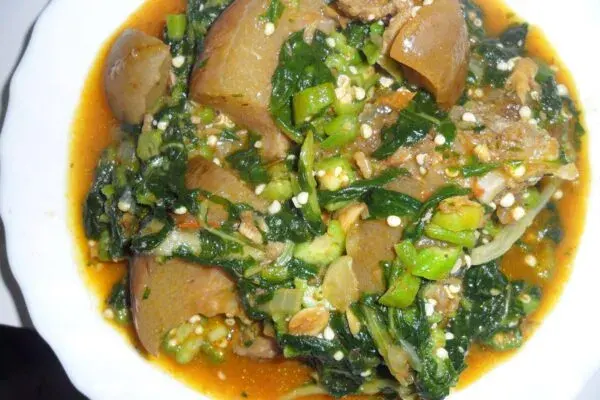
Okro soup, the easy partner for fufu or eba
If you're cooking a swallow for the first time, pair it with a soup that's quick and forgiving. Our okro soup is a good first pot: the okra goes in near the end and only cooks for a few minutes, and its slippery body makes both eba and fufu easy to swallow. For something heavier, egusi soup is the other classic match for both.
Fufu and eba questions
Is fufu healthier than eba?
There's no simple answer. When fufu is cassava-based, both are mostly cassava starch, and the soup you eat with them decides much of the meal. We haven't found a study comparing the two on the same basis, so we won't rank them.
Is fufu the same as akpu?
In Nigeria, mostly yes. Nigerian fufu is usually fermented cassava, which the Igbo call akpu. In Ghana, fufu usually means pounded cassava with plantain or cocoyam.
Is garri the same as eba?
No. Garri is the dry granule, made from grated, fermented, pressed and fried cassava. Eba is what you get when you stir garri into hot water.
Is eba healthy?
Eba is mostly cassava starch, and the fermenting and frying the garri remove most of the cyanide-forming compounds found in raw cassava. What you eat it with matters more, so pair it with a soup full of leaves and protein.
Can you eat fufu and eba with the same soups?
Yes. Nigerian fufu goes with egusi and ogbono. Eba goes with okro, egusi, afang, banga and bitter leaf soup, so the two share most of the same pots.